




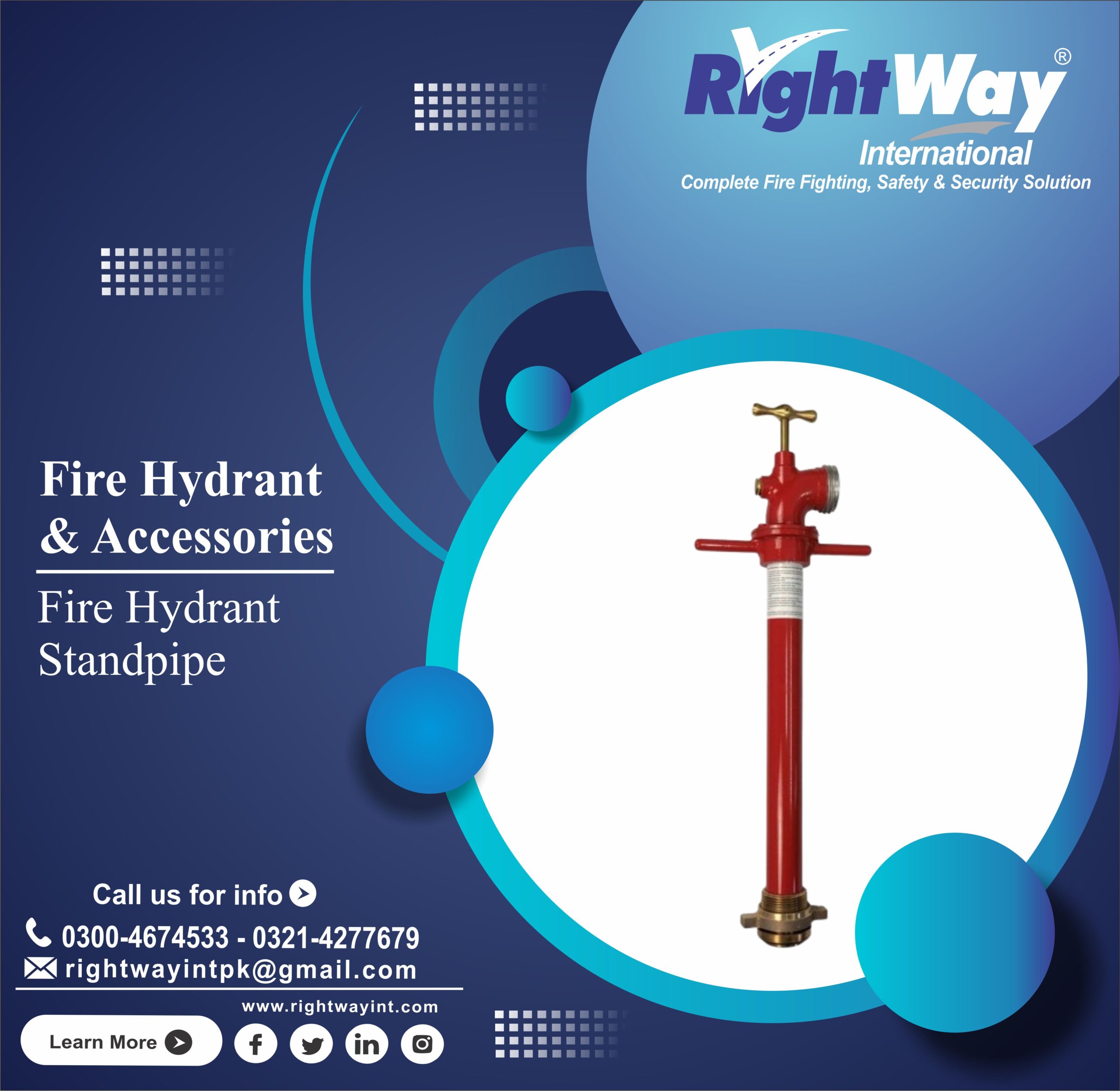
Fire Hydrant Standpipe Types Specifications & Uses in Pakistan. is a vertical piping system installed inside buildings to supply water for firefighting. It allows firefighters or trained occupants to connect hoses at different floors and quickly control fires without relying solely on external fire brigade access.
In Pakistan, standpipe systems are a vital part of modern fire protection setups, commonly used alongside hydrant wrenches, landing valves, hose reel racks, and fire hose systems, following guidelines by the National Fire Protection Association.
What Is a Fire Hydrant Standpipe?
A standpipe system is a network of vertical pipes connected to a water supply system, designed to deliver pressurized water through landing valves installed on each floor.
👉 In simple terms, it is a fixed water supply line inside a building for firefighting use.
Fire Hydrant Standpipe System
The standpipe system is integrated with:
- Fire hydrant landing valves
- Fire hoses
- Hydrant wrenches
- Fire hose nozzles
- Hose reel racks
- Fire pumps
- Water storage tanks
System Operation:
👉 Fire emergency occurs
👉 Firefighter connects hose to landing valve
👉 Hydrant wrench opens valve
👉 Hose deployed (from hose reel rack or cabinet)
👉 Nozzle sprays water
👉 Fire is controlled
Key Components of Standpipe System
- Vertical riser pipe (main pipe)
- Landing valves (floor-wise outlets)
- Fire hose connections
- Pressure control valves
- Fire pump system
- Air release valve
- Drain valve
Fire Hydrant Standpipe Specifications
Choosing proper specifications ensures safety and compliance.
🧪 Material
- Mild Steel (MS)
- Galvanized Iron (GI)
- Ductile Iron (DI)
- Stainless Steel (SS)
📏 Pipe Size
- 2 inch (50 mm)
- 4 inch (100 mm)
- 6 inch (150 mm)
💧 Pressure Rating
- 7 bar to 14 bar (typical)
- High-rise buildings may require higher pressure
🔩 Installation Type
- Surface mounted
- Concealed (inside shafts)
🌡️ Coating
- Red oxide primer
- Epoxy coating
- Anti-corrosion paint
📜 Standards
- NFPA 14 (Standpipe Systems)
- BS 5306
- Local fire safety regulations in Pakistan
Types of Fire Hydrant Standpipe Systems
1️⃣ Wet Standpipe System
- Pipes always filled with water
- Instant water availability
- Used in most buildings
2️⃣ Dry Standpipe System
- Pipes remain empty
- Filled by fire brigade during emergency
- Used in cold regions or special structures
3️⃣ Semi-Automatic Dry System
- Requires manual activation
- Water flows after valve operation
4️⃣ Automatic Standpipe System
- Connected with fire pumps
- Activates automatically during fire
5️⃣ Combined Standpipe System
- Used with sprinkler systems
- Provides dual fire protection
Role of Hose Reel Racks in Standpipe System
Hose reel racks play an important supporting role:
- Store fire hoses neatly
- Prevent tangling and damage
- Ensure quick deployment during emergencies
👉 Standpipe supplies water, while hose reel racks ensure organized hose handling.
Uses of Fire Hydrant Standpipe in Pakistan
Standpipe systems are widely used in:
- 🏢 High-rise buildings
- 🏥 Hospitals
- 🏫 Schools & universities
- 🏬 Shopping malls
- 🏭 Industrial facilities
- 🏠 Residential apartments
Common Applications:
- Internal firefighting systems
- Staircase fire safety setups
- Emergency response systems
- Fire hose cabinet installations
Advantages of Standpipe System
- Provides water at every floor
- Reduces firefighting response time
- Essential for high-rise buildings
- Compatible with hose reel racks and hydrant systems
- Reliable and efficient fire protection
Fire Hydrant Standpipe Price in Pakistan
💰 Estimated Cost Range:
- Small systems: PKR 50,000 – 150,000
- Medium buildings: PKR 150,000 – 500,000
- High-rise systems: PKR 500,000 – 2,000,000+
Price Depends On:
- Building size
- Pipe material and diameter
- Pump system
- Installation complexity
- Compliance requirements
Hydrant Wrench
hydrant wrench is a specialized hand tool used to:
- Open and close fire hydrants
- Operate fire hydrant landing valves
- Tighten or loosen hose couplings
- Assist in connecting fire hoses quickly
Installation Requirements
✔ Install in staircases or shafts
✔ Ensure easy access to landing valves
✔ Maintain proper pipe pressure
✔ Connect with fire pump system
✔ Follow NFPA and local codes
Maintenance Tips
✔ Regular pressure testing
✔ Inspect valves and joints
✔ Check for leaks or corrosion
✔ Ensure pump functionality
✔ Keep hose reel racks and hoses ready
Fire Hydrant Standpipe in Complete Fire System
A standpipe system works with:
- Hydrant wrench
- Landing valves
- Fire hoses
- Hose reel racks
- Fire pumps
- Water tanks
👉 It acts as the backbone of internal firefighting systems.
Final Thoughts
A Fire Hydrant Standpipe is one of the most essential components of building fire safety in Pakistan. It ensures that water is available on every floor for immediate firefighting action. When combined with hydrant wrenches, hose reel racks, and fire hoses, it forms a complete, efficient, and life-saving fire protection system.
FAQs – Fire Hydrant Standpipe
❓ What is a fire hydrant standpipe?
A fire hydrant standpipe is a vertical piping system installed in buildings to supply water for firefighting at multiple floors through landing valves.
❓ What is the purpose of a standpipe system?
Its main purpose is to provide quick and easy access to water for firefighters inside a building, especially in high-rise structures.
❓ What are the main types of standpipe systems?
The main types include:
- Wet standpipe system
- Dry standpipe system
- Semi-automatic dry system
- Automatic standpipe system
- Combined standpipe system
❓ Where are standpipes installed?
They are typically installed in staircases, fire shafts, corridors, and inside fire-rated enclosures for easy access during emergencies.
❓ How does a standpipe system work?
Water is supplied through vertical pipes. Firefighters connect hoses to landing valves, open them using a hydrant wrench, and discharge water through a nozzle.
❓ Is a standpipe system mandatory in Pakistan?
Yes, for high-rise and commercial buildings it is generally required under fire safety regulations and standards like those from the National Fire Protection Association.
❓ What is the difference between a hydrant and a standpipe?
- Hydrant: Usually external, used by fire brigades
- Standpipe: Internal system within a building
❓ What equipment works with a standpipe system?
It works with:
- Hydrant wrenches
- Fire hoses
- Landing valves
- Hose reel racks
- Fire pumps
❓ How often should a standpipe system be maintained?
It should be inspected regularly, with periodic pressure testing and valve checks to ensure proper functionality.
❓ What is the role of hose reel racks in a standpipe system?
Hose reel racks store hoses neatly, prevent tangling, and ensure quick deployment when connected to standpipe landing valves.