




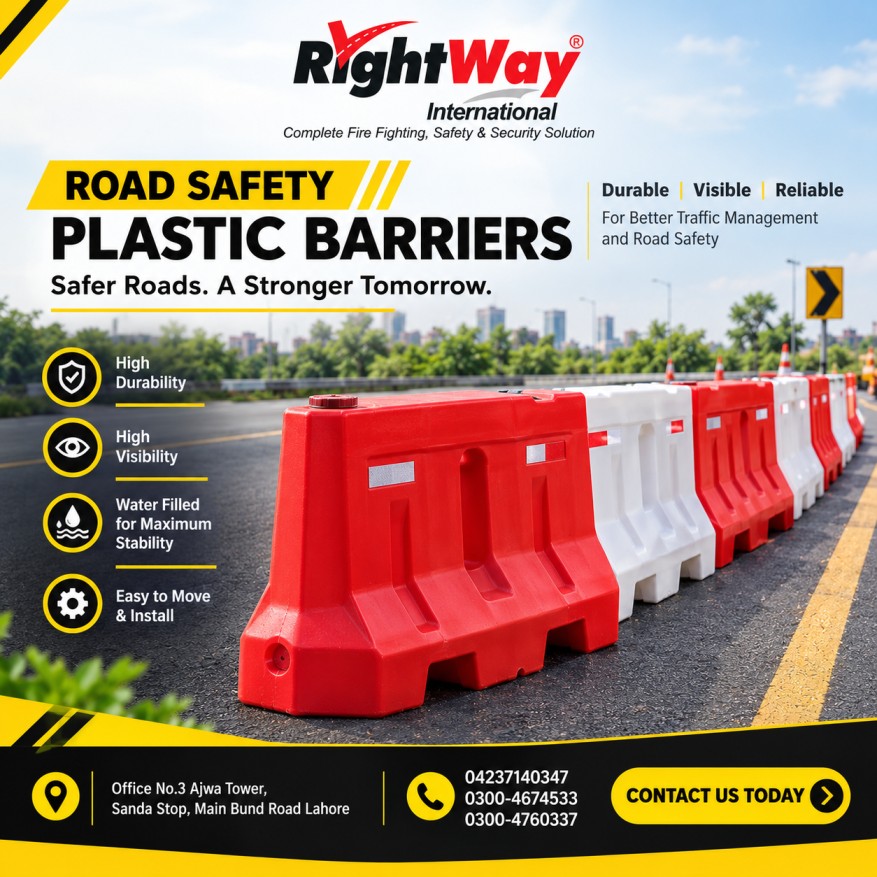
Importance Of Road Safety Barriers. Plastic Road Safety Barriers play an important role in modern traffic management and road safety. These barriers help control vehicle movement, separate traffic lanes, and protect road construction areas. Moreover, they help workers create safer environments for road maintenance, industrial operations, and public events.
At RightWay International, we provide professional fire-fighting, safety, and security solutions for different industries. Our road safety products help organizations manage traffic movement and improve safety in restricted areas. as Per Manual on Uniform Traffic Control Devices Standers.
What Are Plastic Road Safety Barriers?
Plastic Road Safety Barriers are traffic control products made from durable plastic materials, such as High-Density Polyethylene (HDPE). They create visible boundaries between moving vehicles, pedestrians, and restricted areas.
Most water-filled plastic barriers feature a hollow internal design. Users can fill these barriers with water or sand to increase their weight and stability. Consequently, workers can transport empty barriers more easily and install them at different locations.
Manufacturers commonly produce these barriers in bright colors, including red, white, orange, and yellow. In addition, some models feature reflective strips that help drivers recognize restricted areas in low-light conditions.
Key Features of Plastic Traffic Barriers
Plastic traffic barriers offer several practical features for road safety and traffic management.
1. Durable Plastic Construction
Manufacturers use strong plastic materials to produce barriers that withstand regular outdoor use. Therefore, these products offer a practical solution for temporary traffic control.
2. Water-Filled Design
Many plastic barriers feature hollow compartments. Users can fill them with water to increase weight and improve stability during installation.
3. High Visibility
Bright red, white, and orange colors help drivers recognize barriers from a distance. Furthermore, reflective strips improve visibility at night.
4. Easy Transportation
Empty plastic barriers weigh less than filled barriers. As a result, workers can transport and reposition them with greater convenience.
5. Interlocking System
Some models include connecting features that allow users to join multiple barriers together. This design helps create continuous traffic separation.
6. Reusable Design
Businesses can empty, relocate, and reuse plastic barriers for different projects. Consequently, they offer a practical option for temporary traffic management.
Benefits of Using Plastic Road Safety Barriers
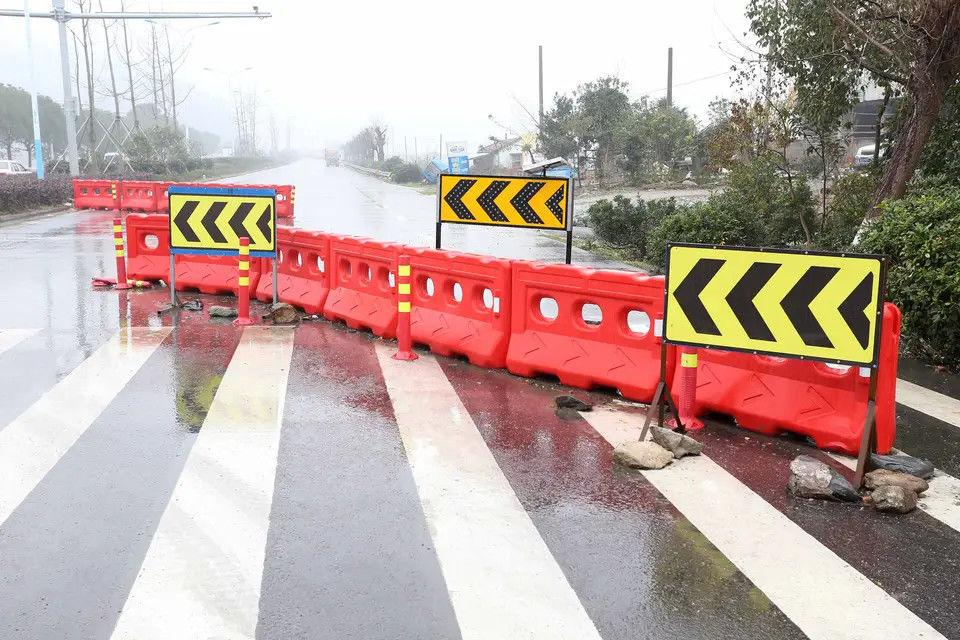
Improved Road Safety
Plastic barriers create visible boundaries around road construction and maintenance areas. Therefore, drivers can identify restricted zones and follow designated traffic routes more easily.
Better Traffic Management
Construction companies and traffic authorities use these barriers to organize vehicle movement. Moreover, they help separate active work areas from public traffic.
Quick Installation and Removal
Workers can position empty barriers at the required location. After installation, they can add water or sand to models designed for filling. This process makes temporary traffic arrangements easier to manage.
Increased Visibility
Bright colors attract drivers’ attention, especially around roadwork and diversion areas. Additionally, reflective markings help drivers recognize barriers in poor lighting.
Cost-Effective Reusability
Companies can reuse plastic barriers across different projects. As a result, they can reduce the need to purchase new temporary traffic control equipment for every project.
Common Applications of Plastic Road Safety Barriers
Plastic road barriers support safety and traffic control in many environments.
Road Construction Projects
Construction companies use plastic barriers to separate workers and machinery from moving vehicles. They also create clear boundaries around excavation and repair activities.
Highways and Motorways
Traffic management teams place barriers along selected road sections to guide vehicles during maintenance and construction. Furthermore, they help organize temporary lane closures.
Road Maintenance Work
Maintenance teams use plastic barriers to restrict vehicle access around damaged roads, drainage work, and repair zones.
Parking Areas
Shopping malls, commercial buildings, and businesses use traffic barriers to organize parking spaces and restrict unauthorized vehicle movement.
Industrial Facilities
Factories and warehouses use plastic safety barriers to separate vehicle routes from pedestrian walkways and restricted working areas.
Public Events
Event organizers use portable plastic barriers to guide traffic, control vehicle entry, and establish temporary restricted zones.
Emergency Situations
Emergency response teams can use plastic barriers to create temporary restricted areas around incidents, damaged roads, and other hazardous locations.
Types of Plastic Road Safety Barriers
Different barrier designs support different traffic management requirements.
1. Water-Filled Plastic Barriers
These barriers feature hollow bodies that users can fill with water. The added weight helps improve stability during temporary road closures and construction work.
2. Interlocking Plastic Barriers
Interlocking barriers connect with adjacent units to create a continuous boundary. Therefore, they work well for long road sections and construction zones.
3. Red and White Traffic Barriers
These high-visibility barriers help drivers recognize restricted areas. Traffic authorities and construction companies commonly use them for road diversions and maintenance work.
4. Portable Plastic Barriers
Portable barriers offer convenient transportation and installation. Moreover, workers can relocate them when project requirements change.
How to Choose the Right Plastic Road Safety Barriers
Before purchasing plastic road barriers, consider a few important factors.
- Material Quality: Choose durable plastic that suits your working environment.
- Barrier Dimensions: Select the correct height, length, and width for your application.
- Filling Capacity: Check whether the model supports water or sand filling.
- Visibility: Look for bright colors and reflective markings.
- Connection System: Choose interlocking barriers when you need continuous traffic separation.
- Stability: Consider the installation surface and expected weather conditions.
- Application: Match the barrier design with your road construction or traffic management requirements.
Most importantly, remember that ordinary plastic traffic barriers do not provide the same impact protection as certified crash barriers. Choose an appropriately tested vehicle restraint system whenever your project requires impact protection.
Why Choose RightWay International?
RightWay International provides professional fire-fighting, safety, and security solutions for commercial, industrial, and infrastructure applications.
We understand the importance of reliable safety equipment in road construction and traffic management. Therefore, we focus on providing practical safety solutions that help businesses and organizations improve their working environments.
Whether you need road safety equipment or industrial safety products, our team can assist you with product information and suitable solutions.
Contact RightWay International today to learn more about our safety products.
Frequently Asked Questions (FAQs)
1. What are plastic road safety barriers used for?
Plastic road safety barriers help control traffic, separate construction zones, restrict vehicle access, and organize road movement. They also support temporary road closures and traffic diversions.
2. What material do manufacturers use for plastic traffic barriers?
Manufacturers commonly use High-Density Polyethylene (HDPE) to produce plastic traffic barriers. This material offers durability and suits many outdoor applications.
3. Can plastic road barriers be filled with water?
Yes. Many plastic road barriers feature hollow compartments that users can fill with water. This additional weight helps improve stability during installation.
4. Are plastic traffic barriers reusable?
Yes. Users can empty, transport, and reposition plastic barriers for different projects. However, regular inspection helps identify cracks and other damage.
5. Where do companies use water-filled plastic barriers?
Companies use water-filled barriers on highways, construction sites, parking areas, industrial facilities, and temporary traffic diversion routes.
6. Are plastic road barriers suitable for outdoor use?
Yes. Manufacturers design many plastic barriers for outdoor applications. However, product quality, weather conditions, and correct installation affect their performance.
7. Do plastic traffic barriers improve road safety?
Yes. They create visible boundaries and help guide vehicles away from restricted areas. However, they do not replace certified crash barriers where impact protection is necessary.
8. Which colors are available for plastic road safety barriers?
Common colors include red, white, orange, and yellow. These bright colors help drivers identify traffic restrictions more easily.
9. What is the difference between plastic and concrete road barriers?
Plastic barriers are lighter and easier to transport, making them suitable for many temporary traffic management applications. In comparison, concrete barriers offer greater mass and serve different traffic separation and vehicle restraint applications.
10. Where can I buy plastic road safety barriers in Pakistan?
You can contact RightWay International in Lahore for information about plastic road safety barriers and other safety equipment
ontact RightWay International
Address: Office No. 3, Ajwa Tower, Sanda Stop, Main Bund Road, Lahore, Pakistan.
Phone Numbers:
- 042-37140347
- 0300-4674533
- 0300-4760337