




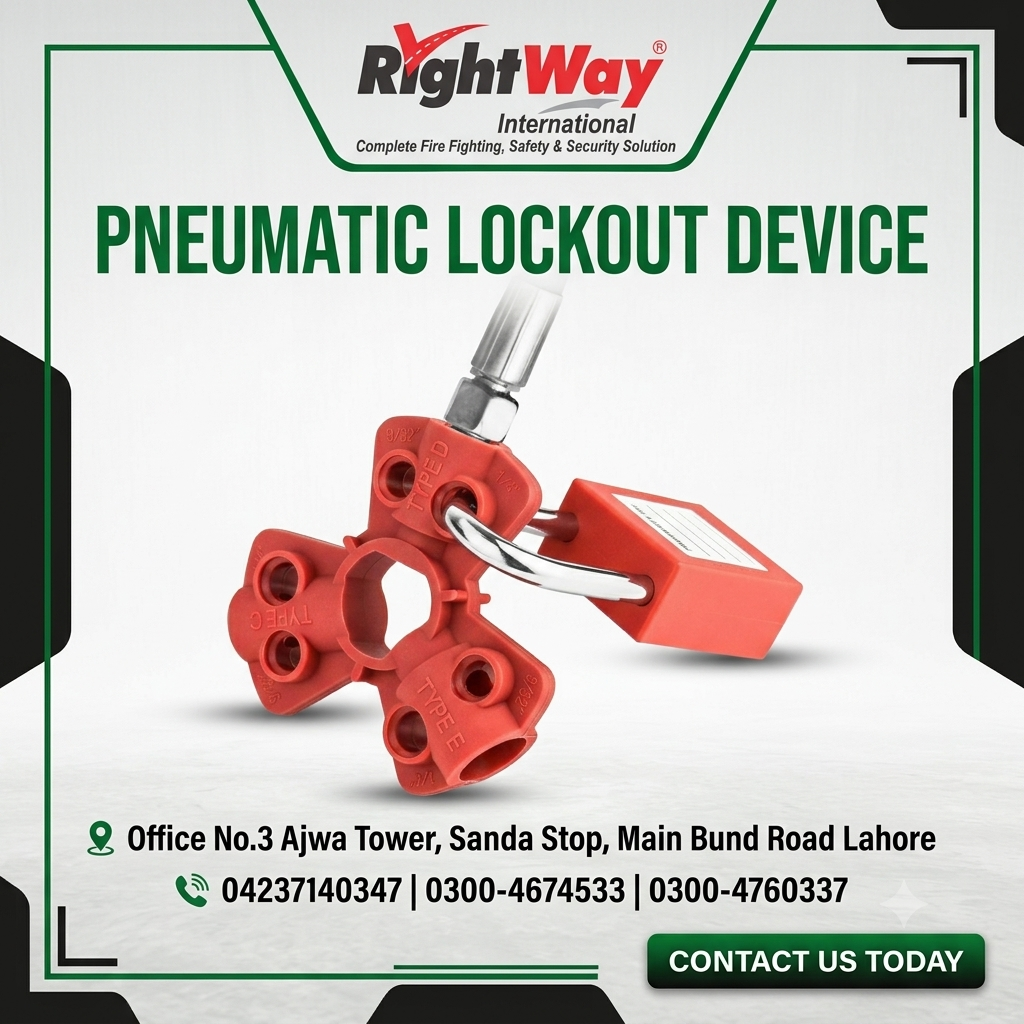
Pneumatic Lockout Device in Pakistan is an important component of industrial Lockout/Tagout (LOTO) programs and hazardous-energy control procedures. These devices help authorized workers isolate compressed-air energy before maintenance, inspection, repair, installation, cleaning, and servicing activities.
Pneumatic systems operate cylinders, actuators, valves, tools, presses, and automated machinery. If compressed air remains connected during maintenance, unexpected movement or pressure release can create serious hazards.
A properly selected pneumatic lockout device helps prevent accidental or unauthorized reconnection of the air supply. When combined with safety padlocks, lockout tags, and proper energy-isolation procedures, these devices support a more controlled maintenance environment. as per Occupational Safety and Health Administration (OSHA) Standers.
Across Pakistan, pneumatic lockout devices are commonly used in manufacturing plants, textile mills, packaging facilities, food-processing plants, pharmaceutical factories, automotive facilities, chemical plants, warehouses, workshops, and production lines.
Benefits of Pneumatic Lockout Devices
Pneumatic Energy Isolation
A pneumatic lockout device helps isolate compressed-air energy during maintenance. By securing the appropriate air connection or isolation point, workers can reduce the risk of unexpected equipment operation.
Prevents Accidental Reconnection
The device physically restricts access to a compatible pneumatic connection, helping prevent unauthorized reconnection while maintenance is underway.
Supports LOTO Procedures
Pneumatic lockout devices work with suitable safety padlocks, lockout tags, hasps, and other LOTO equipment. They provide a physical control point within an organization’s energy-control procedure.
High-Visibility Identification
Many pneumatic lockouts use bright colors for easy identification. This helps maintenance teams recognize equipment that remains under lockout.
Multiple Lock Capability
Selected pneumatic lockout devices can accommodate multiple safety padlocks or work with lockout hasps, making them suitable for certain group maintenance applications.
Durable Construction
Industrial pneumatic lockouts are commonly manufactured from durable materials such as reinforced polymers, engineering plastics, aluminum, or stainless steel. Material selection should match the working environment.
Types of Pneumatic Lockout Devices
Pneumatic Quick Disconnect Lockout
A pneumatic quick disconnect lockout is designed for compatible quick-disconnect fittings. It helps prevent the compressed-air hose from being reconnected during maintenance.
Pneumatic Hose Lockout
A pneumatic hose lockout secures suitable hose connections and helps prevent unintended reconnection of compressed air.
Pneumatic Air Line Lockout
An air line lockout provides a physical means of controlling compatible compressed-air connections during servicing.
Pneumatic Connector Lockout
A pneumatic connector lockout helps prevent an air connector from being reconnected while equipment remains under maintenance.
Pneumatic Valve Lockout
A pneumatic valve lockout can secure compatible pneumatic valves in the required isolation position. The correct device depends on valve type, size, and handle design.
Universal Pneumatic Lockout
A universal pneumatic lockout device can accommodate certain ranges of pneumatic fittings and connections. Always check manufacturer specifications before use.
Key Features of Pneumatic Lockout Devices
Common features include:
- High-visibility construction
- Safety padlock compatibility
- Multiple locking positions
- Durable materials
- Compact design
- Identification options
- Compatibility with pneumatic fittings
- Easy storage in LOTO kits
- Resistance to suitable industrial conditions
The most important consideration is compatibility with the pneumatic connection or isolation point.
Common Applications in Pakistan
| Industry | Application | Common Equipment |
|---|---|---|
| Manufacturing | Machinery maintenance | Pneumatic lockouts, padlocks |
| Textile Mills | Production equipment servicing | Air-line lockouts |
| Packaging | Pneumatic cylinders and actuators | Quick-disconnect lockouts |
| Food Processing | Production-line maintenance | Pneumatic and valve lockouts |
| Pharmaceutical | Equipment servicing | Pneumatic lockouts, tags |
| Automotive | Assembly equipment | Pneumatic connector lockouts |
| Chemical Plants | Process equipment maintenance | Air-line and valve lockouts |
| Workshops | Pneumatic tool servicing | Hose and connector lockouts |
| Warehouses | Equipment maintenance | Pneumatic lockouts |
| Construction | Pneumatic equipment servicing | Air lockout devices |
How a Pneumatic Lockout Device Works
First, the authorized employee identifies the equipment and all associated energy sources.
Next, the equipment is shut down according to the approved procedure. The compressed-air supply is then isolated at the appropriate point.
Workers must also address any stored pneumatic pressure according to the facility’s energy-control procedure.
After isolation, the compatible pneumatic lockout device is installed and secured with the assigned safety padlock.
The required lockout or danger tag is then applied. Before maintenance begins, authorized personnel should verify that the pneumatic energy has been effectively isolated and that stored energy has been controlled.
Pneumatic Lockout and Stored Air Pressure
Compressed air can remain stored inside hoses, cylinders, actuators, receivers, and other pneumatic components even after the main air supply has been disconnected.
Therefore, a complete pneumatic LOTO procedure should address:
- Air supply isolation
- Pneumatic lockout application
- Stored-pressure release
- Prevention of unexpected movement
- Safety padlock application
- Warning tags
- Energy-isolation verification
Workers should follow the facility’s documented procedure and equipment-specific instructions.
Pneumatic Lockout Device Selection Guide
When selecting a pneumatic lockout device in Pakistan, consider:
Pneumatic Connection
Identify whether the equipment uses a quick disconnect, hose, coupling, connector, fitting, or valve.
Size and Compatibility
Check the fitting dimensions and confirm that the lockout fits securely.
Safety Padlock Compatibility
Verify shackle diameter, locking-hole dimensions, and clearance.
Number of Workers
For group maintenance, select a suitable multiple-lock arrangement or compatible hasp system.
Material and Environment
Consider exposure to oil, chemicals, moisture, dust, heat, and outdoor conditions when selecting the material.
Manufacturer Specifications
Always verify the manufacturer’s information regarding compatible fittings, dimensions, materials, and application limitations.
Pneumatic Lockout Safety Practices
A pneumatic lockout device should form part of a complete energy-control program.
- Identify all hazardous energy sources.
- Shut down equipment properly.
- Isolate the compressed-air supply.
- Control stored pneumatic pressure.
- Install the correct pneumatic lockout.
- Apply the assigned safety padlock.
- Attach the required warning tag.
- Verify energy isolation before maintenance.
- Prevent unexpected movement of equipment.
- Train authorized employees in LOTO procedures.
Workers should never rely on a warning tag alone to control hazardous energy.
Maintenance and Inspection
Inspect pneumatic lockout devices before use. Look for:
- Cracks
- Broken components
- Deformation
- Damaged locking holes
- Corrosion
- Excessive wear
- Chemical damage
- Missing parts
Clean equipment using a method suitable for its material and store it in LOTO cabinets, lockout stations, maintenance toolboxes, or portable lockout kits.
Remove damaged equipment from service and replace it before another lockout activity.
Safety Padlock Keyset
Safety Padlock Keysets provide a practical method for managing personal locks during Lockout/Tagout activities. Their high-visibility construction, individual key systems, identification options, durable materials, and compatibility with various lockout devices make them valuable components of industrial energy-control programs.
From manufacturing plants and textile mills to power stations, chemical facilities, pharmaceutical factories, warehouses, food-processing plants, oil and gas facilities, water-treatment plants, construction sites, and commercial buildings, organizations can use properly selected safety padlock systems to improve lockout organization and worker accountability.
Why Pneumatic Lockout Devices Matter
Compressed air can generate powerful movement and may remain stored inside pneumatic equipment after the main supply has been isolated. Unexpected release can cause cylinders, actuators, clamps, tools, or machinery components to move suddenly.
A properly selected pneumatic lockout device provides a practical method for controlling compatible pneumatic isolation points during maintenance.
For industrial facilities in Pakistan, these devices are useful during machine maintenance, production-line repairs, pneumatic-tool servicing, equipment installation, preventive maintenance, plant shutdowns, packaging-machine maintenance, textile machinery servicing, and industrial equipment isolation.
When combined with safety padlocks, LOTO tags, lockout hasps, stored-energy controls, employee training, and verification procedures, pneumatic lockout devices can support a more organized approach to hazardous-energy management.
Pneumatic Lockout Device for Industrial LOTO Programs
Pneumatic Lockout Devices provide an effective method for controlling compressed-air energy during Lockout/Tagout activities. Their high-visibility design, compatibility with safety padlocks, and availability for different pneumatic connections make them valuable components of industrial safety programs.
Organizations in Pakistan should select pneumatic lockout equipment according to fitting type, connection size, padlock compatibility, number of authorized employees, environmental conditions, and the facility’s documented energy-control procedure.
Proper selection, training, inspection, and application can help organizations establish safer and more consistent pneumatic energy-isolation practices.