




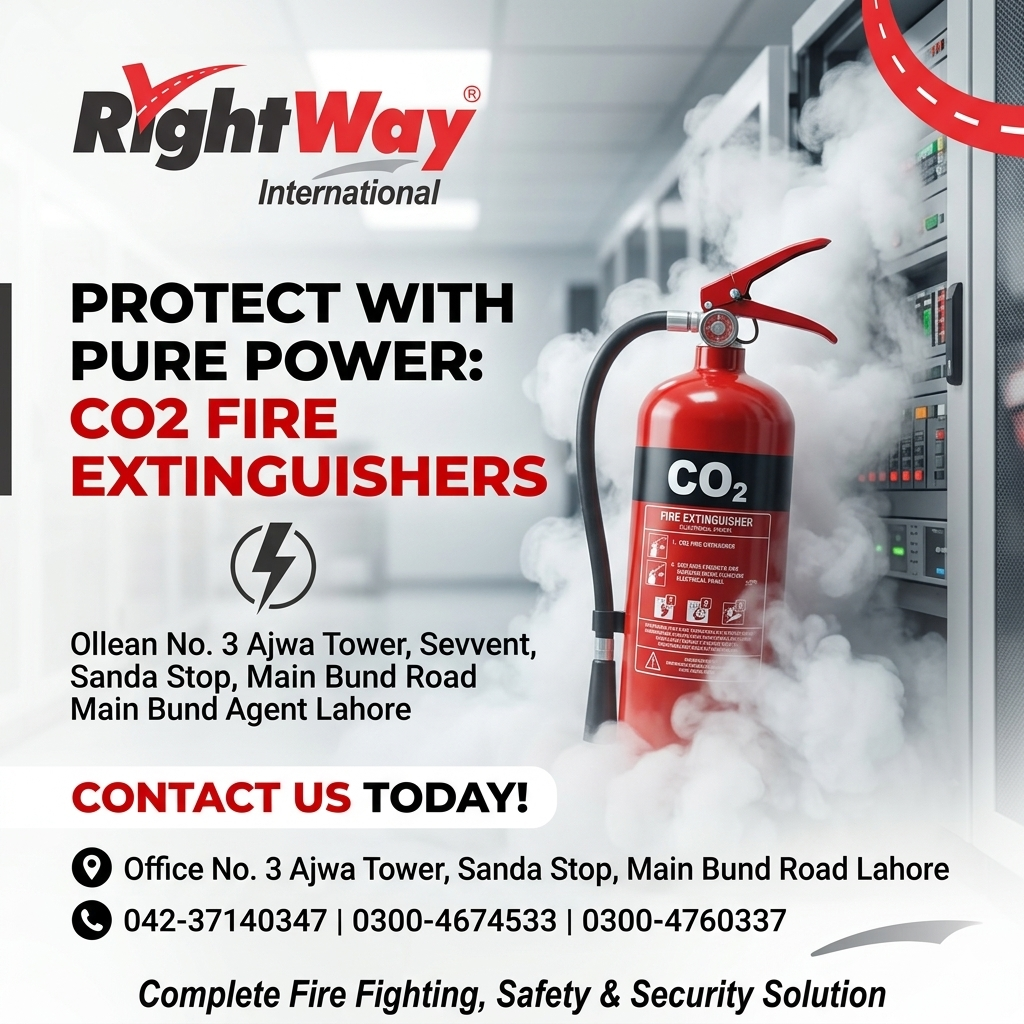
CO₂ Fire Extinguisher (Carbon Dioxide) is one of the most important fire safety tools, especially in environments where protecting equipment matters as much as stopping the fire. While it may not be as universally versatile as a DCP (ABC) extinguisher, it excels in specific, high-risk situations—particularly electrical and liquid fires. as Per National Fire Protection Association Standers.
🔥 What Is a CO₂ Fire Extinguisher?
A CO₂ extinguisher stores carbon dioxide gas under very high pressure in a steel cylinder. When you press the handle, the extinguisher releases the gas through a discharge horn.
As the gas expands:
- It rapidly cools down and forms a white cloud
- It displaces oxygen around the fire
- It interrupts combustion, causing the flames to die out
In other words, instead of coating the fire like powder or foam, CO₂ removes one of the key elements required for fire—oxygen.
⚙️ How It Works (Simple Explanation)
Fire needs three elements to survive:
- Heat
- Fuel
- Oxygen
This is known as the fire triangle. A CO₂ extinguisher targets oxygen directly. Therefore, once the oxygen level drops, the fire can no longer continue burning.
However, because it does not cool the fuel significantly, there is a chance of re-ignition if the area remains hot.
✅ Key Advantages
1. Clean and Residue-Free
Unlike DCP extinguishers, CO₂ leaves no powder, foam, or liquid residue. As a result, there is:
- No cleanup required
- No contamination of equipment
- No damage to sensitive electronics
2. Ideal for Electrical Fires
CO₂ does not conduct electricity. Therefore, you can safely use it on:
- Live electrical panels
- Circuit breakers
- Office equipment
- Server racks
3. Perfect for Sensitive Environments
Because of its clean nature, CO₂ is widely used in:
- IT server rooms
- Data centers
- Laboratories
- Banks and control rooms
4. Fast and Effective Action
CO₂ extinguishers discharge quickly and act immediately. This makes them highly effective for small to medium fires when used promptly.
🔍 Fire Classes Covered
| Fire Type | Suitable? | Notes |
|---|---|---|
| Class A (wood, paper, cloth) | ❌ Not ideal | Fire may re-ignite |
| Class B (flammable liquids) | ✅ Excellent | One of the best options |
| Class C (gases) | ✅ Good | Use with caution |
| Electrical (Class E) | ✅ Best | Primary use case |
| Class F (cooking oils) | ❌ Unsafe | Risk of spreading fire |
👉 Key takeaway: CO₂ is best for liquid and electrical fires, not general-purpose use.
📦 Common Sizes & Applications (Pakistan)
CO₂ extinguishers come in different capacities depending on the level of risk:
| Capacity | Typical Use |
|---|---|
| 2 KG | Offices, cars, UPS systems |
| 5 KG | Shops, server rooms |
| 10 KG | Industrial panels, factories |
💰 Estimated Prices in Pakistan (2026)
Prices vary depending on brand, cylinder quality, and certification:
| Capacity | Price Range (PKR) |
|---|---|
| 2 KG | 6,000 – 10,000 |
| 5 KG | 12,000 – 18,000 |
| 10 KG | 20,000 – 30,000 |
👉 Always choose extinguishers certified by PSQCA or ISO standards to ensure safety and reliability.
⚠️ Important Safety Precautions
❄️ Extremely Cold Discharge
CO₂ exits at very low temperatures (as low as -78°C).
Never touch the horn directly, as it can cause frostbite.
🌬️ Use in Ventilated Areas
Because CO₂ reduces oxygen levels:
- Avoid prolonged use in confined spaces
- Ensure proper ventilation after discharge
🔁 Risk of Re-Ignition
Since CO₂ does not soak or cool materials deeply:
- Fires may restart if heat remains
- Always monitor the area after extinguishing
📏 Limited Range
CO₂ extinguishers typically have a short range (1–3 meters).
Therefore, you must stand relatively close to the fire—while maintaining a safe distance.
🧯 How to Use a CO₂ Extinguisher (PASS Method)
Follow the PASS technique:
- P – Pull the safety pin
- A – Aim at the base of the fire
- S – Squeeze the handle
- S – Sweep side to side
👉 Additionally, always keep the extinguisher upright and aim low—not at the flames, but at the fuel source.
🔄 CO₂ vs DCP: Which One Should You Choose?
| Feature | CO₂ | DCP (ABC) |
|---|---|---|
| Residue | ❌ None | ✔ Leaves powder |
| Electronics safety | ✔ Excellent | ❌ Can damage |
| Fire coverage | Limited | Multi-purpose |
| Cleanup | None | Required |
| Re-ignition risk | Higher | Lower |
✔ Practical Recommendation:
- Use CO₂ for offices, IT equipment, and electrical hazards
- Use Dry Chemical Powder for general fire protection (homes, shops, vehicles)
- Ideally, keep both types together for complete safety coverage
🔧 Maintenance & Servicing
To ensure reliability:
- ✔ Check pressure and seal monthly
- ✔ Inspect nozzle and horn for damage
- ✔ Service annually by professionals
- ✔ Perform hydrostatic testing every 5 years
Proper maintenance ensures the extinguisher works when you need it most.
❓ Frequently Asked Questions
1. Can CO₂ extinguishers be used indoors?
Yes, but ensure ventilation afterward to avoid oxygen depletion.
2. Does CO₂ harm humans?
It is not toxic in small amounts. However, high concentrations in enclosed spaces can be dangerous.
3. Why is CO₂ better than water for electrical fires?
Water conducts electricity, while CO₂ does not. Therefore, CO₂ is much safer.
4. Can I use CO₂ for kitchen fires?
No. For cooking oil fires, a wet chemical extinguisher is the correct choice.
🧠 Final Conclusion
CO₂ fire extinguishers provide clean, fast, and equipment-safe fire suppression. However, they are not designed for every situation. For complete protection, you should combine CO₂ extinguishers with DCP or other types based on your risk environment.