




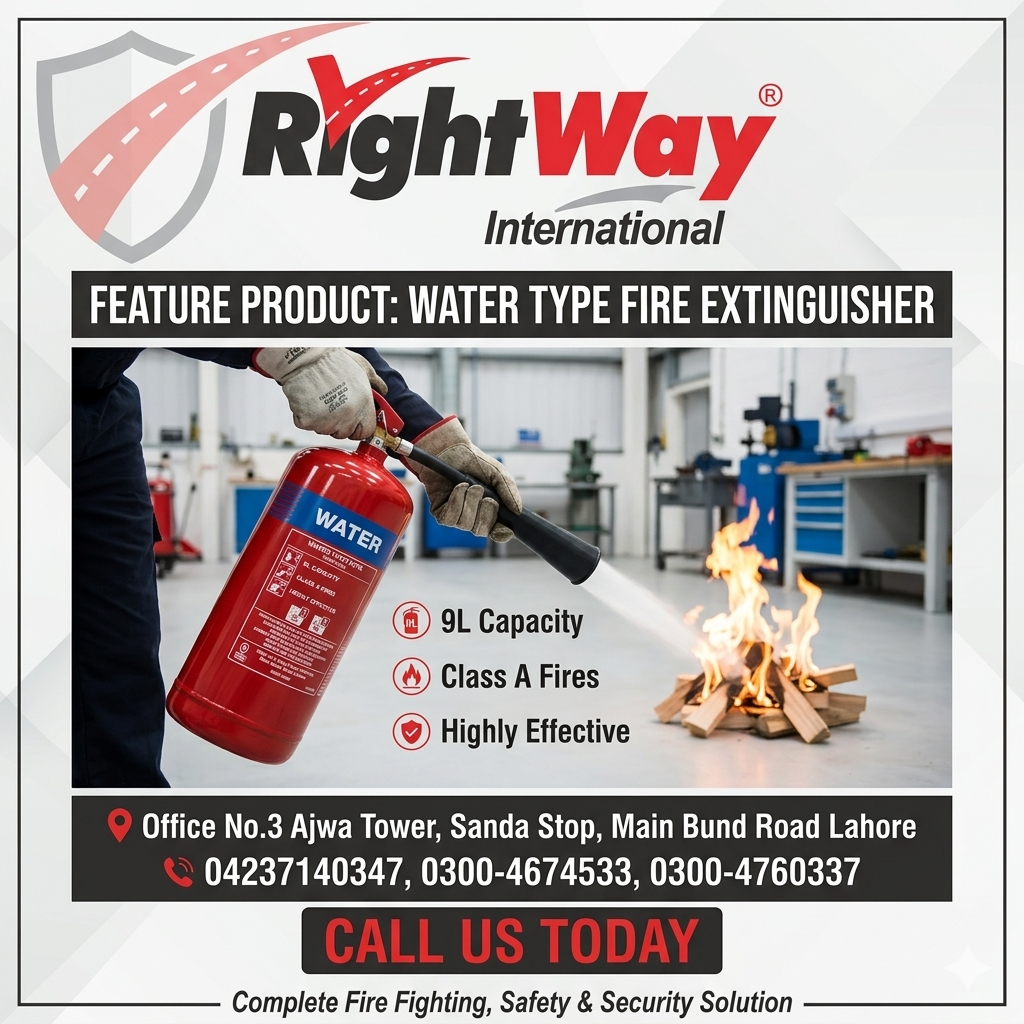
Water Type Fire Extinguisher is one of the most common and cost-effective fire safety devices used worldwide. It is specifically designed to tackle Class A fires, making it ideal for environments where solid combustible materials are present. as Per National Fire Protection Association Standers.
What is a Water Fire Extinguisher?
A water fire extinguisher contains pressurized water that is discharged onto fire to cool burning materials and stop combustion.
It works by:
- Absorbing heat from the fire
- Lowering the temperature below ignition point
- Soaking burning materials to prevent re-ignition
Types of Water Fire Extinguishers
1. Water Jet Extinguisher
- Traditional type
- Strong stream of water
- Suitable for large Class A fires
2. Water Spray Extinguisher
- More efficient than jet
- Covers a wider area
- Often includes additives for better performance
3. Water Mist Extinguisher
- Produces fine mist
- Safer near light electrical risks
- Used in hospitals and sensitive areas
Fire Classes Covered
Water extinguishers are ONLY suitable for Class A fires, including:
- Wood
- Paper
- Cloth
- Rubber
- Plastics
Where Water Extinguishers Are Used
Common applications include:
- Offices
- Schools and colleges
- Homes and apartments
- Warehouses
- Retail stores
Where NOT to Use Water Extinguishers
❌ Electrical fires (risk of electric shock)
❌ Flammable liquids (petrol, oil)
❌ Gas fires
❌ Kitchen oil/fat fires
Using water in these cases can spread fire or cause serious hazards
Key Features
- Simple and easy to use
- Environmentally friendly (no chemicals)
- Low maintenance
- No toxic residue
- Highly affordable
Advantages
1. Cost-Effective
Water extinguishers are among the cheapest fire safety options available.
2. Eco-Friendly
Uses only water—no harmful chemicals.
3. Easy Maintenance
Requires minimal servicing compared to chemical extinguishers.
4. Effective Cooling
Quickly reduces fire temperature and prevents re-ignition.
Disadvantages
- Limited to Class A fires only
- Dangerous with electricity
- Not suitable for modern fire risks like fuel or gas
Halotron Fire Extinguisher
Halotron extinguishers suppress fire by:
- Interrupting the chemical reaction of the fire
- Cooling the flame
- Displacing oxygen in a controlled way
Unlike water or powder extinguishers, Halotron leaves no residue, making cleanup minimal and preventing equipment damage.
Water Fire Extinguisher Prices (Pakistan 2026)
Prices vary by size and brand:
| Size | Capacity | Estimated Price (PKR) |
|---|---|---|
| Small | 6 Liter | PKR 8,000 – 15,000 |
| Medium | 9–10 Liter | PKR 15,000 – 35,000 |
| Large | 25–50 Liter | PKR 35,000 – 115,000 |
Example: A water extinguisher model ranges around PKR 17,500 to 115,000 depending on size and specifications
Water vs Other Fire Extinguishers
| Feature | Water | CO₂ | Dry Powder |
|---|---|---|---|
| Fire Type | Class A only | B & Electrical | A, B, C |
| Residue | None | None | Powder residue |
| Cost | Low | Medium | Low |
| Electrical Safety | ❌ No | ✅ Yes | ✅ Yes |
Frequently Asked Questions (FAQs)
1. What is a water fire extinguisher used for?
It is used for Class A fires such as wood, paper, cloth, and plastics.
2. Can water extinguish electrical fires?
No, it is dangerous because water conducts electricity.
3. Is a water extinguisher safe for home use?
Yes, especially in areas with furniture, paper, and wood materials.
4. What is the lifespan of a water fire extinguisher?
Typically 5–15 years with proper maintenance.
5. Is it better than CO₂ extinguishers?
It depends—water is cheaper but limited to Class A fires, while CO₂ works on electrical fires.
6. Does it leave residue?
No, it only uses water, so cleanup is minimal.
Conclusion
The water type fire extinguisher remains a reliable and budget-friendly solution for tackling Class A fires. While it may not be suitable for all fire types, it is essential for homes, offices, and environments where solid combustibles are common. For complete protection, it is often used alongside CO₂ or dry powder extinguishers.