




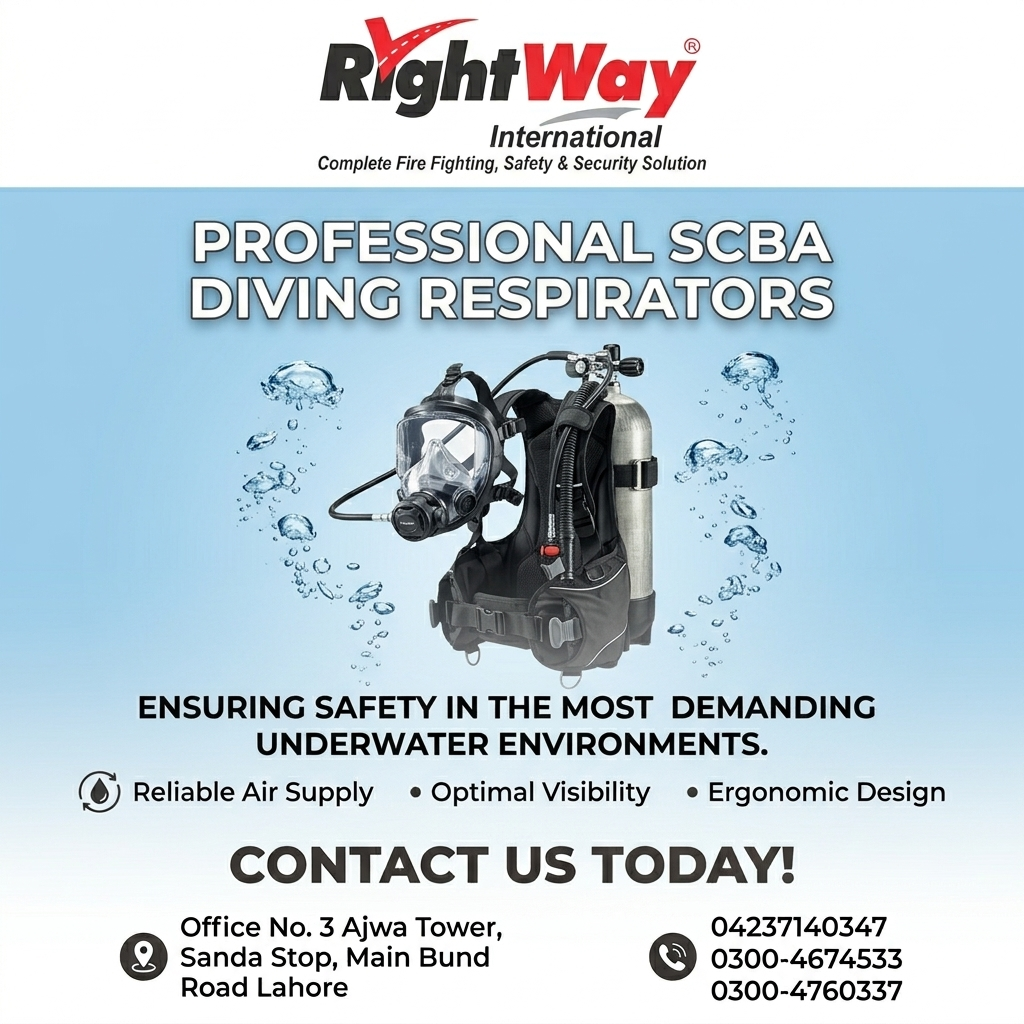
SCBA Diving Respirators are advanced respiratory protection systems designed to provide breathable compressed air for underwater diving operations, hazardous rescue missions, industrial maintenance, offshore activities, confined space operations, and emergency response applications. These systems combine the principles of Self-Contained Breathing Apparatus (SCBA) and underwater diving respirators to ensure a continuous supply of clean breathing air in oxygen-deficient, toxic, submerged, smoke-filled, or hazardous environments. as per Occupational Safety and Health Administration (OSHA) Standers.
SCBA diving respirators are widely used in commercial diving, military diving, firefighting water rescue, offshore oil and gas operations, underwater inspection services, marine salvage operations, rescue diving, hazardous material response, underwater welding, ship maintenance, and emergency rescue applications where respiratory safety and reliable breathing air are critical for survival and operational performance.
Because underwater and hazardous environments may contain contaminated water, toxic gases, low oxygen levels, smoke, chemical vapors, and dangerous atmospheric conditions, SCBA diving respirators provide purified breathable air that improves diver safety, respiratory protection, and emergency response effectiveness.
What Is an SCBA Diving Respirator?
An SCBA Diving Respirator is a self-contained breathing system that supplies compressed breathable air to divers and rescue personnel operating in underwater or hazardous environments.
These systems are commonly used for:
- Commercial diving operations
- Underwater rescue missions
- Firefighter water rescue
- Offshore diving operations
- Ship hull inspection
- Underwater welding
- Marine salvage work
- Hazardous underwater inspections
- Confined space rescue
- Industrial maintenance
- Search and recovery operations
- Military diving applications
- Emergency response diving
- Toxic environment rescue
- Underwater construction
Most SCBA diving respirator systems include:
- High-pressure air cylinder
- Diving regulator
- Full-face respirator mask
- Breathing air hose
- Pressure gauge
- Air delivery valve
- Emergency backup air supply
- Buoyancy control system
- Harness assembly
- Communication system
- Moisture and filtration system
- Respiratory safety controls
SCBA diving respirators support:
- OSHA respiratory protection compliance
- Underwater breathing safety
- Hazardous atmosphere protection
- Emergency rescue preparedness
- Offshore safety operations
- Marine emergency response
- Toxic gas exposure prevention
- Commercial diving safety
- Industrial respiratory protection
- Confined space safety programs
Because these systems provide independent breathable air supply, they significantly improve safety during underwater and hazardous rescue operations.
Airline Breathing Apparatus
An Airline Breathing Apparatus is a supplied-air respiratory protection system that delivers clean compressed breathable air to workers through an airline hose connected to an external breathing air source.
These systems are commonly used for:
- Confined space entry
- Spray painting operations
- Chemical handling
- Tank cleaning
- Offshore maintenance
- Industrial shutdown operations
- Hazardous material handling
- Welding and metal fabrication
- Pharmaceutical production
- Toxic gas environments
- Sandblasting operations
- Emergency rescue operations
- Industrial cleaning procedures
- Industrial coating applications
- Smoke-filled environments
Common Applications of SCBA Diving Respirators
Industries use SCBA diving respirators for various underwater and hazardous breathing applications, including:
- Commercial underwater diving
- Offshore oil platform inspections
- Underwater welding operations
- Marine salvage missions
- Firefighter rescue diving
- Underwater search operations
- Ship maintenance and repair
- Hazardous material recovery
- Flood rescue operations
- Confined space underwater entry
- Military underwater missions
- Emergency rescue diving
- Industrial tank inspections
- Harbor maintenance operations
- Water treatment facility inspections
- Rescue and recovery services
- Underwater construction projects
- Hazardous marine operations
- Toxic environment diving
- Emergency underwater response
Importance of SCBA Diving Respirators in Industrial Safety
SCBA diving respirators play a critical role in protecting divers and rescue personnel from respiratory hazards in underwater and contaminated environments.
Benefits:
- Provides independent breathable air supply
- Protects against toxic contaminants
- Supports underwater rescue operations
- Improves diver safety
- Supports OSHA compliance
- Enhances emergency response readiness
- Enables safe underwater maintenance
- Reduces respiratory exposure risks
- Improves confined space safety
- Supports hazardous environment operations
How SCBA Diving Respirators Work
SCBA diving respirators deliver compressed breathable air from a high-pressure cylinder to the diver through a controlled respiratory system.
Step 1: Air Cylinder Charging
High-pressure cylinders are filled with purified breathable compressed air.
Step 2: Pressure Regulation
The regulator reduces cylinder pressure to safe breathing levels.
Step 3: Air Delivery
Compressed air flows through hoses and valves to the respirator mask.
Step 4: Breathing Process
The diver inhales breathable air through the respirator system.
Step 5: Exhalation Control
Exhaled air exits through exhaust valves or underwater release systems.
Step 6: Emergency Backup Operation
Backup systems provide additional air during emergencies or equipment failure.
Types of SCBA Diving Respirators
Different underwater and rescue operations require specialized SCBA diving respirator configurations.
1. Open-Circuit SCBA Diving Respirators
These systems release exhaled air into the surrounding environment.
Features:
- Simple design
- Reliable operation
- Easy maintenance
- Common commercial diving use
2. Closed-Circuit Rebreather Respirators
These systems recycle exhaled air for extended underwater operation.
Benefits:
- Longer dive duration
- Reduced air consumption
- Low bubble emission
- Military and technical diving applications
3. Full-Face Diving Respirators
Provide complete respiratory and facial protection.
Applications:
- Hazardous water diving
- Chemical-contaminated environments
- Rescue operations
- Offshore industrial work
4. Surface-Supplied Diving Respirators
Air is supplied from the surface through an airline hose system.
Common Uses:
- Commercial diving
- Offshore maintenance
- Underwater construction
- Ship repair operations
5. Emergency Escape Diving Respirators
Portable systems designed for rapid emergency evacuation.
Advantages:
- Compact design
- Fast deployment
- Emergency breathing support
- Hazardous underwater escape
Technical Specifications
| Specification | Details |
|---|---|
| Equipment Type | SCBA Diving Respirator |
| Air Supply | High-Pressure Breathing Air |
| Operating Pressure | 2216 PSI to 4500 PSI |
| Respirator Type | Full Face or Mouthpiece |
| Breathing System | Open or Closed Circuit |
| Application | Underwater Respiratory Protection |
| Compliance | OSHA, NIOSH, NFPA, EN Standards |
| Air Cylinder Material | Steel or Composite |
| Emergency Backup System | Optional |
| Industry Use | Diving and Rescue Operations |
Key Features and Advantages of SCBA Diving Respirators
Independent Breathing Air Supply
Provides self-contained breathable air for underwater and hazardous operations.
Advanced Respiratory Protection
Protects against contaminated water, toxic gases, and oxygen-deficient environments.
High-Pressure Air Storage
Supports extended diving and rescue operations.
Durable Industrial Construction
Built for marine, offshore, and hazardous operating conditions.
Emergency Response Capability
Supports rescue and evacuation procedures.
Enhanced Diver Mobility
Portable systems improve movement and underwater access.
Reliable Safety Performance
Designed for critical life-support applications.
Full-Face Protection Options
Improves respiratory, facial, and eye safety.
How to Select the Right SCBA Diving Respirator
Choosing the correct SCBA diving respirator improves diver safety and operational efficiency.
1. Determine Diving Application
Select equipment based on rescue, industrial, commercial, or military operations.
2. Verify Air Supply Capacity
Choose cylinder size and pressure rating based on dive duration.
3. Assess Environmental Hazards
Evaluate toxic exposure, water contamination, and oxygen levels.
4. Select Respirator Configuration
Choose open-circuit, rebreather, or surface-supplied systems.
5. Ensure Regulatory Compliance
Verify compliance with OSHA, NIOSH, NFPA, and diving safety standards.
Best Practices for SCBA Diving Respirator Usage
- Inspect respirators before each dive
- Monitor breathing air quality regularly
- Test regulators and valves routinely
- Replace damaged hoses immediately
- Conduct cylinder pressure inspections
- Follow diver safety procedures
- Train personnel on emergency response
- Maintain backup breathing systems
- Store cylinders properly after use
- Perform routine equipment maintenance
Industries That Commonly Use SCBA Diving Respirators
Offshore Oil and Gas Industry
Divers use respiratory systems for underwater inspections and maintenance.
Commercial Diving Industry
Professional divers rely on SCBA systems during underwater operations.
Fire and Rescue Services
Water rescue teams use diving respirators during emergency response.
Marine and Shipping Industry
Ship maintenance crews use underwater respiratory protection systems.
Military Operations
Military divers use advanced breathing apparatus during tactical missions.
Water Treatment Facilities
Workers perform underwater inspections and repairs safely.
Underwater Construction Industry
Construction divers use breathing systems during submerged operations.
Hazardous Material Response Teams
Specialized rescue teams require respiratory protection in contaminated water environments.
Importance of OSHA Compliance for SCBA Diving Respirators
OSHA and diving safety regulations require proper respiratory protection for underwater and hazardous environment operations.
Proper SCBA diving respirator programs help organizations:
- Improve diver safety
- Reduce respiratory hazards
- Support OSHA compliance
- Improve emergency preparedness
- Strengthen industrial safety programs
- Enhance rescue capabilities
- Reduce operational risks
- Improve underwater maintenance safety
- Protect emergency response personnel
- Improve hazard management systems
Failure to maintain proper diving respiratory systems may result in serious injury, drowning, toxic exposure, OSHA penalties, operational shutdowns, and workplace fatalities.
Difference Between SCBA Diving Respirators and Standard Diving Equipment
| Feature | SCBA Diving Respirator | Standard Diving Equipment |
|---|---|---|
| Respiratory Protection | Advanced Protection | Basic Diving Air Supply |
| Hazardous Environment Use | Yes | Limited |
| Toxic Gas Protection | High | Low |
| Emergency Rescue Use | Designed for Rescue | Limited |
| Air Filtration | Advanced | Standard |
| OSHA Compliance | Required | Limited |
| Industrial Applications | Extensive | Primarily Recreational |
| Full-Face Respirator Option | Common | Optional |
Frequently Asked Questions (FAQs)
What is an SCBA diving respirator used for?
It provides breathable compressed air for underwater diving, rescue operations, hazardous maintenance, and industrial marine applications.
Who uses SCBA diving respirators?
Commercial divers, firefighters, offshore workers, military divers, rescue teams, marine technicians, and industrial maintenance personnel commonly use them.
What standards apply to SCBA diving respirators?
OSHA, NIOSH, NFPA, and commercial diving safety standards regulate respiratory protection and diving operations.
What hazards do SCBA diving respirators protect against?
They protect against oxygen deficiency, toxic gases, contaminated water, smoke, and hazardous underwater environments.
Can SCBA diving respirators be used for rescue operations?
Yes. They are widely used in underwater rescue, emergency response, and hazardous recovery missions.
Why is breathing air quality important in diving operations?
Poor breathing air quality may expose divers to toxic contaminants and serious respiratory health hazards.
SCBA Diving Respirators are essential respiratory protection systems that improve diver safety, support OSHA compliance, and provide reliable breathable air for underwater and hazardous industrial environments. By delivering purified compressed breathing air for commercial diving, offshore maintenance, marine rescue, underwater inspections, hazardous material recovery, military operations, firefighting water rescue, and industrial underwater maintenance, these systems help reduce respiratory hazards, improve emergency response efficiency, and strengthen industrial safety programs.
Whether used in offshore oil and gas facilities, marine operations, underwater construction, military diving, firefighting rescue services, hazardous material response teams, commercial diving companies, or industrial maintenance operations, SCBA diving respirators remain a critical component of modern underwater respiratory protection and occupational safety management.