




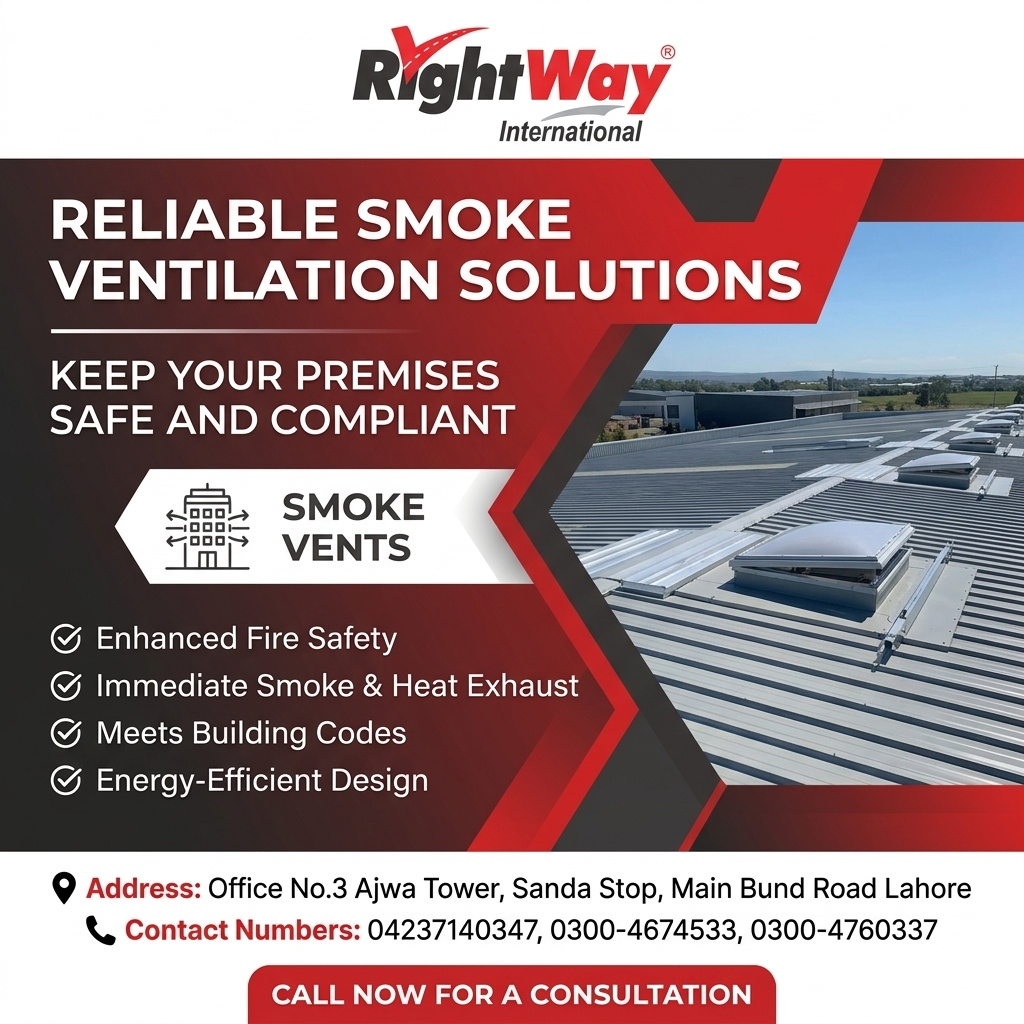
Smoke Vent Benefits Importance Advantages. Smoke Vent System is an essential fire protection and life safety solution designed to remove smoke, heat, and toxic gases from a building during a fire emergency. Unlike conventional ventilation systems, smoke vents are specifically engineered to operate during fire conditions, helping maintain tenable evacuation routes and improving firefighting operations.
Furthermore, smoke vent systems are widely installed in warehouses, manufacturing facilities, shopping centers, industrial buildings, aircraft hangars, distribution centers, atriums, and commercial properties. Their ability to control smoke movement and reduce heat buildup makes them a critical component of modern fire safety strategies. as Per National Fire Protection Association (NFPA)
According to internationally recognized fire safety standards, smoke vent systems should be properly designed, installed, inspected, tested, and maintained to ensure reliable performance during fire incidents.
Benefits of Smoke Vent Systems
1. Improved Life Safety
First, smoke vents help remove dangerous smoke and toxic gases from occupied spaces. Consequently, occupants have more time to evacuate safely during a fire emergency.
2. Enhanced Visibility During Evacuation
Moreover, smoke accumulation can quickly reduce visibility. As a result, smoke vent systems improve sightlines for building occupants and emergency responders.
3. Reduction of Heat Build-Up
Additionally, smoke vents release hot gases and heat generated by a fire. Therefore, temperatures within the building remain lower, reducing structural stress.
4. Improved Firefighter Access
Furthermore, smoke extraction creates safer working conditions for firefighters. Consequently, emergency personnel can locate and suppress fires more effectively.
5. Protection of Building Structure
In addition, excessive heat can weaken structural components. Therefore, smoke vent systems help reduce thermal damage and may extend structural stability during a fire.
6. Reduced Property Damage
Unlike uncontrolled fire conditions, effective smoke management minimizes smoke contamination and heat-related damage. As a result, repair and restoration costs may be significantly reduced.
7. Compliance with Fire Safety Regulations
Most importantly, smoke vent systems help buildings comply with applicable fire codes and safety regulations. Consequently, owners can meet legal and insurance requirements.
Types of Smoke Vent Systems
1. Natural Smoke Vents
Natural smoke vents operate through roof-mounted openings that automatically release smoke and hot gases using natural buoyancy. Consequently, they provide reliable smoke removal without mechanical assistance.
2. Mechanical Smoke Vent Systems
Mechanical smoke vent systems use powered fans and ductwork to extract smoke from a building. Therefore, they provide controlled smoke management for larger or more complex facilities.
3. Automatic Smoke Vents
Automatic smoke vents are activated by heat-sensitive devices, smoke detectors, or fire alarm systems. As a result, they begin smoke removal without manual intervention.
4. Manual Smoke Vents
Manual smoke vents require activation by building personnel or emergency responders. Consequently, they provide additional control when needed.
Uses of Smoke Vent Systems
Smoke vent systems are commonly used in buildings where smoke accumulation can create significant safety hazards.
For example, warehouses use smoke vents to improve visibility and reduce heat during fire emergencies.
Similarly, manufacturing plants rely on smoke ventilation systems to protect workers and equipment. Moreover, shopping malls and retail facilities use smoke vents to assist occupant evacuation.
In addition, aircraft hangars, logistics centers, industrial facilities, sports arenas, exhibition halls, and large commercial buildings frequently incorporate smoke vent systems. Meanwhile, atriums and high-ceiling structures use smoke management systems to control smoke migration.
Therefore, smoke vent systems play a vital role in modern fire protection and life safety programs.
Benefits Compared to Conventional Ventilation Systems
1. Fire-Specific Performance
First, smoke vents are specifically designed for emergency fire conditions. Consequently, they provide superior smoke control compared to ordinary ventilation systems.
2. Faster Smoke Removal
Moreover, smoke vent systems rapidly remove smoke and hot gases. As a result, evacuation conditions improve significantly.
3. Enhanced Emergency Response
Additionally, firefighters benefit from reduced smoke density and improved visibility. Therefore, emergency operations become more effective.
4. Better Occupant Protection
Furthermore, smoke vents help maintain survivable conditions during evacuation. Consequently, life safety is enhanced.
5. Reduced Structural Damage
Most importantly, smoke vent systems help limit heat accumulation that can damage building components. As a result, structural integrity is better preserved.
How a Smoke Vent System Works
First, smoke vents remain closed during normal building operation.
Next, a fire generates heat, smoke, and combustion gases that begin to rise toward the ceiling.
Then, heat-sensitive devices, smoke detectors, or fire alarm systems detect fire conditions.
Afterward, a signal activates the smoke vent system.
Consequently, smoke vents open automatically, allowing smoke and hot gases to escape from the building.
Meanwhile, cooler fresh air may enter through designated openings at lower levels.
As a result, smoke layers are reduced, visibility improves, and temperatures decrease.
Finally, occupants can evacuate more safely while firefighters gain improved access for suppression activities.
Components of a Smoke Vent System
A typical smoke vent system includes:
- Smoke Vents
- Roof Hatches
- Smoke Detectors
- Heat Detectors
- Fire Alarm Control Panel
- Vent Actuators
- Control Systems
- Manual Release Stations
- Mechanical Exhaust Fans (if required)
- Ductwork
- Power Supply
- Backup Power Systems
- Monitoring Devices
- Smoke Curtains (where applicable)
- Air Inlet Openings
Together, these components ensure effective smoke control and life safety protection.
Maintenance Requirements
Regular inspection, testing, and maintenance are essential for reliable operation.
Maintenance activities typically include:
- Inspecting vent openings
- Testing automatic activation devices
- Verifying fire alarm integration
- Inspecting actuators and controls
- Testing manual release mechanisms
- Checking electrical connections
- Inspecting roof-mounted components
- Verifying opening and closing functions
- Testing backup power systems
- Reviewing maintenance records
- Inspecting smoke control equipment
Routine maintenance helps ensure compliance with fire safety standards and dependable emergency performance.
Advantages of Smoke Vent Systems
Smoke vent systems offer several advantages:
- Improved occupant safety
- Faster smoke removal
- Enhanced firefighter visibility
- Reduced heat accumulation
- Lower property damage
- Better emergency response
- Improved structural protection
- Compliance with fire safety regulations
- Reliable automatic operation
- Suitable for industrial and commercial facilities
Applications of Smoke Vent Systems
Common applications include:
- Warehouses
- Distribution Centers
- Manufacturing Facilities
- Aircraft Hangars
- Shopping Malls
- Retail Buildings
- Industrial Plants
- Sports Arenas
- Exhibition Halls
- Logistics Centers
- High-Bay Storage Facilities
- Commercial Buildings
- Atriums
- Transportation Hubs
- Large Public Buildings
In conclusion, a Smoke Vent System is a critical fire protection and life safety solution that helps remove smoke, heat, and toxic gases during fire emergencies. Furthermore, its ability to improve visibility, reduce temperatures, support evacuation, and assist firefighting operations makes it an essential component of modern building safety.
Ultimately, installing a properly designed and maintained smoke vent system enhances occupant safety, minimizes property damage, supports regulatory compliance, and improves overall fire protection performance. Therefore, it remains a trusted solution for facilities seeking effective smoke management and enhanced life safety.