




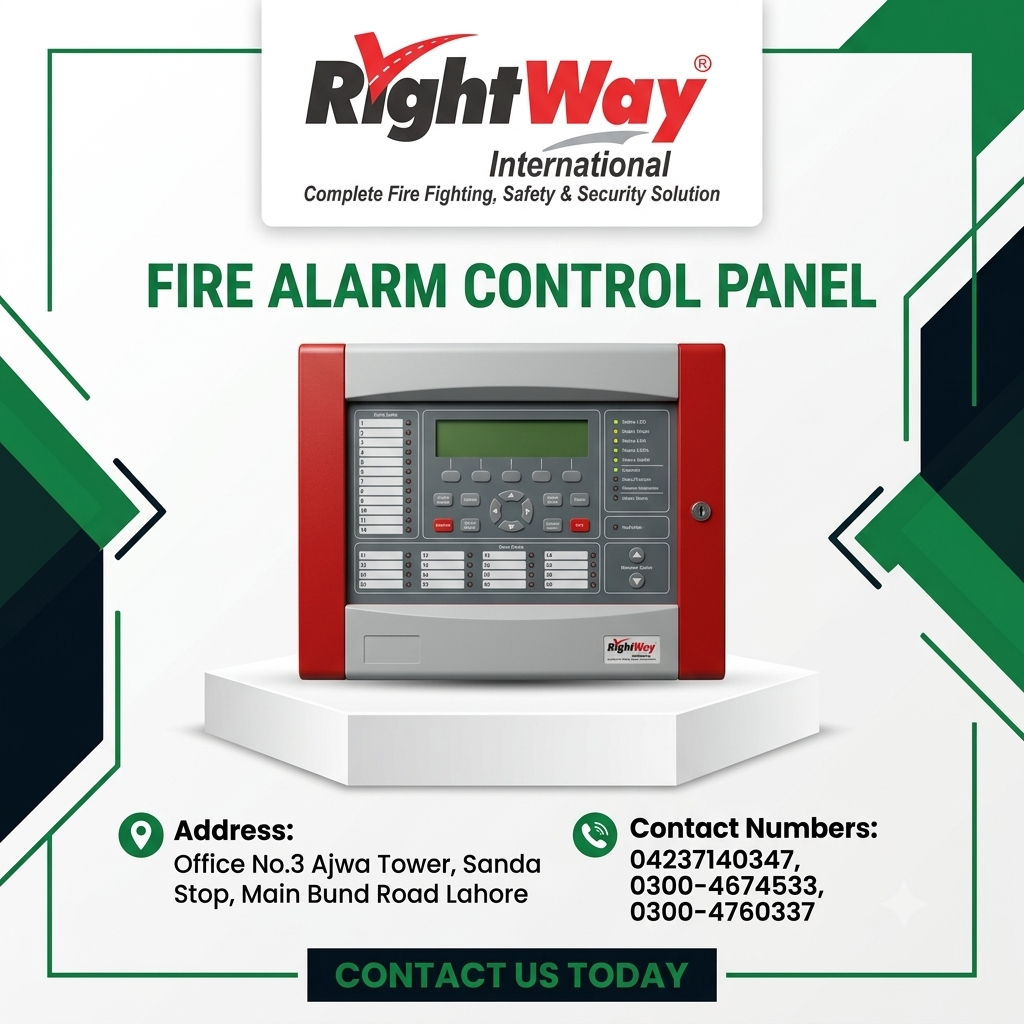
Fire Alarm Control Panel in Pakistan is the central monitoring and control unit of a fire alarm system, designed to receive signals from fire detection devices such as smoke detectors, heat detectors, flame detectors, manual call points, and other fire safety equipment. Upon detecting a fire or emergency condition, the Fire Alarm Control Panel processes the information and activates audible and visual alarm devices, emergency notifications, fire suppression systems, and building safety controls.
Fire Alarm Control Panels are widely used in commercial buildings, industrial facilities, factories, warehouses, manufacturing plants, hospitals, hotels, shopping malls, educational institutions, airports, railway stations, residential buildings, government offices, pharmaceutical industries, laboratories, power plants, oil and gas facilities, chemical processing plants, data centers, electrical substations, marine vessels, mining operations, logistics centers, and public buildings throughout Pakistan.
These systems improve life safety, enable rapid emergency response, reduce fire damage, minimize business interruptions, protect valuable assets, and support compliance with NFPA 72, NFPA 70, UL standards, FM Approved standards, EN 54 standards, ISO standards, IEC standards, OSHA safety guidelines, and local Pakistan fire safety regulations.
Modern Fire Alarm Control Panels are manufactured using advanced microprocessors, intelligent control circuits, digital communication modules, LCD or touchscreen displays, programmable software, battery backup systems, relay outputs, fault monitoring circuits, network communication interfaces, fire-resistant metal enclosures, LED status indicators, event logging memory, Ethernet connectivity, wireless communication modules, and addressable control technology, ensuring dependable, efficient, and long-lasting fire protection.
Designed for continuous monitoring and fast emergency response, Fire Alarm Control Panels provide reliable fire safety solutions for industrial, commercial, healthcare, hospitality, educational, residential, government, and infrastructure applications across Pakistan.
Benefits of Fire Alarm Control Panels
1. Centralized Fire Monitoring
Monitors and controls all connected fire detection devices from one central location.
2. Rapid Fire Detection
Receives signals instantly from smoke, heat, flame, and gas detection devices.
3. Early Fire Warning
Activates alarms immediately to facilitate quick evacuation and emergency response.
4. Intelligent System Management
Processes alarm, fault, and supervisory signals accurately using advanced microprocessors.
5. Enhanced Occupant Safety
Provides early warning to protect building occupants and emergency personnel.
6. Reduced Property Damage
Supports rapid fire response to minimize losses and operational downtime.
7. Continuous Monitoring
Operates 24/7 for dependable fire protection.
8. Easy Expansion
Allows additional detectors, zones, and devices to be integrated as facilities grow.
9. Event Logging
Records alarms, faults, and system events for maintenance and compliance purposes.
10. Regulatory Compliance
Supports compliance with NFPA, UL, EN 54, ISO, IEC, OSHA, and local fire safety regulations.
Types of Fire Alarm Control Panels
1. Conventional Fire Alarm Control Panel
Designed for zone-based fire detection systems in small and medium-sized buildings.
2. Addressable Fire Alarm Control Panel
Identifies the exact location of each connected detector or device.
3. Intelligent Fire Alarm Control Panel
Uses advanced software and diagnostics for improved system performance.
4. Network Fire Alarm Control Panel
Connects multiple fire alarm panels across large facilities or campuses.
5. Wireless Fire Alarm Control Panel
Communicates with wireless detectors and alarm devices without extensive wiring.
6. Hybrid Fire Alarm Control Panel
Supports both conventional and addressable devices in one system.
7. Multi-Loop Fire Alarm Control Panel
Manages several addressable loops for large commercial and industrial facilities.
8. Modular Fire Alarm Control Panel
Allows system expansion by adding additional modules and control cards.
9. Industrial Fire Alarm Control Panel
Designed for factories, power plants, refineries, and hazardous industrial environments.
10. Commercial Fire Alarm Control Panel
Ideal for offices, hotels, hospitals, shopping malls, schools, and retail buildings.
Common Fire Alarm Control Panel Components
Modern Fire Alarm Control Panels typically include:
- Central Processing Unit (CPU)
- LCD or Touchscreen Display
- LED Status Indicators
- Alarm Silence Button
- System Reset Button
- Evacuate Button
- Navigation Keypad
- Main Control Board
- Power Supply Unit
- Battery Backup System
- Charger Circuit
- Addressable Loop Cards
- Zone Modules
- Relay Output Modules
- Notification Appliance Circuits
- Fault Monitoring Circuit
- Communication Interface
- Ethernet Port
- USB Programming Port
- RS-485 Communication Module
- Event Memory Log
- Printer Interface
- Fire-Resistant Steel Enclosure
- Lockable Cabinet
- Identification Labels
These components ensure dependable monitoring, rapid alarm activation, and long-term operational reliability.
Common Uses of Fire Alarm Control Panels in Pakistan
Fire Alarm Control Panels are installed wherever comprehensive fire detection and alarm management are required.
Commercial Buildings
Office towers, shopping malls, banks, conference centers, and retail stores.
Industrial Facilities
Factories, manufacturing plants, workshops, processing facilities, and production lines.
Warehouses
Storage facilities containing combustible materials, packaging products, chemicals, and industrial goods.
Healthcare Facilities
Hospitals, clinics, laboratories, pharmaceutical plants, and healthcare centers.
Educational Institutions
Schools, colleges, universities, libraries, and research facilities.
Hospitality Industry
Hotels, resorts, restaurants, banquet halls, and guest houses.
Government Buildings
Administrative offices, municipal buildings, military installations, and public institutions.
Transportation Facilities
Airports, railway stations, metro stations, seaports, and logistics centers.
Oil and Gas Industry
Refineries, LNG terminals, fuel depots, petrochemical plants, and offshore facilities.
Residential Buildings
Homes, apartments, villas, and residential complexes.
Benefits Compared to Standalone Fire Alarms
- Centralized fire monitoring
- Supports multiple detection devices
- Exact alarm location (addressable systems)
- Continuous system supervision
- Battery backup operation
- Event history recording
- Remote monitoring capability
- Easy maintenance and diagnostics
- Expandable system architecture
- Compatible with suppression systems
- High operational reliability
- Improved emergency coordination
How a Fire Alarm Control Panel Works
A Fire Alarm Control Panel continuously monitors all connected fire detection devices, including smoke detectors, heat detectors, flame detectors, manual call points, and supervisory devices.
Under normal conditions, the panel supervises each circuit for alarm, fault, or tamper conditions. When a detector identifies smoke, heat, or flames, or when a manual call point is activated, the signal is immediately transmitted to the control panel.
The panel analyzes the incoming information and activates audible alarms, visual notification devices, emergency communication systems, fire suppression equipment, elevator recall systems, HVAC shutdown controls, and remote monitoring stations where applicable. This rapid response enables early evacuation, efficient firefighting, and reduced fire damage.
Maintenance Requirements
Routine maintenance ensures dependable operation and compliance with fire safety regulations.
Maintenance activities include:
- Visual Inspection
- Functional Testing
- Detector Circuit Testing
- Alarm Verification
- Battery Inspection
- Battery Replacement
- Charger Testing
- Display Inspection
- LED Indicator Testing
- Relay Testing
- Communication Testing
- Wiring Inspection
- Software Updates
- Event Log Review
- Zone Testing
- Calibration Verification
- Annual Servicing
- Maintenance Record Updating
- Panel Cleaning
- Replacement at End of Service Life
Regular servicing ensures reliable fire detection and emergency response.
Advantages of Fire Alarm Control Panels
Fire Alarm Control Panels provide numerous operational benefits:
- Centralized fire monitoring
- Rapid emergency response
- Intelligent diagnostics
- High reliability
- Continuous supervision
- Expandable architecture
- Battery backup protection
- Easy maintenance
- Low operational costs
- Fast alarm activation
- Detailed event logging
- Remote communication capability
- Long operational lifespan
- Supports intelligent fire alarm systems
- Compliance with international fire safety standards
Applications of Fire Alarm Control Panels
Common applications include:
- Offices
- Shopping Malls
- Warehouses
- Manufacturing Plants
- Factories
- Hotels
- Hospitals
- Schools
- Universities
- Laboratories
- Pharmaceutical Facilities
- Airports
- Railway Stations
- Data Centers
- Electrical Rooms
- Government Buildings
- Power Plants
- Oil and Gas Facilities
- Chemical Plants
- Mining Operations
- Residential Buildings
- Commercial Complexes
- Logistics Centers
- Public Buildings
Flame Detector
A Flame Detector connects directly to the Fire Alarm Control Panel (FACP) to continuously monitor for the presence of flames using UV, IR, or multi-spectrum sensing technology. When a flame is detected, it immediately sends a signal to the control panel, which activates alarms, emergency notifications, and other fire safety systems for a rapid response.
Fire Alarm Control Panels in Pakistan
A Fire Alarm Control Panel in Pakistan is an essential fire safety solution for facilities requiring dependable fire detection, centralized monitoring, and rapid emergency response. Its advanced control technology enables early fire warning, improved life safety, reduced property damage, enhanced business continuity, and compliance with modern fire safety standards.
With intelligent electronics, precision monitoring circuits, rugged fire-resistant enclosures, programmable control software, dependable battery backup systems, advanced communication capabilities, and compliance with international standards, Fire Alarm Control Panels are widely used in offices, factories, warehouses, hospitals, hotels, educational institutions, power plants, laboratories, commercial buildings, government facilities, industrial plants, and residential developments throughout Pakistan.
Professional installation, routine inspections, system testing, battery maintenance, firmware updates, annual servicing, and preventive maintenance ensure reliable operation and long-term compliance with modern fire safety regulations.
Why Choose a High-Quality Fire Alarm Control Panel?
High-quality Fire Alarm Control Panels provide dependable fire monitoring, intelligent control technology, advanced communication capabilities, rugged construction, reliable alarm management, flexible system expansion, and long-term operational performance.
Routine inspections, battery replacement, detector testing, software updates, preventive maintenance, and annual servicing maximize system reliability and extend equipment lifespan.
A Fire Alarm Control Panel in Pakistan is a smart investment for commercial buildings, industrial facilities, warehouses, hospitals, hotels, educational institutions, government offices, manufacturing plants, power plants, laboratories, residential properties, shopping malls, airports, and public buildings seeking reliable fire detection, enhanced life safety, reduced fire losses, improved business continuity, and compliance with international fire safety standards.