




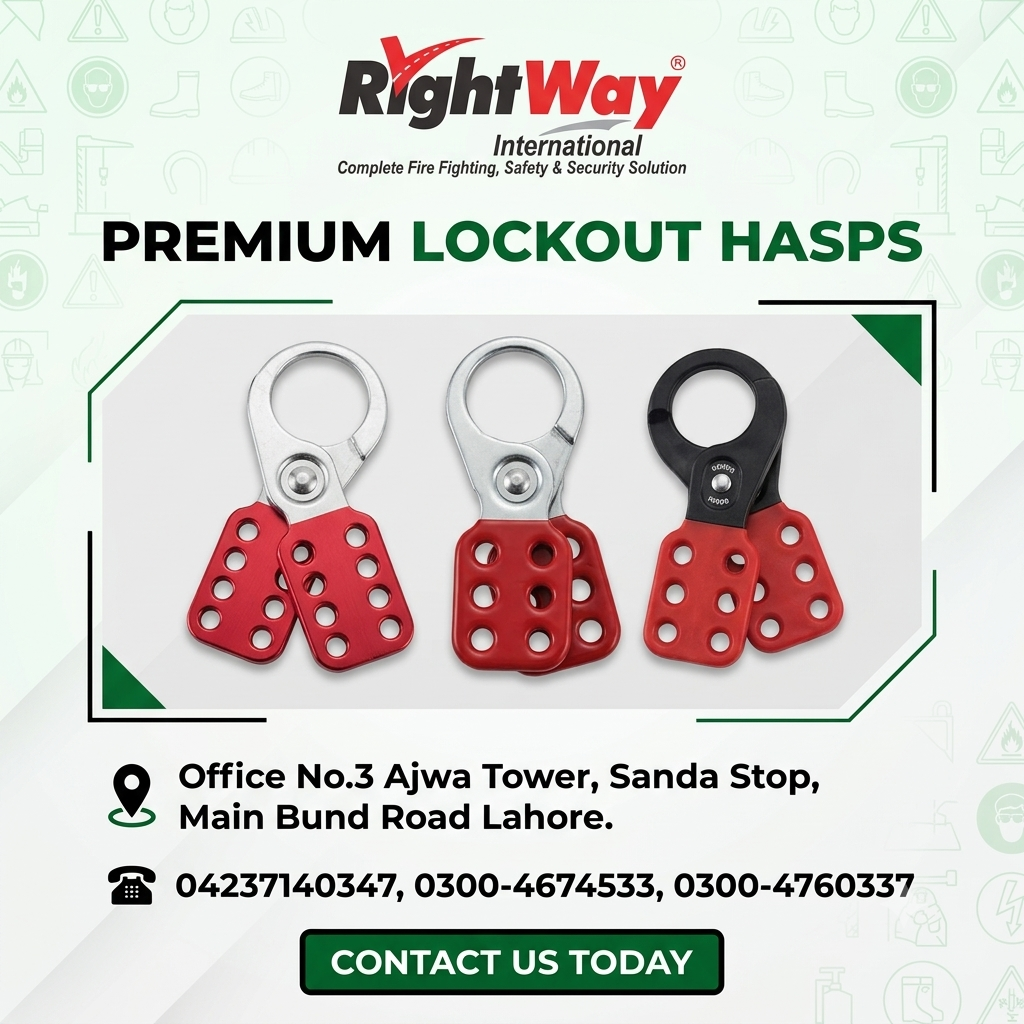
Safety Lockout Hasps in Pakistan is a vital multi-person energy-isolation device for any facility safety management program. Specifically, safety engineers design it to allow multiple technicians to apply their individual safety padlocks to a single energy isolation point, such as a circuit breaker, electrical switch, or gas valve. By enabling group lockout, these scissor-action steel and dielectric hasps protect teams from unexpected machine startups and dangerous electrical shocks during collaborative maintenance operations.
Consequently, facility teams extensively install these lockout hasps across industrial plants, commercial towers, and power stations throughout Pakistan.
Importantly, these safety devices enhance workplace security and prevent severe industrial injuries during complex servicing tasks. Moreover, they support compliance with OSHA 1910.147 LOTO standards, National Fire Protection Association (NFPA) 70E electrical guidelines, ISO 45001 safety frameworks, and local Pakistan Civil Defence regulations.
Manufacturers build modern lockout hasps using heavy-duty steel bodies, rust-resistant chrome plating, and high-visibility vinyl or nylon coatings. Additionally, they feature tamper-resistant interlocking tabs, spring-loaded jaws, and ergonomic grips to deliver dependable performance in demanding industrial environments.
Benefits of Lockout Hasps
- Multi-Worker Group Isolation: Allows up to six or more technicians to secure a single energy point simultaneously, ensuring everyone retains independent control until their work finishes.
- High Mechanical Strength & Durability: Heavy-duty steel and forged alloy construction withstands high pulling forces, industrial tampering, and physical wear on busy plant floors.
- OSHA LOTO Compliance: Fully satisfies OSHA 1910.147 Lockout/Tagout requirements for group isolation procedures on active machinery.
- Corrosion & Rust Resistance: Red plastic vinyl coatings or zinc plating protect the hasp body from moisture, chemical splashes, and outdoor weather conditions across Pakistan.
- High-Visibility Safety Color Coding: Bright red and safety-yellow vinyl coatings stand out instantly, allowing workers to quickly spot active isolation points.
- Tamper-Resistant Interlocking Design: Overlapping hinge tabs prevent unauthorized tampering, forced entry, or slipping out of position while padlocked.
- Ergonomic & Lightweight Handling: Smooth handle designs and spring-loaded closing mechanisms allow technicians to quickly open and close the hasp with gloved hands.
- Non-Conductive Options Available: Dielectric nylon hasps completely eliminate electrical conductivity risks when working near high-voltage switchgear.
- Customizable Warning Labels: Includes write-on or printed “DANGER – DO NOT OPERATE” tags for clear communication of safety hazards.
- Global & Local Regulatory Compliance: Fully supports international OSHA, NFPA 70E, and ISO standards while meeting all local Pakistan industrial safety codes.
Types of Lockout Hasps
- Standard Steel Safety Hasp: Features a heavy-duty stamped steel jaw with a bright red vinyl-coated handle for general industrial applications.
- Non-Conductive Dielectric Hasp: Built entirely from heavy-duty nylon plastic with zero metallic parts, offering maximum insulation near electrical panels.
- Scissor-Jaw Lockout Hasp: Uses a classic scissor-like cross-hole design that accommodates multiple padlocks in a compact footprint.
- Snap-On / Spring-Loaded Hasp: Incorporates a spring-loaded latch that snaps securely into place, offering fast and easy one-handed operation.
- Dual-Jaw / Multi-Point Hasp: Features expanded jaw openings or multiple locking holes to secure oversized gate valves, large switches, and heavy circuit breakers.
- Cable Lockout Hasp: Combines a flexible steel cable with a built-in locking mechanism to secure odd-shaped valves and multi-breaker panels.
- Compact / Miniature Hasp: Offers a narrow jaw profile designed specifically for tight spaces and miniature circuit breaker (MCB) toggles.
- Heavy-Duty Cast Alloy Hasp: Constructed from hardened steel or aluminum alloy for extreme mechanical resistance in heavy manufacturing plants.
- Group Lockout Box Hasp Integration: Works seamlessly with portable group lockout boxes to manage complex multi-tier plant turnarounds.
- Tagout Warning Hasp: Integrated with heavy-duty plastic or paper tag slots for direct safety messaging and employee identification.
Common Lockout Hasp Components
Engineers construct modern safety lockout hasps using high-precision internal and external parts:
- Heavy-Duty Steel Body: Stamped carbon steel or forged alloy base providing robust physical strength.
- Interlocking Jaw Tabs: Precision-aligned mating holes that prevent separation while padlocked.
- Vinyl or Nylon Coating: Protective colored polymer layer offering insulation, comfort, and chemical resistance.
- Hinge Pivot Pin: High-tensile steel rivet ensuring smooth pivoting motion without structural slack.
- Spring-Loaded Latching Mechanism: Internal tension spring that holds the jaw firmly shut (in select models).
- Padlock Hole Array: Multiple bored loops (typically 6 holes) designed to fit standard safety padlock shackle diameters.
- Warning Legend Area: Embossed or printed safety text warning workers against unauthorized removal.
Common Uses in Pakistan
Technicians strategically apply lockout hasps to hazardous energy points and multi-worker isolation areas in:
- Industrial Facilities: Textile mills, steel plants, cement factories, and automotive assembly lines.
- Electrical Infrastructure: High-voltage switchgear rooms, distribution boards, and transformer substations.
- Oil, Gas & Chemical Plants: Refineries, chemical storage depots, and pipeline valve manifolds.
- Pharmaceutical & Cleanrooms: Pharmaceutical formulation units, biotech labs, and air handling units (AHU).
- Power Generation Facilities: Thermal power stations, hydroelectric dams, and solar park inverter stations.
- Commercial & High-Rise Buildings: Elevator machine rooms, central chillers, and generator control rooms.
- Food & Beverage Processing: Dairy plants, beverage bottling lines, and cold storage units.
- Logistics & Warehouses: Conveyor system control boxes and automated sorting lines.
Benefits Compared to Standard Hasps
| Feature | Industrial Safety Lockout Hasp | Standard Hardware Store Hasp |
| Multi-Worker Isolation | Engineered with 6+ lock holes for group safety accountability | Usually designed for a single padlock or standard door security |
| Material & Coating | High-visibility red vinyl or non-conductive dielectric nylon | Plain bare metal, prone to rust and lacking safety visibility |
| Tamper Resistance | Overlocking tabs prevent forced spreading or slipping | Easily pried open with basic hand tools |
| Compliance | Purpose-built for OSHA 1910.147 group LOTO compliance | Non-compliant for official industrial energy isolation |
| Electrical Safety | Insulated coatings or non-conductive nylon options available | Fully conductive bare metal that creates severe arc flash risks |
Safety Padlock Set
A safety padlock acts as a physical isolation barrier attached to an energy-isolating device.
First, an authorized technician switches off the main power or gas line. Next, they attach a lockout hardshell device to the energy source. Then, they snap the plastic safety padlock shackle through the locking hole.
Once closed, the key-retaining cylinder holds the key until the shackle locks securely. Finally, the technician keeps the key on their person. Consequently, no other worker can energize the equipment until maintenance concludes and everyone clears the work zone.
How a Lockout Hasp Works
A lockout hasp acts as a multi-person physical bridging tool attached to an energy-isolating device.
First, an authorized lead technician switches off the main power, valve, or pressure line. Next, they place the hasp jaw through the energy-isolating mechanism (such as a breaker handle hole or valve lockout body) and snap it shut so the interlocking tabs align.
Then, each working technician places their individual safety padlock through one of the hasp’s locking holes and locks it closed.
Because of this setup, the energy source cannot be re-energized until every single technician removes their personal padlock from the hasp. This guarantees total safety and collaborative accountability across the entire maintenance crew.
Maintenance & Servicing Requirements
To remain operational and compliant with safety standards, lockout hasps require routine care:
- Monthly Visual Inspections: Inspect steel bodies regularly for bent jaws, cracked vinyl coatings, deep rust, or alignment failures.
- Hinge Movement Checks: Test the pivoting hinge regularly to ensure smooth opening and closing without binding.
- Lock Hole Integrity Audits: Verify that padlock holes are not warped or distorted from excessive mechanical leverage.
- Coating Restoration: Patch or replace hasps with torn vinyl coatings to maintain electrical insulation and corrosion protection.
- Clean Storage Maintenance: Store unused lockout hasps in designated wall-mounted shadow boards or portable LOTO kits.
High-quality safety lockout hasps form an essential foundation of group industrial health, fire safety, and electrical hazard prevention. When facility teams assign them to authorized personnel and follow strict Lockout/Tagout procedures, these hasps safeguard human life, eliminate machinery accidents, and ensure total compliance with safety codes throughout Pakistan.