




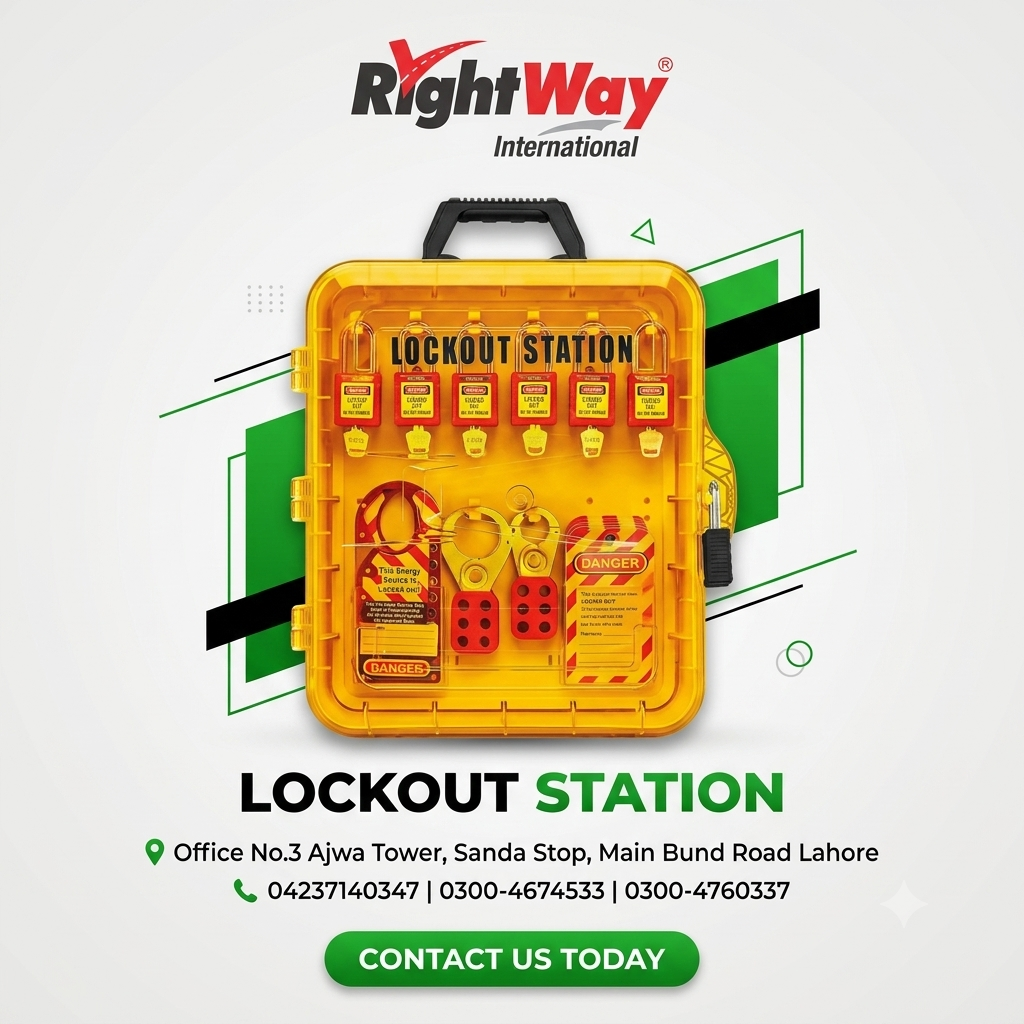
Lockout Stations in Pakistan are an essential visual management and organized storage component of any facility safety management and hazard control program. Specifically, safety engineers design them to store, organize, and display critical LOTO devices such as safety padlocks, lockout hasps, circuit breaker lockouts, and warning tags in a centralized, easily accessible location.
By securely mounting heavy-duty shadow boards, cabinets, or portable carrying stations directly onto workshop walls or maintenance columns, these stations prevent equipment misplacement and ensure rapid response during emergency shutdowns. Consequently, facility teams extensively implement lockout stations across manufacturing plants, oil and gas refineries, power generation stations, and industrial complexes throughout Pakistan.
Importantly, these safety boards reinforce workplace safety and prevent severe multi-source energy accidents by making lockout gear instantly retrievable during equipment servicing. Moreover, they support compliance with
Occupational Safety and Health Administration (OSHA) 1910.147 LOTO standards, National Electrical Code (NEC) guidelines, ISO 45001 safety frameworks, and local Pakistan industrial safety regulations.
Manufacturers build modern lockout stations using industrial-grade acrylic, heavy-gauge powder-coated steel, high-impact polycarbonate, or durable lightweight PVC foam boards featuring high-visibility hazard colors. Additionally, they incorporate custom tool hooks, shadow outlines, clear locking doors, and pre-drilled mounting brackets to deliver dependable performance in demanding industrial environments.
Benefits of Lockout Stations
- Centralized Hazard Control: Prominently houses all essential LOTO devices in one designated location to eliminate searching during critical machinery shutdowns.
- Visual Inventory Auditing: Utilizes shadow outlines and structured slots that make missing padlocks or lockout devices immediately noticeable.
- OSHA LOTO Compliance: Fully satisfies OSHA 1910.147 requirements for orderly administrative hazard communication and equipment organization.
- Weather & Environment Resistant: Built using moisture-resistant, rust-proof aluminum, powder-coated steel, or laminated plastics that withstand grease, oil, and harsh outdoor plant conditions.
- High-Visibility Safety Color Coding: Utilizes striking safety yellow, red, and high-contrast visual panels compliant with ANSI Z535 standards to command immediate attention.
- Secure Storage Capacity: Incorporates lockable glass doors or key-controlled cabinets to prevent unauthorized borrowing or theft of expensive safety gear.
- Customizable Layout Options: Accommodates a wide variety of padlocks, hasps, cable lockouts, valve lockouts, and danger tags tailored to facility needs.
- Durable & Long-Lasting: Engineered with high tensile strength to withstand accidental impacts, heavy daily use, and demanding factory floor environments.
- Global & Local Regulatory Compliance: Fully supports international OSHA, NEC, and ISO standards while meeting all local Pakistan industrial safety codes.
Types of Lockout Stations
- Wall-Mounted Shadow Board Station: High-visibility yellow or red board featuring exact printed silhouettes of padlocks, hasps, and tags for instant visual tracking.
- Lockable Cabinet Lockout Station: Heavy-gauge steel cabinet with transparent viewing windows and secure key locks to protect safety gear from dust and unauthorized access.
- Portable LOTO Station Box: Mobile, compartmentalized carrying case designed for field technicians and mobile maintenance crews across large industrial sites.
- Compact Personal Station: Smaller wall-mounted panel tailored for tight spaces, small workshops, or single production line maintenance zones.
- Modular Expandable Station: Flexible system that allows safety managers to snap on extra storage bins and hook rails as facility safety needs grow.
- Heavy-Duty Outdoor Station: Weather-sealed, corrosion-proof enclosure engineered to withstand moisture, extreme heat, and heavy dust in chemical plants or refineries.
Common Lockout Station Components
Engineers construct modern lockout stations using precision-engineered physical parts:
- High-Impact Backing Panel: Durable PVC, powder-coated steel, or acrylic sheet engineered for high structural durability and resistance to warping.
- Shadow Outlines & Labels: Silkscreened or vinyl-printed silhouettes that designate the exact hanging spot for every specific LOTO tool.
- Steel Hanging Hooks: Precision-welded or screwed prongs designed to securely hold safety padlocks, hasps, and cable ties without bending.
- Transparent Lockable Doors: Shatter-proof polycarbonate front panels that protect tools from debris while allowing clear visual inspection.
- Pre-Drilled Mounting Brackets: Factory-punched holes and mounting hardware slots enabling fast, secure installation on concrete or metal walls.
- Document Pocket / Manual Holder: Integrated acrylic sleeve for storing LOTO procedures, safety checklists, or authorized personnel rosters.
Common Uses in Pakistan
Technicians strategically install lockout stations in high-traffic maintenance zones across:
- Oil, Gas & Petrochemical Refineries: Central control rooms, compressor stations, and pipeline maintenance hubs.
- Manufacturing & Heavy Industry: Assembly line corridors, mechanical workshops, and automated production floors.
- Power Generation & Utilities: Electrical switchgear rooms, transformer yards, and turbine control centers.
- Chemical Processing Plants: Valve alley walls, mixing room entrances, and emergency response stations.
- Construction & Infrastructure: Site offices, temporary electrical distribution hubs, and heavy machinery maintenance yards.
- Textile & Composite Mills: Loom shop floors, central utility rooms, and electrical distribution panels.
Benefits Compared to Standard Improvised Methods
| Feature | Engineered Lockout Station | Improvised Toolboxes / Open Shelves |
| Material Durability | Heavy-gauge steel, rust-proof aluminum, or impact-resistant PVC | Flimsy plastic bins or cardboard boxes that degrade quickly |
| Legal Compliance | Fully compliant with OSHA 1910.147 organized storage rules | Non-compliant, inviting audit penalties for disorganized hazard gear |
| Inventory Control | Shadow boards instantly reveal missing locks or broken hasps | Tools get easily lost, misplaced, or stolen with no tracking trail |
| Accessibility | Centralized, highly visible wall location for instant emergency retrieval | Buried inside toolboxes or scattered across desks, causing costly delays |
| Visual Warning | ANSI-compliant high-visibility design commands immediate safety awareness | Lacks formal visual structure, blending into the background clutter |
Group Lock Boxes
A group lock box functions as an indispensable administrative and physical safety barrier that coordinates multi-person machinery maintenance safely.
First, the authorized lead technician or shift supervisor shuts down all relevant energy sources across the target machine, ensures zero energy input, and applies primary lockout devices (such as valve lockouts and circuit breaker lockouts) to each isolation point.
Next, the supervisor places all the primary isolation keys inside the group lock box and closes the lid. Each member of the maintenance crew then attaches their own personal safety padlock and corresponding lockout tag directly through the perimeter locking slots of the box.
How a Lockout Station Works
A lockout station functions as an indispensable visual control center that streamlines safety gear management during equipment servicing.
First, safety managers strategically mount the station in a highly visible, easily accessible location near major electrical or mechanical hazard zones.
Next, technicians arrive at the station to retrieve their required safety equipment—such as padlocks, lockout hasps, cable ties, and danger tags—before initiating any machinery shutdown. The station’s shadow outlines or labeled slots clearly indicate where each specific item belongs.
Finally, after completing maintenance and removing their locks from the machinery, workers return all gear back to its exact designated silhouette on the board. This ensures the station remains fully stocked, organized, and ready for the next shift or emergency shutdown.
Maintenance & Servicing Requirements
To remain operational and compliant with safety guidelines, lockout stations require basic tracking and handling care:
- Pre-Use Visual Audits: Inspect the board or cabinet weekly to verify that all safety tools are present, undamaged, and correctly returned to their designated shadows.
- Cleaning & Dust Removal: Wipe down acrylic panels and steel surfaces regularly using non-abrasive cleaners to maintain high-visibility color contrast and readability.
- Hardware Tightening: Check mounting screws and hanging hooks periodically to ensure the entire station remains securely anchored to plant walls.
- Inventory Restocking: Restock depleted danger tags, disposable cable ties, and worn padlocks immediately to prevent equipment shortages during emergency shutdowns.