




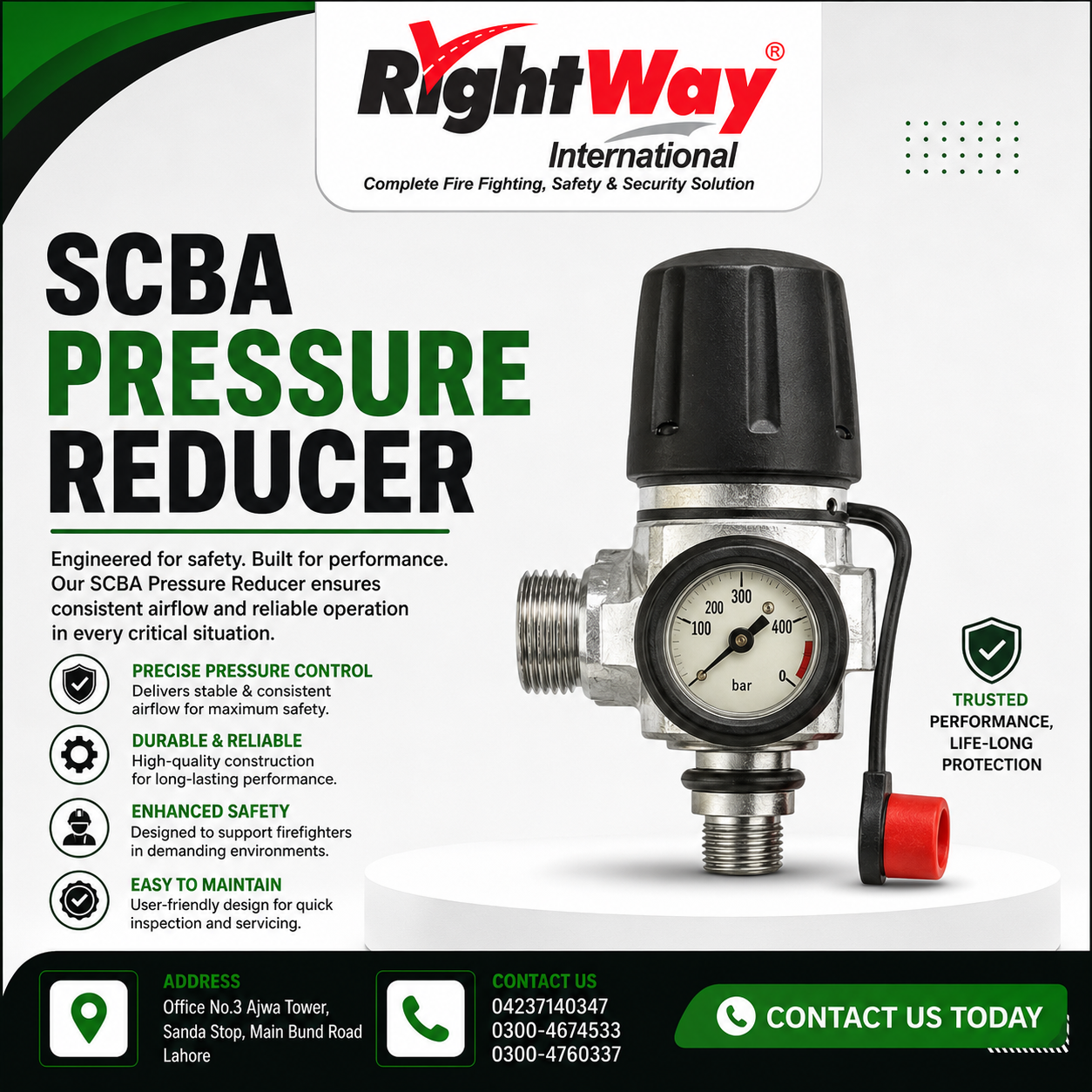
SCBA Pressure Reducer in Pakistan is a critical component of a Self-Contained Breathing Apparatus (SCBA) system. It reduces the extremely high pressure stored inside an SCBA cylinder to a controlled intermediate pressure that can be safely supplied to the SCBA breathing system.
Firefighters, rescue teams, industrial emergency-response personnel, and other users of respiratory-protection equipment rely on properly functioning pressure-reduction systems during operations in smoke-filled, toxic, oxygen-deficient, or otherwise hazardous environments.
Furthermore, the pressure reducer works as part of the SCBA’s overall air-delivery system. It helps maintain controlled pressure as compressed breathing air travels from the cylinder toward the second-stage regulator and facepiece. Therefore, selecting a compatible and properly maintained SCBA Pressure Reducer is essential for reliable SCBA performance.
What Is an SCBA Pressure Reducer?
An SCBA Pressure Reducer is a mechanical pressure-regulating component installed between the high-pressure SCBA cylinder and the downstream breathing-air system.
SCBA cylinders store compressed breathing air at very high pressures. The pressure reducer reduces this cylinder pressure to a lower, controlled intermediate pressure suitable for the rest of the breathing apparatus.
Depending on the SCBA design, the pressure reducer may include:
- High-pressure inlet
- Intermediate-pressure outlet
- Pressure-reducing mechanism
- Internal valve assembly
- Springs
- Seals and O-rings
- Pressure gauges or gauge connections
- Safety relief mechanism
- High-pressure hose connection
- Low-pressure hose connection
- Manufacturer-specific fittings
However, the exact construction varies between SCBA manufacturers and models. Therefore, users should always confirm compatibility before replacing or servicing a pressure reducer.
How Does an SCBA Pressure Reducer Work?
An SCBA Pressure Reducer works by controlling the high-pressure air coming from the cylinder and reducing it to a lower, regulated pressure.
A simplified operating sequence is:
1. High-Pressure Air Enters
First, compressed breathing air flows from the SCBA cylinder into the pressure reducer through the high-pressure inlet.
2. Pressure Reduction Takes Place
The internal pressure-reduction mechanism controls the incoming air and reduces its pressure.
3. Intermediate Pressure Is Maintained
The reducer regulates the downstream pressure within the manufacturer’s specified range.
4. Air Moves Toward the Regulator
The reduced-pressure air travels through the appropriate hose toward the downstream regulator or breathing-air system.
5. Breathing Air Reaches the Facepiece
The second-stage regulator further controls the air delivered to the firefighter according to breathing demand.
As a result, the pressure reducer plays an important role in transforming high-pressure cylinder air into a controlled supply suitable for the SCBA’s breathing-air system.
Why Is an SCBA Pressure Reducer Important?
The pressure reducer is one of the key components responsible for controlled air delivery within an SCBA.
Important benefits include:
- Reduces high cylinder pressure
- Provides controlled intermediate pressure
- Supports consistent air delivery
- Helps protect downstream components
- Supports reliable regulator operation
- Helps maintain SCBA performance
- Supports firefighter respiratory protection
- Allows efficient use of compressed breathing air
- Contributes to overall SCBA safety
- Supports emergency-response operations
Moreover, a pressure reducer must be maintained according to the manufacturer’s service requirements because internal components can wear over time.
Components of an SCBA Pressure Reducer
A professional SCBA Pressure Reducing Valve can contain several precision components.
Common components may include:
1. High-Pressure Inlet
The high-pressure inlet connects the reducer to the SCBA cylinder valve.
It must be compatible with the specified cylinder and valve assembly.
2. Pressure-Reducing Mechanism
The internal mechanism reduces the cylinder’s high pressure to the required intermediate pressure.
3. Spring Assembly
Springs can provide the mechanical force required for pressure regulation.
4. Valve Assembly
The internal valve controls the flow of compressed air through the pressure-reduction stage.
5. O-Rings and Seals
Sealing components help prevent leakage and maintain the required pressure within the system.
6. Intermediate-Pressure Outlet
The outlet supplies regulated air to the downstream SCBA components.
7. Safety Relief Device
Some designs incorporate a relief mechanism to protect the system from excessive downstream pressure.
8. Gauge Connection
Depending on the SCBA design, the pressure reducer may connect to a high-pressure gauge or pressure-monitoring system.
SCBA Pressure Reducer for Firefighters
Firefighters operate SCBA equipment in extremely demanding environments. During firefighting, the breathing apparatus must provide dependable breathing air while the user moves, climbs, crawls, and performs rescue activities.
An SCBA Pressure Reducer for Firefighters helps regulate compressed air from the cylinder and supply the required intermediate pressure to the breathing-air system.
SCBA pressure reducers can therefore support:
- Structural firefighting
- Fire rescue
- Search and rescue
- Emergency response
- Firefighter training
- Industrial firefighting
- Hazardous-material response
- Confined-space rescue
Furthermore, the reducer should be inspected and serviced according to the SCBA manufacturer’s procedures.
SCBA Pressure Reducer for Industrial Applications
Industrial workers and emergency-response teams may use SCBA equipment in environments where atmospheric hazards make normal breathing unsafe.
Applications can include:
- Chemical plants
- Oil and gas facilities
- Refineries
- Petrochemical plants
- Power plants
- Manufacturing facilities
- Steel mills
- Mining operations
- Industrial warehouses
- Confined-space operations
- Hazardous-material response
- Emergency-response teams
A suitable Industrial SCBA Pressure Reducer can support reliable air delivery when correctly installed and maintained.
SCBA Pressure Reducer and First-Stage Regulation
The pressure reducer is commonly associated with the first-stage pressure-reduction function of an SCBA.
The first stage reduces the high pressure stored in the cylinder to an intermediate pressure. The second-stage regulator then provides breathing air to the user based on breathing demand.
This arrangement allows the SCBA to manage high cylinder pressure through multiple stages rather than delivering cylinder pressure directly to the facepiece.
The complete air-delivery system may include:
- SCBA cylinder
- Cylinder valve
- High-pressure connection
- Pressure reducer
- Intermediate-pressure hose
- Second-stage regulator
- Facepiece
- Low-pressure warning system
- Pressure gauge
- Electronic monitoring system
SCBA Pressure Reducer Working Principle
The SCBA Pressure Reducer Working Principle is based on controlled pressure regulation.
The reducer receives high-pressure air from the cylinder and uses an internal valve and spring mechanism to regulate the pressure on the outlet side.
When downstream pressure changes, the internal regulating mechanism responds to that change and adjusts the valve position.
This allows the reducer to maintain the required intermediate pressure within the manufacturer’s specified operating range.
The exact internal mechanism varies according to the manufacturer and model.
SCBA Pressure Reducer Types
Different SCBA manufacturers use different pressure-reduction designs.
Depending on the system, pressure reducers may differ in:
- Operating pressure
- Outlet pressure
- Connection type
- Flow capacity
- Construction materials
- Internal valve design
- Relief protection
- Gauge configuration
- Hose connections
- Maintenance requirements
Therefore, pressure reducers should not be selected only according to appearance or physical dimensions.
The correct replacement should match the SCBA manufacturer’s specified part number, model, pressure rating, connection type, and technical requirements.
SCBA Pressure Reducing Valve
An SCBA Pressure Reducing Valve performs the essential function of reducing high-pressure compressed breathing air to a controlled pressure.
The valve must operate reliably because abnormal pressure regulation can affect downstream components and overall SCBA performance.
A pressure-reducing valve may contain precision-machined components, springs, seals, valve seats, and other internal parts.
Because of this, unauthorized modification or repair can create safety risks.
Specialized servicing should be performed according to the manufacturer’s approved procedures.
SCBA Pressure Reducer Materials
Pressure reducers are generally manufactured using durable engineering materials selected for high-pressure breathing-air applications.
Depending on the manufacturer and design, components may include:
- Stainless steel
- Brass
- Aluminum alloys
- Engineering polymers
- Rubber sealing materials
- High-strength springs
- Precision-machined metal components
The exact material selection depends on the manufacturer’s engineering specifications.
SCBA Pressure Reducer Maintenance
Regular SCBA Pressure Reducer Maintenance is important for reliable operation.
Maintenance may include:
- Visual inspection
- Checking for external damage
- Checking connections
- Inspecting hoses
- Checking for leakage
- Checking pressure performance
- Inspecting seals
- Checking gauge connections
- Functional testing
- Manufacturer-approved servicing
- Replacement of worn components
Users should never disassemble a pressure reducer unless the manufacturer specifically permits the procedure and the person performing the work is appropriately trained.
SCBA Pressure Reducer Inspection
An SCBA Pressure Reducer Inspection should form part of the organization’s overall SCBA inspection program.
Before use, trained personnel should look for:
- Visible damage
- Corrosion
- Loose connections
- Leakage
- Damaged hoses
- Abnormal pressure indications
- Damaged fittings
- Contaminated components
- Missing protective parts
If a component does not perform as expected, the SCBA should be removed from service and evaluated according to the manufacturer’s procedures.
SCBA Pressure Reducer Testing
Pressure-reducer testing should be carried out using appropriate equipment and procedures specified by the SCBA manufacturer.
Testing may evaluate:
- Inlet pressure
- Outlet pressure
- Intermediate pressure
- Flow performance
- Leakage
- Relief function
- Regulator response
- Overall pressure stability
Testing requirements vary between manufacturers and SCBA models.
Therefore, organizations should follow the applicable manufacturer’s service manual and established inspection procedures.
Common Problems With SCBA Pressure Reducers
Like other mechanical components, pressure reducers may experience problems due to wear, contamination, damage, improper maintenance, or incorrect servicing.
Potential issues can include:
- Air leakage
- Incorrect intermediate pressure
- Pressure fluctuations
- Damaged seals
- Worn internal components
- Contaminated valve components
- Damaged fittings
- Abnormal pressure readings
- Reduced airflow
- Relief-device activation
If abnormal performance is detected, trained personnel should remove the equipment from service and follow the manufacturer’s troubleshooting and repair procedure.
Signs of a Faulty SCBA Pressure Reducer
Possible warning signs can include:
- Unusual air leakage
- Incorrect pressure readings
- Unstable outlet pressure
- Abnormal sounds
- Damaged housing
- Visible corrosion
- Damaged connections
- Unexpected pressure changes
- Reduced system performance
- Repeated relief-device activation
However, external symptoms alone cannot confirm the exact internal fault.
A qualified technician should evaluate the pressure reducer using appropriate test equipment.
SCBA Pressure Reducer Safety Guidelines
Because SCBA systems operate at high pressure, appropriate safety procedures are essential.
Users should:
- Follow the SCBA manufacturer’s instructions
- Use compatible pressure reducers
- Never exceed the specified operating pressure
- Inspect components before use
- Check connections carefully
- Inspect hoses regularly
- Avoid unauthorized modifications
- Use approved replacement parts
- Keep components clean
- Protect the reducer from physical damage
- Perform required functional testing
- Follow scheduled maintenance procedures
- Use trained technicians for servicing
Furthermore, damaged or malfunctioning components should be removed from service until they have been properly evaluated.
How to Choose the Right SCBA Pressure Reducer
When selecting an SCBA Pressure Reducer, buyers should consider several factors.
1. SCBA Manufacturer
First, identify the manufacturer of the SCBA.
2. SCBA Model
Next, confirm the exact model and configuration.
3. Part Number
Where possible, identify the original manufacturer’s part number.
4. Cylinder Pressure
Check the cylinder’s rated working pressure and ensure that the reducer is designed for that pressure.
5. Outlet Pressure
Confirm the required intermediate pressure specified by the SCBA manufacturer.
6. Connection Type
Check the cylinder connection, hose connection, and downstream fittings.
7. Flow Capacity
Make sure the reducer can provide the required airflow under the intended operating conditions.
8. Manufacturer Compatibility
Always confirm that the replacement component is approved or compatible with the specific SCBA system.
9. Serviceability
Consider the availability of genuine replacement parts and qualified servicing.
SCBA Pressure Reducer Price in Pakistan
The SCBA Pressure Reducer Price in Pakistan varies according to the manufacturer, model, material, pressure rating, design, connection type, and availability.
Other factors that may affect the price include:
- Original manufacturer
- Replacement part number
- SCBA model
- Operating pressure
- Construction quality
- Imported or locally available product
- Availability of spare parts
- Certification and technical specifications
- Supplier support
- Warranty
Therefore, buyers should compare technical specifications and compatibility rather than selecting a pressure reducer solely because of its price.
SCBA Pressure Reducer in Pakistan
An SCBA Pressure Reducer in Pakistan can be used by fire departments, industrial safety teams, rescue organizations, emergency-response companies, and facilities that operate SCBA systems.
When purchasing an SCBA pressure reducer, buyers should provide the supplier with:
- SCBA brand
- SCBA model
- Original part number
- Cylinder working pressure
- Required outlet pressure
- Connection details
- Application
- Quantity required
Providing accurate equipment information can help the supplier identify a suitable replacement.
SCBA Pressure Reducer Supplier in Pakistan
A reputable SCBA Pressure Reducer Supplier in Pakistan should be able to provide accurate product specifications and compatibility information.
When evaluating a supplier, buyers should consider:
- Product authenticity
- Manufacturer information
- Technical specifications
- Compatibility
- Spare-parts availability
- Service support
- Warranty
- Product documentation
- Delivery availability
- After-sales support
For critical respiratory-protection equipment, purchasing from an established safety-equipment supplier can help reduce the risk of receiving an unsuitable component.
SCBA Pressure Reducer Applications
SCBA pressure reducers can support applications including:
- Firefighting
- Fire rescue
- Industrial firefighting
- Emergency response
- Confined-space rescue
- Hazardous-material response
- Chemical emergency response
- Oil and gas operations
- Refinery emergency response
- Petrochemical operations
- Industrial rescue
- Firefighter training
- Emergency-response training
- Search and rescue
- Respiratory-protection programs
However, the pressure reducer must be compatible with the specific SCBA system used for the application.
SCBA Pressure Reducer vs Regulator
The terms SCBA Pressure Reducer and SCBA Regulator are sometimes used interchangeably in general conversation, but they can refer to different stages of the SCBA air-delivery system.
The pressure reducer or first-stage regulator reduces cylinder pressure to an intermediate pressure.
The second-stage regulator then delivers breathing air to the user according to breathing demand.
A simplified arrangement is:
SCBA Cylinder → Pressure Reducer → Intermediate-Pressure Hose → Second-Stage Regulator → Facepiece
The exact terminology and configuration depend on the manufacturer.
SCBA Pressure Reducer Replacement
An SCBA Pressure Reducer Replacement should be performed carefully and according to the manufacturer’s approved procedure.
Before replacement, trained personnel should verify:
- SCBA model
- Manufacturer
- Original part number
- Pressure rating
- Connection type
- Compatible replacement part
- Required seals
- Service requirements
- Testing requirements
After installation, the SCBA should undergo the manufacturer’s required inspection and functional testing before being returned to service.
SCBA Pressure Reducer Maintenance Kit
Some manufacturers provide specialized service kits for pressure reducers.
A maintenance kit may contain:
- O-rings
- Seals
- Valve components
- Springs
- Filters
- Washers
- Manufacturer-specific replacement parts
The contents depend on the particular pressure reducer.
Only approved service components should be used, and servicing should be performed according to the manufacturer’s technical instructions.
SCBA Pressure Reducer Safety
An SCBA pressure reducer is a high-pressure component. Therefore, incorrect installation, unauthorized modification, or use of incompatible components can affect system performance.
Users should never attempt to improvise replacement parts or modify pressure settings.
Furthermore, pressure testing and internal servicing should be performed by trained personnel using appropriate tools and procedures.
Frequently Asked Questions
What is an SCBA Pressure Reducer?
An SCBA Pressure Reducer is a first-stage pressure-regulating component that reduces the high pressure stored in an SCBA cylinder to a controlled intermediate pressure for the breathing-air system.
What does an SCBA pressure reducer do?
It reduces high-pressure compressed air from the SCBA cylinder and regulates it to a lower intermediate pressure suitable for downstream SCBA components.
Is an SCBA pressure reducer the same as a regulator?
Not always. The pressure reducer generally performs the first-stage pressure reduction, while the second-stage regulator supplies breathing air to the user according to breathing demand.
Why is the pressure reducer important in SCBA?
It helps control the high pressure coming from the cylinder and provides a regulated supply to downstream components.
Can any pressure reducer be used with an SCBA?
No. Pressure reducers must be compatible with the specific SCBA model, cylinder pressure, connections, outlet pressure, and manufacturer’s specifications.
How often should an SCBA pressure reducer be serviced?
Service intervals depend on the SCBA manufacturer, model, operating conditions, usage, and applicable maintenance requirements. Users should follow the manufacturer’s service schedule.
Can I repair an SCBA pressure reducer myself?
SCBA pressure reducers are high-pressure safety components. Internal servicing should only be performed according to the manufacturer’s approved procedures by appropriately trained and qualified personnel.
What are the signs of a faulty SCBA pressure reducer?
Possible signs include leakage, unstable pressure, abnormal pressure readings, unusual sounds, damaged fittings, or unexpected changes in system performance.
Can an SCBA pressure reducer be used for different SCBA brands?
Not necessarily. Compatibility must be verified using the manufacturer’s specifications, model information, part number, pressure rating, and connection details.
What affects SCBA pressure reducer price in Pakistan?
Price can depend on the manufacturer, SCBA model, pressure rating, construction materials, connection type, original part number, availability, and supplier support.
Where can I buy an SCBA Pressure Reducer in Pakistan?
Buyers should contact a reputable fire-safety or respiratory-protection equipment supplier and provide the exact SCBA manufacturer, model, and original pressure-reducer part number to identify a compatible product.
Breathing Air Purification System
Breathing Air Purification System is a combination of filters, separators, adsorbent materials, drains, monitoring devices, and other components used to treat compressed air intended for breathing applications.
Compressed air generated by a compressor may contain contaminants originating from the surrounding environment, compressor intake, lubrication system, moisture, piping, or storage equipment. Therefore, simply compressing air does not automatically make it suitable for breathing.
A properly designed breathing air purification system helps process compressed air through several treatment stages before the air reaches the breathing-air outlet or storage cylinder. Read More