




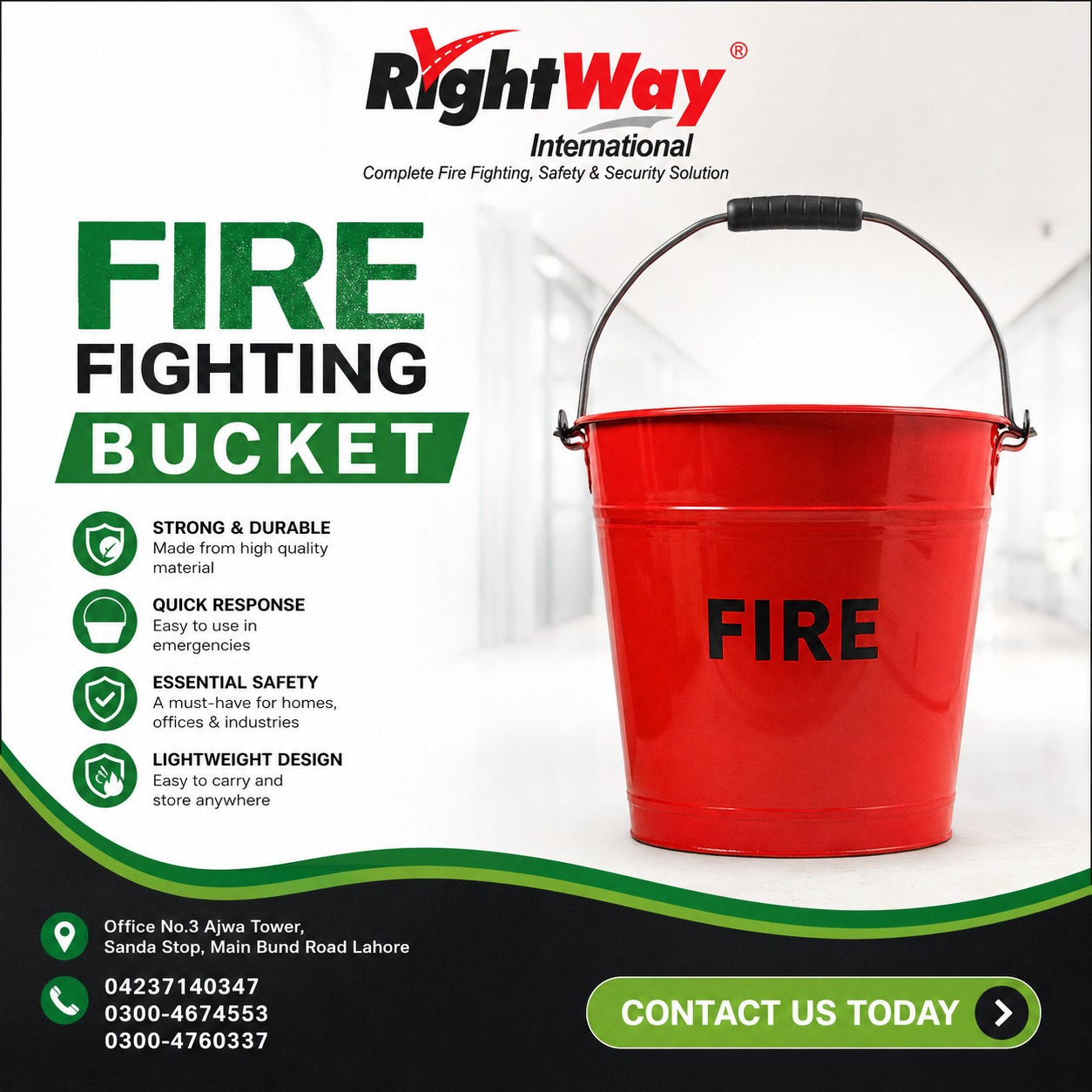
Fire Fighting Bucket: Types Uses Benefits & Buying Guide provides a simple and practical way to keep firefighting materials readily available during a small fire emergency. Depending on its design and intended use, a fire bucket may hold water, sand, or another suitable extinguishing material. It can support an initial response while trained personnel assess the situation.
Fire fighting buckets are commonly found in factories, warehouses, workshops, construction sites, farms, offices, commercial buildings, and other locations where additional firefighting equipment may be useful. Moreover, their simple design makes them easy to store, inspect, and access during an emergency.
However, a fire fighting bucket does not replace a suitable fire extinguisher, fire alarm system, fire sprinkler system, or emergency response plan. Instead, it should form part of a wider fire safety system.
What Is a Fire Fighting Bucket?
A fire fighting bucket is a purpose-designed bucket used to store and carry water, sand, or another appropriate fire-suppressing material during an emergency.
Unlike ordinary household buckets, dedicated fire fighting buckets are generally designed for emergency use. Many models feature a strong metal or durable construction, a handle for easy carrying, and a shape that supports quick access.
Fire buckets may be used with water for certain ordinary combustible-material fires or with sand for specific applications. However, the filling material must always match the fire hazard and the manufacturer’s recommendations.
For example, water may be appropriate for certain fires involving materials such as paper, wood, and textiles. In contrast, water should never be used on burning electrical equipment or flammable-liquid fires where it can create additional hazards.
Therefore, users should understand the correct application before using a fire fighting bucket.
How Does a Fire Fighting Bucket Work?
A fire fighting bucket works by providing a readily available container for an appropriate extinguishing material.
First, the user takes the bucket from its designated location. Next, they use the stored material according to the type of fire and established safety procedures.
For example, a bucket containing water may help suppress certain small fires involving ordinary combustible materials. A bucket containing sand may provide an alternative method for smothering certain small fires where sand is suitable.
The effectiveness depends on the type of fire, amount of material, fire size, accessibility, and safe operating conditions.
If the fire is growing rapidly, producing heavy smoke, spreading to nearby materials, or becoming difficult to control, do not attempt to fight it with a bucket. Raise the alarm, evacuate, and contact emergency services.
Where Can You Use a Fire Fighting Bucket?
A fire fighting bucket can provide additional fire protection in a variety of locations.
1. Industrial Facilities
Factories and industrial facilities can contain machinery, combustible materials, oils, packaging, and other hazards.
A suitable fire fighting bucket can provide an additional emergency response option when positioned near identified fire risks. However, industrial facilities should also maintain appropriate extinguishers, alarms, sprinklers, hydrants, and emergency procedures.
2. Warehouses
Warehouses often store large quantities of packaging, paper products, textiles, plastics, and other materials.
A properly positioned fire bucket can support an emergency response for suitable small fires. However, warehouse fire protection should rely on a comprehensive system rather than a bucket alone.
3. Workshops
Workshops may contain tools, wood, combustible materials, lubricants, and other fire hazards.
Keeping suitable firefighting equipment accessible can help reduce response time during an emergency. A fire bucket can serve as one additional piece of equipment where appropriate.
4. Construction Sites
Construction sites can involve temporary electrical systems, combustible materials, hot work, welding, and other fire risks.
Fire fighting buckets can be placed at suitable emergency points as part of the site’s fire safety arrangements.
5. Farms and Agricultural Areas
Farms may contain dry vegetation, hay, straw, wood, fuel, and machinery.
A suitable water or sand fire bucket may provide additional protection for certain small fires. However, users should always select firefighting equipment according to the specific agricultural hazards.
6. Commercial Buildings
Offices, shops, restaurants, and other commercial properties can also benefit from properly planned fire protection equipment.
A fire bucket may supplement fire extinguishers and other equipment when the building’s fire risk assessment identifies it as appropriate.
Types of Fire Fighting Buckets
Fire fighting buckets are available in different materials, shapes, sizes, and configurations. Choosing the correct type depends on the intended application.
Metal Fire Fighting Bucket
A metal fire fighting bucket is commonly designed for durability and repeated handling. Steel and other suitable metals can provide a robust construction for industrial and commercial environments.
These buckets may be used for storing water or sand, depending on their intended design.
Galvanized Fire Fighting Bucket
A galvanized fire bucket uses a protective zinc coating to help improve resistance to corrosion.
This type can be useful in locations where durability and resistance to environmental conditions are important.
Plastic Fire Fighting Bucket
Some fire buckets use durable plastic or polymer materials.
Plastic buckets can be lightweight and easy to handle. However, buyers should confirm that the product is specifically designed and rated for firefighting applications rather than assuming that any plastic bucket is suitable.
Water Fire Fighting Bucket
A water fire bucket is designed to hold water for use against suitable fires involving ordinary combustible materials.
Water should only be used where it is safe and appropriate. Never use water on energized electrical equipment, burning cooking oil, or fires involving substances for which water creates a dangerous reaction.
Sand Fire Fighting Bucket
A sand fire bucket stores dry sand for suitable emergency applications.
Sand can help smother certain small fires by covering the burning material and reducing access to oxygen. However, it is not a universal solution for every fire type.
Fire Bucket with Stand
A fire bucket with stand combines one or more buckets with a dedicated support structure.
A stand can make the equipment easier to organize and locate. It can also help create a clearly defined firefighting equipment station.
Fire Bucket Set
A fire bucket set may include multiple buckets arranged on a stand.
This configuration can be useful for industrial facilities, workshops, warehouses, construction sites, and other locations where several buckets may be required.
Benefits of a Fire Fighting Bucket
A fire fighting bucket can provide several practical benefits when correctly selected and installed.
Quick Access During Emergencies
Fire can spread rapidly. Keeping firefighting equipment close to potential hazards can reduce the time needed to respond.
Simple Design
Fire buckets have a straightforward design. Users can quickly identify the container and access the stored firefighting material.
Easy Storage
A fire bucket can be positioned on a stand or at a designated fire equipment point without requiring complicated installation.
Durable Construction
Many dedicated fire buckets use materials designed for demanding commercial or industrial environments.
Useful as Additional Fire Protection
A fire bucket can complement fire extinguishers, fire alarms, hydrants, sprinklers, and other fire safety equipment.
Easy Visual Identification
Many dedicated fire buckets use a distinctive appearance or fire-safety marking so users can identify them quickly during an emergency.
Suitable for Different Environments
Depending on the design, fire buckets can support fire safety arrangements in factories, warehouses, workshops, construction sites, farms, and commercial facilities.
Fire Fighting Bucket Materials
Manufacturers produce fire buckets using different materials depending on the intended application.
Common materials include:
- Mild steel
- Galvanized steel
- Stainless steel
- Durable fire-resistant polymers
- Powder-coated metal
- Corrosion-resistant materials
The material alone does not determine product quality. Buyers should also consider the bucket’s construction, handle strength, capacity, finish, corrosion resistance, markings, and intended use.
For outdoor applications, corrosion resistance becomes particularly important because continuous exposure to moisture and weather can damage unsuitable equipment.
Fire Fighting Bucket Sizes and Capacity
Fire fighting buckets are available in different sizes and capacities.
A smaller bucket may be easier to carry and handle, while a larger bucket can hold more firefighting material. However, a larger capacity also increases the weight when filled.
Therefore, choose a size based on:
- Expected fire hazards
- Location
- Available storage space
- User accessibility
- Required quantity
- Material being stored
- Workplace fire safety assessment
The bucket should be large enough for its intended purpose while remaining practical for users to handle safely.
Fire Fighting Bucket with Stand
A fire fighting bucket with stand can provide a more organized firefighting equipment station.
The stand keeps buckets in a designated location and can make them easier to identify during an emergency. Depending on the configuration, the station may contain multiple buckets for different firefighting materials.
A well-positioned fire bucket stand should remain:
- Clearly visible
- Easily accessible
- Free from obstruction
- Protected from unnecessary damage
- Located according to the site’s fire safety plan
Do not place firefighting equipment where people cannot reach it quickly during an emergency.
Fire Fighting Bucket vs Fire Extinguisher
Both products can support emergency fire response, but they operate differently.
| Feature | Fire Fighting Bucket | Fire Extinguisher |
|---|---|---|
| Main function | Holds suitable firefighting material | Discharges an extinguishing agent |
| Typical contents | Water or sand, depending on application | Water, foam, dry powder, CO₂, or other agents |
| Operation | Apply suitable material to the fire | Aim and discharge the extinguisher |
| Storage | Bucket or bucket stand | Wall bracket or designated location |
| Best use | Certain small fires and specific applications | Fire types compatible with the extinguisher |
| Portability | Depends on size and contents | Generally designed for portable use |
| Training | Basic familiarization still important | Proper extinguisher training recommended |
Therefore, a fire fighting bucket should not be considered a replacement for a fire extinguisher. Different fire hazards require different firefighting methods.
Which Fires Can You Fight With a Fire Fighting Bucket?
The correct application depends on what the bucket contains.
A water-filled bucket may be suitable for certain Class A-type fires, such as fires involving paper, wood, cardboard, and textiles.
However, water can be extremely dangerous for some fires.
Do Not Use Water On:
- Energized electrical equipment
- Burning cooking oil or grease
- Certain flammable-liquid fires
- Materials that react dangerously with water
- Any fire where the manufacturer or fire safety procedure prohibits water
Sand can be appropriate for certain small fires where smothering is suitable, but it also does not replace specialized firefighting equipment.
Always identify the fire hazard before selecting the firefighting method.
How to Choose the Best Fire Fighting Bucket
Choosing a fire fighting bucket requires more than selecting the cheapest product.
1. Identify the Fire Hazard
First, determine the types of fires that could occur at your location.
A factory, kitchen, warehouse, laboratory, and construction site may require different fire protection equipment.
2. Select the Correct Material
Choose metal, galvanized steel, stainless steel, or another suitable material according to the environment and application.
3. Consider Bucket Capacity
Select a practical size that provides adequate capacity without making the bucket unnecessarily difficult to handle.
4. Check Handle Strength
The handle should be securely attached and strong enough for the intended load.
5. Inspect the Construction
Check the bucket for strong seams, a stable base, durable finish, and good overall construction.
6. Consider Corrosion Resistance
For outdoor or humid environments, choose a bucket with suitable corrosion resistance.
7. Consider a Fire Bucket Stand
A dedicated stand can improve organization, visibility, and accessibility, especially where multiple buckets are required.
8. Check Manufacturer Information
Choose products with clear manufacturer information, intended-use instructions, specifications, and appropriate product documentation.
How to Use a Fire Fighting Bucket Safely
Always prioritize personal safety before attempting to control a fire.
For a suitable small fire:
- Raise the alarm and assess the situation.
- Identify the type of fire before selecting the firefighting material.
- Take the bucket only if it is safe to do so.
- Use the contents according to the product instructions and fire safety procedure.
- Maintain a safe escape route behind you.
- Never approach a rapidly growing or heavily smoking fire.
- Stop immediately if conditions become unsafe.
- Evacuate and contact emergency services when necessary.
Never put yourself at risk to protect property.
Fire Fighting Bucket Maintenance and Inspection
Regular inspection helps ensure that firefighting equipment remains accessible and usable.
Check the bucket periodically for:
- Rust
- Corrosion
- Cracks
- Dents
- Damaged handles
- Loose components
- Contamination
- Damaged paint or protective coating
- Missing identification
- Damaged stands
- Obstructions around the equipment
If the bucket contains water, follow the site’s inspection and replacement procedures to prevent contamination or other problems.
If sand is used, keep it dry and free from contamination so it remains suitable for its intended application.
Where Should a Fire Fighting Bucket Be Stored?
A fire bucket should remain in a clearly identified and easily accessible location.
Good placement can include designated fire points, workshops, warehouses, industrial areas, construction sites, and other locations identified through a fire risk assessment.
Avoid placing the bucket:
- Behind locked doors
- Inside cluttered storage areas
- Behind heavy equipment
- In locations exposed to unnecessary damage
- Where access becomes difficult during an emergency
Accessibility is one of the most important factors because emergency equipment provides little benefit if users cannot reach it quickly.
Fire Fighting Bucket Safety Precautions
Users should understand several important precautions.
Never Use the Wrong Extinguishing Material
The contents of the bucket must be appropriate for the fire.
Never Use Water on Cooking Oil Fires
Water can cause burning oil to spread violently and increase the fire hazard.
Avoid Electrical Fire Hazards
Do not use water on energized electrical equipment.
Do Not Fight a Large Fire
A bucket is intended only for suitable applications and small fires. A rapidly developing fire requires evacuation and professional firefighting response.
Keep an Escape Route Available
Never position yourself where flames can block your only exit.
Follow Site Procedures
Businesses should train employees and maintain emergency procedures according to the hazards at the workplace.
Why Fire Safety Training Matters
A fire fighting bucket is only useful when people understand when and how to use it safely.
Employees should receive appropriate fire safety training that covers fire hazards, alarm procedures, evacuation routes, emergency equipment, and basic firefighting principles.
Workplaces should also conduct suitable fire risk assessments and maintain appropriate equipment such as:
- Fire extinguishers
- Fire alarm systems
- Fire sprinkler systems
- Fire hydrants
- Fire hose reels
- Emergency lighting
- Fire blankets
- Smoke detection systems
- Emergency evacuation plans
A fire fighting bucket should therefore form part of an integrated fire protection strategy rather than being treated as the primary solution for every fire.
Fire Fighting Bucket in Pakistan
Businesses, factories, warehouses, offices, restaurants, workshops, construction companies, schools, hospitals, farms, and commercial facilities in Pakistan can benefit from properly selected fire safety equipment.
When purchasing a fire fighting bucket in Pakistan, consider the site’s fire hazards, bucket material, capacity, construction quality, corrosion resistance, intended contents, accessibility, and applicable fire safety requirements.
For commercial and industrial applications, a professional fire risk assessment can help determine whether fire buckets are appropriate and where they should be installed.
Common Mistakes When Using a Fire Fighting Bucket
People can make dangerous mistakes when responding to a fire emergency. Proper preparation can help reduce these risks.
Using Water on the Wrong Fire
Water is not suitable for every type of fire. Using it on electrical or cooking-oil fires can make the situation more dangerous.
Keeping the Bucket Empty or Unprepared
A fire bucket intended for water or sand should be maintained according to its intended use and site procedures.
Blocking Access to the Bucket
Do not store boxes, equipment, or other materials in front of emergency firefighting equipment.
Choosing a Weak Bucket
An ordinary household bucket may not provide the durability or design required for emergency firefighting applications.
Ignoring Regular Inspection
Rust, corrosion, damaged handles, or contamination can reduce the usefulness of firefighting equipment.
Attempting to Fight a Large Fire
Never allow a fire bucket to create a false sense of security. If the fire is spreading or conditions are unsafe, evacuate immediately.
Frequently Asked Questions
What is a fire fighting bucket used for?
A fire fighting bucket is used to carry and apply a suitable firefighting material, such as water or sand, for certain small fire emergencies.
What is usually kept in a fire bucket?
Depending on its intended application, a fire bucket may contain water or dry sand. Always follow the manufacturer’s instructions and the site’s fire safety procedures.
Can I use a fire bucket for an electrical fire?
A water-filled fire bucket should not be used on energized electrical equipment. Use an appropriate extinguisher designed for the hazard and follow established emergency procedures.
Can a fire bucket be used for an oil fire?
Do not use water on a cooking-oil fire because it can cause burning oil to spread violently. Use an appropriate method or extinguisher designed for the specific fire hazard.
What material is best for a fire fighting bucket?
Metal, galvanized steel, stainless steel, and other durable materials can be suitable depending on the application. Consider durability, corrosion resistance, environment, and manufacturer specifications.
Is a fire fighting bucket better than a fire extinguisher?
No. They serve different purposes. A suitable fire extinguisher provides a controlled extinguishing agent for specific fire classes, while a fire bucket provides a container for an appropriate firefighting material.
Should a fire fighting bucket have a stand?
A stand can improve visibility, organization, and accessibility. A fire fighting bucket with stand can be particularly useful where multiple buckets are required.
How often should a fire fighting bucket be inspected?
Inspection frequency should follow the site’s fire safety procedures, risk assessment, manufacturer guidance, and applicable requirements. Regularly check for rust, damage, contamination, and accessibility.
Where should I install a fire fighting bucket?
Place it in a clearly accessible and visible location near identified fire hazards, while ensuring that users can reach it without having to pass through the fire or another dangerous area.
Conclusion
A fire fighting bucket provides a simple and practical addition to a fire safety setup when used for the right application. Depending on its design and contents, it can help provide an initial response to certain small fires involving suitable materials.
However, a fire bucket is not a universal firefighting solution. Water and sand have different applications, and neither should be used where they could increase the danger. Therefore, selecting the correct equipment according to the fire hazard is essential.
When choosing a fire fighting bucket, consider its material, capacity, handle strength, construction, corrosion resistance, intended application, accessibility, and manufacturer information. Keep the equipment visible, accessible, and regularly inspected.
For reliable fire protection, combine fire buckets with appropriate fire extinguishers, fire alarms, fire sprinkler systems, fire hydrants, emergency procedures, evacuation plans, and professional fire safety training.