




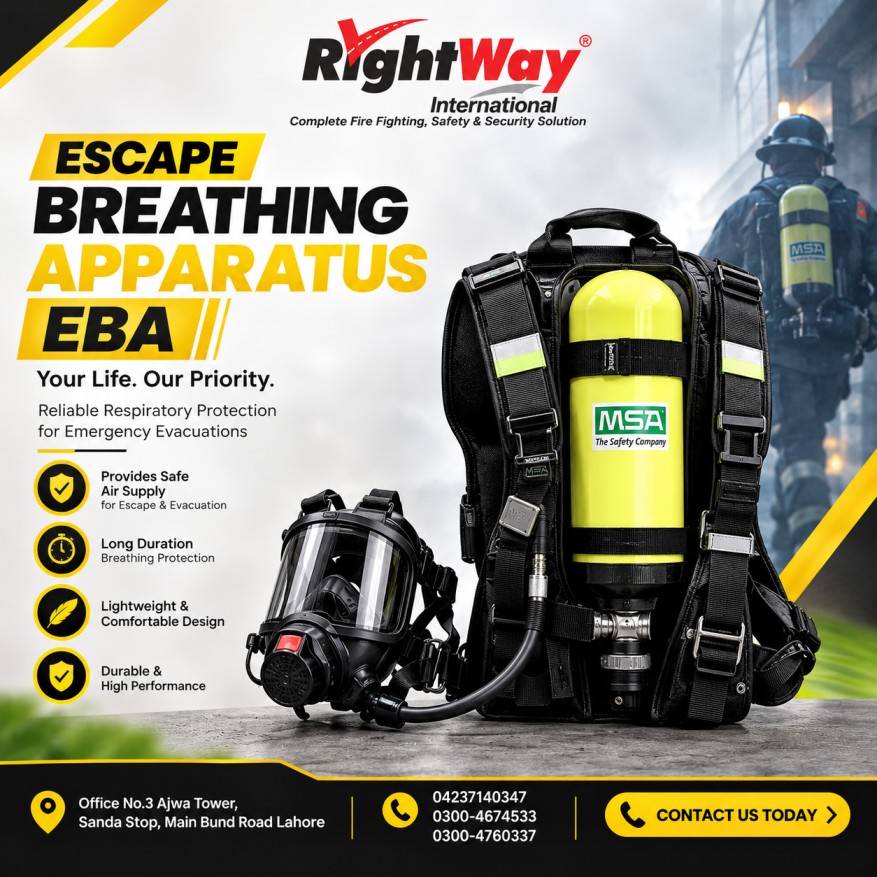
Importance of Escape Breathing Apparatus (EBA) plays an important role in workplace safety by providing a temporary supply of breathable gas during emergency evacuations. Workers use this equipment to escape from hazardous environments where toxic gases, smoke, harmful vapors, or low oxygen levels can threaten their lives.
Depending on the design, EBA equipment uses compressed breathing air or a chemical oxygen-generating system. Industries such as oil and gas, chemical processing, marine operations, and manufacturing rely on suitable escape equipment to strengthen their emergency preparedness.
Unlike Self-Contained Breathing Apparatus (SCBA), which supports various firefighting and rescue activities, EBA primarily helps users escape dangerous environments. Its operating duration and protection level depend on the model and manufacturer’s specifications.
Main Benefits of Escape Breathing Apparatus
- Emergency Escape Support: EBA supplies breathable gas to help workers evacuate hazardous areas safely.
- Respiratory Protection: Suitable EBA equipment helps protect users from dangerous atmospheric conditions during an emergency escape.
- Confined Space Safety: Workers may use escape breathing equipment in industrial vessels, tunnels, and other restricted areas.
- Industrial Safety: Moreover, EBA supports emergency planning in chemical plants, oil and gas facilities, and manufacturing units.
- Portable Design: Many models feature compact designs that allow workers to carry or store them for quick access.
- Emergency Preparedness: Regular training and accessible escape equipment help organizations prepare workers for unexpected hazards.
Where Do Workers Use Escape Breathing Apparatus?
Escape Breathing Apparatus serves various industries where sudden atmospheric hazards may endanger workers.
Oil and Gas Industry
Oil and gas facilities may experience toxic gas releases, including hydrogen sulfide exposure. Suitable escape breathing equipment helps trained workers evacuate according to their emergency procedures.
Chemical Plants and Industrial Facilities
Chemical processing plants handle substances that can release hazardous gases or vapors. Workers may require appropriate EBA equipment to escape when atmospheric conditions become unsafe.
Ships and Offshore Installations
Marine and offshore workplaces may use emergency breathing equipment as part of their evacuation and emergency response arrangements. The selected device must meet the vessel’s or installation’s applicable safety requirements.
Confined Space Operations
Workers entering tanks, industrial vessels, and restricted spaces may face oxygen deficiency or unexpected atmospheric hazards. Employers should assess these risks and provide suitable emergency escape equipment where required.
However, standard EBA does not automatically support firefighting, rescue entry, or prolonged work in contaminated areas. Always select equipment according to the hazard assessment and the manufacturer’s instructions.
How to Choose Escape Breathing Apparatus (EBA)
Choosing the right EBA requires careful consideration of workplace hazards, equipment specifications, and emergency escape procedures.
1. Identify Workplace Hazards
First, assess the potential risks, including toxic gases, hazardous vapors, smoke, and oxygen deficiency. This assessment helps determine the type of respiratory equipment workers need.
2. Check the Operating Duration
Choose a device with a rated operating duration that supports the planned escape route. Consider the distance to a safe area, evacuation conditions, and the manufacturer’s stated limitations.
3. Examine Equipment Design
Depending on the model, EBA may include a hood or facepiece, a breathing gas supply, a regulator or breathing mechanism, a pressure indicator, and a protective carrying case. Check that the design suits the intended application.
4. Verify Certification and Compatibility
Review the manufacturer’s specifications, certification, and applicable safety standards. Confirm that the equipment provides the required protection for the expected atmospheric hazards.
5. Inspect and Maintain the Equipment
Check the equipment’s condition, seals, service status, and expiration or replacement date where applicable. For cylinder-based models, also check the pressure indicator and follow the manufacturer’s inspection schedule.
Arrange servicing through qualified personnel and remove damaged or expired equipment from service.
6. Provide Proper Training
Train workers to activate, don, and use their EBA correctly. They should understand the equipment’s limitations and follow the site’s emergency evacuation procedures.
7. Store Equipment Correctly
Keep EBA in an accessible, clearly identified location. Follow the manufacturer’s storage instructions and ensure that workers can locate the equipment quickly during an emergency.
How Does Escape Breathing Apparatus Work?
Escape breathing apparatus provides a temporary breathing gas supply when a user needs to leave an unsafe environment.
First, the user activates the device according to the manufacturer’s instructions. Depending on the design, the equipment supplies compressed breathing air or generates oxygen through a chemical process.
Next, the user places the hood or facepiece correctly and follows the designated escape route. The device supports breathing during evacuation for its rated operating period.
Finally, the user reaches a safe area and follows the workplace emergency procedure. Workers must never assume that an escape device supports extended exposure or entry into a hazardous area for rescue activities.
Frequently Asked Questions
1. What is Escape Breathing Apparatus (EBA)?
Escape Breathing Apparatus is emergency respiratory equipment that provides a temporary supply of breathable gas. It helps users leave hazardous environments where toxic gases, smoke, or oxygen deficiency may make normal breathing unsafe.
2. Why is Escape Breathing Apparatus important?
EBA helps workers evacuate dangerous areas during atmospheric emergencies. It supports workplace safety in industrial facilities, chemical plants, ships, and oil and gas installations.
3. What is the difference between EBA and SCBA?
EBA primarily supports emergency escape, while SCBA can support approved firefighting, rescue, and other respiratory protection activities. The equipment’s certification and design determine its specific capabilities.
4. How long does Escape Breathing Apparatus last?
Operating duration varies by model and design. Always check the manufacturer’s rated duration and ensure that it suits the planned escape route and emergency conditions.
5. Where do workers use EBA equipment?
Workers may use EBA in oil and gas facilities, chemical plants, ships, offshore installations, and other workplaces where emergency escape respiratory protection is necessary.
6. How do you maintain Escape Breathing Apparatus?
Follow the manufacturer’s inspection and maintenance schedule. Check seals, equipment condition, service status, and pressure indicators where applicable. Arrange required servicing through qualified personnel.
7. Can workers use EBA for firefighting?
Standard escape breathing apparatus primarily supports evacuation rather than firefighting or rescue entry. Firefighters need respiratory equipment specifically approved for their intended activities.
8. Where can I buy Escape Breathing Apparatus in Pakistan?
You can contact RightWay International to inquire about Escape Breathing Apparatus and related industrial safety equipment. Before purchasing, confirm availability, certification, operating duration, and suitability for your application.
Escape Breathing Apparatus plays an important role in emergency preparedness. Therefore, choose suitable equipment, train workers, maintain inspection records, and follow established evacuation procedures to improve workplace safety.