




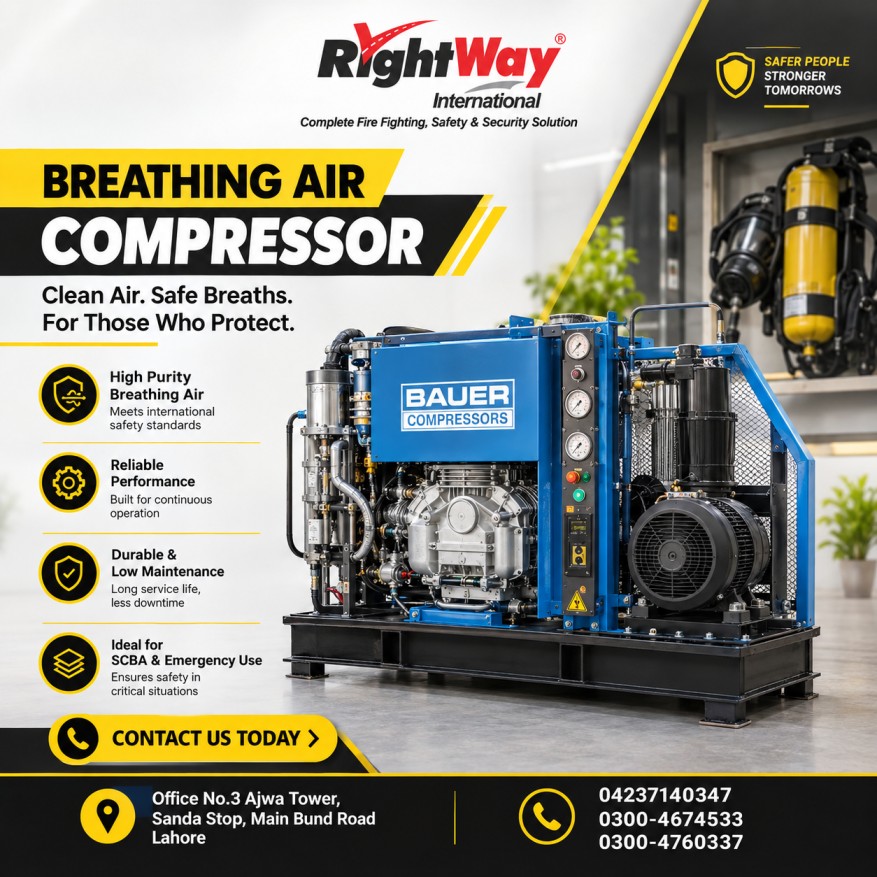
Importance of Breathing Air Compressors plays an important role in workplace safety by supplying clean, breathable air for specialized respiratory protection systems. Workers rely on this equipment when they need a dependable air source in hazardous environments. For example, firefighters, industrial workers, and professional divers use suitable breathing air systems for their specific operations.
Unlike standard industrial compressors, breathing air compressors must meet the air quality requirements of their intended applications. Therefore, operators must consider filtration, purification, pressure, and air quality monitoring when selecting this equipment.
Moreover, breathing air compressors support several industries, including firefighting, manufacturing, marine operations, and professional diving. However, each application requires a suitable compressor that meets the relevant safety standards and manufacturer specifications.
Main Benefits of Breathing Air Compressors
- Clean Breathing Air Supply: A properly designed compressor supplies air that meets the applicable breathing air quality requirements.
- Respiratory Protection: Furthermore, compatible breathing air systems help protect workers who need respiratory equipment in hazardous environments.
- Firefighting Support: Suitable high-pressure compressors refill compatible SCBA cylinders for firefighters and emergency response teams.
- Diving Applications: Similarly, specialized compressors supply breathing air for compatible diving cylinders when they meet the required specifications.
- Industrial Applications: In addition, these compressors support approved respiratory protection systems in various industrial facilities.
- Reliable Performance: Regular maintenance and appropriate purification systems help maintain dependable operation.
- Improved Workplace Safety: Therefore, suitable breathing air equipment helps organizations strengthen their respiratory protection programs.
Where Do Industries Use Breathing Air Compressors?
Breathing air compressors support various activities that require a controlled supply of breathing-quality air. However, the compressor design must match the intended application.
Firefighting and Emergency Services
Fire departments use suitable high-pressure breathing air compressors to refill compatible Self-Contained Breathing Apparatus (SCBA) cylinders. As a result, firefighters can access the breathing air required for approved firefighting and rescue operations.
Industrial Plants
Workers in certain industrial environments use supplied-air respiratory systems to obtain breathing air from compatible equipment. For example, these systems can support approved tasks where airborne contaminants create respiratory hazards.
Marine and Diving Operations
Specialized breathing air compressors fill scuba cylinders for recreational and professional diving. However, operators must verify the air quality, cylinder compatibility, and required filling pressure before use.
Chemical and Manufacturing Facilities
Chemical plants and manufacturing units may require specialized respiratory protection for hazardous tasks. Therefore, suitable breathing air systems can support workplace safety when employers follow the applicable respiratory protection requirements.
Important: Ordinary industrial compressed air is not automatically safe to breathe. It may contain oil, moisture, carbon monoxide, or other contaminants. Consequently, operators must use a complete system designed and maintained to meet the required breathing air quality standards.
How to Choose a Breathing Air Compressor
Choosing the right breathing air compressor requires careful consideration of air quality, operating pressure, capacity, and intended use.
1. Identify Your Application
First, determine whether you need the compressor for SCBA cylinder filling, professional diving, or a compatible supplied-air breathing system. Since each application has different requirements, choose a compressor designed specifically for your intended purpose.
2. Check Working Pressure
Next, verify the required operating or cylinder-filling pressure. High-pressure compressors for breathing air cylinders differ from low-pressure systems that supply compatible respirators. Therefore, always check the manufacturer’s specifications before purchasing.
3. Verify Air Quality
Breathing air must meet the applicable quality standards for its intended use. In addition, check the filtration system, purification cartridges, monitoring equipment, and testing arrangements. Operators must control contaminants such as carbon monoxide, oil, and excessive moisture.
4. Consider Compressor Capacity
Choose a compressor that meets your airflow or cylinder-filling requirements. For example, consider the number of cylinders, their capacity, the required pressure, and how frequently you need to fill them. As a result, you can select equipment that meets your operational needs.
5. Review Safety Features
Depending on the model, useful features may include pressure monitoring, temperature protection, moisture separation, filtration systems, and automatic shutdown mechanisms. Furthermore, confirm that these features meet your workplace requirements.
6. Follow Maintenance Requirements
Regular maintenance helps preserve compressor performance and breathing air quality. Therefore, inspect the equipment according to the manufacturer’s schedule, replace filters and purification cartridges when required, and arrange servicing through qualified technicians.
7. Check Certification and Documentation
Finally, review the manufacturer’s documentation, equipment ratings, and applicable standards. Also, ensure that the compressor and its associated filling equipment match the intended breathing gas and application.
How Does a Breathing Air Compressor Work?
A breathing air compressor draws air through an intake and compresses it to the required pressure. After compression, the system uses suitable cooling, moisture separation, filtration, and purification stages to control contaminants.
For high-pressure cylinder-filling applications, the compressor delivers the processed air through compatible filling equipment into approved breathing air cylinders. Meanwhile, operators monitor pressure and follow the correct filling procedures.
However, compression and filtration alone do not guarantee safe breathing air. The intake location, compressor condition, purification performance, and air quality testing also affect the final result.
Therefore, operators must follow the manufacturer’s instructions and applicable breathing air standards. Regular inspections and appropriate testing further help maintain safe operating conditions.
Frequently Asked Questions
1. What is a Breathing Air Compressor?
A breathing air compressor is specialized equipment designed to supply air that meets the quality requirements of a breathing system. Depending on its design, it can fill high-pressure breathing air cylinders or supply compatible respiratory equipment.
2. Why is a Breathing Air Compressor important?
It provides a controlled source of breathing-quality air for suitable respiratory protection systems. Consequently, proper air quality and regular maintenance help protect users from harmful contaminants.
3. What is the difference between an industrial compressor and a breathing air compressor?
A standard industrial compressor supplies compressed air for tools and machinery. In contrast, a breathing air compressor incorporates equipment and controls intended to meet breathing air quality requirements. Therefore, operators should never assume that ordinary industrial compressed air is safe to breathe.
4. Where are Breathing Air Compressors used?
These compressors support firefighting, emergency services, industrial respiratory protection, and specialized diving operations. However, the required compressor design depends on the intended application.
5. How do you maintain a Breathing Air Compressor?
Follow the manufacturer’s maintenance schedule. In addition, inspect filters, purification cartridges, cooling systems, and pressure indicators. Arrange air quality testing and professional servicing whenever required.
6. Can a Breathing Air Compressor fill scuba cylinders?
Yes, a suitable compressor can fill scuba cylinders when it meets the required pressure, air quality, and gas compatibility specifications. However, not every breathing air compressor supports scuba cylinder filling.
7. What should you check before buying a Breathing Air Compressor?
Check the working pressure, capacity, air quality specifications, filtration system, intended application, and maintenance requirements. Furthermore, verify compatibility with your breathing apparatus and cylinders.
8. Where can I buy a Breathing Air Compressor in Pakistan?
You can contact RightWay International to inquire about breathing air compressors and related safety equipment. Before purchasing, confirm product availability, specifications, certification, and suitability for your intended application.
Breathing air compressors play an important role in respiratory protection and emergency preparedness. Therefore, choose equipment that meets the required air quality standards, maintain its purification system, and arrange regular inspections. As a result, you can support safer and more reliable breathing air operations