




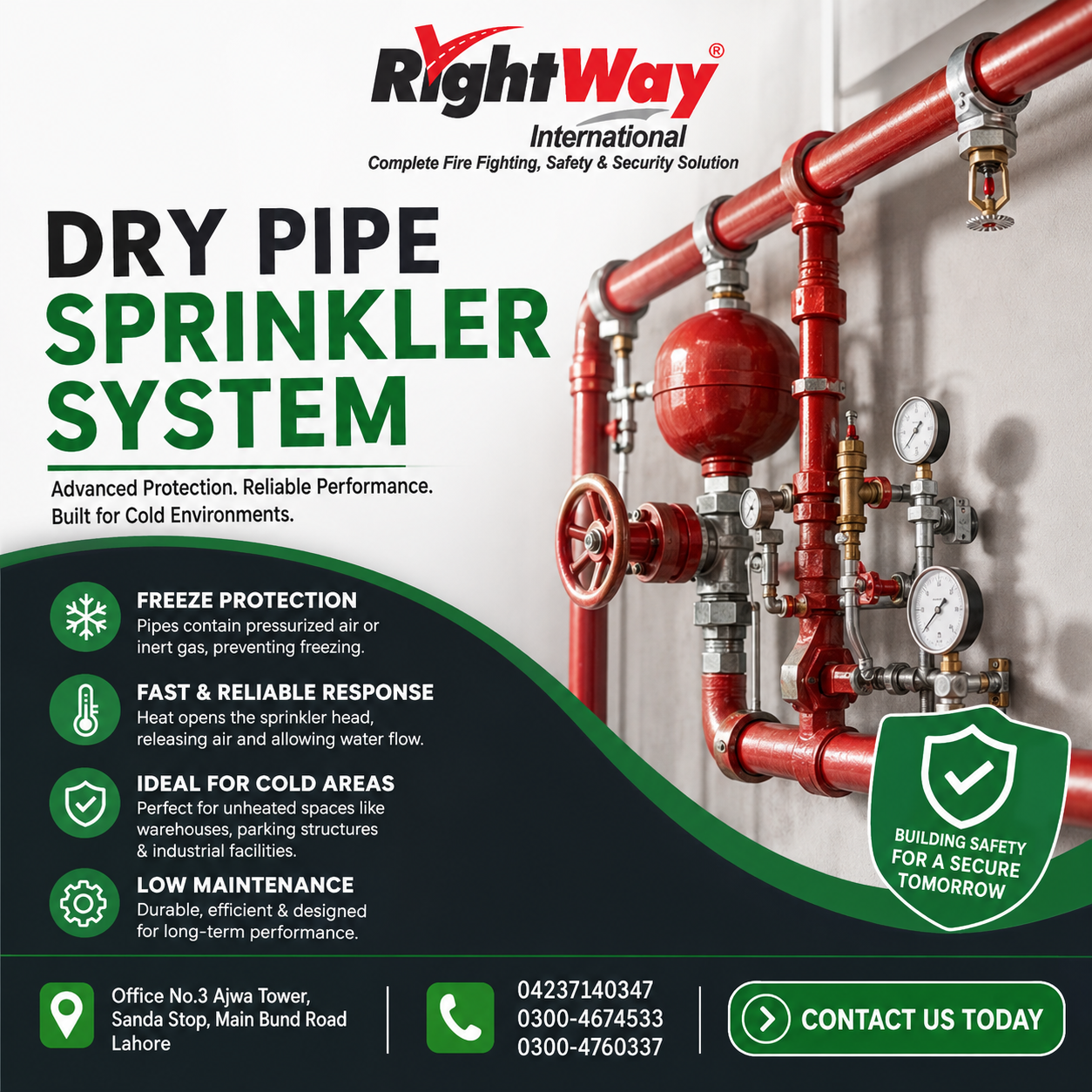
Dry Pipe Sprinkler System: Types Uses Benefits & Buying Guide provides automatic fire protection in areas where freezing temperatures can make a wet pipe sprinkler system unsuitable. Unlike wet pipe systems, dry pipe systems keep the sprinkler piping filled with pressurized air or nitrogen instead of water.
When a fire generates enough heat, the sprinkler activates and releases the pressure inside the pipe. As a result, the dry pipe valve opens and allows water to enter the sprinkler piping. The water then reaches the activated sprinkler and helps control the fire.
What Is a Dry Pipe Sprinkler System?
A Dry Pipe Sprinkler System is an automatic fire protection system designed mainly for cold or unheated areas. Its main components include:
- Dry pipe valve
- Automatic sprinkler heads
- Sprinkler piping
- Air compressor or nitrogen supply
- Pressure gauges
- Water supply
- Alarm devices
- Test and drain assembly
Because the pipes normally contain air or nitrogen, the system reduces the risk of water freezing inside the sprinkler network.
How Does a Dry Pipe Sprinkler System Work?
First, pressurized air or nitrogen keeps the dry pipe valve closed. Then, when a fire produces sufficient heat, the sprinkler head activates.
Next, the sprinkler releases air pressure from the pipe. Consequently, the pressure drops and the dry pipe valve opens.
Afterward, water enters the piping and flows toward the activated sprinkler. Finally, the sprinkler discharges water onto the fire area, while the water-flow alarm can notify building personnel.
Where Are Dry Pipe Sprinkler Systems Used?
Dry pipe sprinkler systems work well in areas where temperatures can fall below freezing, including:
- Cold storage facilities
- Refrigerated warehouses
- Unheated warehouses
- Parking garages
- Loading docks
- Factories
- Industrial facilities
- Cold rooms
- Semi-outdoor areas
For example, a loading dock may experience freezing temperatures when large doors remain open. Therefore, a dry pipe system can provide a suitable fire protection solution.
Types of Dry Pipe Sprinkler Systems
Standard Dry Pipe System
A standard system uses pressurized air or nitrogen to keep water out of the sprinkler piping until activation.
Nitrogen Dry Pipe System
A nitrogen dry pipe sprinkler system uses nitrogen to maintain pressure. Moreover, nitrogen can support corrosion-management strategies in suitable applications.
Cold Storage Dry Pipe System
These systems protect refrigerated and low-temperature areas. However, engineers must consider temperature, sprinkler selection, drainage, and fire hazard during design.
Preaction System
A preaction sprinkler system also keeps water out of the piping under normal conditions. However, it uses a separate detection arrangement and operates differently from a traditional dry pipe system.
Benefits of a Dry Pipe Sprinkler System
A dry pipe sprinkler system offers several important benefits:
- Freezing protection: It reduces the risk of water freezing inside sprinkler pipes.
- Automatic fire protection: Heat can activate the sprinkler without manual operation.
- Cold-area suitability: It works well in appropriate unheated and low-temperature locations.
- Large-area protection: Engineers can design systems for warehouses and industrial buildings.
- Alarm integration: Water-flow and supervisory devices can connect with fire alarm systems.
- Flexible applications: Organizations can use the system in various commercial and industrial environments.
Dry Pipe vs Wet Pipe Sprinkler System
The main difference is what normally fills the sprinkler piping.
| Feature | Dry Pipe System | Wet Pipe System |
|---|---|---|
| Pipe contents | Air or nitrogen | Water |
| Freezing conditions | Suitable | Generally unsuitable without additional protection |
| Water availability | Enters after valve operation | Already inside piping |
| Complexity | Higher | Lower |
| Typical use | Cold or unheated areas | Heated areas |
Therefore, the best system depends on the building’s temperature, fire hazard, and design requirements.
Dry Pipe Sprinkler System Installation
Proper installation helps ensure reliable operation. Before installation, professionals should consider:
- Building temperature
- Fire hazard
- Pipe layout
- Sprinkler locations
- Water supply
- Fire pump capacity
- Air or nitrogen supply
- Drainage
- Alarm connections
- Valve accessibility
Furthermore, installers should provide suitable drainage because trapped water can freeze and contribute to corrosion.
Dry Pipe Sprinkler System Maintenance
Regular inspection and maintenance help keep the system ready for an emergency.
Technicians should check:
- Dry pipe valve
- Sprinkler heads
- Air compressor
- Nitrogen supply
- Pressure gauges
- Control valves
- Alarm devices
- Piping
- Test and drain equipment
- Water supply
Additionally, personnel should investigate low air pressure, leaks, corrosion, damaged sprinklers, and unusual system conditions.
How to Choose the Best Dry Pipe Sprinkler System
Before purchasing a dry pipe sprinkler system, consider:
- Protected area – Identify the building or space requiring protection.
- Temperature – Check the lowest expected temperature.
- Fire hazard – Consider the materials and activities inside the facility.
- Water supply – Confirm available water flow and pressure.
- Sprinkler type – Select sprinklers according to the system design.
- Dry pipe valve – Choose a reliable and compatible valve.
- Air or nitrogen supply – Select the appropriate pressure-maintenance system.
- Technical support – Consider installation, maintenance, warranty, and spare parts.
Dry Pipe Sprinkler System in Pakistan
A dry pipe sprinkler system in Pakistan can provide effective fire protection for cold storage facilities, warehouses, factories, parking garages, loading docks, and other suitable low-temperature environments.
When purchasing a dry pipe sprinkler system in Pakistan, consider system design, sprinkler type, dry pipe valve, air compressor, nitrogen supply, fire pump, alarm integration, installation, maintenance, warranty, and technical support.
Common Mistakes
Avoid these common dry pipe sprinkler system problems:
- Choosing the wrong sprinkler system
- Ignoring freezing temperatures
- Poor pipe drainage
- Incorrect air pressure
- Neglecting corrosion
- Blocking sprinkler heads
- Closing control valves without authorization
- Skipping inspections
- Relying only on sprinklers
Instead, combine the sprinkler system with fire alarms, fire extinguishers, fire hydrants, fire fighting pumps, emergency procedures, and trained personnel.
Frequently Asked Questions
What is a dry pipe sprinkler system?
It is an automatic fire sprinkler system that normally keeps pressurized air or nitrogen inside the sprinkler piping instead of water.
Why are dry pipe sprinkler systems used?
They are mainly used in areas where freezing temperatures could damage water-filled sprinkler pipes.
Where are dry pipe sprinkler systems used?
They are commonly used in cold storage facilities, warehouses, parking garages, loading docks, factories, and other suitable cold environments.
Does a dry pipe system contain water?
Normally, water remains behind the dry pipe valve while the sprinkler piping contains pressurized air or nitrogen.
Is dry pipe better than wet pipe?
Not always. Wet pipe systems generally suit heated areas, while dry pipe systems provide an advantage in suitable freezing environments.
How often should a dry pipe sprinkler system be maintained?
Follow the manufacturer’s instructions and applicable inspection, testing, and maintenance requirements.
A Dry Pipe Sprinkler System provides reliable automatic fire protection for suitable cold and unheated environments. By keeping water out of the sprinkler piping until activation, it reduces the risk of freezing while still providing automatic fire suppression.
Moreover, proper design, installation, inspection, testing, and maintenance help ensure dependable performance. For stronger protection, combine a dry pipe sprinkler system with fire alarm systems, fire fighting pumps, fire hydrants, fire extinguishers, smoke detection, and trained security personnel.