




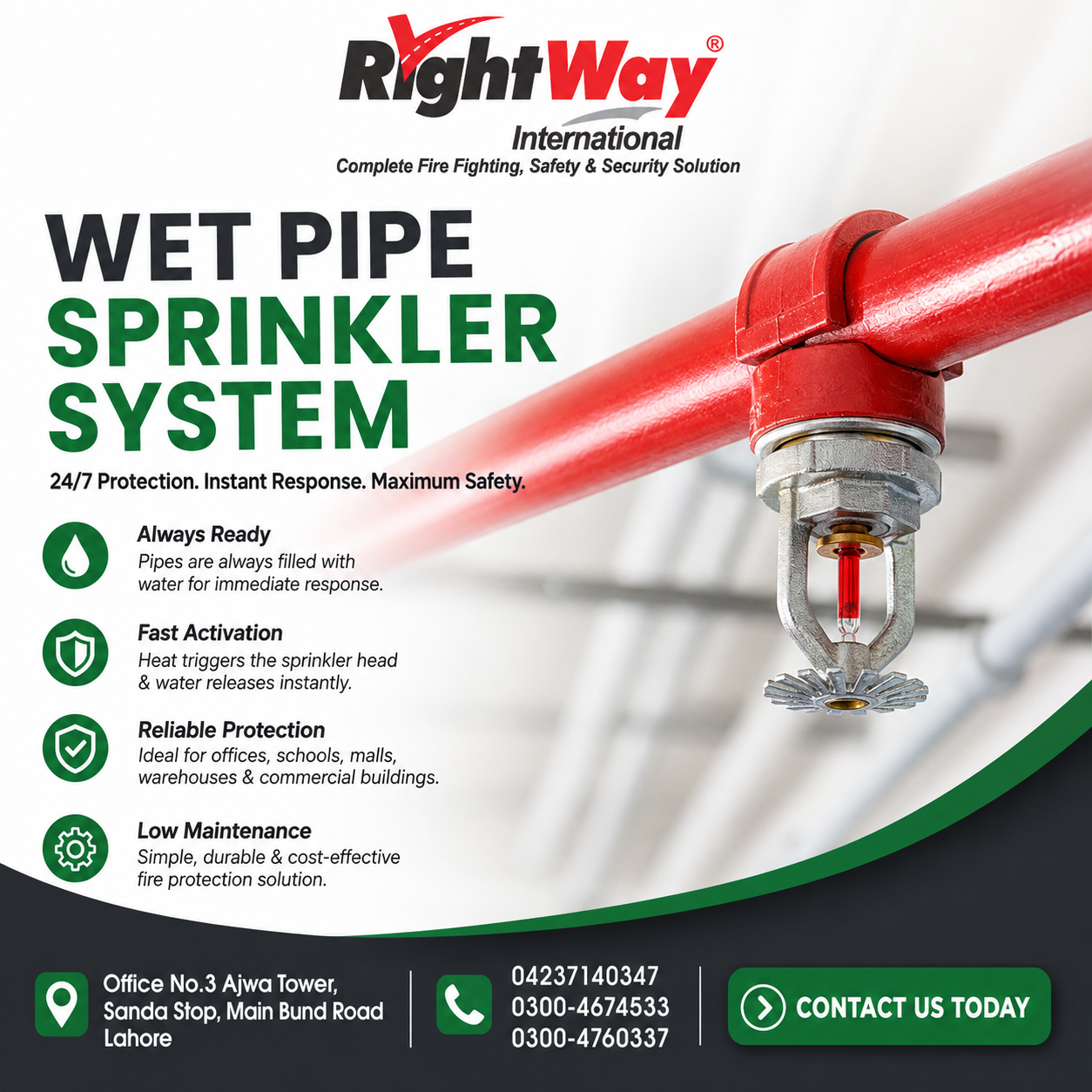
Wet Pipe Sprinkler System: Types Uses Benefits & Buying Guide provides one of the simplest and most reliable forms of automatic fire protection. Unlike dry pipe systems, the sprinkler pipes remain filled with pressurized water. When a sprinkler head detects sufficient heat from a fire, it opens and releases water directly onto the affected area.
Because of its fast response and simple design, a wet pipe sprinkler system works well in commercial buildings, offices, warehouses, shopping malls, hospitals, schools, factories, and other areas where temperatures normally stay above freezing.
What Is a Wet Pipe Sprinkler System?
A wet pipe sprinkler system uses a network of pipes that constantly contain pressurized water. The system connects to a reliable water supply, while individual sprinkler heads remain closed until heat activates them.
When a fire develops, the heat causes the sprinkler’s heat-sensitive element to operate. Consequently, the sprinkler releases water and helps control the fire before it spreads.
How Does a Wet Pipe Sprinkler System Work?
The system works through a straightforward process:
- The sprinkler pipes remain filled with pressurized water.
- A fire produces heat near a sprinkler head.
- The heat-sensitive element reaches its operating temperature.
- The sprinkler opens automatically.
- Pressurized water flows through the open sprinkler.
- The sprinkler distributes water over the protected area.
- Water flow activates the alarm or monitoring system.
Importantly, only sprinklers exposed to sufficient heat normally operate. Therefore, the system can focus water discharge on the area affected by the fire.
Where Are Wet Pipe Sprinkler Systems Used?
Wet pipe sprinkler systems suit buildings where freezing temperatures do not normally occur. Common applications include:
- Offices and commercial buildings
- Shopping malls and retail stores
- Hotels and restaurants
- Hospitals and healthcare facilities
- Schools and educational buildings
- Warehouses
- Manufacturing facilities
- Parking structures
- Apartment and residential buildings
- Public and institutional buildings
For areas exposed to freezing conditions, however, a dry pipe or another suitable sprinkler arrangement may provide better protection.
Types of Wet Pipe Sprinkler Systems
Wet pipe sprinkler systems can use different sprinkler arrangements depending on the building and fire hazard.
1. Standard Wet Pipe System
This is the most common arrangement. Water remains inside the sprinkler piping, and individual sprinkler heads activate when they experience sufficient heat.
2. High-Pressure Wet Pipe System
High-pressure systems use specially selected components and water supplies to meet demanding fire protection requirements. Engineers should design these systems according to the building’s hazard and applicable standards.
3. Residential Wet Pipe System
Residential sprinkler systems use sprinklers specifically designed for homes and residential occupancies. They focus on providing effective fire control while meeting residential design requirements.
Main Components of a Wet Pipe Sprinkler System
A complete system may include:
- Water supply
- Fire pump, where required
- Control valve
- Alarm check valve
- Sprinkler pipes
- Automatic sprinkler heads
- Pressure gauges
- Water flow switch
- Alarm devices
- Test and drain assembly
- Supervisory devices
- Fire department connection
Each component plays an important role. Therefore, proper selection, installation, testing, and maintenance can significantly improve system reliability.
Benefits of Wet Pipe Sprinkler Systems
Wet pipe sprinkler systems offer several important advantages:
Fast Fire Response
Because water already fills the pipes, the system can deliver water quickly after a sprinkler activates.
Automatic Operation
The system responds automatically to heat, which helps provide protection even when nobody is immediately present.
Simple Design
Wet pipe systems generally have fewer operating components than dry pipe systems. As a result, they can be easier to inspect and maintain.
Reliable Fire Protection
When properly designed and maintained, wet pipe sprinklers can help control developing fires and reduce property damage.
Wide Range of Applications
They work well in many commercial, residential, industrial, and institutional buildings.
Easy Integration
Wet pipe systems can connect with fire alarm and building monitoring systems to provide additional warning and supervision.
Wet Pipe vs Dry Pipe Sprinkler System
| Feature | Wet Pipe System | Dry Pipe System |
|---|---|---|
| Pipe contents | Pressurized water | Pressurized air/nitrogen |
| Response | Generally faster | Slightly slower due to valve operation |
| Best for | Heated areas | Cold/unheated areas |
| Freezing protection | Not suitable for ordinary exposed piping | Better suited |
| System complexity | Relatively simple | More complex |
| Maintenance | Generally straightforward | Requires additional air/nitrogen management |
Therefore, the building temperature and environmental conditions play an important role when selecting between wet and dry pipe systems.
Wet Pipe Sprinkler System Installation
Professional installation should follow the approved fire protection design and applicable standards. The process generally includes:
- Assessing the building and fire hazards
- Determining the required sprinkler layout
- Selecting suitable sprinkler heads and pipe sizes
- Installing the piping network
- Connecting the system to the water supply
- Installing valves, alarms, gauges, and test assemblies
- Testing the system
- Inspecting and commissioning the installation
Additionally, the design should consider water pressure, flow requirements, building occupancy, ceiling height, storage arrangements, and obstruction risks.
Wet Pipe Sprinkler System Maintenance
Regular inspection and maintenance help keep the system ready for an emergency. Important checks include:
- Inspect sprinkler heads for damage or obstruction
- Check control valves and keep them in the correct position
- Test water flow alarms
- Check pressure gauges
- Inspect pipes and fittings
- Test pumps where installed
- Check water supplies
- Inspect fire department connections
- Test monitoring and supervisory devices
- Maintain proper clearance around sprinkler heads
Never hang objects from sprinkler pipes or obstruct sprinkler heads. Furthermore, only qualified personnel should modify or repair the system.
Wet Pipe Sprinkler System Buying Guide
Before purchasing or installing a wet pipe sprinkler system, consider:
- Building size and layout
- Occupancy type
- Fire hazard classification
- Ceiling height
- Storage arrangement
- Required water flow and pressure
- Sprinkler type and temperature rating
- Pipe material and sizing
- Fire pump requirements
- Alarm and monitoring requirements
- Installation quality
- Inspection and maintenance support
- Manufacturer documentation
- Warranty and after-sales service
A professional fire protection company can help determine the appropriate system based on the building’s actual requirements.
Wet Pipe Sprinkler System in Pakistan
Wet pipe sprinkler systems are widely suitable for commercial buildings, offices, shopping malls, warehouses, factories, hospitals, hotels, schools, and residential projects in Pakistan, particularly where the protected areas do not face freezing temperatures.
When installing a system in Pakistan, consider the local building requirements, water availability, fire pump capacity, sprinkler design, fire alarm integration, installation quality, and long-term maintenance.
Common Wet Pipe Sprinkler System Mistakes
Avoid these common problems:
- Selecting the wrong sprinkler type
- Poor sprinkler spacing
- Incorrect pipe sizing
- Inadequate water supply
- Blocked sprinkler heads
- Closed control valves
- Poor installation
- Lack of regular inspections
- Ignoring damaged components
- Hanging items from sprinkler piping
- Failing to test alarms and water flow
Regular professional inspection can identify these issues before they affect system performance.
FAQs
Is a wet pipe sprinkler system always filled with water?
Yes. Under normal operating conditions, the sprinkler piping remains filled with pressurized water.
Where is a wet pipe sprinkler system best used?
It is generally suitable for buildings and areas where temperatures remain above freezing, such as offices, malls, hotels, warehouses, hospitals, and factories.
Does every sprinkler activate during a fire?
No. Individual sprinklers normally activate when they experience sufficient heat. The number of operating sprinklers depends on how the fire develops.
Can wet pipe sprinklers work without a fire pump?
It depends on the available water supply and system design. Some buildings require a fire pump to provide the necessary pressure and flow.
How often should a wet pipe sprinkler system be maintained?
Inspection, testing, and maintenance should follow the applicable fire protection standards, system requirements, and the recommendations of qualified professionals.
A Wet Pipe Sprinkler System provides dependable and automatic fire protection for many commercial, residential, industrial, and institutional buildings. Since the pipes remain filled with water, the system can respond quickly when heat activates a sprinkler.
However, proper design, installation, water supply, inspection, and maintenance remain essential. For the best protection, combine sprinkler systems with fire alarms, fire extinguishers, fire hydrants, fire pumps, emergency procedures, and trained personnel.
Dry Pipe Sprinkler System
How Does a Dry Pipe Sprinkler System Work?
First, pressurized air or nitrogen keeps the dry pipe valve closed. Then, when a fire produces sufficient heat, the sprinkler head activates.
Next, the sprinkler releases air pressure from the pipe. Consequently, the pressure drops and the dry pipe valve opens.
Afterward, water enters the piping and flows toward the activated sprinkler. Finally, the sprinkler discharges water onto the fire area, while the water-flow alarm can notify building personnel. Read More