




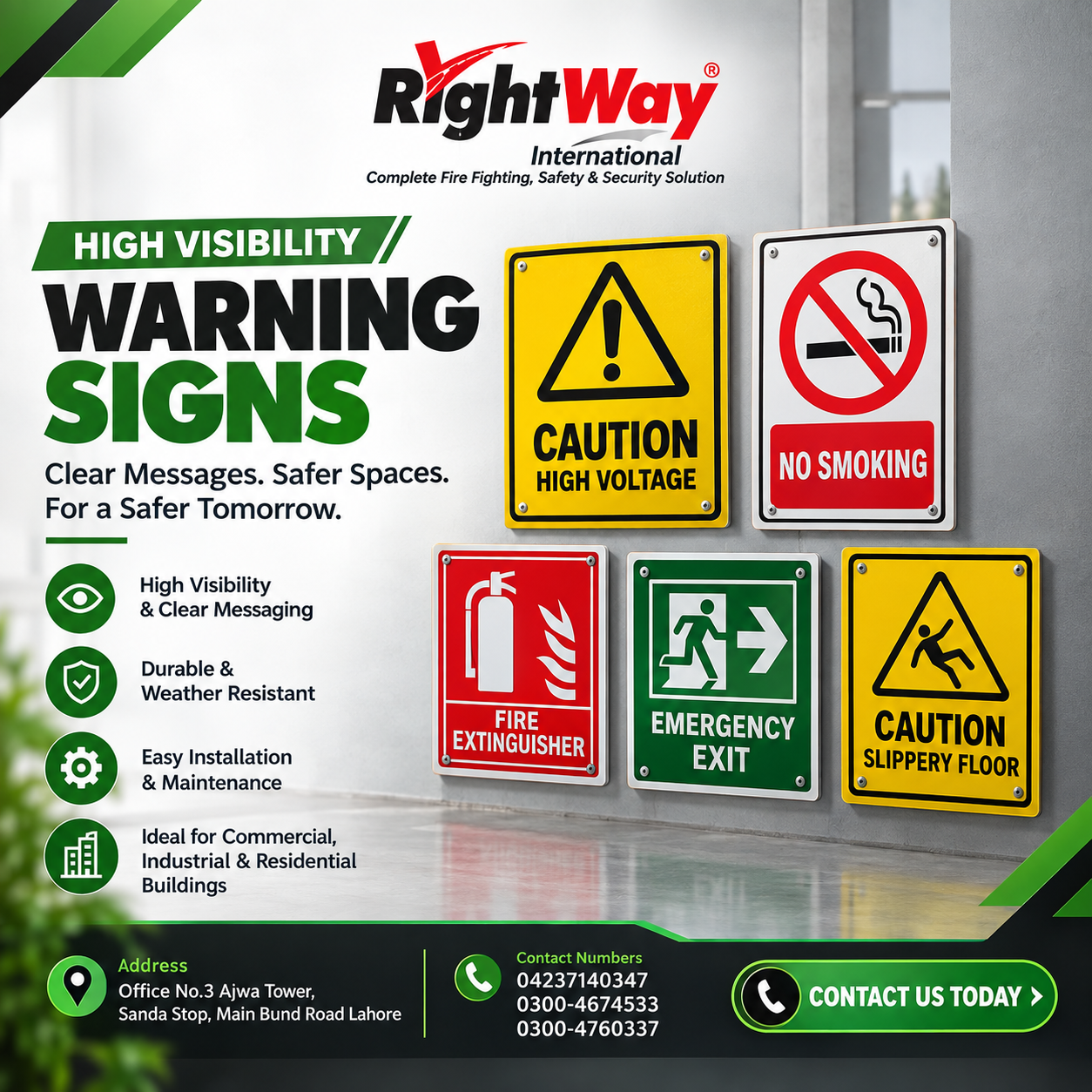
Warning Signs: Types Uses Benefits & Buying Guide. Warning signs play an important role in workplace safety, fire protection, industrial safety, and emergency preparedness. They help people identify hazards quickly and understand potential risks before an accident occurs. Therefore, businesses, factories, warehouses, construction sites, offices, hospitals, and commercial buildings use warning signs to communicate safety information clearly.
In addition, warning signs can guide employees, visitors, and contractors away from dangerous areas. When businesses place the right signs in visible locations, they can improve hazard awareness and support a safer working environment.
This guide explains the types, uses, benefits, materials, sizes, installation methods, maintenance requirements, and selection factors of warning signs. It also covers warning signs in Pakistan and explains how to choose suitable safety signage for different environments.
What Are Warning Signs?
Warning signs are safety signs that alert people to potential hazards or dangerous conditions. They normally use clear symbols, colors, shapes, borders, and short messages to communicate information quickly.
For example, a high voltage warning sign alerts people to an electrical hazard. Similarly, a flammable material warning sign indicates the presence of materials that can catch fire easily.
Because people can understand standardized symbols faster than long instructions, warning signs provide an effective way to communicate hazards.
How Do Warning Signs Work?
Warning signs work by attracting attention and communicating a specific hazard before someone enters or interacts with a dangerous area.
First, the sign uses a recognizable symbol or warning message. Next, its color and shape help people identify the type of warning. Finally, clear placement allows people to see the sign before they reach the hazard.
For example, a warning sign near an electrical panel can alert workers before they open or approach the equipment. Likewise, a chemical warning sign can identify a hazardous storage area before someone enters it.
Therefore, proper warning sign placement can reduce confusion and improve safety awareness.
Types of Warning Signs
Warning signs come in many forms because different workplaces contain different hazards. The following are some common types.
1. General Warning Signs
General warning signs alert people to an unspecified or general hazard. They often use a standard warning symbol that immediately indicates caution.
Businesses can use these signs near areas where several potential hazards exist.
2. Fire Warning Signs
Fire warning signs identify fire-related hazards and fire safety equipment. For example, facilities may use signs for fire extinguishers, fire hose reels, fire hydrants, fire alarms, and fire exits.
These signs help people locate important fire protection equipment quickly during an emergency.
3. High Voltage Warning Signs
High voltage warning signs alert people to areas containing dangerous electrical voltage.
Factories, electrical rooms, substations, power plants, and industrial facilities commonly use these signs. Proper placement can help prevent accidental contact with energized equipment.
4. Electrical Warning Signs
Electrical warning signs identify electrical hazards such as live equipment, electrical panels, cables, and machinery.
In addition, companies can place electrical warning signs near maintenance areas where workers may encounter electrical risks.
5. Flammable Material Warning Signs
Flammable warning signs identify materials that can ignite easily. These signs are particularly useful around fuel storage areas, chemical storage rooms, workshops, laboratories, and industrial facilities.
As a result, workers can recognize fire hazards before handling or storing flammable materials.
6. Chemical Warning Signs
Chemical warning signs identify areas where hazardous chemicals are stored, handled, or used.
Factories, laboratories, warehouses, hospitals, and chemical facilities often use these signs. Clear chemical signage can also help employees recognize areas that require additional precautions.
7. No Smoking Signs
No smoking signs prohibit smoking in areas where cigarettes, flames, or sparks could create a fire hazard.
For example, businesses commonly place these signs near fuel storage, gas cylinders, chemical storage, warehouses, and other high-risk areas.
8. Danger Warning Signs
Danger warning signs communicate serious hazards that require immediate attention.
They can appear around machinery, electrical equipment, restricted areas, construction zones, and industrial operations.
9. Slippery Floor Warning Signs
Slippery floor warning signs alert people about wet, oily, or slippery surfaces.
Cleaning teams often use temporary warning signs after mopping or cleaning floors. Meanwhile, facilities may use permanent signs in areas where slippery conditions frequently occur.
10. Construction Warning Signs
Construction warning signs identify hazards around construction sites.
These signs can warn people about excavation areas, falling objects, heavy machinery, restricted zones, and other site-specific risks.
11. Machinery Warning Signs
Machinery warning signs alert operators and workers to mechanical hazards.
Manufacturing plants and factories can use these signs near moving parts, cutting equipment, crushing machinery, and other dangerous machines.
12. Hazardous Area Warning Signs
Hazardous area signs identify locations where people may encounter specific safety risks.
For example, companies may use them around chemical storage rooms, electrical rooms, restricted industrial areas, and dangerous machinery zones.
13. Biohazard Warning Signs
Biohazard warning signs identify areas or materials that may present biological risks.
Hospitals, laboratories, medical facilities, and research centers commonly use these signs to identify controlled areas.
14. Radiation Warning Signs
Radiation warning signs alert people to areas where radiation hazards may exist.
Hospitals, laboratories, research facilities, and industrial sites may use radiation signs around controlled equipment or restricted areas.
15. Emergency Warning Signs
Emergency warning signs provide important information during emergencies.
They can identify emergency equipment, emergency routes, assembly points, exits, and other critical areas. Consequently, clear emergency signage can help people respond more quickly.
Warning Signs vs Safety Signs
Although people often use these terms interchangeably, they can have different purposes.
Warning signs primarily alert people to hazards or potential danger.
Safety signs, on the other hand, cover a broader category of signs that provide warnings, instructions, prohibitions, mandatory actions, emergency information, and equipment identification.
Therefore, warning signs form an important part of a complete workplace safety signage system.
Where Are Warning Signs Used?
Warning signs can help improve safety in many environments, including:
- Factories
- Warehouses
- Construction sites
- Offices
- Shopping malls
- Hospitals
- Schools
- Hotels
- Restaurants
- Workshops
- Laboratories
- Power plants
- Electrical rooms
- Chemical facilities
- Industrial plants
- Parking areas
- Storage facilities
- Commercial buildings
However, the sign should always match the specific hazard in that location.
Main Features of Warning Signs
A well-designed warning sign should communicate information quickly. Therefore, several design elements play an important role.
Warning Symbol
A recognizable symbol helps people understand the hazard quickly.
Warning Text
Short and clear wording can provide additional information when a symbol alone does not provide enough detail.
Color
Warning signs commonly use strong, noticeable colors to attract attention and distinguish hazards from other types of safety information.
Shape
The shape of a sign can help people recognize its purpose from a distance.
Border
A clear border improves visibility and separates the warning information from the surrounding environment.
Reflective or Photoluminescent Surface
Reflective materials can improve visibility when light hits the sign. Similarly, photoluminescent materials can remain visible in low-light conditions after absorbing light.
Benefits of Warning Signs
Warning signs provide several important safety benefits.
1. Hazard Identification
First, warning signs identify hazards before people interact with them.
2. Improved Safety Awareness
They remind workers and visitors to pay attention to potential risks.
3. Emergency Awareness
Emergency warning signs help people identify important equipment and areas during an emergency.
4. Clear Communication
A standardized symbol can communicate information quickly without requiring lengthy instructions.
5. Workplace Safety
Proper signage supports a more organized and safety-conscious workplace.
6. Visitor Protection
Warning signs also help visitors recognize restricted or dangerous areas.
7. Reduced Confusion
Clear signage reduces uncertainty, especially in large industrial or commercial facilities.
8. Better Visibility
Reflective and photoluminescent signs can improve visibility in low-light conditions.
Warning Sign Materials
Manufacturers produce warning signs from different materials to suit indoor and outdoor environments.
PVC Warning Signs
PVC signs are lightweight, economical, and suitable for many indoor applications.
Acrylic Warning Signs
Acrylic provides a clean and professional appearance. Businesses can use acrylic signs in offices, commercial buildings, and controlled environments.
Aluminum Warning Signs
Aluminum signs provide good durability and work well in many industrial and outdoor environments.
Stainless Steel Warning Signs
Stainless steel offers excellent durability and resistance to corrosion. Therefore, it can suit demanding industrial environments.
Vinyl Warning Signs
Vinyl provides a flexible option for labels, stickers, temporary signs, and various indoor applications.
Reflective Warning Signs
Reflective signs improve visibility when vehicle headlights, flashlights, or other light sources illuminate the surface.
Photoluminescent Warning Signs
Photoluminescent signs can provide visibility in low-light conditions. Consequently, they can support emergency identification when normal lighting becomes unavailable.
Warning Sign Sizes
The appropriate sign size depends on the viewing distance and installation location.
For example, a small sign may work well near a piece of equipment. However, a large warning sign may provide better visibility across a warehouse or construction site.
Before selecting a size, consider:
- Viewing distance
- Indoor or outdoor installation
- Available wall space
- Lighting conditions
- Hazard level
- Sign placement
- Expected viewing angle
Warning Sign Colors
Color helps people recognize safety information quickly.
For example, warning signs often use colors that provide strong visual contrast and attract attention. However, businesses should select colors according to the applicable safety-sign system and the purpose of the sign.
Moreover, the sign should maintain clear contrast between the background, symbol, border, and text.
Warning Sign Installation
Proper installation plays an important role in sign effectiveness.
First, install the sign where people can see it before reaching the hazard. Next, make sure surrounding equipment, storage materials, doors, or structures do not block the sign.
When installing warning signs, consider:
- Visibility
- Mounting height
- Viewing distance
- Lighting
- Weather exposure
- Background contrast
- Traffic flow
- Hazard location
For outdoor installations, choose suitable weather-resistant materials and mounting hardware.
Warning Sign Maintenance and Inspection
Warning signs require regular inspection to maintain visibility and effectiveness.
During inspections, check for:
- Faded colors
- Damaged surfaces
- Broken mounting hardware
- Missing signs
- Peeling labels
- Dirt and dust
- Corrosion
- Blocked visibility
- Poor lighting
- Outdated information
If a sign becomes difficult to read, replace it promptly. Additionally, review signage whenever the workplace layout, equipment, or hazards change.
How to Choose the Right Warning Sign
Choosing the correct warning sign requires more than selecting an attractive design. Instead, consider the actual hazard and the environment where you will install the sign.
1. Identify the Hazard
First, determine the exact hazard that the sign needs to communicate.
2. Select the Correct Sign Type
Choose a sign that clearly represents the specific risk.
3. Consider the Location
Indoor and outdoor environments may require different materials and mounting solutions.
4. Check Visibility
Make sure people can see and understand the sign from an appropriate distance.
5. Choose a Suitable Material
Select PVC, aluminum, acrylic, stainless steel, vinyl, reflective, or photoluminescent material according to the application.
6. Consider Lighting Conditions
For dark or low-light areas, reflective or photoluminescent options may provide better visibility.
7. Consider Durability
Outdoor and industrial environments may require stronger, weather-resistant materials.
8. Follow Applicable Safety Requirements
Finally, ensure the signage follows relevant workplace safety and fire-safety requirements for the facility.
Warning Signs for Fire Safety
Fire safety signage helps people identify hazards and locate essential fire protection equipment.
Common fire-related signs include:
- Fire extinguisher signs
- Fire hose reel signs
- Fire hydrant signs
- Fire alarm signs
- Fire exit signs
- Fire door signs
- No smoking signs
- Fire equipment signs
- Emergency fire signs
- Fire hazard signs
In addition, facilities should keep fire safety signs visible and unobstructed so people can locate equipment quickly during an emergency.
Warning Signs for Industrial Facilities
Industrial facilities often contain multiple hazards. Therefore, they need a well-planned warning signage system.
Common industrial warning signs include:
- High voltage signs
- Electrical hazard signs
- Chemical hazard signs
- Machinery warning signs
- Flammable material signs
- Restricted area signs
- PPE-related warning signs
- Hazardous area signs
- Fire warning signs
- Emergency warning signs
By placing these signs at appropriate locations, facilities can communicate risks before workers enter hazardous areas.
Warning Signs for Construction Sites
Construction sites change frequently. As a result, safety signage must adapt to changing hazards.
Construction warning signs can identify:
- Excavation areas
- Falling object hazards
- Heavy machinery
- Electrical hazards
- Restricted areas
- Slippery surfaces
- Construction traffic
- Material storage areas
- Crane operations
- Temporary hazards
Managers should review construction signage regularly and move or replace signs whenever site conditions change.
Common Warning Sign Selection Mistakes
Businesses sometimes make avoidable mistakes when selecting or installing warning signs.
Choosing the Wrong Sign
A sign should clearly represent the actual hazard.
Using Poor-Quality Materials
Low-quality materials can fade, crack, peel, or become difficult to read.
Installing Signs Too High or Too Low
Incorrect mounting height can reduce visibility.
Blocking the Sign
Equipment, shelves, doors, or stored materials should not cover important safety information.
Using Too Much Text
Long messages can make signs difficult to understand quickly.
Ignoring Lighting Conditions
A sign that works well during daylight may not provide sufficient visibility in dark areas.
Failing to Inspect Signs
Damaged or faded signs can lose their effectiveness. Therefore, businesses should include signage in routine safety inspections.
Warning Signs in Pakistan
Warning signs play an important role in factories, warehouses, offices, hospitals, schools, construction sites, shopping malls, and commercial buildings across Pakistan.
Businesses in cities such as Lahore, Karachi, Islamabad, Rawalpindi, Faisalabad, Multan, and Peshawar may require different types of safety signage depending on their facilities and hazards.
For industrial and commercial applications, companies should consider durable materials that can withstand local environmental conditions. Furthermore, outdoor signs may require weather-resistant construction, while emergency areas may benefit from reflective or photoluminescent signs.
When purchasing warning signs in Pakistan, consider the sign material, size, visibility, printing quality, installation method, and intended application.
Warning Signs vs Prohibition Signs
Warning signs alert people to potential hazards.
Prohibition signs, however, tell people what they must not do.
For example:
- Warning sign: Electrical hazard
- Prohibition sign: No unauthorized access
- Warning sign: Flammable material
- Prohibition sign: No smoking
Both sign types contribute to workplace safety, but they communicate different information.
Warning Signs vs Mandatory Signs
Warning signs communicate potential danger, whereas mandatory signs communicate an action that people must take.
For example:
- Warning sign: Electrical hazard
- Mandatory sign: Wear electrical safety equipment
- Warning sign: Chemical hazard
- Mandatory sign: Wear protective gloves
Therefore, facilities may need several types of safety signs to communicate hazards and required actions effectively.
Frequently Asked Questions
What are warning signs?
Warning signs are safety signs that alert people to potential hazards or dangerous conditions.
What are the main types of warning signs?
Common types include fire warning signs, electrical warning signs, high voltage signs, chemical warning signs, flammable material signs, machinery warning signs, construction warning signs, and hazardous area signs.
Where are warning signs used?
Warning signs are used in factories, warehouses, offices, construction sites, hospitals, schools, commercial buildings, industrial plants, laboratories, and other areas where hazards may exist.
What materials are used for warning signs?
Common materials include PVC, acrylic, aluminum, stainless steel, vinyl, reflective materials, and photoluminescent materials.
Are warning signs important for fire safety?
Yes. Warning signs can help identify fire hazards, fire protection equipment, emergency areas, and restricted zones. As a result, they support faster hazard recognition and emergency response.
What size should a warning sign be?
The appropriate size depends on viewing distance, installation location, lighting conditions, and the level of information displayed on the sign.
What are reflective warning signs?
Reflective warning signs use materials that reflect light toward the viewer. Therefore, they can provide better visibility when illuminated by headlights or other light sources.
What are photoluminescent warning signs?
Photoluminescent signs absorb light and can remain visible in low-light conditions. They can therefore support safety communication during lighting failures or emergencies.
How often should warning signs be inspected?
Facilities should inspect warning signs regularly as part of their workplace safety checks. In addition, businesses should inspect them whenever they notice damage, fading, obstruction, or changes in workplace hazards.
Where can I buy warning signs in Pakistan?
Businesses can purchase warning signs from safety signage manufacturers and suppliers in Pakistan. Before buying, compare material quality, visibility, durability, customization options, and suitability for the intended application.
Warning signs provide a simple but effective way to communicate hazards in workplaces, industrial facilities, construction sites, commercial buildings, and public areas. They help people recognize potential dangers and take appropriate precautions before accidents occur.
Moreover, the right warning sign should match the hazard, location, viewing distance, lighting conditions, and environmental requirements. Durable materials, clear symbols, proper installation, and regular inspection can further improve sign performance.
Whether you need fire warning signs, electrical warning signs, high voltage signs, chemical warning signs, industrial warning signs, construction warning signs, or custom safety signage, selecting the correct product can support a safer and more organized environment.