




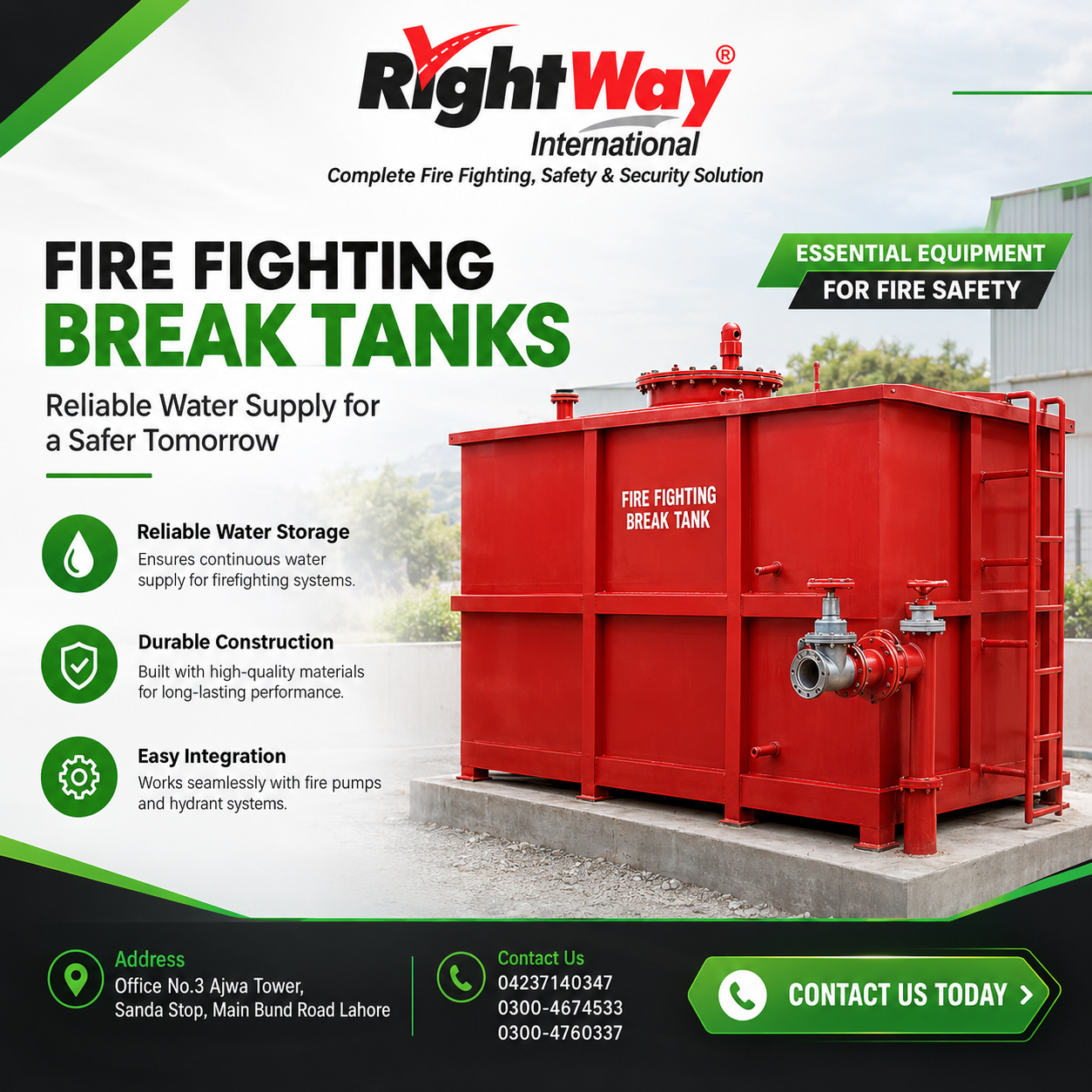
Fire Fighting Break Tank plays an important role in many fire protection water supply systems. It provides a dedicated water source for fire pumps and helps maintain a reliable supply during an emergency. Moreover, a properly selected break tank can improve water availability, system performance, and fire safety.
In commercial buildings, industrial facilities, warehouses, hospitals, shopping centers, and other large properties, fire protection systems need a dependable water supply. Therefore, a Fire Fighting Break Tank can provide the required water storage between the main water source and the fire pump system.
This guide explains the types, uses, benefits, materials, installation requirements, maintenance practices, and buying considerations for fire fighting break tanks.
What Is a Fire Fighting Break Tank?
A Fire Fighting Break Tank is a dedicated water storage tank that supplies water to a fire protection system. It normally sits between the incoming water supply and the fire pump installation.
The tank creates a physical break between the incoming water network and the fire protection water supply. As a result, it can help prevent backflow and protect the incoming water system from contamination.
Furthermore, the tank gives the fire pump a readily available water source. When the fire protection system activates, the pump draws water from the tank and sends it through the fire protection network.
How Does a Fire Fighting Break Tank Work?
A Fire Fighting Break Tank works as an intermediate water storage point.
First, the incoming water supply fills the tank. Next, the tank stores the required volume of water. When the fire protection system needs water, the fire pump draws water from the tank.
The pump then distributes water through the fire protection system. Depending on the installation, this water can supply fire hydrants, hose reels, sprinklers, fire hose systems, or other firefighting equipment.
Therefore, a correctly designed break tank helps maintain a stable and dependable water supply during an emergency.
Why Is a Fire Fighting Break Tank Used?
A Fire Fighting Break Tank provides several important functions in a fire protection system.
1. Provides a Dedicated Water Supply
The tank keeps a dedicated quantity of water available for firefighting. Therefore, the system does not have to depend entirely on the incoming water network during an emergency.
2. Supports Fire Pumps
Fire pumps require a reliable water source. A break tank provides the pump with stored water and helps maintain a consistent supply.
3. Helps Prevent Backflow
The physical separation between the incoming supply and stored fire water can help reduce backflow risks. Consequently, the arrangement can provide additional protection for the incoming water network.
4. Improves System Reliability
A dedicated water source can improve the reliability of a fire protection installation. In addition, proper tank sizing helps the system provide water for the required operating period.
5. Supports Fire Protection Equipment
The stored water can supply different firefighting systems. For example, it may support fire hydrants, sprinklers, hose reels, and other water-based fire protection equipment.
Types of Fire Fighting Break Tanks
Different buildings require different tank designs. Therefore, manufacturers offer several types of fire fighting break tanks.
Steel Fire Fighting Break Tank
Steel tanks provide a strong and durable solution for many industrial and commercial applications. They can offer good mechanical strength and long service life when properly protected against corrosion.
Galvanized Steel Break Tank
Galvanized steel tanks have a protective zinc coating that helps reduce corrosion. As a result, they can work well in environments where additional corrosion protection is important.
GRP Fire Fighting Break Tank
GRP, or glass-reinforced plastic, tanks provide a lightweight alternative to traditional metal tanks. They offer good corrosion resistance and can suit various commercial and industrial installations.
Fiberglass Break Tank
Fiberglass tanks can provide excellent resistance to corrosion and moisture. Moreover, their relatively low weight can make transportation and installation easier.
Sectional Break Tank
A sectional tank consists of multiple panels assembled at the installation location. This design can work particularly well where access through doors, corridors, or restricted spaces presents a challenge.
Modular Fire Water Tank
Modular tanks use prefabricated sections that technicians assemble on-site. Therefore, they can provide a practical solution for large-capacity installations.
Underground Break Tank
An underground tank sits below ground level and can save valuable surface space. However, installation requires careful planning, waterproofing, structural design, and access for maintenance.
Above-Ground Break Tank
Above-ground tanks remain accessible for inspection and maintenance. They can provide a practical solution for facilities with sufficient installation space.
Where Are Fire Fighting Break Tanks Used?
A Fire Fighting Break Tank can serve many types of buildings and facilities.
Common applications include:
- Commercial buildings
- Industrial plants
- Warehouses
- Shopping malls
- Hospitals
- Hotels
- Schools and universities
- Residential high-rise buildings
- Manufacturing facilities
- Data centers
- Parking facilities
- Large offices
- Airports
- Power plants
- Infrastructure projects
In addition, facilities with large fire protection systems may require dedicated water storage to support their firefighting demand.
Main Components of a Fire Fighting Break Tank System
A complete Fire Fighting Break Tank installation can include several components.
Storage Tank
The tank stores the water required for the fire protection system. Its capacity depends on the system design and required water demand.
Inlet Connection
The inlet allows water to enter the tank from the approved incoming supply.
Outlet Connection
The outlet supplies water to the fire pump or other connected fire protection equipment.
Float Valve or Level Control
A level control system helps regulate the incoming water supply. It can also help maintain the required water level.
Overflow Connection
An overflow arrangement helps manage excess water if the tank reaches its maximum level.
Drain Connection
A drain allows technicians to empty the tank when necessary for cleaning, inspection, or maintenance.
Level Indicator
A level indicator allows operators to monitor the available water inside the tank.
Access Cover
An access cover provides entry for inspection and cleaning while helping protect the stored water from external contamination.
Benefits of a Fire Fighting Break Tank
Installing a properly designed Fire Fighting Break Tank can provide several benefits.
Reliable Fire Water Availability
The tank maintains a dedicated water reserve for the fire protection system. Therefore, the fire pump can access stored water when required.
Better Fire Pump Performance
A suitable water source helps the fire pump operate effectively. As a result, the overall fire protection system can perform more reliably.
Reduced Backflow Risk
The break arrangement separates the incoming water supply from the stored fire water. This separation can reduce the risk of unwanted reverse flow.
Flexible Installation Options
Different materials and configurations allow engineers to select a tank according to the available space, capacity, environment, and project requirements.
Easy Maintenance
Many tank designs provide access points for inspection, cleaning, and servicing. Consequently, routine maintenance becomes easier.
Long-Term Value
A quality tank can provide long-term service when the manufacturer selects suitable materials and the installation team follows the correct maintenance procedures.
Fire Fighting Break Tank vs Fire Water Storage Tank
Although both systems store water for firefighting, their functions can differ.
A Fire Fighting Break Tank commonly provides an intermediate storage point between the incoming water supply and the fire pump system. It can also create a physical separation that helps protect the incoming supply.
A larger fire water storage tank, on the other hand, may serve as the primary water reserve for a complete fire protection installation.
The correct solution depends on the building design, water supply, fire demand, pump arrangement, available space, and applicable requirements.
How to Choose the Right Fire Fighting Break Tank
Choosing the correct Fire Fighting Break Tank requires careful consideration.
1. Determine the Required Capacity
Start by determining the required water volume. The design should consider the connected fire protection systems and their expected water demand.
2. Select the Appropriate Material
Choose the tank material according to the installation environment. Steel, galvanized steel, GRP, and fiberglass can each provide different advantages.
3. Consider Available Space
Measure the available installation area before selecting the tank. For restricted locations, sectional or modular designs may offer greater flexibility.
4. Check Fire Pump Requirements
The tank should provide a suitable water supply for the connected fire pump. Therefore, engineers should consider pump flow, suction requirements, and system demand.
5. Consider Installation Conditions
Review access, foundation requirements, drainage, ventilation, environmental exposure, and maintenance access before installation.
6. Verify Applicable Standards
Always confirm the requirements that apply to the specific project. Local regulations, project specifications, fire protection standards, and authority requirements can affect tank design.
Installation of a Fire Fighting Break Tank
Correct installation plays an important role in system reliability.
First, prepare a suitable foundation that can support the tank and its operating weight. Next, position the tank according to the approved system design.
Then, connect the inlet, outlet, overflow, drain, level controls, and other required components. After that, inspect all connections and check for leaks.
Finally, test the complete system before putting it into normal service.
A qualified fire protection professional should review the installation to ensure that it meets the project requirements.
Maintenance of a Fire Fighting Break Tank
Regular maintenance helps keep the Fire Fighting Break Tank ready for emergency use.
A basic maintenance program may include:
- Inspecting the tank externally
- Checking for corrosion or physical damage
- Inspecting inlet and outlet connections
- Checking valves and level controls
- Testing overflow and drain arrangements
- Checking water levels
- Cleaning the tank when required
- Inspecting internal surfaces where applicable
- Checking for leaks
- Reviewing connected fire pump performance
- Keeping maintenance records
Furthermore, maintenance frequency should follow the manufacturer’s recommendations and applicable fire protection requirements.
Common Problems With Break Tanks
Several problems can affect the performance of a Fire Fighting Break Tank.
Incorrect Tank Capacity
An undersized tank may not provide enough water for the required fire protection demand. Therefore, engineers should calculate the required capacity before purchasing the tank.
Poor Installation
Incorrect connections, inadequate foundations, or poor pipe arrangements can create operational problems.
Corrosion
Metal tanks can experience corrosion when they lack suitable protection or maintenance. Regular inspection can help identify problems early.
Poor Water Quality
Contaminated or poorly maintained water can affect the system. Therefore, facilities should follow appropriate cleaning and inspection procedures.
Lack of Maintenance
Even a high-quality tank requires regular inspection. Without maintenance, valves, connections, level controls, and other components may not perform correctly.
Fire Fighting Break Tanks in Pakistan
The demand for reliable fire protection systems continues across commercial, industrial, residential, and infrastructure projects in Pakistan. Therefore, a Fire Fighting Break Tank can play an important role in projects that require a dedicated and reliable firefighting water supply.
Fire fighting break tanks in Pakistan are available in different materials, capacities, and configurations. Depending on the project, buyers may select steel, galvanized steel, GRP, fiberglass, sectional, or modular solutions.
When purchasing a Fire Fighting Break Tank in Pakistan, consider the tank capacity, material quality, manufacturing standards, installation requirements, fire pump compatibility, maintenance support, and project specifications.
Moreover, local site conditions can affect the appropriate tank design. Therefore, buyers should consult qualified fire protection professionals before finalizing the tank.
Fire Fighting Break Tank Buying Guide
Before purchasing a Fire Fighting Break Tank, consider the following checklist:
- Required tank capacity
- Tank dimensions
- Construction material
- Corrosion protection
- Indoor or outdoor installation
- Above-ground or underground installation
- Fire pump requirements
- Inlet and outlet sizes
- Drain and overflow arrangements
- Level control system
- Access requirements
- Installation space
- Maintenance access
- Applicable fire protection standards
- Manufacturer experience
- Warranty and after-sales support
Additionally, always compare technical specifications rather than selecting a tank based only on price.
Safety Considerations
Fire protection equipment must remain ready for emergency use. Therefore, the Fire Fighting Break Tank should remain accessible for inspection and maintenance.
Keep the area around the tank clear. Also, protect the tank and associated equipment from unauthorized modification or accidental damage.
Furthermore, inspect the complete fire water system regularly. A tank alone cannot protect a building; it must work correctly with the fire pump, pipe network, valves, hydrants, sprinklers, hose reels, and other connected equipment.
Frequently Asked Questions
What is a Fire Fighting Break Tank?
A Fire Fighting Break Tank is a dedicated water storage tank used to supply water to a fire protection system. It commonly provides an intermediate water supply between the incoming water source and fire pumps.
Why is a break tank required?
A break tank can provide dedicated fire water storage and create physical separation between the incoming water supply and the fire protection system.
What materials are used for fire fighting break tanks?
Common materials include steel, galvanized steel, GRP, and fiberglass. The appropriate material depends on the application, environment, capacity, and project requirements.
Can a break tank supply fire pumps?
Yes. A properly designed Fire Fighting Break Tank can supply water to fire pumps. However, the tank and pump arrangement should match the approved fire protection system design.
What size break tank do I need?
The required capacity depends on the fire protection system, water demand, required duration, pump configuration, and applicable design requirements. A qualified engineer should determine the appropriate capacity.
Are fire fighting break tanks suitable for industrial buildings?
Yes. Fire fighting break tanks can support fire protection systems in many industrial facilities, warehouses, factories, and large commercial buildings.
How often should a break tank be maintained?
Maintenance frequency depends on the tank design, manufacturer recommendations, applicable standards, and project requirements. Regular inspection and testing help maintain system readiness.
A Fire Fighting Break Tank provides an important water supply solution for many fire protection systems. It can support fire pumps, provide dedicated water storage, and help create separation between the incoming water supply and firefighting network.
However, selecting the right tank requires careful attention to capacity, material, installation conditions, pump requirements, maintenance, and applicable standards.
Whether you need a steel, galvanized, GRP, fiberglass, sectional, or modular Fire Fighting Break Tank, choose a solution that matches the technical requirements of your fire protection system.