




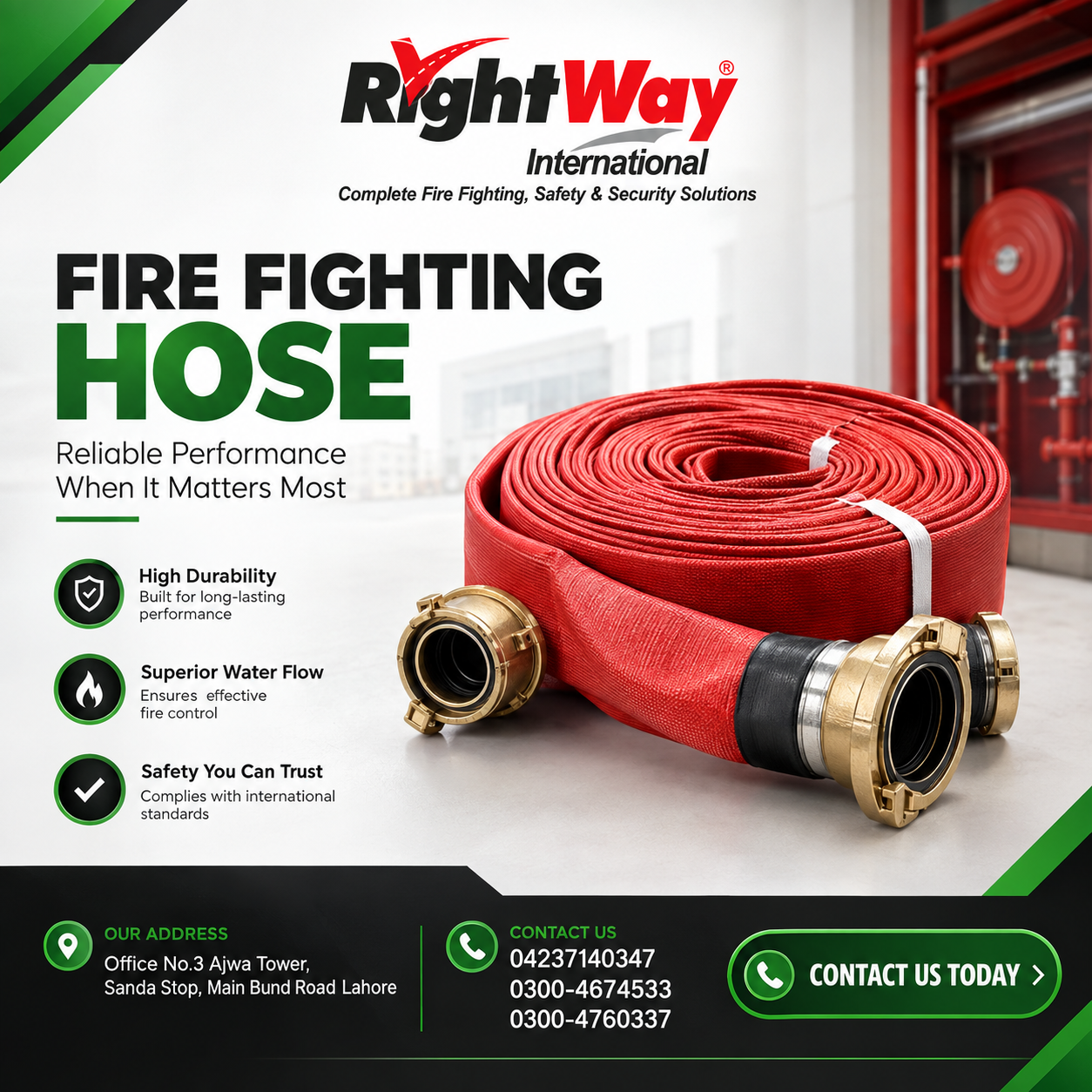
Fire Fighting Hose: Types Uses Benefits & Buying Guide plays an essential role in modern fire protection systems. It allows firefighters and trained personnel to deliver water quickly and effectively during a fire emergency. In addition, fire hoses work with fire hydrants, fire hose reels, standpipe systems, fire pumps, and compatible nozzles.
Commercial buildings, factories, warehouses, hospitals, hotels, and high-rise buildings often require reliable firefighting equipment. Therefore, choosing the correct Fire Fighting Hose can improve emergency response and help maintain an effective fire protection system.
What Is a Fire Fighting Hose?
A Fire Fighting Hose is a flexible tube that carries pressurized water or another suitable firefighting agent from a water source to a fire.
Firefighters can connect the hose to a fire hydrant, standpipe, fire pump, hose reel, or other compatible outlet. The hose then carries water to the nozzle, where the operator directs the flow toward the fire.
Moreover, manufacturers produce fire hoses in different sizes, materials, lengths, and pressure ratings. As a result, users can select a hose according to the requirements of a particular fire protection system.
How Does a Fire Fighting Hose Work?
A fire fighting hose carries water from a pressurized water supply to the point where firefighters need it.
First, trained personnel connect the hose to a compatible fire hydrant, valve, pump, or hose reel. Next, they secure the connections and open the water supply. The pressurized water then travels through the hose and reaches the fire hose nozzle.
Finally, the operator controls the water stream and directs it toward the fire.
Therefore, the hose must provide sufficient strength, flexibility, and pressure resistance for its intended application.
Types of Fire Fighting Hoses
1. Fire Delivery Hose
A Fire Delivery Hose carries water from a hydrant, fire pump, standpipe, or other water source to the firefighting point.
Fire departments and industrial emergency teams commonly use delivery hoses because they provide flexible water transportation during firefighting operations.
2. Fire Hose Reel Hose
A Fire Hose Reel Hose connects to a fire hose reel and provides a convenient water supply for initial fire response.
Because the hose remains stored on a reel, trained personnel can deploy it quickly when a small fire occurs.
3. Layflat Fire Hose
A Layflat Fire Hose remains relatively flat when it does not carry water. This design makes storage and transportation easier.
When pressurized water enters the hose, it expands and creates a passage for water flow. Consequently, layflat hoses can support various firefighting and water delivery applications.
4. Fire Suction Hose
A Fire Suction Hose helps draw water from an open water source such as a tank, reservoir, swimming pool, or other suitable supply.
Unlike a standard delivery hose, a suction hose needs construction that can withstand the conditions created during water intake.
5. High Pressure Fire Hose
A High Pressure Fire Hose handles applications that require higher operating pressure.
For this reason, buyers should check the hose pressure rating before connecting it to a high-pressure fire pump or water supply.
6. Industrial Fire Hose
An Industrial Fire Hose serves factories, warehouses, manufacturing plants, chemical facilities, and other industrial locations.
Depending on the environment, an industrial hose may need additional resistance to abrasion, chemicals, heat, weather, or repeated handling.
Where Are Fire Fighting Hoses Used?
Fire Fighting Hoses serve many different locations and applications, including:
- High-rise buildings
- Commercial buildings
- Industrial facilities
- Factories
- Warehouses
- Hospitals
- Hotels
- Shopping centers
- Schools
- Parking structures
- Residential buildings
- Manufacturing plants
- Construction sites
- Fire stations
- Oil and gas facilities
These locations can have different fire risks and water supply requirements. Therefore, users should select a hose that matches the building’s fire protection design.
Main Components of a Fire Fighting Hose
A typical Fire Fighting Hose can include several important components:
- Hose tube
- Outer jacket
- Reinforcement layers
- Hose couplings
- Hose connectors
- End fittings
- Protective cover
- Nozzle connection
- Threaded connections
Each component contributes to the hose’s performance and reliability.
For example, compatible couplings create a secure connection between the hose and the fire hydrant, valve, pump, or nozzle. Similarly, the hose construction helps it withstand water pressure and regular handling.
Benefits of Fire Fighting Hoses
Fire Fighting Hoses offer several important benefits:
- Provide flexible water delivery
- Support fast firefighting operations
- Help deliver water over longer distances
- Connect with fire hydrant systems
- Work with compatible fire hose nozzles
- Support industrial firefighting
- Provide convenient emergency water access
- Come in different sizes and lengths
- Support high-rise firefighting operations
- Improve emergency preparedness
Furthermore, a properly selected and maintained hose can help firefighters respond efficiently during an emergency.
Fire Fighting Hose vs Fire Hose Reel Hose
| Feature | Fire Fighting Hose | Fire Hose Reel Hose |
|---|---|---|
| Main purpose | Delivers water during firefighting operations | Provides convenient water access for initial fire response |
| Common location | Fire stations, hydrant systems, industrial sites | Commercial and building interiors |
| Storage | Depends on the hose type | Stored on a hose reel |
| Deployment | Firefighters or trained personnel deploy it | Users can pull it directly from the reel |
| Water source | Hydrant, pump, standpipe, or other supply | Connected to a dedicated water supply |
| Application | Various firefighting operations | Early-stage fire response |
Both options support fire safety. However, their designs and applications differ, so users should select the appropriate type for the fire protection system.
Fire Fighting Hose Sizes
Manufacturers offer fire hoses in different diameters and lengths. The correct size depends on several factors, such as:
- Required water flow
- Operating pressure
- Fire protection system design
- Connection size
- Hose length
- Nozzle requirements
- Building layout
- Fire pump capacity
A larger hose can generally carry more water, while a smaller hose can offer easier handling. However, the system designer should determine the appropriate size according to the required flow and pressure.
Therefore, avoid selecting a hose based only on its physical size or appearance.
Fire Fighting Hose Pressure Rating
The Fire Fighting Hose pressure rating plays an important role in safe and reliable operation.
Before purchasing a hose, check its working pressure, test pressure, and burst pressure. Then, compare these ratings with the requirements of the connected fire protection system.
For example, a hose connected to a high-pressure fire pump needs a suitable pressure rating. Similarly, industrial applications may require a hose with additional durability.
Always select a hose that can safely handle the pressure generated by the intended system.
Fire Fighting Hose Materials
Manufacturers use different materials and construction methods to produce fire hoses.
Common materials include:
- Synthetic rubber
- PVC
- Polyester
- Nylon
- EPDM
- Rubber-lined fabric
- Reinforced synthetic materials
Each material offers different characteristics. For instance, some materials provide greater flexibility, while others offer better resistance to abrasion, chemicals, weather, or heat.
Consequently, buyers should select the material according to the installation environment and intended use.
Fire Fighting Hose Installation
Before installation, review the complete fire protection system and determine the hose requirements.
Consider the following factors:
- Hose diameter
- Hose length
- Connection type
- Operating pressure
- Required water flow
- Fire hydrant location
- Hose reel configuration
- Fire pump capacity
- Nozzle compatibility
- Applicable fire safety requirements
In addition, qualified fire protection professionals should install fixed fire hose systems according to the approved system design and applicable requirements.
Proper installation helps the hose deliver water effectively and maintain reliable connections during an emergency.
Fire Fighting Hose Maintenance and Inspection
Regular maintenance helps keep a Fire Fighting Hose ready for emergency use.
During an inspection, check the hose for:
- Cuts
- Cracks
- Abrasion
- Leaks
- Damaged couplings
- Corrosion
- Chemical damage
- Excessive wear
- Deformation
- Incorrect storage
Also, keep hose storage areas clean and accessible. Protect hoses from unnecessary exposure to direct sunlight, excessive heat, chemicals, sharp objects, and other damaging conditions.
If you find serious damage, remove the hose from service and follow the applicable repair or replacement requirements.
How to Choose a Fire Fighting Hose
Before purchasing a Fire Fighting Hose, consider the following factors:
1. Hose Type
First, identify the intended application. A hydrant hose, hose reel hose, suction hose, and industrial fire hose serve different purposes.
2. Hose Size
Next, select the diameter according to the required water flow and system connection.
3. Hose Length
Choose a length that provides sufficient reach without creating unnecessary handling or storage problems.
4. Pressure Rating
Always check the working pressure and other relevant pressure ratings. The hose must match the requirements of the connected system.
5. Material
Choose a suitable material based on temperature, abrasion, chemicals, weather exposure, flexibility, and other environmental conditions.
6. Couplings
Make sure the couplings match the fire hydrant, valve, nozzle, fire pump, or other connected equipment.
7. Durability
For industrial and outdoor applications, consider a hose that can handle repeated use and the conditions of the installation environment.
8. Quality and Compliance
Finally, purchase from a reliable manufacturer or supplier. Also, check the applicable fire protection standards and project specifications before making a purchase.
Fire Fighting Hose in Pakistan
Fire Fighting Hoses in Pakistan support fire protection systems in commercial buildings, factories, warehouses, hospitals, hotels, shopping centers, and industrial facilities.
When purchasing a Fire Fighting Hose in Pakistan, buyers should consider the hose material, diameter, length, pressure rating, coupling type, application, and system compatibility.
Moreover, working with a reliable fire safety equipment supplier can help buyers select suitable products for their specific requirements.
Before purchasing, ask the supplier for product specifications and confirm that the hose matches the requirements of the existing fire protection system.
Common Fire Fighting Hose Mistakes to Avoid
Several common mistakes can reduce the effectiveness of a fire hose system.
Avoid these problems:
- Choosing the wrong hose diameter
- Ignoring pressure requirements
- Using incompatible couplings
- Selecting poor-quality materials
- Storing hoses incorrectly
- Ignoring visible damage
- Blocking access to hose reels or outlets
- Skipping regular inspections
- Using the wrong hose for a particular application
- Ignoring applicable fire protection requirements
Therefore, always match the hose with the approved fire protection system and maintain it according to the relevant requirements.
FAQs
What is a Fire Fighting Hose?
A Fire Fighting Hose is a flexible tube that carries pressurized water or another suitable firefighting agent from a water source to the fire.
What are the common types of fire fighting hoses?
Common types include fire delivery hoses, fire hose reel hoses, layflat fire hoses, fire suction hoses, high-pressure fire hoses, and industrial fire hoses.
What size fire fighting hose should I choose?
The correct size depends on the required water flow, operating pressure, connection size, hose length, nozzle requirements, and overall system design.
Can a fire fighting hose connect to a fire hydrant?
Yes. A compatible fire fighting hose can connect to a fire hydrant through suitable couplings and fittings.
How should I maintain a fire fighting hose?
Inspect the hose regularly for cuts, cracks, leaks, abrasion, damaged couplings, corrosion, and other signs of deterioration. Also, store the hose correctly and follow the applicable inspection and testing requirements.
What is the difference between a fire hose and a fire hose reel hose?
A standard fire hose can serve various firefighting applications, while a fire hose reel hose stays mounted on a reel and provides convenient access for initial fire response.
Why does fire hose pressure rating matter?
The pressure rating helps determine whether a hose can safely handle the pressure generated by the connected fire protection system. Therefore, always match the hose rating with the system requirements.
Where can I buy a Fire Fighting Hose in Pakistan?
You can purchase a Fire Fighting Hose in Pakistan from specialized fire safety equipment manufacturers and suppliers. Before buying, compare the hose specifications, material, pressure rating, connection type, and intended application.
A Fire Fighting Hose forms an important part of many fire protection systems. It provides a flexible way to transport water from hydrants, pumps, standpipes, hose reels, and other water supplies to the firefighting point.
The right hose depends on several factors, including its type, size, length, material, pressure rating, coupling, and intended application. In addition, proper installation, inspection, storage, and maintenance help keep the hose ready for emergency use.
When purchasing a Fire Fighting Hose in Pakistan, choose a reliable product that matches your fire protection system and project requirements. Most importantly, follow applicable fire safety standards and use qualified professionals for system design, installation, inspection, and maintenance.