




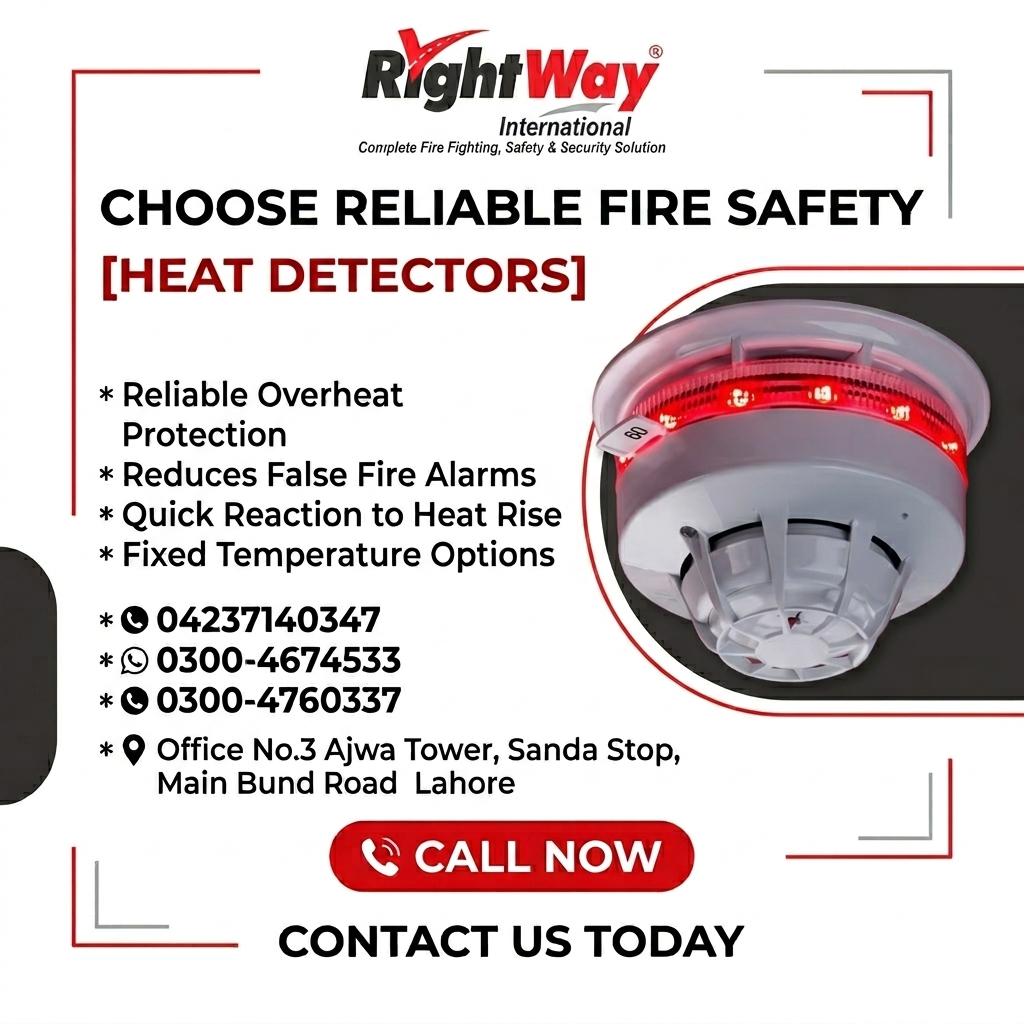
Heat Detector – Complete Guide is a fire detection device that identifies fire by sensing temperature changes instead of smoke. Therefore, it works best in environments where smoke detectors may cause false alarms. As a result, heat detectors are widely used in kitchens, garages, warehouses, and industrial areas. as Per National Fire Protection Association Standers
What is a Heat Detector?
A heat detector is an electronic safety device that activates an alarm when the temperature reaches a fixed level or rises rapidly within a short time. Unlike smoke detectors, it does not detect smoke particles; instead, it focuses purely on heat.
Because of this, it is highly reliable in areas with dust, steam, or fumes.
How Does a Heat Detector Work?
Heat detectors operate based on temperature sensing mechanisms.
1. Normal Condition
First, the detector continuously monitors the surrounding temperature. During this stage, it remains inactive.
2. Temperature Change
Next, heat from a fire increases the ambient temperature.
3. Detection Mechanism
Depending on the type, the detector either:
- senses a fixed temperature threshold, or
- detects a rapid rise in temperature
4. Alarm Activation
Finally, once the condition is met, the detector triggers the alarm immediately.
Thus, it ensures reliable fire detection even in harsh environments.
Types of Heat Detectors
1. Fixed Temperature Heat Detector
This type activates when the temperature reaches a preset level (e.g., 57°C or 135°F). Therefore, it is simple and reliable.
2. Rate-of-Rise Heat Detector
This detector responds when the temperature increases rapidly (e.g., 6–8°C per minute). As a result, it provides faster detection of sudden fires.
3. Combination Heat Detector
This type combines both fixed temperature and rate-of-rise features. Hence, it offers better protection.
Key Characteristics
- Detects heat instead of smoke
- Suitable for harsh environments
- Resistant to dust, steam, and fumes
- Lower false alarm rate
- Slower response compared to smoke detectors
Fire Types Detected
Heat detectors are effective for:
- Fast-flaming fires
- High-heat fires
- Industrial and electrical fires
However, they are not ideal for detecting slow, smoldering fires.
Where Heat Detectors Are Used
Heat detectors are commonly installed in:
- Kitchens
- Garages
- Boiler rooms
- Warehouses
- Factories and industrial plants
Because these areas often produce smoke or fumes, heat detectors perform better than smoke detectors.
Where NOT to Use
However, avoid using heat detectors in:
❌ Bedrooms and sleeping areas
❌ Living rooms
❌ Offices with clean air
❌ Escape routes and hallways
In these areas, smoke detectors provide earlier warning.
Advantages
1. Fewer False Alarms
First, heat detectors are not affected by smoke, steam, or dust.
2. Reliable in Harsh Environments
Moreover, they perform well in industrial and high-humidity areas.
3. Durable Design
In addition, they require less frequent maintenance.
4. Cost-Effective
Generally, they are affordable and long-lasting.
Disadvantages
- However, they respond slower than smoke detectors
- They cannot detect smoke or early-stage fires
- Not suitable for life safety in sleeping areas
- Limited sensitivity to smoldering fires
Heat Detector vs Photoelectric Smoke Detector
| Feature | Heat Detector | Smoke Detector |
|---|---|---|
| Detection Method | Temperature | Smoke particles |
| Response Time | Slower | Faster |
| Best For | Harsh environments | Clean indoor areas |
| False Alarms | Very low | Moderate |
| Fire Type | Flaming fires | Smoldering & flaming |
Overall, both devices serve different purposes; therefore, using them together improves fire safety.
Maintenance Tips
To ensure proper operation, follow these steps:
- Test the detector regularly
- Keep it clean from dust and debris
- Check wiring and connections
- Replace units as per manufacturer guidelines
- Inspect during fire safety audits
Frequently Asked Questions (FAQs)
1. Are heat detectors better than smoke detectors?
Not exactly. They serve different purposes. Heat detectors are better in harsh environments, while smoke detectors provide earlier warning.
2. Do heat detectors detect smoke?
No, they only respond to temperature changes.
3. Where should I install a heat detector?
Install it in kitchens, garages, and industrial areas.
4. Are they safe for homes?
Yes, but they should not replace smoke detectors in living or sleeping areas.
5. What is their lifespan?
Typically, heat detectors last 10–15 years.
Conclusion
In conclusion, a heat detector is a reliable fire detection device designed for environments where smoke detectors may fail or cause false alarms. Because it responds to temperature changes, it performs well in kitchens, garages, and industrial settings.
However, since it detects fire at a later stage, it should not replace smoke detectors. Instead, combining heat detectors with smoke detectors ensures complete and effective fire protection.