




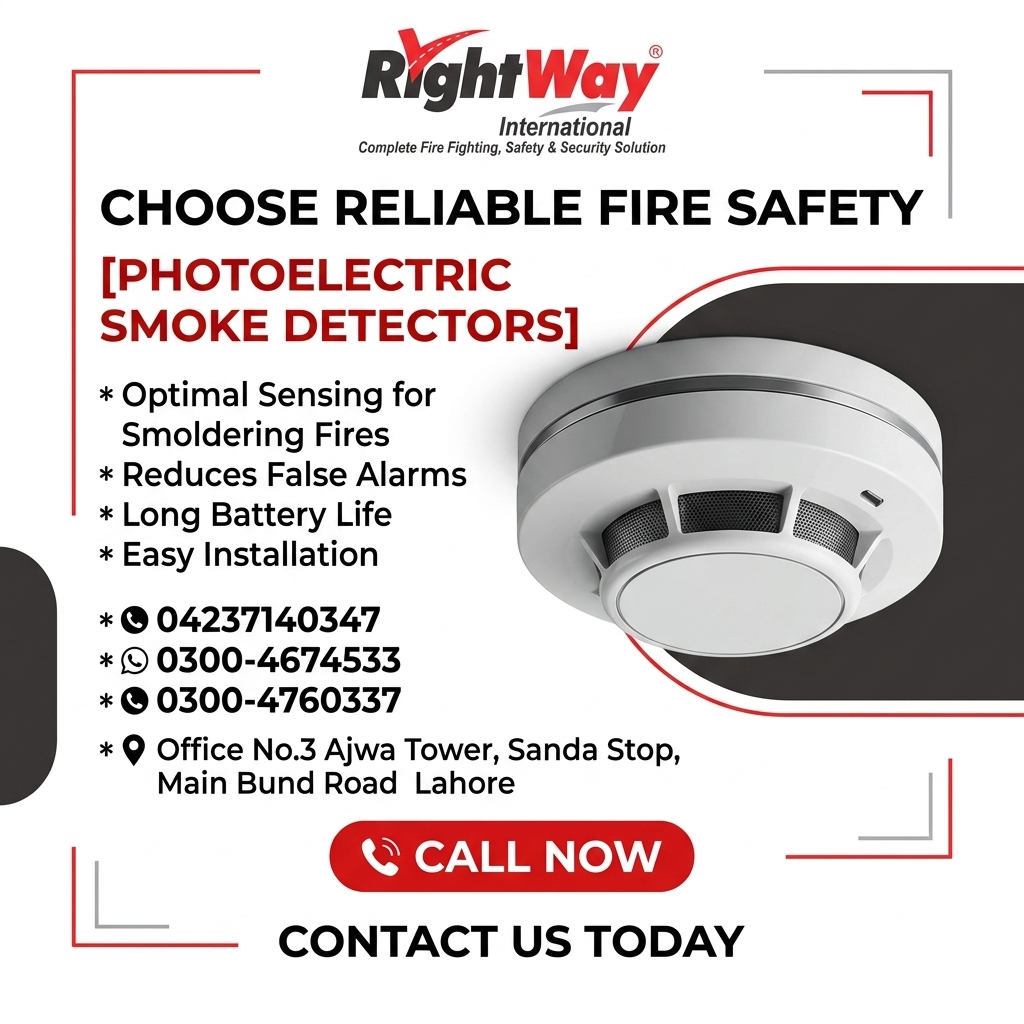
Photoelectric Smoke Detector Complete Guide. is a highly effective fire detection device designed to identify slow, smoldering fires at an early stage. These fires usually produce large amounts of visible smoke before flames appear; therefore, early detection becomes critical for safety. As a result, photoelectric detectors are widely installed in homes, offices, hotels, and commercial buildings as part of modern fire alarm systems. as Per National Fire Protection Association.
What is a Photoelectric Smoke Detector?
A photoelectric smoke detector uses light-based sensing technology to detect smoke particles in the air. Unlike ionization detectors, it does not rely on radioactive material.
Instead, it uses a light source and a sensor placed inside a chamber. Under normal conditions, the light does not reach the sensor. However, when smoke enters, it scatters the light, which then hits the sensor and triggers the alarm.
How Does a Photoelectric Smoke Detector Work?
The device operates based on light scattering caused by smoke particles.
1. Normal Condition
First, the detector emits a light beam inside the sensing chamber. At this stage, the beam moves away from the sensor; therefore, no alarm is triggered.
2. Smoke Entry
Next, smoke particles enter the chamber. As they accumulate, they begin to scatter the light in different directions.
3. Light Detection
Consequently, some of the scattered light reaches the sensor. The sensor immediately detects this change in light intensity.
4. Alarm Activation
Finally, the system recognizes the variation and activates the alarm without delay.
Thus, this method ensures effective detection of visible smoke from slow-burning fires.
Key Characteristics
- Detects visible smoke particles
- Specifically designed for smoldering fires
- Uses light-scattering technology
- Produces fewer false alarms
- Suitable for indoor environments
Fire Types Detected
Photoelectric smoke detectors perform best in the following situations:
- Smoldering fires, such as burning furniture or wiring
- Class A fires involving wood, paper, or cloth
- Fires that produce thick smoke before flames appear
In contrast, they respond more slowly to fast-flaming fires.
Where Photoelectric Smoke Detectors Are Used
These detectors are commonly installed in:
- Bedrooms and sleeping areas
- Living rooms and lounges
- Hallways near bedrooms
- Hotels and hospitals
- Offices and commercial buildings
Because of their reliability, they are especially important in areas where people sleep.
Where NOT to Use
However, avoid installing them in the following places:
❌ Extremely dusty environments
❌ Areas prone to insect entry
❌ Outdoor or open-air locations
❌ Near strong airflow such as vents or fans
Advantages
1. Early Detection of Smoldering Fires
First and foremost, these detectors identify dangerous fires before flames develop.
2. Fewer False Alarms
In addition, they are less sensitive to cooking fumes and steam.
3. Safer Technology
Moreover, they do not use radioactive material.
4. Ideal for Sleeping Areas
Therefore, they provide better protection in bedrooms and rest areas.
Disadvantages
- However, they respond more slowly to fast-flaming fires
- They are usually more expensive than ionization detectors
- They require regular cleaning to prevent dust buildup
- In some cases, they may miss very small invisible particles
Photoelectric vs Ionization Smoke Detector
| Feature | Photoelectric Detector | Ionization Detector |
|---|---|---|
| Fire Type | Smoldering fires | Fast flaming fires |
| Detection Speed | Faster for smoke | Faster for flames |
| False Alarms | Less common | More common |
| Best Location | Bedrooms, living areas | Kitchens, open areas |
| Technology | Light scattering | Ionization chamber |
Overall, experts recommend using both types together for complete protection.
Maintenance Tips
To ensure proper performance, follow these steps:
- Test the alarm monthly
- Replace batteries every 6–12 months
- Clean the detector regularly
- Replace the unit every 8–10 years
- Keep it free from dust and paint
Frequently Asked Questions (FAQs)
1. Is a photoelectric smoke detector better than ionization?
It depends on the situation. Generally, it performs better for smoldering fires, whereas ionization works better for flaming fires.
2. Does it reduce false alarms?
Yes, in most cases, it produces fewer false alarms compared to ionization detectors.
3. Can it detect all fires?
No, it is less effective for fast-flaming fires.
4. Where should I install it?
Ideally, place it in bedrooms, hallways, and living areas.
5. What is its lifespan?
Typically, it lasts 8–10 years.
Conclusion
In conclusion, the photoelectric smoke detector offers reliable and early detection of smoldering fires. Because it produces fewer false alarms and uses safe technology, it remains an excellent choice for residential and commercial use.
However, for maximum safety, you should combine it with ionization detectors or use a dual-sensor system. Ultimately, proper installation and regular maintenance ensure long-term protection and performance.