




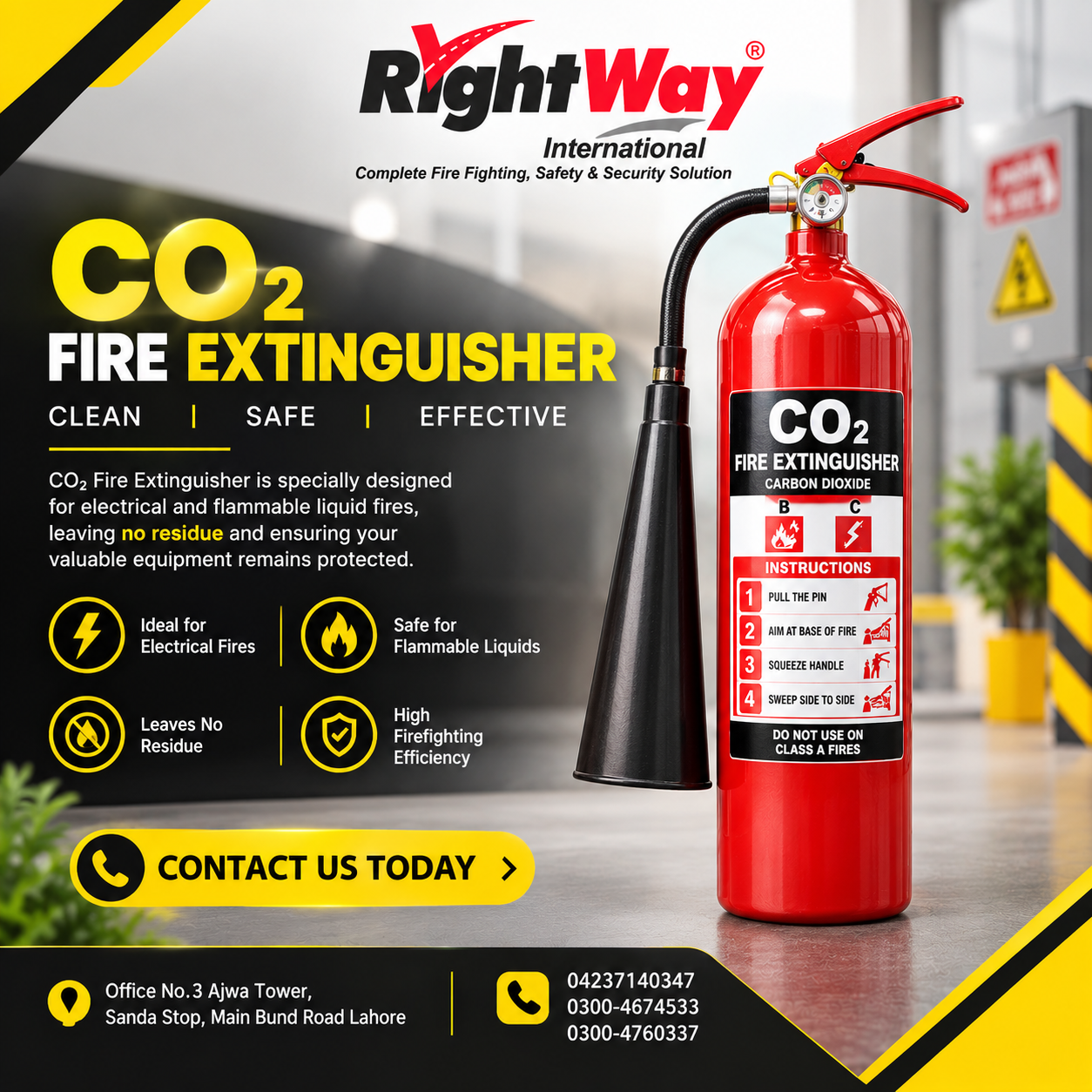
Importance of CO₂ Fire Extinguisher. CO₂ fire extinguisher plays an important role in protecting electrical equipment, machinery, offices, laboratories, server rooms, and other areas where electrical or flammable-liquid fire hazards exist. CO₂ stands for carbon dioxide, a clean extinguishing agent that suppresses fire without leaving powder or foam residue.
Unlike water and foam extinguishers, a CO₂ fire extinguisher releases carbon dioxide gas that helps remove oxygen from the immediate fire area. As a result, the fire loses one of the essential elements it needs to continue burning.
Because CO₂ does not leave a solid residue, many businesses choose it for locations containing sensitive electrical and electronic equipment. However, users must select the correct extinguisher according to the specific fire hazard and the manufacturer’s fire rating.
What Is a CO₂ Fire Extinguisher?
A CO₂ fire extinguisher contains carbon dioxide under high pressure. When the user activates the extinguisher, the cylinder releases CO₂ through the horn or discharge nozzle.
The gas suppresses compatible fires by reducing the oxygen available around the flame. In addition, the rapid expansion of CO₂ produces a cooling effect that helps reduce the temperature around the fire.
CO₂ extinguishers commonly protect against:
- Electrical equipment fires
- Computer equipment fires
- Server and data-center equipment fires
- Certain flammable-liquid fires
- Laboratory equipment fires
- Office electrical equipment fires
- Machinery involving electrical components
However, CO₂ extinguishers do not suit every fire type. Therefore, always check the extinguisher’s label before use.
Why Is a CO₂ Fire Extinguisher Important?
The importance of a CO₂ fire extinguisher comes from its ability to suppress certain fires without leaving a powdery or wet residue. This feature makes CO₂ particularly useful around electrical and electronic equipment.
For example, a conventional powder extinguisher can leave residue across computers, control panels, circuit boards, and other sensitive equipment. CO₂, on the other hand, dissipates after discharge and does not leave the same type of solid residue.
Therefore, businesses often consider CO₂ extinguishers when protecting valuable electrical and electronic assets.
1. Ideal for Certain Electrical Fire Risks
Electrical equipment can create serious fire hazards in offices, factories, server rooms, workshops, and commercial buildings.
A correctly rated CO₂ extinguisher can suppress certain electrical fires without introducing water onto energized equipment. As a result, it can provide an important first-response option for electrical fire hazards.
However, users should disconnect electrical power when they can do so safely. They should also follow the manufacturer’s instructions and applicable safety procedures.
2. Leaves No Solid Residue
One of the major benefits of a CO₂ fire extinguisher involves its clean discharge.
CO₂ does not leave the powder residue associated with many dry chemical extinguishers. Therefore, it can help reduce cleanup and contamination around sensitive equipment.
This advantage makes CO₂ extinguishers particularly useful for:
- Computers
- Server equipment
- Control panels
- Electrical cabinets
- Laboratory equipment
- Telecommunication equipment
- Electronic devices
Nevertheless, CO₂ discharge can create other hazards, including reduced visibility and oxygen displacement in confined spaces. Users should always follow proper safety procedures.
3. Helps Protect Valuable Equipment
Businesses invest heavily in computers, servers, machinery, control systems, and electronic equipment. A fire can damage these assets within minutes.
A correctly selected CO₂ extinguisher can help control a compatible fire while avoiding the solid residue that some other extinguishing agents leave behind.
Therefore, businesses can include CO₂ extinguishers in their fire protection strategy for areas containing sensitive equipment.
4. Provides Fast Fire Suppression
A CO₂ extinguisher releases gas rapidly when the user activates the handle. The gas spreads around the fire and reduces the oxygen concentration near the flames.
As a result, CO₂ can suppress a small compatible fire quickly when the user operates the extinguisher correctly.
However, CO₂ provides limited protection against re-ignition in some situations. Therefore, users should continue monitoring the area after extinguishing the flames.
5. Useful for Certain Flammable-Liquid Fires
CO₂ extinguishers can also provide protection against certain Class B fire hazards, which involve flammable liquids.
Examples can include certain fires involving:
- Solvents
- Oils
- Fuels
- Paint-related liquids
- Other compatible flammable liquids
However, the extinguisher’s certified rating determines its suitability. Therefore, always verify the label before using CO₂ on a flammable-liquid fire.
How Does a CO₂ Fire Extinguisher Work?
A CO₂ fire extinguisher works mainly by discharging carbon dioxide into the fire area.
Fire requires three basic elements: heat, fuel, and oxygen. This combination forms the commonly known fire triangle.
When the user discharges CO₂, the gas reduces the available oxygen around the flames. At the same time, the rapid expansion of the gas creates a cooling effect.
As a result, the fire can lose the conditions required to continue burning.
For example, when a small electrical fire occurs inside suitable equipment, the user can direct the CO₂ discharge toward the base of the flames. The gas then surrounds the affected area and helps suppress combustion.
Main Benefits of CO₂ Fire Extinguishers
CO₂ extinguishers offer several important benefits.
Clean Extinguishing Agent
CO₂ does not leave a powder or foam coating behind. Therefore, it works well in areas where cleanup and residue could create additional problems.
Suitable for Certain Electrical Fires
A correctly rated CO₂ extinguisher can provide an effective option for certain energized electrical fire hazards.
No Powder Residue
Unlike dry chemical powder extinguishers, CO₂ does not leave solid powder on equipment.
Compact and Portable
Many CO₂ extinguishers feature a portable cylinder design. Therefore, users can position them near suitable fire hazards for quick access.
Useful for Sensitive Equipment
Businesses can use CO₂ extinguishers around computers, servers, electrical panels, and other sensitive equipment when the fire risk assessment supports their use.
Where Are CO₂ Fire Extinguishers Used?
CO₂ extinguishers work particularly well in areas containing compatible electrical or flammable-liquid hazards.
Offices
Modern offices contain computers, printers, electrical appliances, networking equipment, and other electronic devices. Therefore, a correctly selected CO₂ extinguisher can provide useful protection against certain electrical fire risks.
Server Rooms
Server rooms contain expensive electronic equipment that can suffer extensive damage from fire and unsuitable extinguishing agents. CO₂ can provide clean fire suppression for compatible fire hazards.
Electrical Rooms
Electrical rooms contain switchboards, control panels, cables, circuit breakers, and other electrical equipment. A correctly rated CO₂ extinguisher can provide an important first-response option.
Laboratories
Laboratories may contain electrical equipment and certain flammable liquids. Therefore, fire protection professionals may select CO₂ extinguishers for compatible hazards.
Workshops
Workshops can contain electrical machinery and equipment. Consequently, a suitable CO₂ extinguisher can form part of the area’s fire protection plan.
CO₂ Fire Extinguisher vs. DCP Fire Extinguisher
CO₂ and DCP extinguishers use different extinguishing agents and offer different characteristics.
| Feature | CO₂ Fire Extinguisher | DCP Fire Extinguisher |
|---|---|---|
| Extinguishing agent | Carbon dioxide | Dry chemical powder |
| Solid residue | No | Yes |
| Electrical fire applications | Suitable for certain electrical fires | Suitable for certain electrical fires, depending on rating |
| Flammable-liquid fires | Suitable for certain Class B fires | Suitable for certain Class B fires, depending on rating |
| Cleanup | Minimal solid residue | Powder cleanup required |
| Sensitive electronics | Often preferred where appropriate | Powder may contaminate equipment |
| Fire classes | Depends on certification | Depends on certification |
Therefore, users should choose between CO₂ and DCP according to the fire hazard, equipment, fire rating, environment, and applicable safety requirements.
How to Use a CO₂ Fire Extinguisher
Only attempt to extinguish a fire when it remains small, you have the correct extinguisher, and you have a clear escape route.
Follow the manufacturer’s operating instructions. In general:
- Remove the safety pin or seal according to the extinguisher design.
- Hold the extinguisher securely.
- Aim the discharge horn or nozzle toward the base of the fire.
- Squeeze the operating handle.
- Sweep the discharge across the fire while maintaining a safe distance.
Do not touch the discharge horn with bare skin during operation. CO₂ expands rapidly and can make the discharge components extremely cold.
Moreover, avoid using CO₂ in small, poorly ventilated, or confined spaces unless appropriate safety procedures protect people from oxygen displacement.
If the fire grows or becomes unsafe, evacuate immediately and contact emergency services.
Important Safety Precautions for CO₂ Extinguishers
CO₂ extinguishers require proper handling because carbon dioxide can create safety risks in enclosed areas.
Avoid Confined Spaces
CO₂ can displace oxygen. Therefore, users should exercise extreme caution in small or poorly ventilated rooms.
Do Not Touch the Discharge Horn
The discharge components can become very cold during operation. Consequently, users should follow the manufacturer’s instructions for safe handling.
Keep an Escape Route
Always maintain a clear path to safety when attempting to extinguish a small fire.
Choose the Correct Fire Extinguisher
Never assume that CO₂ can handle every fire. Check the extinguisher’s certified fire rating before use.
Train Employees
Businesses should train employees in basic fire extinguisher awareness and emergency evacuation procedures.
CO₂ Fire Extinguisher Maintenance
Regular maintenance helps keep a CO₂ fire extinguisher ready for an emergency.
During routine inspections, check:
- Cylinder condition
- Safety pin and seal
- Discharge horn or nozzle
- Hose, where fitted
- Signs of damage
- Corrosion
- Accessibility
- Identification label
- Inspection and service records
- Pressure or weight requirements specified by the manufacturer
CO₂ extinguishers often require specific servicing procedures because their cylinders store gas under high pressure. Therefore, qualified technicians should carry out required servicing according to the manufacturer’s instructions and applicable regulations.
How to Choose the Right CO₂ Fire Extinguisher
Before buying a CO₂ fire extinguisher, consider the following factors.
Fire Hazard
First, identify the type of fire risk in the area. Then select an extinguisher with the appropriate certified rating.
Cylinder Capacity
CO₂ extinguishers come in different capacities. Choose a suitable size according to the fire risk and installation location.
Certification
Select a product that meets recognized standards and applicable local requirements.
Location
Install the extinguisher where people can access it quickly without exposing themselves to unnecessary danger.
Professional Assessment
For commercial and industrial facilities, consult a qualified fire safety professional before selecting and installing extinguishers.
Importance of CO₂ Fire Extinguisher in Pakistan
Fire safety plays an important role in offices, factories, warehouses, commercial buildings, laboratories, electrical rooms, and other facilities throughout Pakistan.
Many businesses rely on electrical systems, computers, machinery, servers, control panels, and other electronic equipment. Consequently, they need suitable fire protection equipment for electrical fire hazards.
A correctly rated CO₂ fire extinguisher in Pakistan can provide a valuable first-response solution for compatible electrical and flammable-liquid fires.
However, businesses should not depend on extinguishers alone. Instead, they should combine extinguishers with fire alarms, emergency exits, fire detection systems, evacuation plans, employee training, and regular equipment inspections.
Frequently Asked Questions About CO₂ Fire Extinguishers
What does CO₂ stand for in a fire extinguisher?
CO₂ stands for carbon dioxide. The extinguisher stores carbon dioxide under pressure and releases it to suppress compatible fires.
What is a CO₂ fire extinguisher used for?
CO₂ extinguishers commonly protect against certain electrical equipment fires and certain Class B flammable-liquid fires. Always check the extinguisher’s certified rating before use.
Is CO₂ good for electrical fires?
A correctly rated CO₂ extinguisher can provide an effective first-response option for certain energized electrical fires. However, users should follow safety procedures and disconnect electrical power when they can do so safely.
Does a CO₂ fire extinguisher leave residue?
No. CO₂ does not leave the powder or foam residue associated with many other extinguishing agents. Therefore, it can work well around sensitive electrical and electronic equipment.
Can CO₂ extinguishers be used for all types of fires?
No. CO₂ extinguishers do not suit every fire type. For example, users should not rely on CO₂ as a general-purpose extinguisher for fires involving ordinary combustible materials or certain cooking oils.
Can CO₂ damage electronics?
CO₂ does not leave solid powder residue. However, the fire itself can damage electronic equipment, and users should always select an extinguisher according to the specific hazard and manufacturer’s rating.
How does a CO₂ extinguisher put out fire?
CO₂ reduces the oxygen available around the flames and also produces a cooling effect as it expands. Together, these effects can suppress a compatible fire.
Can CO₂ extinguishers be used in confined spaces?
CO₂ can displace oxygen and create an asphyxiation hazard. Therefore, users should exercise extreme caution in confined or poorly ventilated areas and follow appropriate safety procedures.
How often should a CO₂ fire extinguisher be inspected?
Inspect CO₂ extinguishers regularly for damage, corrosion, accessibility, and other visible problems. Follow the manufacturer’s servicing schedule and applicable local requirements for professional maintenance.
What is the difference between CO₂ and DCP extinguishers?
CO₂ extinguishers use carbon dioxide and leave no solid residue, while DCP extinguishers use dry chemical powder and can leave residue. Both can handle certain electrical and flammable-liquid fire hazards, but their certified ratings and applications differ.
The importance of CO₂ fire extinguishers comes from their ability to suppress certain electrical and flammable-liquid fires without leaving solid extinguishing-agent residue. This feature makes them particularly useful around computers, servers, electrical panels, control systems, laboratories, and other sensitive equipment.
However, CO₂ extinguishers do not suit every fire. Therefore, businesses should identify their fire hazards before selecting an extinguisher.
Regular inspection, professional servicing, correct installation, employee awareness, and proper fire safety planning also play an important role. When businesses combine CO₂ extinguishers with other fire protection measures, they can create a more comprehensive approach to fire safety.