




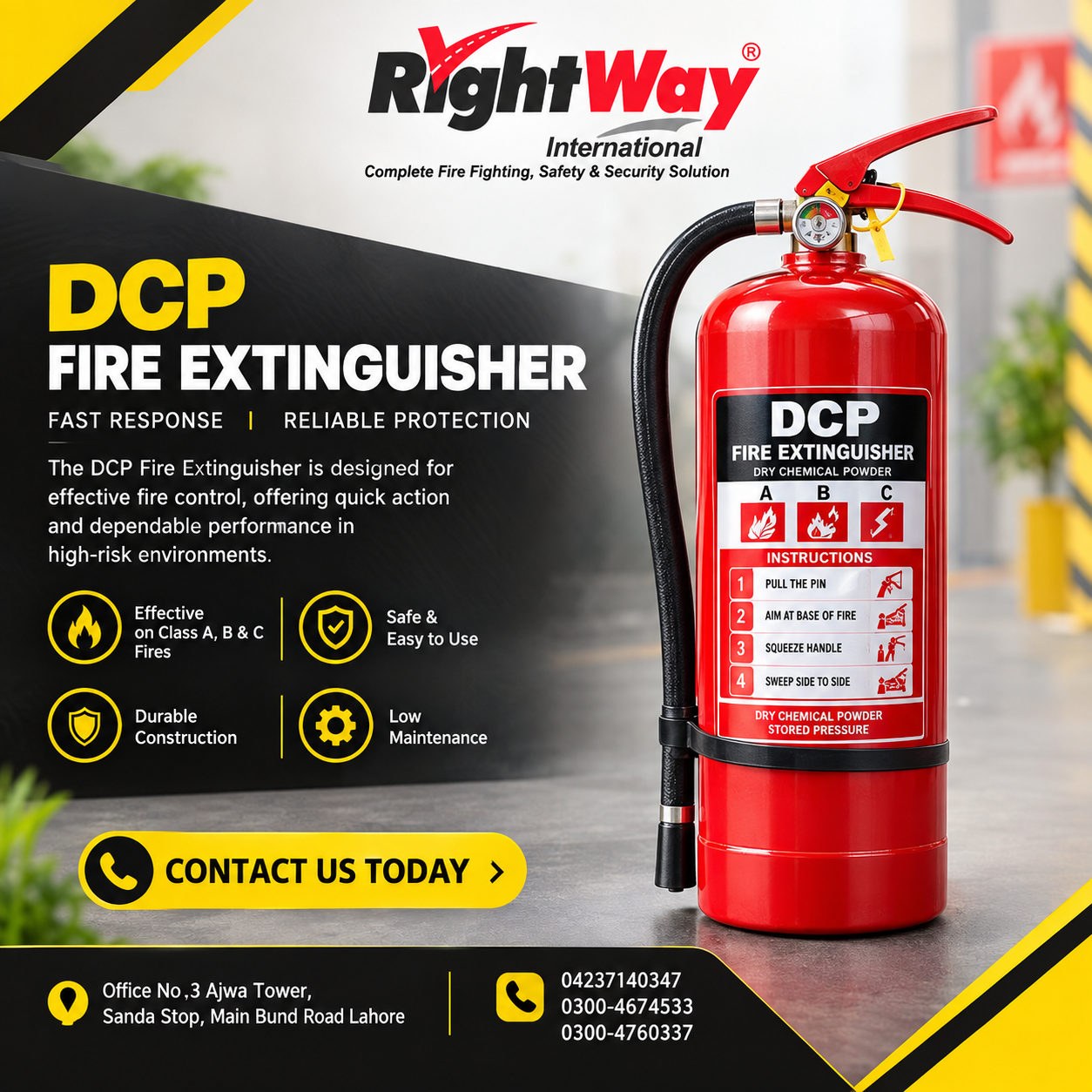
Importance of DCP Fire Extinguisher. DCP fire extinguisher plays an important role in protecting people, buildings, equipment, and property from fire. DCP stands for Dry Chemical Powder, which suppresses flames by interrupting the chemical reaction that keeps a fire burning.
Because DCP extinguishers can handle several common fire hazards, businesses, factories, warehouses, offices, workshops, and other facilities often keep them as part of their fire protection equipment.
However, choosing the correct extinguisher remains essential. Different fires require different extinguishing agents. Therefore, users should understand the importance of DCP fire extinguishers, their applications, benefits, limitations, and maintenance requirements before selecting one.
What Is a DCP Fire Extinguisher?
A DCP fire extinguisher contains dry chemical powder that the cylinder releases under pressure. When a user activates the extinguisher, the powder travels through the hose and nozzle toward the fire.
The powder interrupts the combustion process and helps suppress the flames. Depending on the extinguisher’s certified rating and powder formulation, a DCP extinguisher can handle several fire classes.
For example, some DCP extinguishers can handle:
- Class A fires involving ordinary combustible materials
- Class B fires involving flammable liquids
- Class C fires involving flammable gases
- Certain electrical fire hazards
Always check the manufacturer’s label and certification before using a DCP extinguisher. The label identifies the fire classes that the particular model can safely handle.
Why Is a DCP Fire Extinguisher Important?
The importance of a DCP fire extinguisher comes from its ability to provide quick first-response fire suppression. A small fire can grow rapidly. Therefore, having the correct extinguisher nearby can give people valuable time to control a developing fire or evacuate safely.
Here are the main reasons businesses and property owners choose DCP extinguishers.
1. DCP Extinguishers Handle Multiple Fire Hazards
One major advantage of a DCP fire extinguisher is its versatility. Depending on its certified rating, one extinguisher can handle several types of fire.
For example, workplaces may have combustible materials, flammable liquids, gases, and electrical equipment in the same facility. In such locations, a correctly rated DCP extinguisher can provide useful first-response protection.
However, users should never assume that every DCP extinguisher can handle every type of fire. Always check the fire rating before use.
2. DCP Extinguishers Provide Fast Fire Suppression
Fire can spread quickly, especially when combustible materials surround the flames. A DCP extinguisher releases powder under pressure, allowing the extinguishing agent to reach the fire rapidly.
As a result, the powder can quickly reduce visible flames when a user applies it correctly.
However, extinguishing the flames does not always remove the source of the fire. Therefore, users should monitor the area and contact emergency services when necessary.
3. DCP Extinguishers Can Protect Against Certain Electrical Fires
Many DCP extinguishers carry ratings that allow their use on energized electrical equipment. The dry chemical powder does not rely on water to suppress the flames.
Therefore, a correctly rated DCP extinguisher can provide an important first-response option around certain electrical hazards.
Nevertheless, users should always check the extinguisher label before attempting to control an electrical fire. Whenever possible, isolate the electrical power safely and contact qualified personnel.
4. DCP Extinguishers Offer Easy Access During Emergencies
A fire extinguisher only helps when people can reach it quickly. For this reason, businesses should place DCP extinguishers at clearly identified and accessible locations.
For example, facilities may position extinguishers near:
- Electrical rooms
- Workshops
- Machinery
- Storage areas
- Production areas
- Parking areas
- Kitchens
- Emergency routes
Moreover, employees should know where the extinguishers are located before an emergency occurs.
5. DCP Extinguishers Support Commercial and Industrial Fire Safety
Factories, warehouses, workshops, offices, and commercial buildings often contain several potential fire hazards. Consequently, these facilities need a suitable fire protection strategy.
A correctly selected DCP extinguisher can form one part of that strategy. In addition, facilities may require fire alarms, emergency lighting, hydrant systems, fire hose reels, evacuation plans, and staff training.
How Does a DCP Fire Extinguisher Work?
A DCP fire extinguisher works mainly by interrupting the chemical chain reaction that sustains combustion.
When the user pulls the safety pin and activates the handle, pressure forces the dry chemical powder through the hose or nozzle. The powder then spreads across the burning area.
As the powder reaches the flames, it interferes with the combustion process and helps stop the fire from continuing to burn.
For example, the user can aim the nozzle toward the base of a small fire and sweep the powder across the burning area. This technique helps the extinguishing agent reach the fuel source more effectively.
However, users should only attempt to fight a fire when they have the correct extinguisher, a clear escape route, and a fire that remains small enough to manage safely.
Benefits of DCP Fire Extinguishers
DCP fire extinguishers provide several benefits when users select and maintain them correctly.
Fast Flame Suppression
DCP powder can quickly suppress flames when the user applies the extinguisher correctly. Therefore, it can help control a developing fire during its early stage.
Versatile Fire Protection
Many DCP extinguishers carry ratings for multiple fire classes. Consequently, they can provide protection against several common workplace hazards.
Portable Design
Portable DCP extinguishers allow users to carry the equipment directly toward a small fire. Their compact design also makes them practical for many commercial and industrial environments.
Different Sizes Available
Manufacturers offer DCP extinguishers in different capacities. Therefore, property owners can select an appropriate size according to the fire risk, location, and applicable safety requirements.
Wide Range of Applications
DCP extinguishers can support fire protection in homes, offices, factories, warehouses, workshops, vehicles, and commercial buildings when the extinguisher rating matches the identified hazard.
Where Are DCP Fire Extinguishers Used?
DCP fire extinguishers can protect many environments where compatible fire hazards exist.
Offices
Offices contain electrical equipment, furniture, paper, plastics, and other combustible materials. Therefore, a suitable fire extinguisher can provide an important first-response option.
Factories
Factories may contain machinery, electrical systems, combustible materials, fuels, oils, or gases. For this reason, fire safety professionals should assess each area and select extinguishers according to the identified hazards.
Warehouses
Warehouses often store packaging, textiles, plastics, paper products, and other combustible materials. Consequently, facilities should position appropriate extinguishers where employees can reach them quickly.
Workshops
Workshops can contain machinery, electrical equipment, oils, fuels, and other potential ignition sources. Therefore, a correctly rated DCP extinguisher can form an important part of the workshop’s fire protection plan.
Vehicles
Vehicles and industrial equipment may also require portable fire extinguishers. The appropriate extinguisher type and capacity depend on the vehicle, fire hazards, and applicable safety requirements.
DCP Fire Extinguisher vs. Other Fire Extinguishers
Different extinguishing agents work best for different fire hazards.
| Extinguisher Type | Common Applications |
|---|---|
| DCP | Multiple fire classes, depending on the certified rating |
| CO₂ | Electrical equipment and certain flammable-liquid fires |
| Foam | Class A and certain Class B fires |
| Water | Class A fires |
| Wet Chemical | Cooking oil and fat fires |
Therefore, users should never select an extinguisher based only on its size or appearance. Instead, identify the fire hazard first and then choose an extinguisher with the appropriate certification and rating.
How to Use a DCP Fire Extinguisher
Only use a portable extinguisher when the fire remains small, you have the correct extinguisher, and you have a safe escape route.
Most portable extinguishers follow the PASS method:
- Pull the safety pin.
- Aim the nozzle at the base of the flames.
- Squeeze the handle.
- Sweep the nozzle from side to side across the base of the fire.
Keep a safe distance from the flames. Moreover, keep your escape route behind you so you can leave quickly if the fire grows.
If smoke becomes overwhelming, the fire spreads, or you cannot control the flames quickly, evacuate immediately and contact emergency services.
Importance of DCP Fire Extinguisher Maintenance
Installing an extinguisher does not guarantee protection. Regular inspection and proper maintenance keep the equipment ready for an emergency.
Therefore, inspect the extinguisher regularly and check:
- Pressure indicator, where applicable
- Safety pin
- Tamper seal
- Hose
- Nozzle
- Cylinder condition
- Signs of corrosion
- Physical damage
- Accessibility
- Inspection and service records
In addition, follow the manufacturer’s service instructions and applicable local fire safety requirements.
Professional technicians should carry out servicing at the required intervals. Regular maintenance can identify problems before an emergency occurs.
How to Choose the Right DCP Fire Extinguisher
Before purchasing a DCP fire extinguisher, consider several important factors.
Identify the Fire Class
First, identify the materials and equipment that could cause a fire in the area. This step helps determine the appropriate extinguisher type.
Check the Fire Rating
Next, check the extinguisher’s certified fire rating. Do not choose an extinguisher based only on its cylinder capacity.
Select the Correct Capacity
Choose a capacity that matches the fire risk and location. Larger risks may require additional extinguishers or other fire protection systems.
Check Certification
Always select products that meet recognized safety standards and applicable local requirements.
Consider the Installation Location
Place the extinguisher where people can see and reach it easily. At the same time, protect it from conditions that could damage the equipment.
Get Professional Advice
For commercial and industrial facilities, a qualified fire safety professional can assess the site and recommend suitable extinguisher types, ratings, quantities, and locations.
Importance of DCP Fire Extinguisher in Pakistan
Fire safety equipment plays an important role in homes, offices, factories, warehouses, shops, and commercial buildings throughout Pakistan.
Many facilities contain electrical equipment, machinery, combustible materials, fuels, or other potential fire hazards. Therefore, property owners and businesses should develop a suitable fire protection plan.
A DCP fire extinguisher can provide valuable first-response protection when its rating matches the identified fire hazard. However, fire safety should not depend on extinguishers alone.
For better protection, businesses should also consider fire alarms, emergency exits, fire hose reels, hydrant systems, emergency lighting, evacuation procedures, and employee training.
In addition, organizations should follow applicable Pakistani fire safety requirements and obtain professional advice when planning larger fire protection systems.
Frequently Asked Questions About DCP Fire Extinguishers
What does DCP stand for in a fire extinguisher?
DCP stands for Dry Chemical Powder. The powder suppresses compatible fires by interfering with the combustion process.
What is a DCP fire extinguisher used for?
A DCP fire extinguisher can handle several types of fires, depending on its certified rating and powder formulation. Many models cover Class A, Class B, and Class C hazards and may also carry ratings for certain electrical fire risks.
Is a DCP extinguisher suitable for electrical fires?
Some DCP extinguishers carry ratings for energized electrical equipment. Always check the manufacturer’s label and certification before using one on an electrical fire.
Can a DCP extinguisher put out every type of fire?
No. Different fires require different extinguishing agents. For example, certain cooking-oil fires require wet chemical extinguishers, while water extinguishers can create serious risks when used on energized electrical equipment.
What are the main benefits of a DCP fire extinguisher?
The main benefits include rapid flame suppression, versatility, portability, availability in different sizes, and suitability for several common fire hazards when the extinguisher carries the correct rating.
How does a DCP fire extinguisher work?
A DCP extinguisher releases dry chemical powder under pressure. The powder interrupts the chemical chain reaction that supports combustion and helps suppress the flames.
How often should I inspect a DCP fire extinguisher?
Check the extinguisher regularly for visible damage, pressure problems, blocked nozzles, corrosion, and accessibility. Follow the manufacturer’s instructions and applicable local requirements for professional inspection and servicing.
Can DCP powder damage electrical equipment?
Yes. DCP powder can leave residue on electrical and electronic equipment. Therefore, although a correctly rated DCP extinguisher may control an electrical fire, users should consider the potential equipment contamination.
Where should I install a DCP fire extinguisher?
Install the extinguisher in an accessible and clearly visible location near identified fire hazards. However, do not place it where a developing fire could block access to it.
Is DCP better than CO₂?
DCP and CO₂ extinguishers serve different applications. DCP extinguishers can cover multiple fire classes depending on their rating, while CO₂ extinguishers commonly serve electrical equipment and certain flammable-liquid hazards. Therefore, users should select the extinguisher according to the specific fire risk rather than choosing one agent for every situation.
The importance of DCP fire extinguishers comes from their ability to provide rapid first-response protection against several compatible fire hazards. Their versatility, portable design, and range of available capacities make them useful in many residential, commercial, and industrial environments.
However, choosing the correct extinguisher remains essential. Users should check the fire rating, install the extinguisher correctly, inspect it regularly, and provide appropriate training.
Most importantly, a DCP fire extinguisher should form part of a complete fire safety plan rather than serve as the only line of protection. When businesses combine suitable extinguishers with alarms, emergency exits, fire protection systems, maintenance, and staff training, they can create a more comprehensive approach to fire safety.