




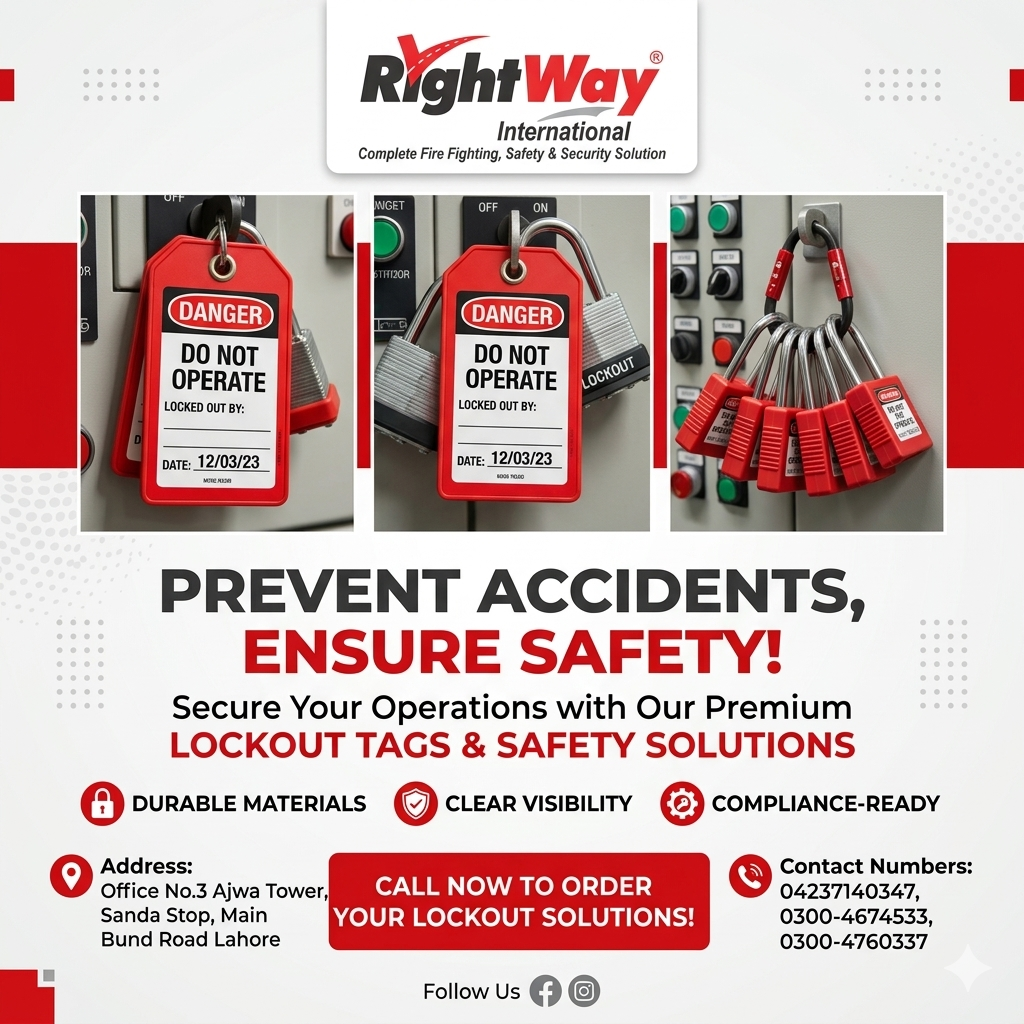
Lockout Tags Complete Guide play a critical role in industrial Lockout/Tagout (LOTO) safety programs by clearly warning employees that machinery, equipment, or energy sources must not be operated during maintenance or servicing activities. Safety professionals use these highly visible tags alongside lockout devices to communicate hazard information, identify authorized personnel, and prevent accidental equipment startup.
Because hazardous energy can cause serious injuries or fatalities, industries rely on lockout tags to support Occupational Safety and Health Administration OSHA-compliant energy isolation procedures. Furthermore, OSHA 29 CFR 1910.147 regulations require employers to provide clear warning methods whenever hazardous energy sources are isolated. As a result, lockout tags have become an essential component of workplace safety systems across manufacturing plants, oil refineries, chemical facilities, and power generation industries.
What Are Lockout Tags?
A lockout tag is a durable warning label or identification tag attached to lockout devices, switches, valves, breakers, plugs, or industrial equipment during maintenance operations. These tags communicate critical safety information such as:
- Equipment status
- Authorized personnel identification
- Maintenance activity warnings
- Energy isolation confirmation
- Do-not-operate instructions
- Repair or servicing notifications
Workers typically attach lockout tags using nylon ties, steel loops, or self-locking cable fasteners. Once installed, the tags provide a clear visual warning that equipment must remain isolated until maintenance work is fully completed.
Unlike physical lockout devices that prevent equipment operation mechanically, lockout tags primarily serve as communication and warning tools within the LOTO procedure.
Common Applications of Lockout Tags
Lockout tags are widely used in industrial and commercial environments for:
- Electrical panel lockout procedures
- Valve isolation identification
- Circuit breaker maintenance
- Industrial machinery servicing
- Conveyor system shutdowns
- Hydraulic and pneumatic isolation
- Plug lockout identification
- Group lockout/tagout operations
- Boiler and pressure vessel maintenance
- HVAC servicing procedures
- Chemical processing shutdowns
- Oil and gas maintenance operations
Types of Lockout Tags
Because industrial environments vary greatly, manufacturers produce different lockout tag designs for specific safety applications.
1. Danger Lockout Tags
These tags display highly visible “DANGER” warnings to indicate immediate hazardous conditions.
Purpose:
Workers use danger tags when equipment operation could result in severe injury or death.
Common Text:
- DO NOT OPERATE
- LOCKED OUT
- ENERGIZED EQUIPMENT HAZARD
2. Warning Lockout Tags
Warning tags communicate potential hazards that require caution during servicing activities.
Function:
They alert employees about maintenance activities without indicating immediate life-threatening danger.
3. Customized Lockout Tags
Facilities often use custom tags containing company branding, worker identification, departmental information, or specialized instructions.
Benefit:
Customized tags improve accountability and simplify maintenance tracking.
4. Electrical Lockout Tags
Manufacturers design these tags specifically for electrical safety applications.
Features:
- High-voltage warnings
- Shock hazard labels
- Arc flash alerts
- Non-conductive materials
5. Reusable Lockout Tags
These durable tags use write-on/wipe-off surfaces for repeated use in industrial facilities.
Advantage:
Reusable systems reduce replacement costs while maintaining safety compliance.
6. Weather-Resistant Lockout Tags
Outdoor environments require tags resistant to moisture, UV exposure, chemicals, and extreme temperatures.
Applications:
- Oil and gas facilities
- Marine industries
- Outdoor substations
- Construction sites
Technical Specifications
| Specification | Details |
|---|---|
| Material | PVC, Vinyl, Polyester, Laminated Plastic |
| Attachment Type | Nylon Tie, Steel Ring, Self-Locking Cable |
| Temperature Resistance | -40°C to 120°C |
| Chemical Resistance | Resistant to oils, solvents, acids, and moisture |
| Print Type | Permanent UV-resistant printing |
| Size Options | Standard and custom sizes available |
| Reusability | Disposable and reusable models |
| Compliance | OSHA 1910.147, ANSI Z535, ISO Safety Standards |
Key Features and Advantages of Lockout Tags
High-Visibility Safety Warnings
Bright colors and bold text improve workplace hazard awareness and reduce accidental equipment operation.
Improved Worker Communication
Lockout tags clearly identify who applied the lockout and why the equipment remains isolated.
OSHA Compliance Support
Properly used lockout tags help facilities comply with OSHA hazardous energy control regulations.
Durable Industrial Construction
Heavy-duty materials withstand chemicals, moisture, abrasion, and harsh industrial conditions.
Easy Identification
Maintenance personnel can quickly identify equipment status during inspections and servicing.
Customizable Information
Companies can include:
- Employee names
- Departments
- Contact details
- Lockout dates
- Maintenance schedules
- Hazard descriptions
Group Lockout Compatibility
Multiple workers can use lockout tags alongside lockout hasps and padlocks during team maintenance operations.
How to Select the Right Lockout Tags
Choosing the proper lockout tags improves both safety and regulatory compliance.
1. Identify the Hazard Type
Determine whether the application involves:
- Electrical hazards
- Mechanical hazards
- Hydraulic systems
- Chemical processing equipment
- Pneumatic systems
2. Consider Environmental Conditions
Select weather-resistant or chemical-resistant tags for harsh industrial environments.
3. Verify Material Durability
Choose tear-resistant and waterproof materials for long-term industrial use.
4. Evaluate Visibility Requirements
Ensure tags use bright colors and large readable text for easy identification.
5. Confirm OSHA Compliance
Always select lockout tags that meet OSHA 1910.147 and ANSI safety labeling standards.
Best Practices for Lockout Tag Safety
- Always apply lockout tags together with proper lockout devices whenever possible.
- Clearly write employee identification and maintenance details on the tag.
- Ensure tags remain visible at all times during servicing activities.
- Never remove another worker’s lockout tag without authorization.
- Inspect tags regularly for damage, fading, or illegibility.
- Train employees on proper lockout/tagout procedures and hazard communication.
- Verify energy isolation before beginning maintenance work.
Industries That Commonly Use Lockout Tags
Manufacturing Industry
Factories use lockout tags during machine maintenance, conveyor servicing, and equipment shutdowns.
Oil and Gas Facilities
Workers secure valves, pipelines, pumps, and drilling equipment during inspections and repairs.
Chemical Processing Plants
Maintenance teams isolate hazardous chemical systems and pressure vessels safely.
Power Generation Plants
Electrical technicians use lockout tags on switchgear, transformers, and turbines.
Water Treatment Facilities
Operators apply lockout tags during pump maintenance and filtration system repairs.
Construction Industry
Contractors use temporary lockout procedures for electrical and mechanical systems.
Importance of OSHA Compliance for Lockout Tags
OSHA’s Lockout/Tagout Standard (29 CFR 1910.147) requires employers to establish procedures that protect workers from hazardous energy during servicing activities.
According to OSHA requirements:
- Lockout tags must be durable and standardized.
- Tags must clearly warn against hazardous operation.
- Authorized employees must receive LOTO training.
- Employers must inspect lockout/tagout procedures regularly.
Failure to comply with OSHA regulations can result in severe workplace accidents, penalties, and legal liabilities.
Cable Lockout Device
A cable lockout is a safety device consisting of a strong multi-strand steel cable and a lockable body mechanism. Technicians thread the cable through equipment handles, valve wheels, electrical disconnects, or multiple isolation points. Once tightened and locked with safety padlocks, the cable prevents movement or operation of the secured equipment.
Most cable lockout systems support multiple padlocks, allowing every authorized worker to apply their individual lock during group maintenance operations. As a result, the equipment remains isolated until all workers safely complete their tasks and remove their personal locks.
Frequently Asked Questions (FAQs)
Can lockout tags be used without lockout devices?
Tagout-only systems are allowed only when equipment cannot physically accept a lockout device. However, OSHA strongly recommends using lockout devices whenever possible because they provide physical restraint.
What information should appear on a lockout tag?
Most lockout tags include:
- Worker name
- Department
- Date
- Reason for lockout
- Warning message
- Contact information
Are reusable lockout tags OSHA compliant?
Yes. Reusable lockout tags are OSHA compliant if they remain durable, legible, and securely attached during use.
What colors are commonly used for lockout tags?
Red, yellow, orange, and white are the most common safety colors because they provide high visibility and hazard recognition.
How often should lockout tags be inspected?
Facilities should inspect lockout tags regularly during safety audits and replace damaged or illegible tags immediately.
Conclusion
Lockout Tags are essential safety identification tools that strengthen industrial Lockout/Tagout procedures and help prevent accidental equipment startup during maintenance activities. Their high visibility, hazard communication capabilities, and OSHA compliance support make them indispensable in industrial safety programs.
By selecting durable, clearly labeled, and application-specific lockout tags, organizations can significantly improve worker safety, reduce hazardous energy incidents, and maintain full compliance with OSHA LOTO regulations.