




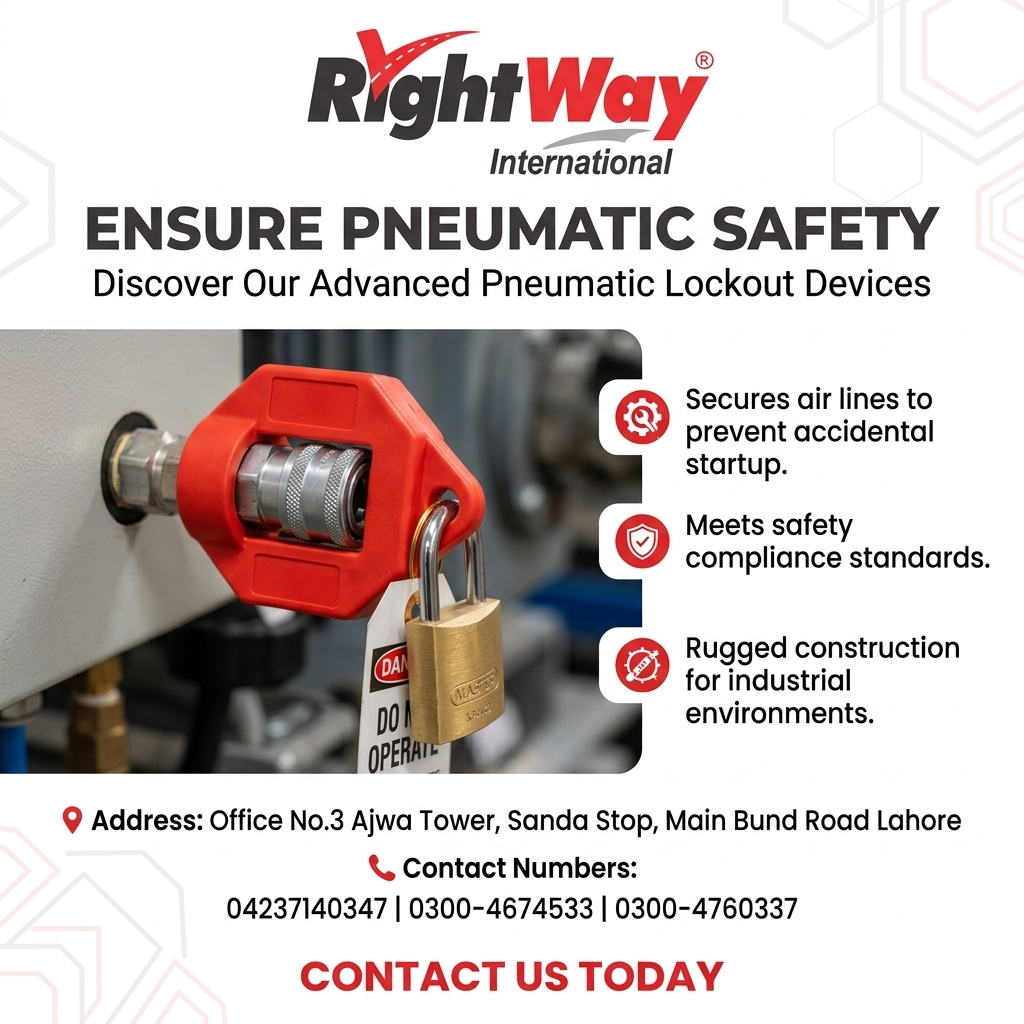
Pneumatic Lockout Device. are essential Lockout/Tagout (LOTO) safety solutions designed to isolate and secure compressed air systems during maintenance, repair, inspection, and servicing operations. These industrial safety devices help prevent accidental equipment startup, unexpected release of compressed air, pneumatic pressure buildup, mechanical movement, and workplace injuries in industrial and commercial environments.
Industries widely use pneumatic lockout devices to improve workplace safety, support Occupational Safety and Health Administration (OSHA) compliance, and protect workers during hazardous energy control procedures involving compressed air systems, pneumatic valves, air compressors, hoses, actuators, pipelines, industrial machinery, and pneumatic-powered equipment.
Because compressed air systems can store hazardous energy even after shutdown, pneumatic lockout devices play a critical role in ensuring that only authorized personnel can restore system operation or reconnect air supply lines.
What Is a Pneumatic Lockout Device?
A Pneumatic Lockout Device is an industrial safety device specifically designed to isolate, block, or secure pneumatic energy sources during Lockout/Tagout procedures.
These devices prevent the flow of compressed air and help ensure that machinery or pneumatic systems cannot be activated during maintenance operations.
Pneumatic lockout devices are commonly used with:
- Air compressor systems
- Pneumatic control valves
- Pneumatic quick-disconnect fittings
- Air hose couplings
- Pneumatic cylinders
- Industrial pneumatic machinery
- Pneumatic actuators
- Air supply manifolds
- Pneumatic energy isolation systems
- Compressed air pipelines
Most pneumatic lockout devices support:
- OSHA-compliant LOTO procedures
- Hazardous energy isolation
- Pneumatic system maintenance
- Industrial servicing operations
- Multi-worker lockout applications
- Machine shutdown procedures
- Preventive maintenance programs
- Compressed air safety management
- Pneumatic hazard control systems
- Authorized worker protection
Because compressed air systems can unexpectedly release stored pressure, pneumatic lockout devices significantly improve worker safety and hazardous energy control.
Common Applications of Pneumatic Lockout Devices
Industries use pneumatic lockout devices for various industrial safety applications, including:
- Air compressor maintenance
- Pneumatic valve isolation
- Compressed air line servicing
- Pneumatic equipment repairs
- Industrial machinery maintenance
- Pneumatic actuator servicing
- HVAC pneumatic system maintenance
- Manufacturing equipment shutdown
- Packaging machinery servicing
- Assembly line maintenance
- Construction equipment servicing
- Oil and gas pneumatic isolation
- Mining equipment lockout
- Chemical processing plant maintenance
- Food processing machinery maintenance
- Conveyor system repairs
- Pneumatic tool servicing
- Utility maintenance operations
- Pneumatic pressure testing procedures
- Automated production system maintenance
Air Compressor Lockout
These lockout devices isolate compressed air systems to prevent accidental pressure release or equipment startup.
Benefits:
- Prevents accidental air flow
- Improves worker safety
- Supports OSHA compliance
- Reduces maintenance hazards
How Pneumatic Lockout Devices Work
Pneumatic lockout devices provide a secure method for isolating compressed air systems during maintenance and servicing operations.
Step 1: Equipment Shutdown
Authorized employees shut down the pneumatic system or machinery.
Step 2: Air Supply Isolation
Workers disconnect or isolate the compressed air source.
Step 3: Pneumatic Lockout Device Installation
The lockout device is installed on the pneumatic fitting, valve, or hose connection.
Step 4: Safety Padlock Attachment
Authorized employees secure the lockout device using a safety padlock.
Step 5: Tagout Identification
Workers attach warning tags identifying the maintenance status and authorized personnel.
Step 6: Pressure Release Verification
Employees release stored pneumatic pressure and verify zero-energy conditions.
Step 7: Maintenance or Servicing
The equipment remains safely isolated throughout maintenance activities.
Step 8: Lockout Removal
After servicing is completed, authorized personnel remove the lockout device and safely restore compressed air flow.
Types of Pneumatic Lockout Devices
Different industrial applications require different pneumatic lockout solutions.
1. Pneumatic Quick Disconnect Lockout Devices
These devices secure pneumatic hose fittings and quick-disconnect couplings.
Features:
- Prevents reconnection
- Easy installation
- Compact design
- Supports multiple padlocks
2. Pneumatic Valve Lockout Devices
Designed to isolate pneumatic shutoff valves.
Benefits:
- Blocks valve operation
- Durable industrial construction
- Supports group lockout
- Improves maintenance safety
3. Air Hose Lockout Devices
These lockouts prevent compressed air hose connections.
Applications:
- Pneumatic tool servicing
- Manufacturing systems
- Construction equipment
- Maintenance workshops
4. Pneumatic Plug Lockout Devices
Used to isolate pneumatic plugs and fittings.
Advantages:
- Quick installation
- High visibility
- Reusable design
- Enhanced worker safety
5. Heavy-Duty Pneumatic Lockout Devices
Designed for harsh industrial environments and heavy pneumatic systems.
Common Uses:
- Mining operations
- Oil and gas facilities
- Chemical processing plants
- Outdoor industrial maintenance
Technical Specifications
| Specification | Details |
|---|---|
| Material | Nylon, ABS Plastic, Steel, Aluminum |
| Application | Pneumatic Energy Isolation |
| Compatibility | Air Hoses, Valves, Couplings |
| Locking Type | Padlock Compatible |
| Color Options | Red, Yellow, Blue |
| Temperature Resistance | Industrial-grade |
| Chemical Resistance | Available |
| UV Resistance | Available |
| Compliance | OSHA 29 CFR 1910.147 Support |
| Safety Features | High Visibility, Non-Conductive Options |
Key Features and Advantages of Pneumatic Lockout Devices
Improved Workplace Safety
Pneumatic lockout devices prevent accidental compressed air release and machinery activation.
OSHA Compliance Support
Proper lockout devices help organizations comply with OSHA hazardous energy control standards.
Durable Industrial Construction
Industrial-grade materials withstand harsh industrial environments and repeated use.
Hazardous Energy Isolation
These devices safely isolate compressed air systems during servicing operations.
Group Lockout Capability
Multiple workers can secure the same pneumatic system simultaneously.
High Visibility Design
Bright colors improve lockout identification and workplace awareness.
Corrosion and Chemical Resistance
Many devices resist moisture, chemicals, oils, and industrial contaminants.
Reduced Workplace Injuries
Effective pneumatic lockout procedures lower risks of pressure-related accidents.
How to Select the Right Pneumatic Lockout Device
Choosing the proper pneumatic lockout solution improves workplace safety and operational efficiency.
1. Identify the Pneumatic System
Determine whether the device will isolate hoses, valves, fittings, plugs, or compressors.
2. Verify Compatibility
Ensure the lockout device fits the pneumatic connection size and configuration.
3. Evaluate Environmental Conditions
Use corrosion-resistant and weather-resistant devices for outdoor or chemical environments.
4. Verify OSHA Compliance
Ensure the device supports OSHA Lockout/Tagout regulations.
5. Consider Group Lockout Requirements
Select devices that support multiple safety padlocks if multiple workers are involved.
Best Practices for Pneumatic Lockout Device Usage
- Use only OSHA-compliant lockout devices.
- Release stored pneumatic pressure before maintenance.
- Assign individual safety padlocks to authorized workers.
- Inspect lockout devices regularly for wear or damage.
- Replace damaged devices immediately.
- Train employees on pneumatic lockout procedures.
- Use warning tags with every lockout application.
- Store lockout devices in organized LOTO stations.
- Standardize lockout procedures across facilities.
- Conduct regular lockout/tagout safety audits.
Industries That Commonly Use Pneumatic Lockout Devices
Manufacturing Plants
Factories use pneumatic lockout devices during machinery servicing and maintenance operations.
Oil and Gas Industry
Compressed air systems require reliable hazardous energy isolation during maintenance.
Chemical Processing Facilities
Chemical plants isolate pneumatic systems during repairs and shutdown procedures.
Power Generation Plants
Power stations use pneumatic lockout systems for safe equipment maintenance.
Construction Industry
Construction sites use pneumatic lockouts for portable air-powered equipment.
Mining Operations
Mining facilities require heavy-duty pneumatic lockout devices for equipment servicing.
Food and Beverage Industry
Processing plants secure pneumatic systems during sanitation and maintenance procedures.
Automotive Industry
Automotive manufacturing uses pneumatic lockouts for robotic and assembly systems.
Commercial Buildings
Facility maintenance teams isolate HVAC pneumatic systems during repairs.
Importance of OSHA Compliance for Pneumatic Lockout Devices
OSHA’s Lockout/Tagout Standard (29 CFR 1910.147) requires employers to protect workers from hazardous energy during servicing and maintenance activities.
Proper pneumatic lockout systems help organizations:
- Improve hazardous energy control
- Reduce workplace injuries
- Prevent accidental compressed air release
- Support OSHA inspections
- Improve employee safety awareness
- Standardize maintenance procedures
- Protect industrial equipment
- Reduce operational downtime
- Improve facility safety management
- Strengthen workplace compliance programs
Failure to implement proper pneumatic lockout procedures may result in serious injuries, OSHA penalties, equipment damage, production interruptions, and compressed air accidents.
Safety Padlock Key Set
A Safety Padlock Key Set is a collection of industrial-grade lockout padlocks and matching keys specifically designed for hazardous energy isolation and Lockout/Tagout procedures.
These padlocks are used to secure lockout devices such as:
- Circuit breaker lockouts
- Valve lockouts
- Electrical panel lockouts
- Disconnect switch lockouts
- Plug lockouts
- Cable lockouts
- Group lockout boxes
- Industrial machinery lockouts
- Pneumatic lockout devices
- Hydraulic isolation systems
Each safety padlock includes a uniquely coded or keyed locking mechanism to ensure controlled access during maintenance and servicing operations.
Difference Between Pneumatic Lockout Devices and Standard Valve Lockouts
| Feature | Pneumatic Lockout Device | Standard Valve Lockout |
|---|---|---|
| Application | Compressed Air Systems | Liquid/Gas Valves |
| Energy Type | Pneumatic Energy | Mechanical/Fluid |
| Common Use | Air Hoses & Fittings | Valve Handles |
| Pressure Isolation | Yes | Limited |
| OSHA LOTO Support | Yes | Yes |
| Best For | Pneumatic Maintenance | General Valve Isolation |
Frequently Asked Questions (FAQs)
What is a pneumatic lockout device used for?
A pneumatic lockout device is used to isolate compressed air systems during maintenance and servicing procedures.
Are pneumatic lockout devices OSHA required?
OSHA requires hazardous energy control systems. Pneumatic lockout devices help organizations comply with Lockout/Tagout regulations.
Can pneumatic lockout devices be reused?
Yes. Industrial-grade pneumatic lockout devices are reusable and designed for long-term use.
What materials are pneumatic lockout devices made from?
Manufacturers commonly use nylon, ABS plastic, steel, aluminum, and non-conductive materials.
Why is pneumatic lockout important?
Compressed air systems can store hazardous energy that may unexpectedly release during maintenance operations.
Can multiple workers apply lockout devices to the same system?
Yes. Group lockout procedures allow multiple workers to secure the same pneumatic system.
Pneumatic Lockout Devices are essential industrial Lockout/Tagout safety solutions that improve hazardous energy control, support OSHA compliance, and protect workers during maintenance and servicing operations involving compressed air systems. By physically preventing accidental air flow, equipment startup, and pressure release, these devices help reduce workplace injuries, improve maintenance efficiency, and strengthen industrial safety programs.
Whether used in manufacturing plants, oil refineries, chemical processing facilities, power generation stations, mining operations, automotive factories, commercial buildings, or construction sites, pneumatic lockout devices remain a critical component of modern industrial Lockout/Tagout procedures and workplace safety management systems.