




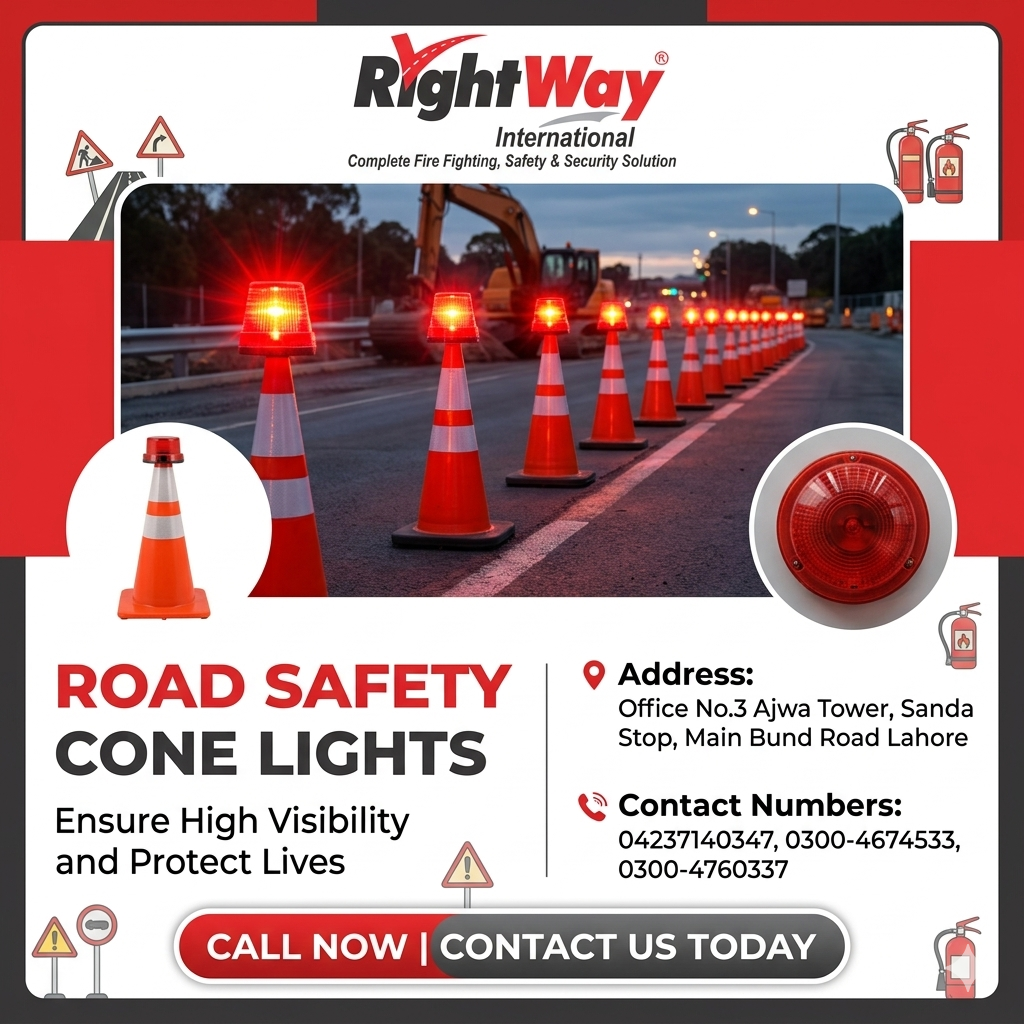
Road Safety Cone Lights are highly visible warning devices designed to enhance the visibility of traffic cones, delineators, barricades, and temporary traffic control systems. These safety lighting solutions help alert drivers, pedestrians, cyclists, and workers to roadway hazards, lane closures, construction activities, accident scenes, maintenance operations, and restricted areas. By improving visibility in low-light, nighttime, foggy, rainy, and adverse weather conditions, road safety cone lights significantly reduce accident risks and support safer transportation environments.
Road safety cone lights are widely used on highways, roads, construction sites, tunnels, bridges, airports, industrial facilities, parking areas, utility work zones, emergency response locations, public events, and smart transportation infrastructure projects to improve traffic guidance and hazard awareness.
As transportation networks continue to expand and roadway safety becomes increasingly important, road safety cone lights play a critical role in traffic management systems, work zone safety programs, emergency preparedness initiatives, accident prevention strategies, roadway maintenance operations, and intelligent transportation networks. These devices support compliance with Occupational Safety and Health Administration (OSHA) requirements, Department of Transportation (DOT) guidelines, Federal Highway Administration (FHWA) standards, Manual on Uniform Traffic Control Devices (MUTCD) requirements, and local traffic safety regulations.
What Are Road Safety Cone Lights?
A Road Safety Cone Light is a portable flashing, steady-burning, or rotating warning light designed to be mounted on traffic cones, delineators, barricades, or temporary traffic control devices. These lights provide enhanced visibility and communicate warnings to road users about hazards, lane restrictions, road work activities, accidents, and other temporary roadway conditions.
Road safety cone lights are commonly used for:
- Traffic control
- Construction zone safety
- Road maintenance operations
- Hazard identification
- Lane closure management
- Emergency response
- Accident scene protection
- Pedestrian safety
- Vehicle guidance
- Nighttime visibility enhancement
- Work zone warning systems
- Infrastructure protection
- Public safety improvement
- Risk reduction programs
- Temporary traffic management
Cone Light Safety Systems
Cone light safety systems are commonly used for:
- Highway construction projects
- Utility maintenance operations
- Road repair activities
- Emergency traffic control
- Airport ground operations
- Tunnel maintenance
- Bridge repair projects
- Municipal roadway management
- Industrial traffic control
- Parking lot safety
- Event traffic management
- Smart transportation systems
- Public works projects
- Hazardous area marking
- Accident prevention programs
Flashing Warning Lights
Flashing Warning Lights are commonly used for:
- Hazard warning
- Traffic control
- Vehicle safety
- Emergency signaling
- Construction zone protection
- Industrial safety
- Pedestrian safety
- Equipment operation alerts
- Roadway hazard notification
- Work zone safety
- Public safety enhancement
- Accident prevention
- Infrastructure protection
- Operational awareness
- Risk management
Traffic Safety Equipment
Traffic safety equipment is commonly used for:
- Roadway hazard warning
- Driver notification
- Traffic regulation
- Construction safety
- Emergency preparedness
- Public safety enhancement
- Vehicle guidance
- Work zone management
- Infrastructure maintenance
- Risk mitigation
- Smart mobility solutions
- Temporary traffic control
- Pedestrian protection
- Operational safety
- Transportation management
Key Components of Road Safety Cone Lights
A typical road safety cone light system includes:
- LED light modules
- Flashing warning lights
- Traffic cone mounting brackets
- Rechargeable battery packs
- Solar charging panels
- High-visibility lenses
- Weatherproof housing
- Light control circuitry
- Reflective optical systems
- Automatic dusk-to-dawn sensors
- Wireless synchronization modules
- Power management systems
- Durable polycarbonate covers
- Waterproof seals
- Mounting adapters
- Portable carrying components
- Battery status indicators
- Impact-resistant enclosures
How Road Safety Cone Lights Work
Road safety cone lights improve visibility and safety by providing bright warning signals around hazardous or restricted areas.
Step 1: Installation
The cone light is securely mounted on a traffic cone, barricade, or delineator.
Step 2: Activation
The unit is activated manually or automatically using built-in sensors.
Step 3: Warning Signal Generation
The light emits flashing, rotating, or steady illumination to attract attention.
Step 4: Hazard Communication
Drivers and pedestrians recognize the warning signal and respond accordingly.
Step 5: Enhanced Safety
The system improves visibility and reduces accident risks in hazardous areas.
Types of Road Safety Cone Lights
1. LED Cone Lights
Energy-efficient lights providing high visibility and long operating life.
2. Flashing Cone Lights
Use intermittent flashes to maximize driver attention.
3. Solar Cone Lights
Self-powered warning lights ideal for remote locations.
4. Battery-Powered Cone Lights
Portable units designed for temporary traffic control applications.
5. Steady-Burn Cone Lights
Provide continuous illumination in work zones and restricted areas.
6. Wireless Cone Lights
Feature remote monitoring and synchronized warning capabilities.
7. Magnetic Cone Lights
Quick-install warning lights suitable for emergency applications.
8. High-Intensity Cone Lights
Designed for highways and high-speed traffic environments.
9. Emergency Cone Lights
Used by police, fire departments, and emergency response teams.
10. Smart Cone Lights
Integrated with intelligent transportation and traffic management systems.
Common Applications of Road Safety Cone Lights
Road safety cone lights are widely used in:
- Highways
- Expressways
- Urban roads
- Construction zones
- Utility work sites
- Road maintenance projects
- Accident scenes
- Emergency response areas
- Airports
- Tunnels
- Bridges
- Parking facilities
- Industrial complexes
- Public events
- Smart city infrastructure
Traffic Control Lighting Systems
Traffic control lighting systems are commonly used for:
- Lane closure management
- Temporary roadway guidance
- Construction zone protection
- Driver warning systems
- Hazard identification
- Accident prevention
- Public safety enhancement
- Infrastructure maintenance
- Emergency traffic diversion
- Smart transportation networks
- Vehicle guidance solutions
- Traffic engineering projects
- Municipal roadway operations
- Risk management initiatives
- Transportation safety programs
Importance of Road Safety Cone Lights in Traffic Management
Road safety cone lights are essential components of modern temporary traffic control systems.
Key Benefits
- Improve nighttime visibility
- Enhance driver awareness
- Reduce accident risks
- Increase work zone safety
- Support emergency response operations
- Improve traffic flow management
- Protect workers and pedestrians
- Strengthen hazard communication
- Improve roadway safety compliance
- Reduce operational disruptions
Technical Specifications
| Specification | Details |
|---|---|
| Equipment Type | Road Safety Cone Light |
| Function | Hazard Warning and Traffic Guidance |
| Light Source | LED, Flashing LED |
| Power Source | Battery, Rechargeable Battery, Solar |
| Visibility Range | High Visibility |
| Weather Resistance | Excellent |
| Impact Resistance | High |
| Installation Type | Portable and Temporary |
| Maintenance Requirement | Low |
| Compliance Standards | OSHA, DOT, FHWA, MUTCD, Local Traffic Regulations |
Key Features and Advantages of Road Safety Cone Lights
High Visibility
Bright warning signals improve hazard recognition.
Energy Efficiency
LED technology minimizes power consumption.
Portable Design
Easy to transport and deploy in temporary work zones.
Weather Resistant
Suitable for harsh outdoor environments.
Durable Construction
Designed for repeated use in demanding conditions.
Long Operational Life
Provides reliable performance for extended periods.
Quick Installation
Can be mounted rapidly on traffic cones and barricades.
Regulatory Compliance
Supports compliance with roadway safety regulations.
How to Select the Right Road Safety Cone Light
1. Assess Traffic Conditions
Consider vehicle speed, traffic volume, and visibility requirements.
2. Determine Power Requirements
Choose battery-powered, rechargeable, or solar-powered models.
3. Evaluate Environmental Conditions
Ensure the device can withstand weather and temperature extremes.
4. Select Appropriate Flash Pattern
Choose flashing or steady-burn configurations based on project needs.
5. Verify Compliance Standards
Confirm compliance with applicable transportation regulations.
Best Practices for Using Road Safety Cone Lights
- Conduct regular inspections
- Replace damaged units immediately
- Maintain battery charge levels
- Clean lenses frequently
- Test warning functions regularly
- Ensure proper placement
- Follow manufacturer guidelines
- Monitor visibility performance
- Maintain spare units
- Verify regulatory compliance
Industries That Use Road Safety Cone Lights
- Highway authorities
- Transportation departments
- Construction companies
- Utility providers
- Municipal governments
- Emergency services
- Airport operators
- Public works departments
- Industrial facilities
- Logistics centers
- Railway authorities
- Event management companies
- Infrastructure contractors
- Smart city developers
- Traffic engineering firms
Importance of Traffic Safety Compliance
Road safety cone lights help organizations achieve compliance by ensuring:
- Improved hazard visibility
- Enhanced work zone protection
- Better traffic control
- Reduced accident risks
- Increased worker safety
- Improved public protection
- Reduced liability exposure
- Compliance with roadway safety regulations
Difference Between LED Cone Lights and Solar Cone Lights
| Feature | LED Cone Lights | Solar Cone Lights |
| Power Source | Battery or Rechargeable Battery | Solar Energy |
| Energy Efficiency | High | Very High |
| Installation Flexibility | Excellent | Excellent |
| Operating Cost | Low | Very Low |
| Maintenance | Low | Very Low |
| Environmental Impact | Low | Minimal |
| Common Applications | Construction and Traffic Control | Remote and Long-Term Projects |
| Service Life | Long | Very Long |
Frequently Asked Questions (FAQs)
What are Road Safety Cone Lights used for?
Road safety cone lights provide visual warnings and improve traffic cone visibility in hazardous and restricted areas.
Where are Road Safety Cone Lights commonly used?
They are commonly used on highways, construction sites, accident scenes, road maintenance projects, airports, and industrial facilities.
What types of Road Safety Cone Lights are available?
Common types include LED cone lights, flashing cone lights, solar-powered cone lights, rechargeable cone lights, and emergency cone lights.
Do Road Safety Cone Lights improve roadway safety?
Yes. They significantly improve visibility, increase hazard awareness, and reduce accident risks in temporary traffic control zones.
When should Road Safety Cone Lights be replaced?
They should be replaced when brightness decreases, components become damaged, batteries fail, or operational reliability is compromised.
Road Safety Cone Lights are essential traffic safety devices that improve visibility, enhance hazard communication, reduce accident risks, and support safer roadway operations. Their portability, durability, energy efficiency, weather resistance, and regulatory compliance make them indispensable for highways, construction zones, emergency response operations, infrastructure projects, airports, industrial facilities, and smart transportation systems. By improving traffic guidance, increasing hazard awareness, protecting workers and motorists, and supporting effective traffic management, road safety cone lights contribute significantly to safer and more efficient transportation environments worldwide.