




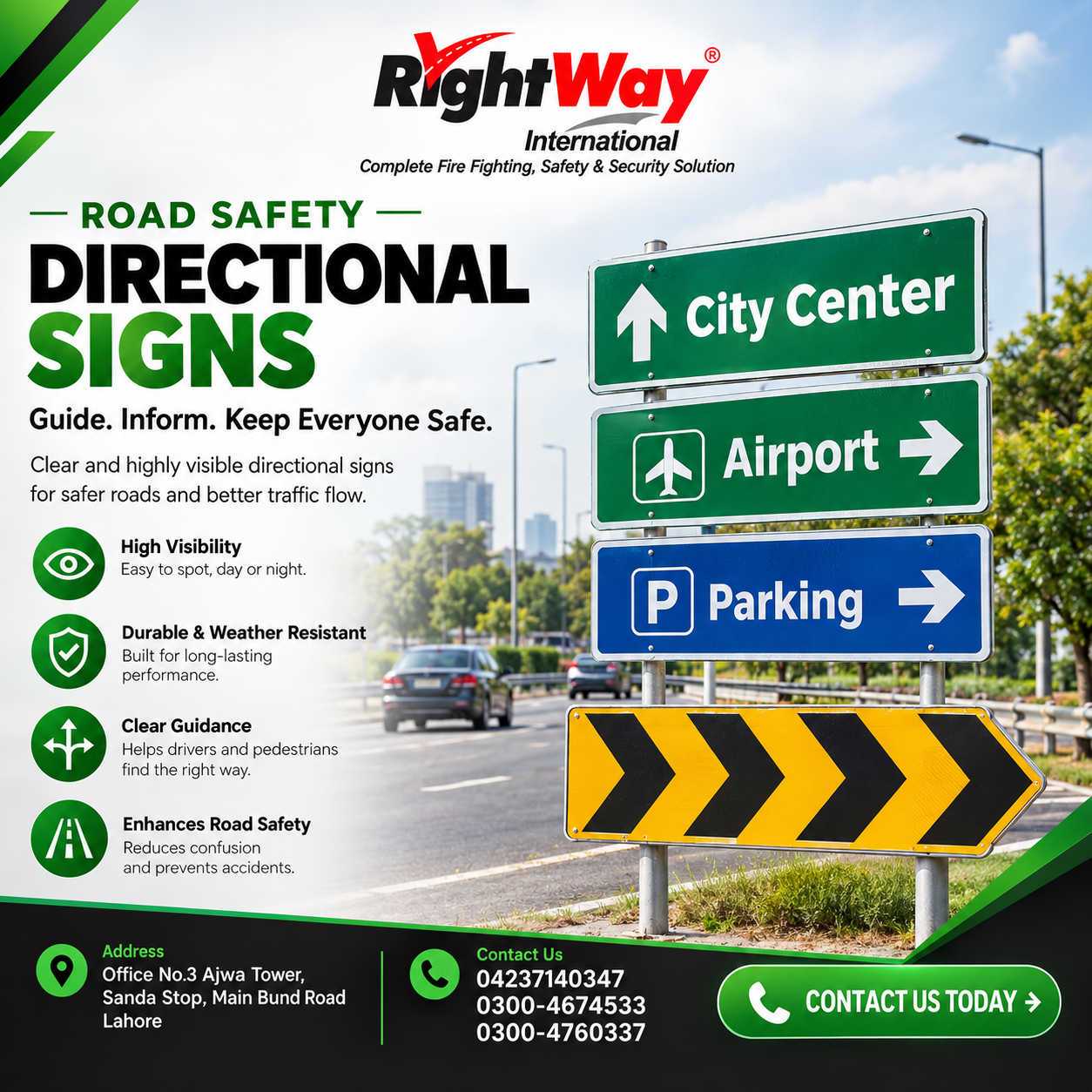
Road Safety Directional Signs: Types Uses Benefits help drivers, pedestrians, and road users understand directions, routes, exits, turns, and important road information. Clear directional signs improve navigation and help reduce confusion, especially on highways, industrial roads, parking areas, construction zones, airports, and commercial properties.
These signs use clear symbols, arrows, colors, and readable lettering to communicate information quickly. Therefore, properly designed Road Safety Directional Signs play an important role in maintaining organized and safer traffic movement.
What Are Road Safety Directional Signs?
Road Safety Directional Signs are visual signs that guide road users toward specific destinations, routes, entrances, exits, facilities, or traffic lanes.
Depending on the location, they may indicate:
- Direction and route information
- Entry and exit points
- Parking areas
- Emergency routes
- Pedestrian crossings
- Facility entrances
- Road turns and junctions
- Restricted or controlled areas
- Industrial and warehouse routes
The signs can use arrows, symbols, text, or a combination of these elements.
Why Are Road Safety Directional Signs Important?
Clear directional information helps road users make decisions quickly. In busy areas, unclear directions can cause unnecessary stopping, wrong turns, congestion, and safety risks.
Properly installed directional signs can:
- Improve traffic flow
- Reduce driver confusion
- Guide pedestrians safely
- Identify entrances and exits
- Improve navigation
- Support emergency access
- Organize parking and internal roads
- Increase visibility of important routes
For this reason, directional signs are useful for both public roads and private facilities.
Types of Road Safety Directional Signs
1. Directional Arrow Signs
These signs use arrows to indicate the correct direction. They are commonly installed at intersections, entrances, parking areas, and internal roads.
2. Exit Direction Signs
Exit signs guide drivers toward designated exits. They are particularly useful in parking facilities, commercial properties, industrial sites, and large compounds.
3. Entrance Direction Signs
These signs identify the correct entrance to a building, facility, parking area, or industrial site.
4. Parking Direction Signs
Parking directional signs guide drivers toward parking areas, visitor parking, staff parking, loading zones, or designated vehicle spaces.
5. Pedestrian Direction Signs
These signs help pedestrians identify walkways, crossings, entrances, exits, and other safe routes.
6. Emergency Direction Signs
Emergency directional signs can guide people toward emergency exits, assembly points, fire equipment, or designated emergency routes.
7. Industrial Road Direction Signs
Factories, warehouses, ports, and industrial facilities often require directional signs to guide vehicles toward loading areas, production zones, warehouses, offices, and restricted areas.
8. Custom Directional Signs
Custom signs can be designed according to the site layout, branding requirements, required wording, arrows, symbols, and installation location.
Where Are Road Safety Directional Signs Used?
Road Safety Directional Signs can be used in many locations, including:
- Highways
- Roads and intersections
- Industrial areas
- Factories
- Warehouses
- Construction sites
- Airports
- Parking areas
- Shopping centers
- Hospitals
- Schools and universities
- Housing societies
- Commercial buildings
- Fuel stations
- Ports and logistics facilities
The sign design should match the environment, viewing distance, traffic conditions, and information required.
Main Features of Road Safety Directional Signs
A properly designed directional sign should be easy to understand from an appropriate distance.
Important features include:
Clear Text
Text should be simple, readable, and large enough for the intended viewing distance.
Visible Arrows
Directional arrows should clearly indicate the route without creating confusion.
Recognizable Symbols
Standardized symbols can communicate information quickly, particularly where drivers have limited time to read text.
Durable Materials
Outdoor signs should withstand sunlight, rain, dust, temperature changes, and general environmental exposure.
High Visibility
Reflective or high-visibility materials can improve sign recognition, particularly in low-light conditions where appropriate.
Benefits of Road Safety Directional Signs
Improved Navigation
Directional signs help drivers and pedestrians reach their destinations without unnecessary confusion.
Better Traffic Flow
Clear route information can help vehicles move efficiently through busy areas.
Increased Safety
Proper signs help identify routes, crossings, exits, and other important locations.
Reduced Confusion
Well-positioned signs provide information before drivers reach a decision point.
Professional Appearance
Consistent and professionally designed signs can improve the organization and appearance of commercial and industrial properties.
Customizable Design
Signs can be customized according to location, language, symbols, arrows, dimensions, and site requirements.
Road Safety Directional Signs vs Warning Signs
Directional signs primarily provide route and navigation information, while warning signs alert road users to potential hazards.
| Feature | Directional Signs | Warning Signs |
|---|---|---|
| Main purpose | Guide road users | Warn about hazards |
| Typical information | Directions, exits, entrances | Curves, hazards, crossings |
| Common elements | Arrows, text, symbols | Warning symbols |
| Main benefit | Navigation | Hazard awareness |
Both types can form part of a comprehensive road-safety sign system.
How to Choose Road Safety Directional Signs
Consider the following factors before purchasing:
1. Identify the Location
Determine where the sign will be installed and the distance from which users need to see it.
2. Define the Information
Use short and clear wording. Avoid unnecessary information that could make the sign difficult to understand.
3. Select the Appropriate Size
The sign size should correspond to viewing distance, road conditions, and installation position.
4. Choose Suitable Materials
Select materials and finishes according to indoor or outdoor use, weather exposure, and expected service life.
5. Consider Visibility
Choose suitable colors, lettering, symbols, and reflective materials based on the environment and applicable requirements.
6. Plan Installation
Position signs where drivers and pedestrians can see them before reaching the relevant turn, entrance, exit, or decision point.
Road Safety Directional Signs in Pakistan
Road Safety Directional Signs in Pakistan are used in industrial areas, factories, warehouses, housing societies, commercial buildings, parking facilities, highways, construction areas, and other locations where clear navigation is required.
When purchasing signs in Pakistan, consider:
- Material quality
- Outdoor durability
- Visibility
- Reflective properties
- Printing quality
- Sign size
- Custom design options
- Installation method
- Weather resistance
- Supplier experience
Businesses should also ensure that their signs are suitable for the intended location and comply with applicable local requirements.
Road Safety Directional Signs Buying Guide
Before purchasing Road Safety Directional Signs, determine the required wording, arrow direction, sign dimensions, material, mounting method, and visibility requirements.
A professional supplier should be able to provide:
- Custom directional signs
- Road direction signs
- Exit signs
- Entrance signs
- Parking signs
- Industrial directional signs
- Reflective signs
- Outdoor safety signs
- Custom symbols and arrows
- Different mounting options
Avoid selecting signs based only on price. Durability, visibility, readability, and correct placement are equally important.
Maintenance of Road Safety Directional Signs
Regular inspection helps keep signs visible and effective. Check for:
- Faded graphics
- Damaged surfaces
- Loose mounting
- Dirt and dust
- Corrosion
- Broken supports
- Reduced reflectivity
- Obstructed visibility
Damaged or unclear signs should be repaired or replaced promptly.
Frequently Asked Questions
What are Road Safety Directional Signs?
Road Safety Directional Signs provide directions and route information to drivers, pedestrians, and other road users.
Where are directional signs used?
They are commonly used on roads, highways, industrial sites, factories, warehouses, parking areas, airports, commercial buildings, and construction sites.
Can directional signs be customized?
Yes. Custom directional signs can include specific wording, arrows, symbols, colors, dimensions, and branding according to the project requirements.
What materials are used for directional signs?
Depending on the application, signs can be manufactured using materials such as aluminum, reflective sheeting, acrylic, PVC, or other suitable sign substrates.
Are reflective directional signs useful?
Reflective materials can improve visibility when illuminated by vehicle headlights, making them useful for many outdoor and low-light applications.
Road Safety Directional Signs provide clear visual guidance for drivers and pedestrians while helping organize traffic movement. From entrances and exits to parking areas, industrial roads, and emergency routes, properly designed signs can make navigation easier and improve site organization.
For effective results, choose signs based on visibility, durability, viewing distance, material, wording, installation position, and site requirements. Custom-designed directional signs can also provide a consistent and professional appearance across roads, commercial properties, and industrial facilities.