




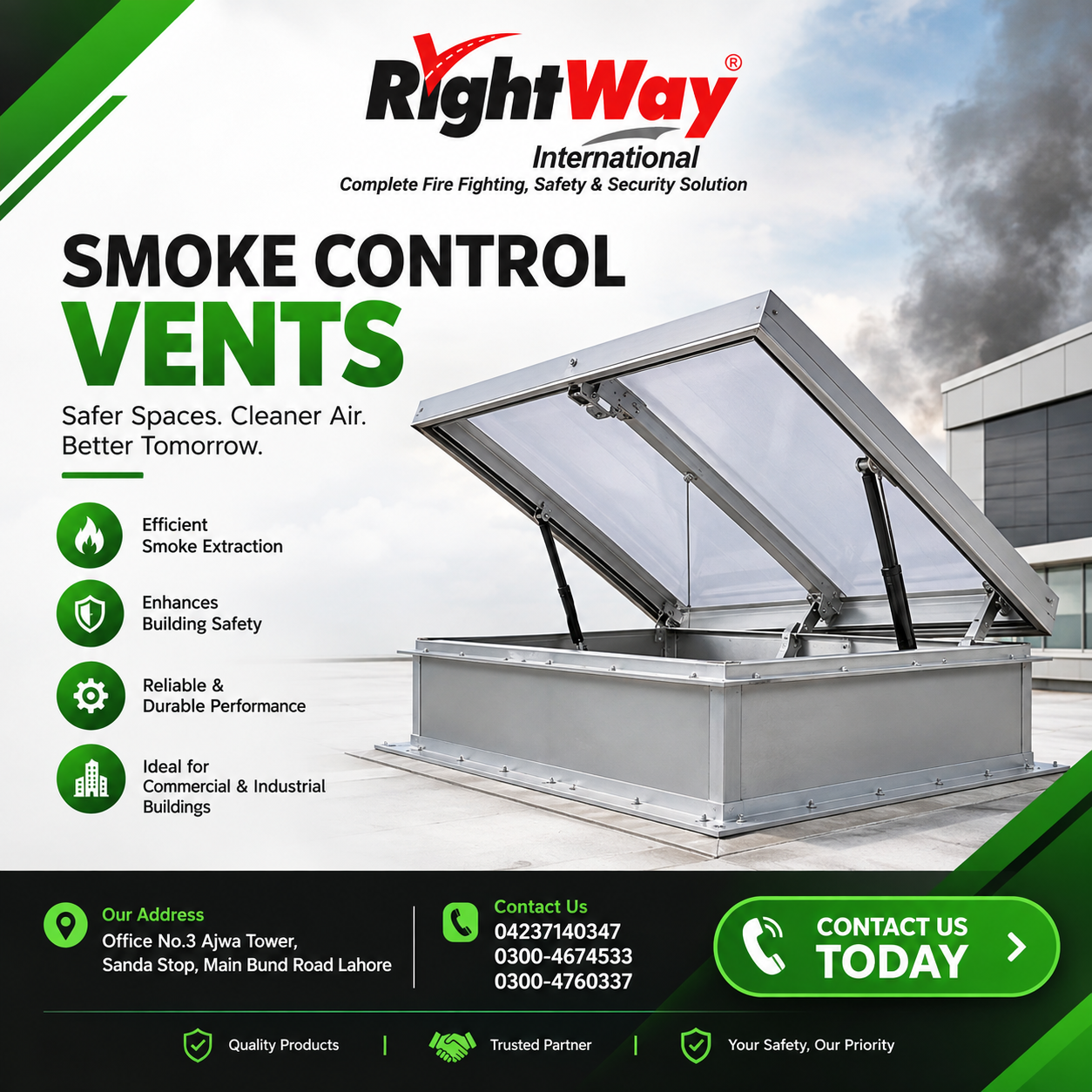
Smoke Control Vents: Types Uses Benefits & Buying Guide play an important role in modern fire safety systems. They help control smoke and hot gases during a fire by providing a designated pathway for smoke to escape or move through a building.
Unlike ordinary ventilation openings, smoke control vents support a specific fire safety strategy. Depending on the building design, the system can open automatically when smoke detectors, heat detectors, or a fire alarm system identifies a fire condition.
As a result, smoke control vents can help manage smoke movement, support evacuation, and assist firefighters during an emergency.
What Is a Smoke Control Vent?
A Smoke Control Vent is a specialized fire safety device that helps remove or control smoke and hot gases during a fire.
Engineers can install these vents on roofs, walls, shafts, or other designated locations. Furthermore, the system may use automatic, manual, electric, or pneumatic operation depending on the project requirements.
A typical smoke control vent system may include:
- Smoke control vents
- Smoke exhaust vents
- Automatic opening mechanisms
- Electric actuators
- Pneumatic actuators
- Smoke detectors
- Heat detectors
- Fire alarm systems
- Smoke control panels
- Manual control switches
- Manual override systems
- Power supplies
- Backup power supplies
- Smoke extraction fans
- Smoke control dampers
- Ventilation ducts
- Sensors
- Louvres
Therefore, the exact components depend on whether the building uses natural smoke ventilation, mechanical smoke extraction, or a combination of both.
How Does a Smoke Control Vent Work?
First, engineers design the smoke management system according to the building layout, occupancy, fire hazard, and smoke control strategy.
During a fire, hot smoke naturally rises toward the upper areas of a building. Therefore, designers often install smoke vents at high levels where they can provide an effective smoke outlet.
When the fire detection system identifies a fire, it sends a signal to the smoke control panel. The control panel then activates the appropriate vent or smoke extraction equipment.
Next, the smoke control vent opens and provides a designated pathway for smoke and hot gases.
In a natural smoke ventilation system, the buoyancy of hot smoke helps move gases toward the vent. On the other hand, a mechanical smoke extraction system uses powered fans to remove smoke through dedicated ducts.
Consequently, a properly engineered system can help control smoke movement and support safer evacuation and firefighting conditions.
Types of Smoke Control Vents
Natural Smoke Control Vents
Natural smoke control vents use the natural movement of hot smoke and gases to provide smoke exhaust.
Typically, engineers install these vents at roof level or in other high-level locations. When the system activates, the vent opens and allows smoke and hot gases to escape.
Natural smoke ventilation can work well in:
- Warehouses
- Factories
- Industrial buildings
- Atriums
- Large storage facilities
- Commercial buildings
However, engineers must consider building geometry, vent location, smoke reservoirs, air supply, and environmental conditions before selecting this system.
Mechanical Smoke Extraction Vents
Mechanical smoke extraction systems use powered fans to remove smoke from a building.
The fans move smoke through dedicated ductwork and discharge it at an approved location. Therefore, mechanical smoke extraction can provide an effective solution where natural ventilation cannot meet the required smoke control objectives.
These systems are commonly used in:
- Underground car parks
- Basement areas
- Shopping centers
- Large commercial buildings
- Industrial facilities
- Enclosed spaces
Automatic Smoke Control Vents
Automatic smoke control vents connect with fire detection and smoke control systems.
When the programmed fire condition occurs, the control panel activates the actuator and opens the vent. As a result, the system can begin smoke management without waiting for manual intervention.
Automatic smoke control vents can integrate with:
- Fire alarm systems
- Smoke detectors
- Heat detectors
- Fire control panels
- Smoke control panels
- Building management systems
Manual Smoke Control Vents
Manual smoke control vents allow authorized personnel to operate the ventilation system manually.
In addition, some automatic systems include manual override controls. These controls can provide an additional operating method when required by the approved fire safety strategy.
Smoke Control Louvres
Smoke control louvres provide controlled openings for smoke extraction or air supply.
They can use electric or pneumatic actuators and can form part of a larger smoke management system. Furthermore, engineers can use louvres in different building configurations according to the required smoke control design.
Where Are Smoke Control Vents Used?
Smoke control vents are especially useful in buildings where smoke can accumulate quickly because of large floor areas, high ceilings, underground spaces, or complex layouts.
Common applications include:
- Warehouses
- Factories
- Industrial buildings
- Shopping malls
- Shopping centers
- Atriums
- Exhibition centers
- Stadiums
- Airports
- Railway stations
- Underground car parks
- Basement areas
- Storage facilities
- Commercial buildings
- Logistics facilities
- Distribution centers
- Large assembly areas
For example, a large warehouse can produce significant amounts of smoke during a fire. Therefore, a properly engineered smoke ventilation system for warehouses can help manage smoke movement and support the building’s overall fire safety strategy.
Benefits of Smoke Control Vents
A smoke control vent system provides several important benefits.
Smoke Management
First, smoke control vents help manage smoke accumulation and movement during a fire.
Improved Evacuation Conditions
Furthermore, a properly designed smoke management system can help maintain better conditions in designated evacuation areas.
Firefighter Support
In addition, smoke control systems can assist firefighters by helping manage smoke and hot gases during emergency operations.
Heat Removal
Natural smoke vents can also release hot gases from designated areas, depending on the system design.
Automatic Operation
Moreover, automatic smoke vents can activate through a connected detection and control system, reducing the need for immediate manual intervention.
Fire System Integration
Smoke control vents can integrate with fire alarm systems, smoke detectors, heat detectors, smoke control panels, and emergency control systems.
Flexible Applications
Finally, engineers can design smoke control systems for warehouses, factories, car parks, shopping malls, atriums, and other large or enclosed spaces.
Smoke Control Vents vs Ordinary Ventilation
Although both systems move air, they serve different purposes.
| Feature | Smoke Control Vent | Ordinary Ventilation |
|---|---|---|
| Primary purpose | Smoke and heat management during fire | Normal air circulation |
| Fire operation | Designed for emergency operation | Usually designed for normal operation |
| Activation | Automatic or manual depending on design | Normal building controls |
| Fire alarm integration | Often integrated | Not always integrated |
| Emergency smoke management | Yes | No |
| Typical applications | Fire safety systems | General ventilation |
Therefore, an ordinary ventilation opening should not automatically serve as a smoke control vent. Instead, the building’s fire safety design should specify suitable smoke control equipment.
Smoke Control Vents vs Smoke Extraction Fans
Both systems help manage smoke, but they use different operating principles.
A smoke control vent can use the natural buoyancy of hot smoke to provide an outlet.
In contrast, a smoke extraction fan actively removes smoke using mechanical power.
Therefore, natural smoke ventilation may suit some large spaces, while mechanical smoke extraction may work better in underground or enclosed areas.
The final selection should depend on the building’s fire strategy, smoke calculations, layout, and applicable requirements.
Smoke Control Vent Installation
Proper installation directly affects the performance of a smoke control ventilation system.
Before installation, professionals should evaluate:
- Building size
- Building height
- Occupancy
- Fire hazard
- Smoke reservoir design
- Vent location
- Effective vent area
- Air supply
- Smoke extraction requirements
- Natural or mechanical ventilation
- Actuator type
- Control system
- Fire alarm integration
- Primary power supply
- Backup power
- Ductwork
- Smoke dampers
- Exhaust fan capacity
- Smoke discharge location
- Environmental conditions
Furthermore, installers should follow the approved fire strategy, applicable standards, manufacturer instructions, and project-specific engineering calculations.
Smoke Control Vent Maintenance
Regular smoke control vent inspection, testing, and maintenance help keep the system ready for an emergency.
During maintenance, technicians should inspect:
- Vent panels
- Vent frames
- Hinges
- Actuators
- Electric motors
- Pneumatic components
- Smoke detectors
- Heat detectors
- Control panels
- Manual controls
- Electrical wiring
- Power supplies
- Backup power
- Ductwork
- Smoke dampers
- Exhaust fans
- Louvres
- Sensors
- Mounting components
Additionally, technicians should check for corrosion, mechanical damage, blocked openings, actuator faults, damaged wiring, electrical problems, and control-panel faults.
Regular testing also helps identify problems before an emergency occurs.
How to Choose the Best Smoke Control Vent
Before purchasing a smoke control vent, consider the following factors:
- Building type – Identify whether you need the system for a warehouse, car park, factory, atrium, or commercial building.
- Fire hazard – Evaluate the type and quantity of combustible materials.
- Smoke control strategy – Determine whether natural or mechanical smoke control suits the building.
- Vent size – Select an appropriate effective opening area.
- Installation location – Determine the most suitable roof, wall, shaft, or other location.
- Activation method – Consider automatic, manual, electric, or pneumatic operation.
- Actuator – Select a compatible and reliable actuator.
- Control panel – Confirm compatibility with the fire alarm and smoke control system.
- Power supply – Ensure adequate primary and backup power where required.
- Environmental conditions – Consider temperature, weather, corrosion, and operating conditions.
- Fire performance – Confirm that the equipment suits the intended fire safety application.
- Technical support – Consider installation, commissioning, testing, maintenance, spare parts, and warranty.
As a result, professional assessment can help ensure that the selected smoke control system matches the actual requirements of the building.
Smoke Control Vents in Pakistan
A smoke control vent in Pakistan can provide an important fire safety solution for warehouses, factories, industrial facilities, shopping malls, car parks, commercial buildings, logistics centers, atriums, and other large or enclosed spaces.
When purchasing smoke control vents in Pakistan, consider:
- Smoke vent type
- Vent size
- Natural or mechanical smoke control
- Actuator
- Smoke control panel
- Fire alarm integration
- Smoke detectors
- Heat detectors
- Exhaust fans
- Smoke dampers
- Ductwork
- Power supply
- Backup power
- Installation
- Commissioning
- Testing
- Maintenance
- Warranty
- Technical support
Furthermore, a professional fire protection company should assess the building configuration and fire hazard before designing and installing the system.
Common Smoke Control Vent Problems
Avoid these common smoke control system problems:
- Selecting the wrong vent type
- Incorrect vent positioning
- Insufficient vent area
- Poor smoke reservoir design
- Inadequate air supply
- Incorrect actuator selection
- Poor electrical connections
- Incorrect control-panel configuration
- Blocked smoke vents
- Damaged vent mechanisms
- Corrosion
- Failed smoke detectors
- Faulty actuators
- Damaged wiring
- Incorrect fan capacity
- Poor ductwork design
- Neglecting smoke damper maintenance
- Failing to test automatic operation
- Ignoring backup power requirements
- Skipping regular inspection and maintenance
Therefore, professional engineering, correct installation, commissioning, regular testing, and proper maintenance remain essential for dependable smoke control.
Frequently Asked Questions
What is a smoke control vent?
A smoke control vent is a fire safety device that helps control or remove smoke and hot gases from a building during a fire.
Why are smoke control vents used?
They help manage smoke movement and accumulation. In addition, they can support evacuation conditions and firefighting operations when engineers properly integrate them into the building’s fire safety strategy.
Where are smoke control vents used?
They are commonly used in warehouses, factories, industrial buildings, shopping malls, atriums, underground car parks, commercial buildings, logistics facilities, and other large spaces.
Are smoke control vents automatic?
Yes, many systems operate automatically through fire alarm, smoke detection, heat detection, or dedicated smoke control panels. However, some systems also provide manual operation or override controls.
What is the difference between a smoke vent and an ordinary ventilation vent?
A smoke control vent supports emergency smoke management, while an ordinary ventilation vent normally handles everyday air circulation. Therefore, ordinary ventilation equipment should not automatically replace dedicated smoke control equipment.
Do smoke control vents require a fire alarm system?
Many automatic systems connect with fire detection and alarm systems. However, the exact arrangement depends on the approved fire safety design.
Are smoke control vents suitable for warehouses?
Yes. Smoke control vents for warehouses can form an important part of an engineered smoke management strategy, particularly in large buildings with high ceilings.
Are smoke control vents suitable for car parks?
Yes. Smoke control systems for car parks can use mechanical extraction, natural ventilation, or a combination of systems depending on the building design.
How often should smoke control vents be maintained?
Inspection, testing, and maintenance should follow applicable requirements, manufacturer instructions, and the building’s approved fire safety maintenance program.
A Smoke Control Vent System provides an important method for managing smoke and hot gases during a fire. By creating controlled smoke exhaust pathways or supporting mechanical smoke extraction, these systems can contribute to safer evacuation conditions and more effective firefighting operations.
Moreover, proper smoke control vent selection, vent sizing, actuator selection, smoke detection, control panel integration, fan capacity, ductwork, installation, commissioning, inspection, testing, and maintenance all contribute to reliable system performance.
For comprehensive fire protection, a smoke control system can also work alongside fire alarm systems, smoke detectors, heat detectors, fire fighting pumps, fire hydrants, fire extinguishers, emergency procedures, and trained personnel.