




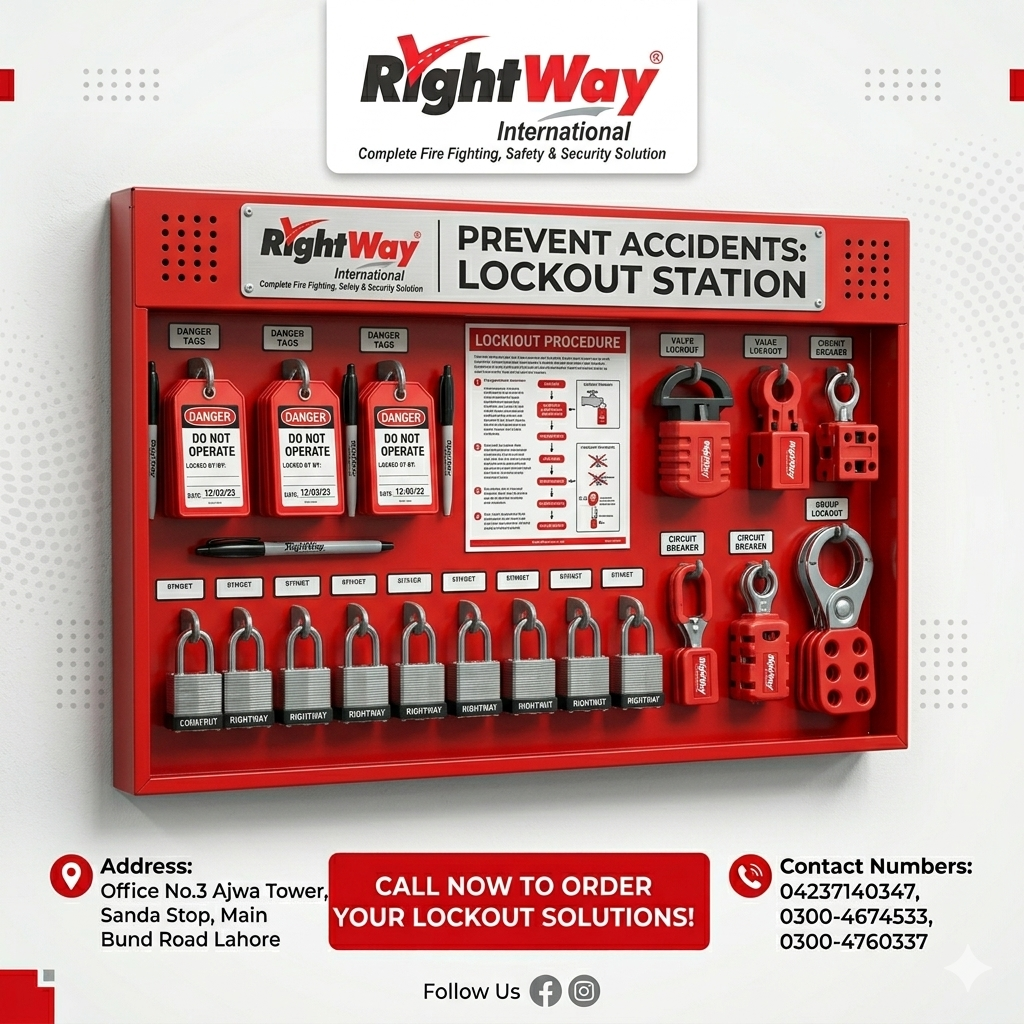
Lockout Tagout Station. is an organized storage and management system designed to keep Lockout/Tagout (LOTO) devices easily accessible, visible, and properly secured within industrial workplaces. Safety professionals use lockout stations to store padlocks, lockout hasps, safety tags, cable lockouts, valve lockouts, electrical lockout devices, and other hazardous energy isolation equipment in one centralized location.
Because industrial facilities often require fast access to LOTO devices during maintenance and servicing procedures, lockout stations improve workplace organization, increase OSHA compliance, and enhance worker safety. Furthermore, Occupational Safety and Health Administration (OSHA) 29 CFR 1910.147 standards require employers to implement proper hazardous energy control procedures. Therefore, lockout stations serve as a highly effective solution for maintaining organized and compliant lockout/tagout programs.
What Is a Lockout Station?
A lockout station is a wall-mounted or portable safety cabinet designed to store and organize lockout/tagout equipment used during machinery maintenance, servicing, inspections, and repair operations.
These stations help workers quickly locate the necessary lockout devices while ensuring all safety equipment remains visible, protected, and readily available. Most lockout stations include designated compartments or hooks for:
- Safety padlocks
- Lockout hasps
- Lockout tags
- Cable lockouts
- Valve lockout devices
- Circuit breaker lockouts
- Plug lockouts
- Electrical lockout kits
- Group lockout boxes
- Safety instructions and procedures
As a result, maintenance teams can respond efficiently during equipment shutdown procedures while reducing the risk of missing or misplaced LOTO devices.
Common Applications of Lockout Stations
Industries use lockout stations for a wide range of hazardous energy control procedures, including:
- Industrial machinery maintenance
- Electrical panel servicing
- Valve isolation procedures
- Conveyor system shutdowns
- Group lockout operations
- Chemical processing maintenance
- Oil and gas shutdown procedures
- Power generation maintenance
- HVAC system servicing
- Hydraulic and pneumatic isolation
- Manufacturing plant maintenance
- Water treatment facility repairs
Types of Lockout Stations
Because industrial environments differ significantly, manufacturers provide several lockout station designs for various applications.
1. Wall-Mounted Lockout Station
These fixed stations are installed in maintenance areas, production floors, or electrical rooms.
Features:
- Permanent installation
- High visibility
- Organized equipment storage
- Easy worker access
2. Portable Lockout Station
Portable systems allow maintenance teams to transport lockout equipment directly to job sites.
Benefits:
- Mobility during field maintenance
- Ideal for large industrial facilities
- Compact storage design
3. Electrical Lockout Station
Manufacturers design these stations specifically for electrical lockout applications.
Includes:
- Circuit breaker lockouts
- Plug lockout devices
- Electrical safety padlocks
- Voltage warning tags
4. Group Lockout Station
These stations support multiple-worker lockout procedures.
Function:
Authorized employees can store personal safety locks and group lockout equipment securely.
5. Custom Lockout Station
Facilities often customize lockout stations based on operational requirements.
Custom Options:
- Company branding
- Equipment-specific compartments
- Department identification
- Transparent safety covers
6. Covered Lockout Station
Protective covers shield lockout devices from dust, moisture, and harsh industrial conditions.
Applications:
- Outdoor facilities
- Chemical plants
- Marine environments
- Dust-prone manufacturing areas
Technical Specifications
| Specification | Details |
|---|---|
| Material | ABS Plastic, Polycarbonate, Steel, Acrylic |
| Mounting Type | Wall-Mounted or Portable |
| Storage Capacity | Small to Large Multi-Device Capacity |
| Color | Red, Yellow, Transparent, Custom Colors |
| Environmental Resistance | UV, Chemical, Moisture Resistant |
| Lock Compatibility | Supports Multiple Safety Padlocks |
| Compartments | Customizable Hooks and Storage Areas |
| Compliance | OSHA 1910.147, ANSI Z244.1 |
Key Features and Advantages of Lockout Stations
Centralized Safety Equipment Storage
Lockout stations keep all LOTO devices organized in one easily accessible location.
Improved OSHA Compliance
Organized lockout systems help facilities comply with OSHA hazardous energy control requirements.
Faster Maintenance Operations
Technicians can quickly locate the necessary lockout devices, reducing maintenance delays.
Enhanced Workplace Safety
Clearly visible lockout equipment promotes better safety awareness among employees.
Reduced Equipment Loss
Proper storage prevents misplaced or damaged lockout devices.
Group Lockout Support
Multiple workers can access shared LOTO equipment during team maintenance procedures.
Durable Industrial Construction
Heavy-duty materials withstand harsh industrial environments and long-term use.
How to Select the Right Lockout Station
Choosing the proper lockout station improves both workplace organization and safety performance.
1. Determine Storage Requirements
First, identify the number and type of lockout devices required for daily operations.
2. Consider Installation Location
Choose wall-mounted stations for fixed work areas or portable stations for mobile maintenance teams.
3. Evaluate Environmental Conditions
Select weather-resistant or covered stations for outdoor or chemical-intensive environments.
4. Verify Capacity Needs
Ensure the station can accommodate all required safety padlocks, tags, and lockout devices.
5. Choose OSHA-Compliant Systems
Always use lockout stations that support OSHA-compliant lockout/tagout procedures.
Best Practices for Lockout Station Safety
- Install lockout stations in highly visible and accessible areas.
- Keep all lockout devices properly organized and labeled.
- Regularly inspect lockout equipment for damage or wear.
- Replace missing or damaged devices immediately.
- Train employees on proper lockout station usage.
- Maintain updated LOTO procedures near the station.
- Assign responsibility for station maintenance and inventory checks.
Industries That Commonly Use Lockout Stations
Manufacturing Plants
Factories use lockout stations to manage machine maintenance and production shutdown procedures.
Oil and Gas Industry
Facilities secure valves, pipelines, and processing systems safely during maintenance operations.
Chemical Processing Facilities
Workers organize hazardous energy isolation equipment for chemical system servicing.
Power Generation Plants
Technicians use lockout stations for electrical maintenance and turbine isolation procedures.
Water Treatment Facilities
Operators manage pump and valve lockout devices efficiently during repairs.
Construction and Engineering
Field maintenance teams use portable lockout stations for temporary worksite safety.
Importance of OSHA Compliance for Lockout Stations
OSHA’s Lockout/Tagout Standard (29 CFR 1910.147) requires employers to control hazardous energy during servicing and maintenance activities.
Properly organized lockout stations help companies:
- Maintain consistent LOTO procedures
- Improve employee compliance
- Reduce workplace accidents
- Enhance maintenance efficiency
- Support safety audits and inspections
Failure to implement proper hazardous energy control systems may result in serious injuries, OSHA penalties, and operational disruptions.
Lockout Tags
lockout tag is a durable warning label or identification tag attached to lockout devices, switches, valves, breakers, plugs, or industrial equipment during maintenance operations. These tags communicate critical safety information such as:
- Equipment status
- Authorized personnel identification
- Maintenance activity warnings
- Energy isolation confirmation
- Do-not-operate instructions
- Repair or servicing notifications
Workers typically attach lockout tags using nylon ties, steel loops, or self-locking cable fasteners. Once installed, the tags provide a clear visual warning that equipment must remain isolated until maintenance work is fully completed.
Unlike physical lockout devices that prevent equipment operation mechanically, lockout tags primarily serve as communication and warning tools within the LOTO procedure.
Frequently Asked Questions (FAQs)
What is the purpose of a lockout station?
A lockout station stores and organizes Lockout/Tagout devices in a centralized location for quick access during maintenance procedures.
What devices are stored in a lockout station?
Most stations contain:
- Safety padlocks
- Lockout tags
- Lockout hasps
- Valve lockouts
- Circuit breaker lockouts
- Cable lockouts
- Plug lockouts
Are lockout stations required by OSHA?
OSHA does not specifically require lockout stations, but organized LOTO systems greatly support OSHA compliance and workplace safety.
Can lockout stations be customized?
Yes. Many manufacturers provide customized lockout stations with specific storage layouts, branding, and equipment configurations.
Where should lockout stations be installed?
Install stations near maintenance areas, production floors, electrical rooms, and equipment servicing locations for easy accessibility.
Conclusion
Lockout Stations are essential organizational tools that improve Lockout/Tagout efficiency, enhance worker safety, and support OSHA compliance in industrial environments. By providing centralized access to critical LOTO equipment, these stations help maintenance teams perform hazardous energy isolation procedures quickly, safely, and effectively.
Whether used in manufacturing plants, oil refineries, power stations, or chemical facilities, lockout stations contribute significantly to safer workplaces and more reliable maintenance operations.