




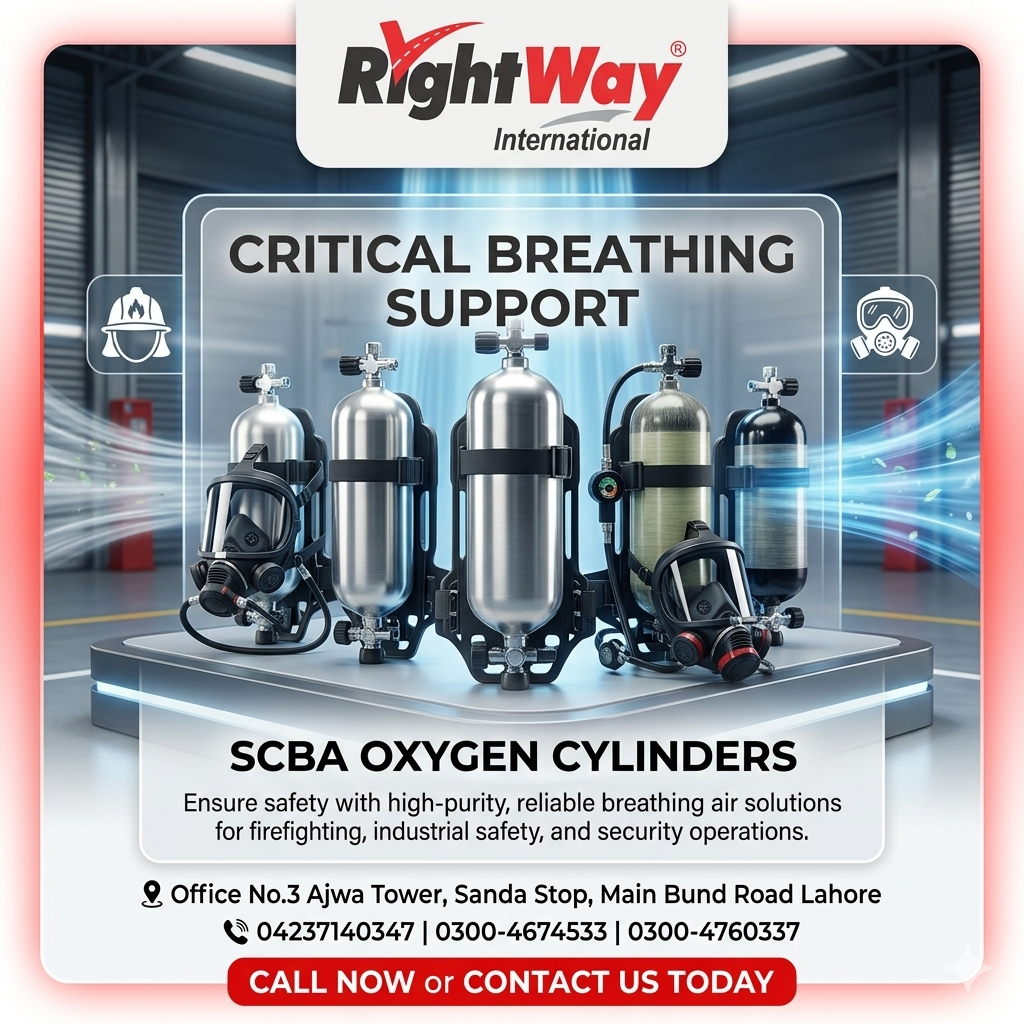
SCBA Oxygen Cylinders are high-pressure breathing air storage cylinders designed to supply clean, breathable air to Self-Contained Breathing Apparatus (SCBA) systems used in hazardous, smoke-filled, toxic, oxygen-deficient, and contaminated environments. These cylinders are critical components of respiratory protection systems used by firefighters, industrial workers, rescue teams, HAZMAT personnel, miners, and emergency responders.
SCBA oxygen cylinders are commonly used in firefighting operations, chemical plants, oil and gas facilities, confined space entry, mining rescue, pharmaceutical manufacturing, marine safety, nuclear facilities, wastewater treatment plants, and emergency rescue operations where breathable air is essential for worker survival and safety.
Because hazardous environments may contain toxic gases, smoke particles, chemical vapors, low oxygen levels, and airborne contaminants, SCBA oxygen cylinders provide an independent supply of breathable air that protects workers during dangerous industrial and emergency operations. as per Occupational Safety and Health Administration (OSHA)
What Are SCBA Oxygen Cylinders?
SCBA Oxygen Cylinders are portable high-pressure cylinders that store compressed breathing air or oxygen used in Self-Contained Breathing Apparatus systems.
These cylinders connect to:
- Full face respirator masks
- Positive pressure regulators
- SCBA harness assemblies
- Breathing hoses
- Demand valve systems
- PASS alarm systems
- Emergency rescue equipment
- Firefighter turnout gear
- HAZMAT suits
- Industrial respiratory protection systems
Most SCBA oxygen cylinder systems include:
- High-pressure breathing air cylinder
- Cylinder valve assembly
- Pressure gauge
- Pressure reducer
- Regulator connection
- Carrying harness
- Cylinder retention system
- Low-air warning alarm
- Cylinder protective coating
- Quick-connect fittings
SCBA oxygen cylinders support:
- OSHA respiratory protection compliance
- Firefighter respiratory safety
- Toxic gas exposure prevention
- Confined space entry safety
- Industrial emergency response
- Hazardous atmosphere protection
- Oxygen-deficient environment safety
- HAZMAT operations
- Emergency evacuation procedures
- Industrial respiratory hazard control
Because these cylinders provide an independent air supply, they significantly improve worker safety in life-threatening environments.
Common Applications of SCBA Oxygen Cylinders
Industries use SCBA oxygen cylinders for various hazardous operations, including:
- Structural firefighting
- Industrial firefighting
- Chemical spill response
- Confined space rescue
- Oil refinery maintenance
- Hazardous material handling
- Mining rescue operations
- Marine firefighting
- Pharmaceutical production safety
- Nuclear plant maintenance
- Toxic gas leak containment
- Emergency evacuation procedures
- Tunnel rescue operations
- Utility maintenance work
- Industrial shutdown procedures
- Oxygen-deficient area entry
- Smoke-filled building rescue
- Power plant emergency response
- Wastewater treatment maintenance
- Offshore platform safety operations
Self Contained Breathing Apparatus (SCBA)
A Self-Contained Breathing Apparatus (SCBA) is a respiratory protection system that supplies breathable compressed air from a portable cylinder carried by the user.
SCBA systems are widely used in:
- Firefighting operations
- Industrial rescue missions
- Toxic atmosphere entry
- Confined space operations
- Chemical processing facilities
- Oil and gas plants
- Mining environments
- Oxygen-deficient areas
- HAZMAT response operations
- Marine emergency response
- Power generation facilities
- Emergency evacuation support
- Pharmaceutical manufacturing
- Industrial maintenance shutdowns
- Hazardous gas environments
Importance of SCBA Oxygen Cylinders in Firefighting
Firefighters rely on SCBA oxygen cylinders during rescue and fire suppression operations in smoke-filled and high-temperature environments.
Benefits:
- Supplies breathable air during firefighting
- Prevents smoke inhalation
- Supports emergency rescue operations
- Protects respiratory systems
- Enables safe entry into hazardous areas
- Improves firefighter survival
- Supports prolonged rescue operations
How SCBA Oxygen Cylinders Work
SCBA oxygen cylinders store compressed breathable air that flows through a regulator into the respirator mask.
Step 1: Cylinder Inspection
Users inspect the cylinder pressure, valve assembly, regulator, and safety systems before use.
Step 2: SCBA Donning
The user wears the SCBA harness and secures the respirator mask.
Step 3: Cylinder Activation
The cylinder valve is opened to release compressed breathing air.
Step 4: Airflow Regulation
The regulator controls airflow into the face mask under positive pressure.
Step 5: Hazardous Environment Entry
The user enters contaminated or oxygen-deficient environments safely.
Step 6: Air Pressure Monitoring
The low-air alarm activates when cylinder pressure reaches critical levels.
Step 7: Safe Exit Procedure
After completing operations, the user exits the hazardous area and removes the SCBA equipment.
Types of SCBA Oxygen Cylinders
Different industries require different cylinder configurations based on operational hazards and duration requirements.
1. Steel SCBA Cylinders
Steel cylinders are durable and commonly used in industrial environments.
Features:
- High durability
- Long service life
- Corrosion-resistant coating
- Reliable pressure containment
2. Aluminum SCBA Cylinders
Aluminum cylinders are lightweight and suitable for emergency response operations.
Benefits:
- Reduced weight
- Easy portability
- Corrosion resistance
- Lower maintenance
3. Carbon Fiber SCBA Cylinders
Carbon fiber cylinders are advanced lightweight cylinders designed for extended use.
Advantages:
- Extremely lightweight
- High-pressure capacity
- Extended air duration
- Improved mobility
4. Composite SCBA Cylinders
Composite cylinders combine metal liners with reinforced fiber wrapping.
Applications:
- Firefighting operations
- Industrial rescue
- HAZMAT response
- Confined space entry
5. Escape SCBA Cylinders
Compact emergency breathing cylinders designed for evacuation procedures.
Common Uses:
- Offshore platforms
- Marine vessels
- Chemical facilities
- Emergency escape systems
Technical Specifications
| Specification | Details |
|---|---|
| Cylinder Type | High-Pressure SCBA Cylinder |
| Air Supply | Compressed Breathing Air |
| Cylinder Materials | Steel, Aluminum, Carbon Fiber |
| Operating Pressure | 2216 PSI to 5500 PSI |
| Breathing Duration | 30 to 60 Minutes |
| Valve Type | High-Pressure Valve |
| Alarm System | Audible Low-Air Alarm |
| Compliance | OSHA, NFPA, NIOSH |
| Application | Firefighting & Industrial Safety |
| Protection Level | Respiratory Protection |
Key Features and Advantages of SCBA Oxygen Cylinders
High-Pressure Air Storage
Provides sufficient breathable air for hazardous operations.
Lightweight Construction
Modern carbon fiber cylinders improve worker mobility and reduce fatigue.
OSHA Compliance Support
Supports respiratory protection requirements and industrial safety standards.
Corrosion Resistance
Industrial-grade coatings improve cylinder durability in harsh environments.
Positive Pressure Compatibility
Supports positive-pressure SCBA systems to prevent contaminant leakage.
Extended Air Supply
High-capacity cylinders allow longer operating durations.
Reliable Emergency Protection
Ensures continuous breathable air during rescue operations.
Durable Industrial Design
Designed for extreme temperatures and industrial environments.
How to Select the Right SCBA Oxygen Cylinder
Choosing the correct SCBA cylinder improves respiratory protection and workplace safety.
1. Identify Hazard Conditions
Determine exposure risks such as smoke, toxic gases, or oxygen deficiency.
2. Evaluate Air Duration Requirements
Select cylinder capacity based on operational duration.
3. Verify Safety Compliance
Ensure cylinders meet OSHA, NFPA, and NIOSH standards.
4. Consider Cylinder Weight
Choose lightweight cylinders for mobility-intensive operations.
5. Assess Environmental Conditions
Select corrosion-resistant and heat-resistant cylinders for harsh environments.
Best Practices for SCBA Oxygen Cylinder Usage
- Inspect cylinders before every use
- Check cylinder pressure regularly
- Train employees on SCBA procedures
- Replace damaged valves immediately
- Perform hydrostatic testing as required
- Store cylinders in dry, secure environments
- Conduct routine maintenance inspections
- Follow OSHA respiratory protection standards
- Maintain backup emergency cylinders
- Clean SCBA equipment after use
Industries That Commonly Use SCBA Oxygen Cylinders
Fire Departments
Firefighters use SCBA cylinders during structural and industrial firefighting operations.
Oil and Gas Industry
Workers rely on respiratory protection in hazardous gas environments.
Chemical Processing Plants
Chemical facilities require protection from toxic vapors and airborne hazards.
Mining Operations
Mining rescue teams use SCBA cylinders in oxygen-deficient areas.
Marine and Offshore Industry
Ships and offshore platforms use SCBA systems for emergency response.
Pharmaceutical Manufacturing
Controlled production environments require advanced respiratory protection.
Wastewater Treatment Facilities
Workers use SCBA systems when exposed to hazardous gases.
Power Generation Facilities
Power plants use SCBA equipment during maintenance shutdowns and emergency operations.
Importance of OSHA Compliance for SCBA Oxygen Cylinders
OSHA respiratory protection standards require employers to provide approved respiratory equipment when workers face hazardous airborne contaminants or oxygen-deficient atmospheres.
Proper SCBA cylinder programs help organizations:
- Improve respiratory safety
- Reduce toxic exposure risks
- Prevent smoke inhalation injuries
- Improve emergency preparedness
- Support OSHA inspections
- Strengthen industrial safety programs
- Reduce workplace fatalities
- Improve hazard management
- Protect emergency response personnel
- Standardize respiratory protection procedures
Failure to maintain proper SCBA cylinder procedures may result in severe injuries, respiratory illness, OSHA penalties, operational shutdowns, and fatalities.
Difference Between SCBA Oxygen Cylinders and Air-Purifying Respirators
| Feature | SCBA Oxygen Cylinders | Air-Purifying Respirators |
|---|---|---|
| Air Supply | Independent Cylinder | Filter-Based |
| Oxygen Deficiency Protection | Yes | No |
| Smoke Protection | Excellent | Limited |
| Toxic Gas Protection | High | Moderate |
| Emergency Use | Ideal | Limited |
| Hazardous Environment Use | Excellent | Moderate |
| Respiratory Safety Level | Maximum | Moderate |
| OSHA Compliance Support | Yes | Yes |
Full Face Mask SCBA
Frequently Asked Questions (FAQs)
What are SCBA oxygen cylinders used for?
They provide breathable compressed air in hazardous, toxic, smoke-filled, or oxygen-deficient environments.
Who uses SCBA oxygen cylinders?
Firefighters, industrial workers, miners, rescue teams, HAZMAT personnel, and emergency responders commonly use them.
How long does an SCBA oxygen cylinder last?
Most cylinders provide approximately 30 to 60 minutes of breathable air depending on workload and cylinder capacity.
Are SCBA cylinders OSHA required?
OSHA requires respiratory protection equipment when workers are exposed to hazardous atmospheres or toxic airborne contaminants.
What materials are SCBA cylinders made from?
Manufacturers commonly use steel, aluminum, carbon fiber, and composite materials.
Why are carbon fiber SCBA cylinders popular?
They are lightweight, durable, and provide longer operating durations.
SCBA Oxygen Cylinders are essential respiratory protection components that improve workplace safety, support OSHA compliance, and protect workers operating in hazardous industrial and emergency environments. By supplying clean breathable air during firefighting, confined space rescue, chemical handling, mining operations, oil and gas maintenance, marine emergencies, and industrial shutdown procedures, these cylinders help reduce respiratory injuries, improve rescue efficiency, and strengthen industrial safety programs.
Whether used in firefighting operations, chemical plants, mining environments, offshore facilities, wastewater treatment plants, pharmaceutical manufacturing, power generation facilities, or emergency rescue operations, SCBA oxygen cylinders remain a critical part of modern respiratory protection and industrial hazard management.