




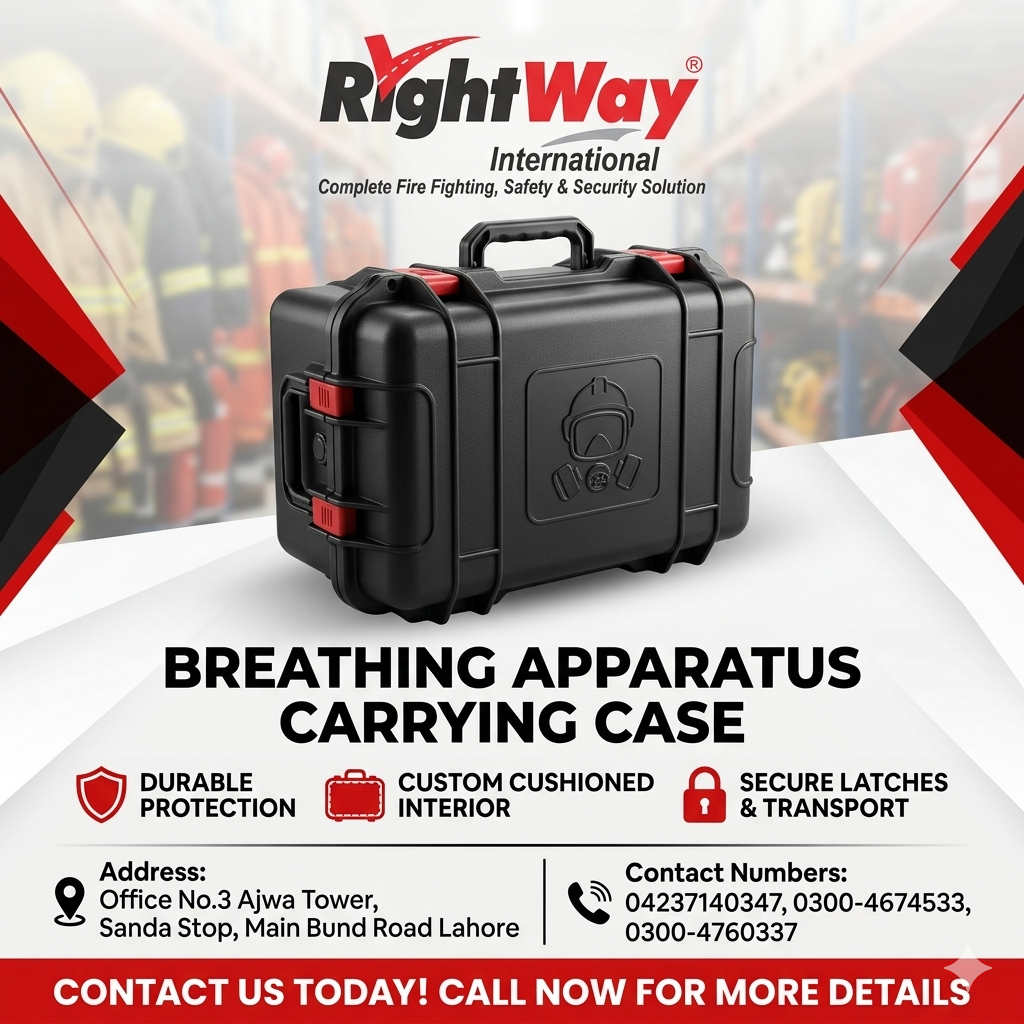
Breathing Apparatus Carrying Case is a critical protective storage and transport solution designed to safely house, organize, and protect breathing apparatus equipment such as Self-Contained Breathing Apparatus (SCBA), respiratory protection systems, air cylinders, face masks, regulators, and related accessories. It ensures safe handling, secure transportation, and long-term preservation of life-saving respiratory equipment used in hazardous and emergency environments.
These carrying cases are widely used in firefighting, industrial safety, offshore operations, mining, chemical plants, emergency rescue services, military operations, marine environments, and confined space entry applications where breathing apparatus must remain protected, accessible, and ready for immediate deployment.
Because respiratory protection equipment is mission-critical in life-threatening environments, breathing apparatus carrying cases play a vital role in equipment protection, operational readiness, compliance with safety standards such as OSHA, NFPA, EN, and NIOSH, and efficient emergency response management.
What Is a Breathing Apparatus Carrying Case?
A Breathing Apparatus Carrying Case is a rugged, impact-resistant storage container designed to carry and protect complete breathing apparatus systems including SCBA units, air cylinders, masks, hoses, regulators, and spare components.
It is commonly used for:
- Self-Contained Breathing Apparatus (SCBA) storage and transport
- Firefighter breathing equipment protection
- Industrial respiratory safety equipment handling
- Confined space entry gear transport
- Emergency rescue equipment deployment
- Offshore oil and gas safety systems
- Chemical plant respiratory protection storage
- Mining and tunneling safety equipment
- Military and defense respiratory systems
- Marine and shipyard safety operations
- Hazardous material response kits
- Airport and aviation emergency equipment
- Pharmaceutical and nuclear facility safety systems
- Industrial maintenance and shutdown operations
- Disaster response and recovery missions
Key Components of a Breathing Apparatus Carrying Case System
A typical breathing apparatus carrying case includes:
- Hard-shell protective outer casing
- Shock-resistant and impact-proof structure
- Foam interior padding and equipment slots
- Custom molded compartments for SCBA units
- Cylinder holding brackets or straps
- Mask and regulator storage sections
- Hose and accessory compartments
- Waterproof and dustproof sealing system
- Heavy-duty locking mechanism
- Pressure and equipment labeling panels
- Reinforced handles for manual transport
- Wheels and trolley system for mobility
- Corrosion-resistant hinges and latches
- Ventilation or pressure equalization valve
- Identification tags and safety markings
How Breathing Apparatus Carrying Cases Work
Breathing apparatus carrying cases function as protective transport systems that ensure respiratory equipment remains safe, organized, and deployment-ready.
Step 1: Equipment Placement
The breathing apparatus system is securely placed into designated compartments.
Step 2: Shock Protection
Foam padding absorbs vibration, impact, and external pressure during transport.
Step 3: Environmental Sealing
The case protects equipment from dust, moisture, chemicals, and contamination.
Step 4: Secure Locking
Heavy-duty locks ensure equipment safety during storage and movement.
Step 5: Transport Handling
Handles or wheels allow safe movement across industrial or emergency environments.
Step 6: Rapid Deployment
Equipment can be quickly accessed during emergencies without disassembly damage.
Types of Breathing Apparatus Carrying Cases
1. Hard-Shell SCBA Carrying Case
Designed for maximum protection of Self-Contained Breathing Apparatus units in firefighting and industrial use.
2. Wheeled Transport Carrying Case
Equipped with wheels and telescopic handles for easy movement in large facilities or field operations.
3. Waterproof and Dustproof Carrying Case
Used in offshore, marine, and chemical environments where exposure risks are high.
4. Heavy-Duty Military Grade Case
Built for defense, tactical, and emergency deployment applications requiring extreme durability.
5. Compact Personal Carrying Case
Used for individual respirator kits and lightweight breathing apparatus systems.
6. Modular Equipment Carrying Case
Allows customizable internal compartments for different breathing apparatus configurations.
Common Applications of Breathing Apparatus Carrying Cases
Breathing apparatus carrying cases are widely used in:
- Firefighting and rescue operations
- Industrial safety and maintenance
- Confined space entry operations
- Oil and gas offshore platforms
- Mining and underground operations
- Chemical processing plants
- Nuclear and pharmaceutical facilities
- Marine and shipbuilding industries
- Military and defense operations
- Airport emergency response units
- Hazardous material handling teams
- Disaster relief and rescue missions
- Construction and infrastructure projects
- Welding and fabrication environments
- Emergency medical and rescue services
Importance of Breathing Apparatus Carrying Case in Industrial Safety
Breathing apparatus carrying cases are essential for ensuring that respiratory protection equipment remains fully functional, protected, and ready for immediate use.
Key Benefits:
- Protection from physical damage and impact
- Prevention of contamination and dust exposure
- Safe transportation of SCBA systems
- Improved equipment organization
- Faster emergency response readiness
- Extended lifespan of breathing apparatus equipment
- Reduced maintenance and repair costs
- Enhanced workplace safety compliance
- Efficient storage in industrial environments
- Protection against moisture and corrosion
Technical Specifications
| Specification | Details |
|---|---|
| Equipment Type | Breathing Apparatus Carrying Case |
| Application | Respiratory Protection Equipment Storage |
| Material | High-density polymer, ABS, aluminum, reinforced composite |
| Protection Level | Impact, dust, moisture resistant |
| Compatibility | SCBA, respirators, air cylinders, masks |
| Closure Type | Locking latches, sealed enclosures |
| Mobility Options | Handles, wheels, trolley systems |
| Environment | Industrial, marine, mining, offshore |
| Interior | Custom foam padding compartments |
| Standards | OSHA, NFPA, EN, NIOSH |
Key Features and Advantages of Breathing Apparatus Carrying Cases
Impact-Resistant Construction
Protects sensitive breathing apparatus components from damage.
Waterproof and Dustproof Design
Ensures safe storage in harsh environments.
Organized Equipment Layout
Keeps SCBA components neatly arranged for quick access.
Portable Mobility System
Wheels and handles enable easy transport in field operations.
Secure Locking Mechanism
Prevents unauthorized access and equipment loss.
Chemical and Corrosion Resistance
Suitable for hazardous industrial environments.
Lightweight yet Durable Structure
Balances portability with maximum protection.
Rapid Deployment Capability
Enables quick access during emergency response situations.
How to Select the Right Breathing Apparatus Carrying Case
1. Identify Equipment Type
Ensure compatibility with SCBA or respirator systems.
2. Evaluate Environmental Conditions
Choose waterproof, chemical-resistant, or heavy-duty cases based on usage.
3. Check Storage Capacity
Ensure enough compartments for cylinders, masks, and accessories.
4. Consider Mobility Requirements
Select wheeled or portable models depending on transport needs.
5. Verify Safety Compliance
Ensure adherence to OSHA, NFPA, EN, and NIOSH standards.
Best Practices for Using Breathing Apparatus Carrying Cases
- Inspect case before each use for cracks or damage
- Ensure all locking systems function properly
- Keep interior foam clean and dry
- Avoid overloading beyond designed capacity
- Store in a dry and temperature-controlled environment
- Label equipment for quick identification
- Clean after exposure to hazardous environments
- Replace damaged foam inserts promptly
- Secure during transport to prevent movement
- Follow manufacturer maintenance guidelines
Industries That Use Breathing Apparatus Carrying Cases
- Fire and rescue services
- Oil and gas industry
- Chemical manufacturing plants
- Mining and tunneling operations
- Marine and offshore platforms
- Military and defense forces
- Aviation emergency services
- Pharmaceutical and biotech facilities
- Nuclear power plants
- Construction and infrastructure sectors
- Industrial cleaning and maintenance
- Hazardous waste management
- Emergency disaster response teams
- Shipbuilding and repair industries
- Utility and energy sectors
Importance of OSHA and Safety Compliance
Breathing apparatus carrying cases support compliance with workplace safety regulations by ensuring:
- Proper storage of respiratory protection equipment
- Reduced risk of equipment damage or failure
- Improved emergency readiness
- Safe handling of life-support systems
- Standardized safety procedures
- Enhanced industrial risk management
- Reliable deployment in hazardous environments
- Protection of emergency responders and workers
Difference Between Breathing Apparatus Carrying Case and Standard Equipment Bag
| Feature | Carrying Case | Standard Equipment Bag |
|---|---|---|
| Protection Level | High-impact rigid protection | Low to moderate |
| Environmental Resistance | Waterproof, dustproof | Limited |
| Equipment Safety | Maximum | Moderate |
| Durability | Industrial-grade | Basic |
| SCBA Compatibility | Yes | Limited |
| Mobility Options | Wheels, handles | Usually only straps |
| Emergency Use Suitability | Excellent | Limited |
Frequently Asked Questions (FAQs)
What is a breathing apparatus carrying case used for?
It is used to safely store and transport SCBA and respiratory protection equipment.
Where are these cases commonly used?
They are used in firefighting, industrial safety, mining, offshore operations, and emergency rescue.
Are breathing apparatus carrying cases waterproof?
Many models are designed to be waterproof and dustproof for harsh environments.
What equipment fits inside these cases?
SCBA units, air cylinders, masks, regulators, hoses, and accessories.
Why are carrying cases important in safety operations?
They protect critical life-saving equipment and ensure quick deployment in emergencies.
Conclusion
Breathing Apparatus Carrying Cases are essential protective solutions for safe storage, transport, and rapid deployment of respiratory protection systems. They ensure SCBA equipment remains secure, organized, and fully operational across demanding industries such as firefighting, offshore oil and gas, mining, chemical processing, marine operations, and emergency response.
With features such as impact resistance, waterproof sealing, modular storage design, and mobility systems, these carrying cases significantly enhance operational safety, equipment longevity, and emergency readiness in hazardous environments.