




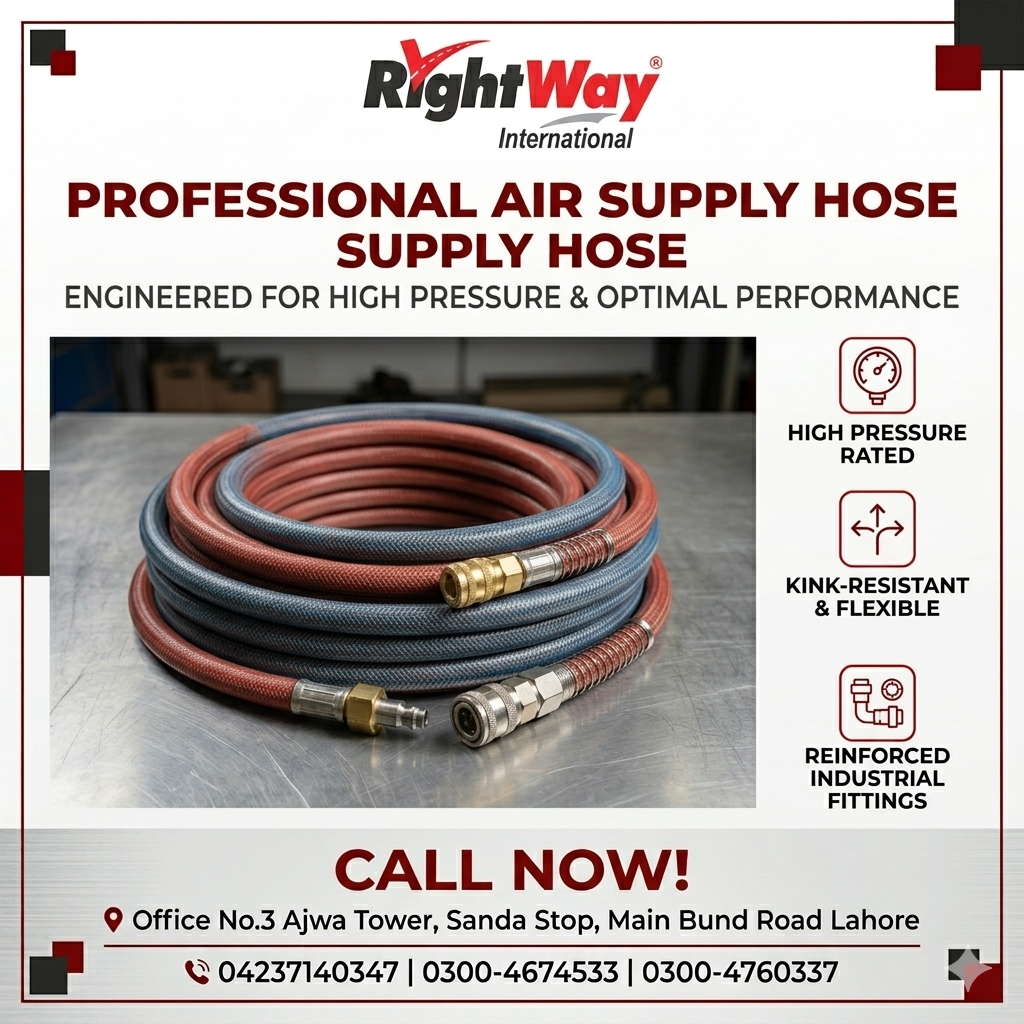
Air Supply Hose in Respiratory Protection Systems is a critical component of respiratory protection and breathing apparatus systems designed to deliver clean, breathable air from a compressed air source to the user. It is widely used in industrial safety, firefighting support systems, confined space entry, offshore operations, chemical processing, mining, hazardous material handling, marine environments, and emergency rescue operations where breathable air is not naturally available.
Air supply hoses are engineered to ensure continuous airflow, pressure stability, durability, and safe respiratory delivery under demanding working conditions. These hoses form part of Supplied-Air Respirator (SAR) systems and are essential for protecting workers in oxygen-deficient or contaminated environments.
Because many industries expose workers to toxic gases, airborne chemicals, smoke, and oxygen-limited spaces, air supply hose systems play a vital role in maintaining respiratory safety, operational continuity, and compliance with safety regulations such as OSHA, NIOSH, National Fire Protection Association , and EN standards.
What Is an Air Supply Hose?
An Air Supply Hose is a flexible, high-strength conduit that transports compressed breathing air from an air source (such as a compressor, cylinder bank, or breathing air system) to a respirator facepiece or breathing apparatus.
It is commonly used in:
- Supplied-Air Respirator (SAR) systems
- Continuous-flow breathing systems
- Demand-type respiratory systems
- Confined space entry operations
- Industrial cleaning and maintenance
- Hazardous material response
- Painting, coating, and sandblasting operations
- Chemical processing plants
- Offshore oil and gas facilities
- Mining and tunneling operations
- Shipbuilding and marine environments
- Nuclear and pharmaceutical facilities
- Emergency rescue and disaster response
- Welding and fabrication environments
Key Components of an Air Supply Hose System
A typical air supply hose system includes:
- High-pressure or low-pressure air hose
- Quick-connect couplings
- Hose connectors and fittings
- Air regulator interface
- Flow control valves
- Anti-kink protective outer layer
- Reinforced hose lining
- Breathing air filter connection
- Pressure monitoring system
- Respirator or mask connection point
- Safety disconnect fittings
- Hose retention clips
- Abrasion-resistant coating
How Air Supply Hose Systems Work
Air supply hose systems operate by transporting clean, filtered air from a safe source to the user in hazardous environments.
Step 1: Air Source Connection
Compressed air is generated from a breathing air compressor or cylinder bank.
Step 2: Filtration Process
Air passes through filtration systems to remove moisture, oil, and contaminants.
Step 3: Hose Delivery
The purified air flows through a reinforced air supply hose.
Step 4: Pressure Regulation
A regulator ensures stable airflow and safe breathing pressure.
Step 5: Respirator Delivery
Air reaches the facepiece or breathing apparatus for user inhalation.
Step 6: Continuous Operation
The system maintains uninterrupted airflow for safe operation in hazardous environments.
Types of Air Supply Hoses
1. Low-Pressure Air Supply Hose
Used in light industrial and painting applications where lower airflow demand exists.
2. High-Pressure Air Supply Hose
Designed for demanding environments such as firefighting support and confined space operations.
3. Chemical-Resistant Air Hose
Engineered to withstand exposure to corrosive chemicals and hazardous vapors.
4. Heat-Resistant Air Supply Hose
Used in welding, foundries, and high-temperature environments.
5. Anti-Static Air Supply Hose
Prevents static electricity buildup in explosive or flammable atmospheres.
6. Heavy-Duty Reinforced Air Hose
Designed for offshore, mining, and industrial construction environments.
Common Applications of Air Supply Hose Systems
Air supply hoses are widely used in:
- Firefighting support operations
- Industrial maintenance and cleaning
- Confined space entry and rescue
- Chemical plant operations
- Offshore oil platform maintenance
- Mining and underground tunneling
- Shipyard and marine repair work
- Pharmaceutical manufacturing environments
- Nuclear facility maintenance
- Spray painting and coating applications
- Sandblasting and surface preparation
- Welding and fabrication industries
- Hazardous material cleanup operations
- Emergency disaster response
- Utility and infrastructure maintenance
Importance of Air Supply Hose in Industrial Safety
Air supply hoses are essential for ensuring safe respiratory protection in environments where breathable air is not available.
Key Benefits:
- Continuous clean air supply
- Protection from toxic gases and vapors
- Enhanced worker safety in confined spaces
- Reduced risk of respiratory failure
- Stable airflow under pressure
- Increased operational efficiency
- Improved emergency response capability
- Compliance with OSHA and safety standards
- Support for long-duration work operations
- Reliable performance in hazardous environments
Technical Specifications
| Specification | Details |
|---|---|
| Equipment Type | Air Supply Hose |
| Application | Respiratory Protection Systems |
| Material | Rubber, PVC, Polyurethane, Composite Reinforced Fibers |
| Pressure Range | Low to High Pressure Systems |
| Length Options | Customizable (varies by system) |
| Compatibility | SAR and Breathing Air Systems |
| Standards | OSHA, NIOSH, NFPA, EN |
| Environment | Industrial, Marine, Mining, Offshore |
| Features | Anti-kink, heat-resistant, chemical-resistant |
| Connection Type | Quick-connect fittings |
Key Features and Advantages of Air Supply Hose Systems
Continuous Air Delivery
Provides uninterrupted airflow for safe breathing.
High Durability Construction
Designed to withstand harsh industrial environments.
Flexible Design
Allows easy movement during operations.
Chemical and Heat Resistance
Suitable for hazardous and high-temperature conditions.
Lightweight Handling
Reduces strain during long-duration use.
Secure Connection System
Prevents accidental disconnection during operations.
Anti-Kink Technology
Ensures consistent airflow without blockage.
Long Operational Lifespan
Built for repeated industrial and emergency use.
How to Select the Right Air Supply Hose
1. Identify Work Environment
Determine whether the hose will be used in industrial, offshore, or emergency applications.
2. Check Pressure Requirements
Select appropriate low-pressure or high-pressure systems.
3. Evaluate Material Compatibility
Choose chemical-resistant or heat-resistant materials based on exposure risks.
4. Verify Length and Flexibility
Ensure hose length supports mobility and workspace requirements.
5. Confirm Safety Compliance
Ensure compliance with OSHA, NIOSH, NFPA, and EN safety standards.
Best Practices for Air Supply Hose Usage
- Inspect hoses before every use
- Check for cracks, leaks, or wear
- Ensure secure fittings and connections
- Avoid sharp bends and kinks
- Clean hoses regularly after use
- Store in a dry, protected environment
- Replace damaged sections immediately
- Conduct periodic pressure testing
- Follow manufacturer maintenance guidelines
- Train users on proper handling procedures
Industries That Use Air Supply Hose Systems
- Fire and rescue services
- Oil and gas industry
- Chemical processing plants
- Mining and tunneling operations
- Marine and shipbuilding industry
- Pharmaceutical manufacturing
- Nuclear energy facilities
- Construction and infrastructure projects
- Industrial cleaning services
- Hazardous waste management
- Military and defense operations
- Emergency response teams
Importance of OSHA Compliance for Air Supply Hose Systems
OSHA regulations require proper respiratory protection systems for workers exposed to hazardous atmospheres.
Air supply hose systems help organizations:
- Improve workplace safety
- Reduce respiratory hazards
- Ensure compliance with regulations
- Enhance emergency preparedness
- Maintain equipment reliability
- Reduce occupational injuries
- Support safe confined space entry
- Strengthen industrial safety programs
- Improve operational efficiency
- Protect emergency responders
Breathing Apparatus Backplate and Harness
Breathing Apparatus Backplate and Harness is the load-bearing assembly of a breathing apparatus that secures the air cylinder and breathing components to the wearer’s body while providing comfort, balance, and stability during use.
These systems are commonly used for:
- Self-Contained Breathing Apparatus (SCBA)
- Firefighter breathing apparatus
- Industrial respiratory protection
- Confined space entry
- Hazardous material response
- Chemical processing operations
- Emergency rescue procedures
- Offshore oil and gas operations
- Mining applications
- Marine and shipyard operations
- Commercial diving support systems
- Military respiratory protection
- Aviation emergency breathing systems
- Pharmaceutical manufacturing
- Nuclear facility operations
- Industrial maintenance activities
Difference Between Air Supply Hose and Standard Air Tubing
| Feature | Air Supply Hose | Standard Air Tubing |
|---|---|---|
| Pressure Capacity | High/Industrial Grade | Low Pressure Only |
| Safety Standards | OSHA/NIOSH/NFPA Compliant | Limited |
| Durability | High | Low |
| Hazardous Use | Yes | No |
| Chemical Resistance | Strong | Weak |
| Respiratory Use | Yes | No |
| Industrial Suitability | Excellent | Basic |
Frequently Asked Questions (FAQs)
What is an air supply hose used for?
It delivers breathable air from a clean air source to a respirator or breathing apparatus in hazardous environments.
Where are air supply hoses used?
They are used in firefighting support, industrial maintenance, confined spaces, offshore work, and chemical processing.
What materials are used in air supply hoses?
Common materials include reinforced rubber, PVC, polyurethane, and chemical-resistant composites.
Are air supply hoses safe for toxic environments?
Yes, when used with proper filtration and compliance with safety standards.
What standards apply to air supply hose systems?
OSHA, NIOSH, NFPA, and EN standards typically apply.
Conclusion
Air Supply Hose systems are essential components of modern respiratory protection setups, ensuring safe and continuous airflow in hazardous environments. They are widely used across firefighting, industrial safety, offshore operations, mining, chemical processing, marine work, and emergency response applications.
With features such as durability, chemical resistance, pressure stability, and flexible design, air supply hoses significantly enhance worker safety, operational efficiency, and regulatory compliance in demanding environments where breathable air is not naturally available.