




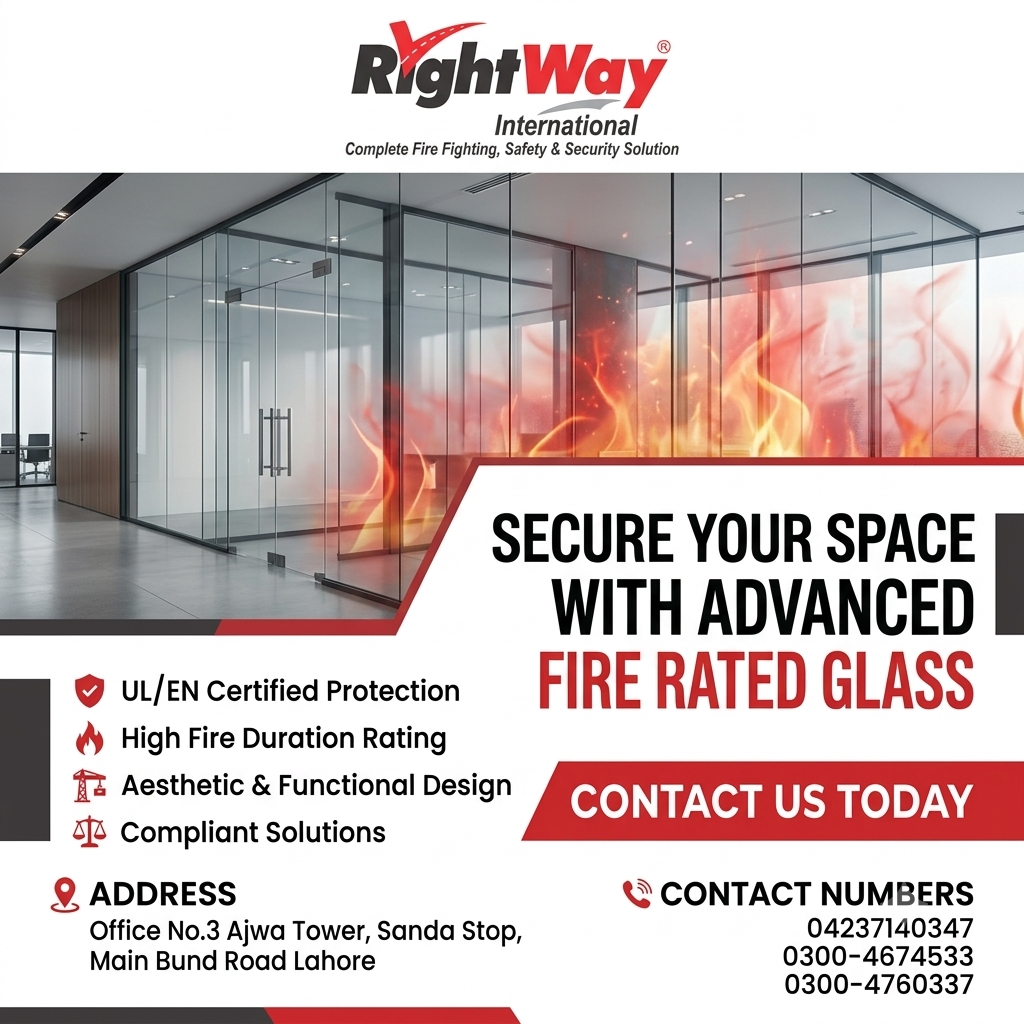
Fire Rated Glass is a critical passive fire protection solution specifically designed to resist the spread of flames, smoke, heat, and toxic gases while maintaining visibility within a building for a predetermined period. Unlike conventional glazing materials, specialized fire-resistant glass systems are tested and certified to withstand fire exposure and help maintain building compartmentation during emergencies.
Furthermore, these advanced glazing products play a vital role in protecting occupants, preserving property, supporting evacuation procedures, and assisting firefighting operations. They are widely installed in commercial buildings, hospitals, schools, hotels, airports, shopping centers, industrial facilities, residential developments, and other public structures.
According to fire safety regulations and standards established by the National Fire Protection Association (NFPA), the International Building Code (IBC), and local fire authorities, fire-resistant glazing systems must be properly designed, tested, certified, installed, inspected, and maintained to ensure dependable performance during fire incidents.
Benefits of Fire Resistant Glass Systems
1. Prevents Fire Spread
First, these specialized glazing solutions help contain fire within designated compartments. Consequently, fire growth is controlled and the risk of extensive building damage is significantly reduced.
2. Controls Smoke Movement
Moreover, smoke is often responsible for more fire-related fatalities than flames. As a result, fire-resistant glazing helps limit smoke migration and maintain safer evacuation routes.
3. Maintains Visibility During Emergencies
Additionally, transparent fire-protective barriers allow occupants and emergency responders to maintain visual awareness during critical situations. Therefore, evacuation and rescue operations can be performed more effectively.
4. Enhances Occupant Safety
Furthermore, certified glazing systems provide valuable time for building occupants to evacuate safely. Consequently, the risk of injury and loss of life is substantially minimized.
5. Protects Property and Assets
In addition, these protective systems help reduce damage to equipment, inventory, records, machinery, and critical infrastructure. Therefore, financial losses can be significantly reduced.
6. Supports Regulatory Compliance
Unlike standard glass products, fire-rated glazing materials are tested and certified to meet fire safety regulations and building code requirements. As a result, compliance is improved.
7. Improves Architectural Design
Most importantly, these transparent fire barriers allow architects to combine safety with aesthetics. Consequently, buildings can maintain open, modern designs without compromising fire protection.
Types of Fire Resistant Glass
1. Wired Fire Glass
Wired glass contains embedded wire mesh that helps maintain integrity during fire exposure. Therefore, it is commonly used in doors, windows, and interior openings.
2. Ceramic Fire Glass
Ceramic glazing provides excellent resistance to high temperatures and thermal shock. As a result, it is frequently used in demanding fire protection applications.
3. Tempered Fire Protective Glass
Tempered fire-protective products offer enhanced strength and impact resistance while maintaining fire performance. Consequently, they are widely installed in commercial facilities.
4. Laminated Fire Resistant Glass
Laminated systems incorporate multiple layers of glass and interlayers designed to resist fire and heat transfer. Therefore, they provide enhanced protection and performance.
5. Insulated Fire Resistive Glass
Insulated glazing units are specifically designed to limit radiant and conductive heat transfer during fire exposure. As a result, they are commonly used in areas requiring higher levels of protection.
6. Fire Rated Glass Walls and Partitions
These systems create transparent fire barriers while maintaining compartmentation. Consequently, they are frequently installed in offices, hospitals, and public buildings.
Fire Resistance Ratings
Fire-resistant glazing products are tested and certified for specific durations of protection, including:
- 20-Minute Fire Rated Glass
- 30-Minute Fire Rated Glass
- 45-Minute Fire Rated Glass
- 60-Minute Fire Rated Glass
- 90-Minute Fire Rated Glass
- 120-Minute Fire Rated Glass
- 180-Minute Fire Rated Glass
- 240-Minute Fire Rated Glass
These ratings indicate how long the glazing system can withstand fire exposure while maintaining integrity and performance.
Common Uses of Fire Resistant Glazing
These protective glass systems are installed in a wide range of facilities where life safety and fire protection are priorities.
For example, hospitals utilize certified glazing products to protect patients and maintain smoke compartments.
Similarly, schools and universities rely on transparent fire barriers to separate classrooms, laboratories, corridors, and exits.
Moreover, hotels and residential buildings use fire-resistant glass systems to limit fire spread while preserving visibility.
In addition, shopping malls, airports, office towers, manufacturing facilities, and industrial plants frequently install these products to enhance overall safety.
Meanwhile, data centers and critical infrastructure facilities depend on certified glazing solutions to protect sensitive equipment and maintain operational continuity.
Therefore, fire-resistant glazing remains an essential component of comprehensive fire protection strategies.
Benefits Compared to Standard Glass
1. Superior Fire Resistance
First, certified fire-protective glazing is specifically designed and tested to withstand fire exposure. Consequently, it offers significantly greater protection than conventional glass.
2. Reduced Heat Transfer
Moreover, many advanced systems help limit radiant and conductive heat transfer. As a result, adjacent areas remain safer during fire incidents.
3. Enhanced Safety
Additionally, these products help maintain protected escape routes and compartments. Therefore, occupant evacuation becomes safer and more effective.
4. Improved Building Protection
Furthermore, compartmentation helps reduce fire damage throughout the structure. Consequently, building integrity is better preserved.
5. Regulatory Compliance
Most importantly, certified glazing systems support compliance with fire safety codes, insurance requirements, and building regulations.
How Fire Rated Glass Works
First, the glazing system functions like conventional architectural glass under normal conditions.
Next, when a fire occurs, flames, smoke, and heat begin spreading through the building.
Then, the fire-resistant glazing resists the passage of flames and smoke for its designated rating period.
Afterward, specialized interlayers, ceramic materials, or insulating technologies help maintain structural integrity and limit heat transfer.
Consequently, the fire remains confined to a specific compartment for a predetermined period.
Meanwhile, occupants can use protected escape routes to evacuate safely.
Finally, firefighters gain additional time to control and suppress the fire before it spreads to adjacent areas.
Components of a Fire Resistant Glazing System
A typical system may include:
- Fire Rated Glass Panels
- Fire Rated Frames
- Intumescent Seals
- Smoke Seals
- Fire Resistant Glazing Materials
- Fire Rated Gaskets
- Structural Support Systems
- Fire Resistant Mullions
- Fire Protective Interlayers
- Vision Panels
- Certified Labels
- Fire Rated Hardware
- Insulating Components
- Thermal Barriers
- Anchoring Systems
Together, these components provide reliable passive fire protection and compartmentation.
Maintenance Requirements
Regular inspection and maintenance are essential to ensure dependable performance.
Maintenance activities typically include:
- Inspecting glazing panels for damage
- Examining frame conditions
- Checking seals and gaskets
- Verifying structural supports
- Inspecting hardware components
- Reviewing certification labels
- Assessing glazing clarity and integrity
- Repairing damaged components
- Reviewing inspection records
- Confirming code compliance
Routine maintenance helps ensure long-term effectiveness and regulatory compliance.
Advantages of Fire Resistant Glazing
These systems offer numerous advantages:
- Prevent fire spread
- Restrict smoke movement
- Maintain visibility
- Improve occupant safety
- Protect escape routes
- Support firefighting operations
- Reduce property damage
- Protect critical assets
- Enhance building compartmentation
- Improve code compliance
- Increase overall fire safety
- Reduce business interruption
- Extend evacuation time
- Improve emergency preparedness
Applications of Fire Resistant Glass
Common applications include:
- Hospitals
- Schools and Universities
- Hotels
- Office Buildings
- Shopping Malls
- Airports
- Warehouses
- Manufacturing Facilities
- Industrial Plants
- Residential Buildings
- Apartment Complexes
- Data Centers
- Telecommunication Facilities
- Government Buildings
- Healthcare Facilities
- High-Rise Buildings
- Transportation Hubs
- Research Laboratories
- Commercial Complexes
In conclusion, Fire Rated Glass is an essential passive fire protection solution that helps contain fire, smoke, and heat while maintaining visibility within a building. Furthermore, its ability to support compartmentation, protect evacuation routes, and assist emergency response operations makes it a critical element of modern fire safety design.
Ultimately, properly designed, tested, installed, inspected, and maintained glazing systems enhance life safety, reduce property damage, improve regulatory compliance, and provide valuable protection for occupants and assets. Therefore, they remain one of the most effective and widely used passive fire protection solutions in buildings worldwide.