




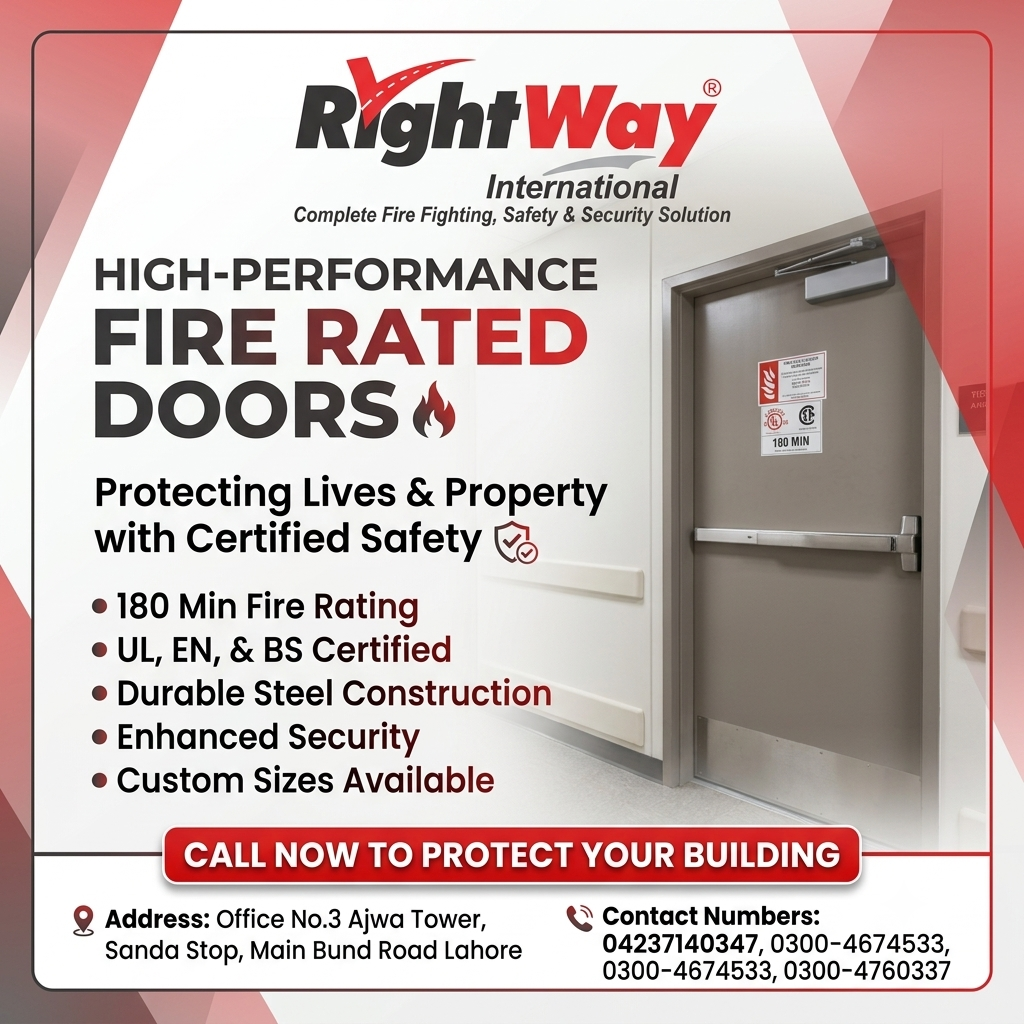
Fire Rated Doors. are critical passive fire protection systems specifically designed to resist the spread of flames, smoke, heat, and toxic gases within a building for a predetermined period. Unlike active fire protection systems that require activation during a fire emergency, these specialized door assemblies provide continuous protection by maintaining compartmentation and protecting escape routes.
Furthermore, these fire-resistant barriers play a vital role in safeguarding occupants, protecting property, supporting emergency evacuation, and assisting firefighting operations during fire incidents. They are widely installed in commercial buildings, hospitals, schools, hotels, industrial facilities, shopping malls, airports, residential complexes, data centers, and other public structures.
According to fire safety regulations and standards established by the National Fire Protection Association (NFPA), the International Building Code (IBC), and local fire authorities, certified door assemblies must be properly designed, tested, installed, inspected, and maintained to ensure reliable performance during emergencies.
Benefits of Fire Protection Door Systems
1. Prevents Fire Spread
First, these protective doors help contain fire within a designated compartment. Consequently, fire growth is controlled and the risk of extensive building damage is significantly reduced.
2. Controls Smoke Movement
Moreover, smoke is often responsible for more fire-related fatalities than flames. As a result, these assemblies help limit smoke migration and maintain safer evacuation routes.
3. Enhances Occupant Safety
Additionally, they provide valuable time for occupants to evacuate safely. Therefore, the risk of injury and loss of life is substantially minimized.
4. Protects Property and Assets
Furthermore, these specialized systems help reduce damage to equipment, inventory, records, machinery, and critical infrastructure. Consequently, financial losses can be significantly reduced.
5. Supports Emergency Response
In addition, fire containment allows firefighters to focus suppression efforts in a specific area. Therefore, firefighting operations become more effective and efficient.
6. Improves Building Compliance
Unlike standard doors, certified fire-resistant assemblies are tested to meet fire safety regulations and building code requirements. As a result, regulatory compliance is improved.
7. Reduces Business Interruption
Most importantly, limiting fire and smoke spread helps reduce downtime after a fire incident. Consequently, business continuity and operational resilience are better protected.
Types of Fire-Resistant Door Assemblies
1. Steel Fire Doors
Steel models provide excellent fire resistance, durability, and security. Therefore, they are commonly used in industrial facilities, commercial buildings, and high-risk areas.
2. Wooden Fire Doors
Wood-based assemblies combine fire protection with architectural aesthetics. As a result, they are frequently installed in hotels, offices, schools, and residential buildings.
3. Glass Fire Doors
Glass systems provide visibility while maintaining fire resistance. Consequently, they are often used in hospitals, office buildings, shopping centers, and public facilities.
4. Double Fire Doors
Double-door assemblies are designed for wider openings and high-traffic areas. Therefore, they are commonly installed in corridors, stairwells, and assembly occupancies.
5. Sliding Fire Doors
Sliding units are ideal for large openings where swing doors are impractical. As a result, they are frequently used in warehouses and industrial facilities.
6. Automatic Fire Doors
Automatic systems are connected to fire alarm systems and close automatically during a fire emergency. Consequently, compartmentation is maintained without manual intervention.
Fire Resistance Ratings
These protective assemblies are tested and certified for specific durations of fire resistance, including:
- 20-Minute Rated Doors
- 30-Minute Rated Doors
- 45-Minute Rated Doors
- 60-Minute Rated Doors
- 90-Minute Rated Doors
- 120-Minute Rated Doors
- 180-Minute Rated Doors
- 240-Minute Rated Doors
These ratings indicate how long the door assembly can withstand fire exposure while maintaining its integrity and performance.
Common Applications
These passive fire protection systems are installed in virtually every type of building where life safety and fire protection are priorities.
For example, hospitals use certified assemblies to protect patients and maintain smoke compartments.
Similarly, schools and universities rely on these systems to separate classrooms, corridors, laboratories, and exits.
Moreover, hotels and residential buildings utilize fire-resistant barriers to protect occupants and limit fire spread between rooms and floors.
In addition, shopping malls, airports, office towers, manufacturing facilities, warehouses, and industrial plants frequently install these safety systems to enhance overall protection.
Meanwhile, data centers and critical infrastructure facilities depend on certified door assemblies to protect sensitive equipment and maintain operational continuity.
Therefore, these systems remain an essential component of comprehensive fire protection strategies.
Benefits Compared to Standard Doors
1. Superior Fire Resistance
First, these specialized assemblies are specifically designed and tested to withstand fire exposure. Consequently, they offer significantly greater protection than conventional doors.
2. Enhanced Smoke Protection
Moreover, many certified assemblies include smoke seals and specialized gasketing systems. As a result, smoke infiltration is minimized.
3. Improved Life Safety
Additionally, they help maintain protected escape routes during emergencies. Therefore, occupant evacuation becomes safer and more effective.
4. Increased Structural Protection
Furthermore, compartmentation helps reduce fire damage throughout the building. Consequently, structural integrity is better preserved.
5. Regulatory Compliance
Most importantly, these systems support compliance with fire safety codes, insurance requirements, and building regulations.
How Fire Protection Doors Work
First, the door assembly remains open or closed under normal operating conditions.
Next, when a fire occurs, heat, flames, and smoke begin spreading through the building.
Then, the assembly resists the passage of fire and smoke for its designated rating period.
Afterward, self-closing devices automatically close the door if it is open.
Consequently, the fire remains confined to a specific compartment for a predetermined period.
Meanwhile, occupants use protected escape routes to evacuate safely.
Finally, firefighters gain additional time to control and suppress the fire before it spreads to adjacent areas.
Components of a Certified Door Assembly
A typical assembly includes:
- Fire Rated Door Leaf
- Fire Rated Door Frame
- Intumescent Seals
- Smoke Seals
- Self-Closing Devices
- Fire Rated Hinges
- Door Closers
- Fire Rated Locks
- Fire Rated Latches
- Fire Rated Glazing
- Vision Panels
- Hold-Open Devices
- Threshold Seals
- Door Coordination Hardware
- Fire Resistant Core Material
- Certified Fire Door Labels
Together, these components provide reliable passive fire protection and compartmentation.
Maintenance Requirements
Regular inspection and maintenance are essential to ensure dependable performance.
Maintenance activities typically include:
- Inspecting door leaves for damage
- Testing self-closing devices
- Verifying latch operation
- Checking door alignment
- Inspecting hinges and hardware
- Examining smoke seals
- Inspecting intumescent strips
- Verifying fire-rated glazing integrity
- Testing automatic door systems
- Repairing damaged components
- Reviewing inspection records
- Confirming code compliance
Routine maintenance helps ensure long-term effectiveness and regulatory compliance.
Key Advantages
These systems offer numerous advantages:
- Prevent fire spread
- Restrict smoke movement
- Improve occupant safety
- Protect escape routes
- Support firefighting operations
- Reduce property damage
- Protect critical assets
- Enhance building compartmentation
- Improve code compliance
- Increase overall fire safety
- Reduce business interruption
- Extend evacuation time
- Improve emergency preparedness
Industries and Facilities Served
Common applications include:
- Hospitals
- Schools and Universities
- Hotels
- Office Buildings
- Shopping Malls
- Airports
- Warehouses
- Manufacturing Facilities
- Industrial Plants
- Residential Buildings
- Apartment Complexes
- Data Centers
- Telecommunication Facilities
- Government Buildings
- Healthcare Facilities
- High-Rise Buildings
- Power Plants
- Transportation Hubs
- Research Laboratories
In conclusion, Fire Rated Doors are essential passive fire protection systems that help contain fire, smoke, and heat within designated areas of a building. Furthermore, their ability to maintain compartmentation, protect evacuation routes, and support emergency response operations makes them a critical element of modern fire safety design.
Ultimately, these certified assemblies enhance life safety, reduce property damage, improve regulatory compliance, and provide valuable protection for occupants and assets. Therefore, they remain one of the most effective and widely used passive fire protection solutions in buildings worldwide.