




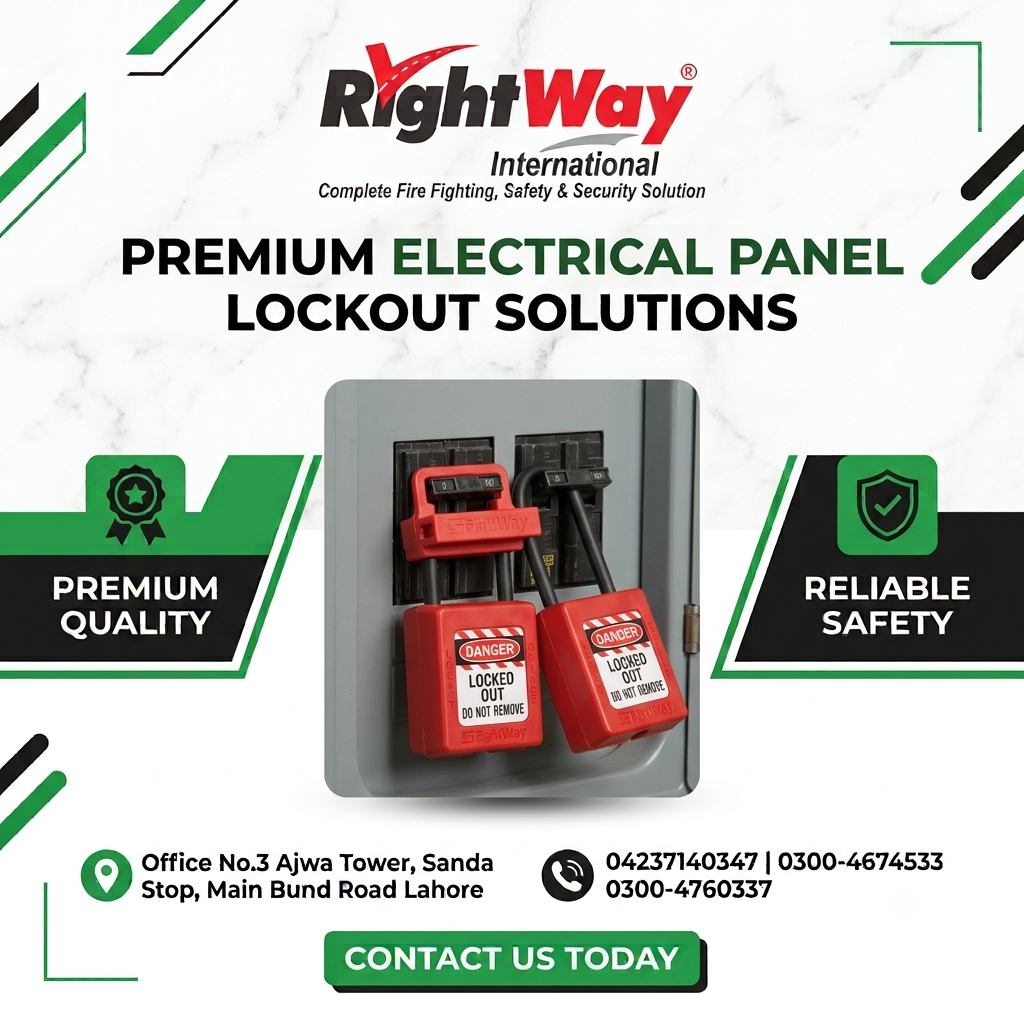
Electrical Panel Lockout Devices in Pakistan are an essential part of industrial energy-control and electrical safety programs. These devices help prevent unauthorized access to electrical panels, circuit breakers, disconnect switches, and other electrical energy sources during maintenance, inspection, repair, installation, and servicing activities.
Electrical maintenance teams use electrical panel lockout devices to physically restrict access to electrical controls and prevent accidental energization while authorized workers perform maintenance. By securing the relevant panel, switch, breaker, or disconnecting mechanism, these safety devices create a visible and physical barrier against unintended electrical operation.
Across Pakistan, industrial facilities use electrical panel lockout systems in manufacturing plants, factories, power stations, commercial buildings, warehouses, construction sites, pharmaceutical facilities, textile mills, food-processing plants, chemical factories, oil and gas facilities, and utility installations.
Moreover, electrical panel lockout equipment supports structured Lockout/Tagout (LOTO) procedures. When workers combine appropriate lockout devices with personal safety locks, warning tags, electrical isolation procedures, and verification steps, they can establish a more controlled approach to hazardous-energy management. as Per Occupational Safety and Health Administration (OSHA) Safety Standers.
Modern electrical panel lockout devices come in several configurations. Manufacturers produce them from durable thermoplastic, polycarbonate, ABS-type materials, coated metal, and other industrial-grade materials. Depending on the application, products may include breaker lockouts, panel door lockouts, electrical disconnect lockouts, switch lockouts, universal circuit breaker lockouts, and lockable electrical safety covers.
Benefits of Electrical Panel Lockout Devices
Positive Electrical Isolation
An electrical panel lockout device restricts access to the relevant electrical control or disconnecting mechanism. Consequently, unauthorized personnel have less opportunity to restore power while maintenance work continues.
Prevents Accidental Energization
A properly installed lockout device helps prevent unintended operation of circuit breakers, disconnect switches, and electrical controls.
Therefore, maintenance teams can maintain better control over the electrical energy source throughout the service activity.
Lockout/Tagout Support
Electrical panel lockout equipment provides physical locking points for safety padlocks and compatible lockout tags. This feature supports organized LOTO procedures and improves worker accountability.
High-Visibility Warning
Bright safety colors and warning labels make locked-out electrical equipment easy to identify. Furthermore, visual identification helps workers recognize equipment that requires isolation before servicing.
Multiple Padlock Capability
Some electrical panel lockout systems provide multiple locking points. As a result, several authorized workers can attach their individual safety padlocks during group maintenance operations.
Tamper-Resistant Construction
Rigid covers, brackets, clamps, and locking mechanisms restrict unauthorized access to electrical controls. In addition, purpose-built equipment provides a more consistent solution than improvised tape, wire, or temporary restraints.
Durable Industrial Materials
Manufacturers use materials such as reinforced thermoplastic, polycarbonate, ABS-type plastic, and coated metal for different electrical lockout applications. Each material provides different levels of impact resistance, environmental durability, and electrical insulation.
Easy Installation
Many electrical lockout devices install without permanent modification to the electrical panel or breaker. Therefore, maintenance teams can apply and remove them efficiently during routine servicing.
Compact Storage
Most electrical lockout equipment has a compact design. Consequently, safety departments can organize products inside LOTO kits, electrical safety cabinets, maintenance toolboxes, and wall-mounted lockout stations.
Standardized Safety Control
Purpose-built electrical lockout equipment helps organizations establish a repeatable energy-isolation method. Instead of relying on inconsistent temporary solutions, workers can follow a defined lockout procedure.
Types of Electrical Panel Lockout Devices
Electrical Panel Door Lockout
An electrical panel door lockout restricts unauthorized access to the panel enclosure. Depending on the design, the device can secure the panel door and prevent workers from opening it without removing the authorized lock.
This solution can help control access to electrical distribution panels, control cabinets, switchboards, and industrial electrical enclosures.
Circuit Breaker Lockout
A circuit breaker lockout physically restricts the breaker toggle or operating mechanism. Different models accommodate different breaker designs, including single-pole, double-pole, and multi-pole configurations.
These devices commonly support electrical maintenance activities where workers need to prevent a specific breaker from returning to the energized position.
Universal Circuit Breaker Lockout
A universal circuit breaker lockout provides adjustable compatibility with multiple breaker configurations. Therefore, maintenance departments can use one versatile system across different electrical installations.
Miniature Circuit Breaker Lockout
A miniature circuit breaker lockout, often called an MCB lockout, secures compatible miniature circuit breakers used in electrical distribution systems.
These devices are common in commercial buildings, industrial control systems, offices, factories, workshops, and utility installations.
MCCB Lockout Device
An MCCB lockout device secures compatible molded-case circuit breakers. Because MCCBs vary significantly in construction and operating mechanisms, technicians should confirm compatibility before selecting a specific lockout.
Disconnect Switch Lockout
A disconnect switch lockout prevents unauthorized operation of electrical disconnect switches. These devices can support isolation procedures for machinery, motors, production equipment, HVAC systems, and industrial electrical installations.
Electrical Switch Lockout
An electrical switch lockout device restricts operation of compatible switches and control mechanisms. Workers can combine the device with a safety padlock and warning tag as part of the site’s energy-control procedure.
Panel Cover Lockout
A panel cover lockout restricts access to selected electrical controls or panel components. This design can provide an additional physical barrier where the electrical installation allows compatible lockout hardware.
Universal Electrical Lockout
A universal electrical lockout device provides flexible compatibility across several types of electrical isolation points. Such products can prove useful for maintenance departments that manage diverse electrical equipment.
Key Features of Electrical Panel Lockout Devices
Circuit Breaker Blocking Mechanism
The blocking mechanism physically restricts movement of the compatible breaker or switch.
Adjustable Clamping System
Some lockout devices use adjustable clamps to accommodate different breaker widths and configurations.
Panel Door Security
Panel lockout systems can restrict access to electrical cabinets, control panels, and distribution enclosures where the design permits safe and compatible installation.
Padlock Holes
Dedicated locking holes allow workers to attach safety padlocks directly to the lockout device.
Multiple Locking Points
Multi-lock designs allow several authorized employees to maintain personal control during group maintenance.
High-Visibility Safety Colors
Red, yellow, orange, and other highly visible finishes make electrical lockout devices easier to identify.
Durable Thermoplastic Construction
Industrial thermoplastic construction can provide lightweight handling, impact resistance, and electrical insulation properties where appropriate.
Metal Lockout Components
Some heavy-duty applications use coated steel or other metal components to provide additional mechanical strength.
Compact Design
A compact lockout minimizes interference with nearby equipment and simplifies storage.
Compatibility With Lockout Tags
Workers can use appropriate LOTO tags, danger tags, warning labels, and safety padlocks alongside electrical lockout equipment.
Common Applications of Electrical Panel Lockout Devices in Pakistan
Electrical safety teams use electrical panel lockout devices across many industrial and commercial environments.
| Industry Sector | Primary Application | Common Electrical Equipment |
|---|---|---|
| Manufacturing Plants | Machine maintenance and electrical servicing | MCC panels, breakers, disconnect switches |
| Textile Mills | Production machinery isolation | MCBs, MCCBs, electrical control panels |
| Power Generation | Equipment and auxiliary-system maintenance | Switchgear, breakers, disconnects |
| Chemical Plants | Process equipment isolation | Control panels, MCCs, disconnect switches |
| Oil & Gas Facilities | Electrical maintenance and equipment isolation | Switchgear, breakers, motor controls |
| Pharmaceutical Plants | Equipment servicing and facility maintenance | Distribution panels, breakers, control cabinets |
| Food Processing Plants | Production-line maintenance | Electrical panels, motor controls, breakers |
| Warehouses | Conveyor and equipment maintenance | Disconnect switches, circuit breakers |
| Construction Sites | Temporary electrical-system maintenance | Breakers, disconnects, distribution boards |
| Commercial Buildings | Electrical maintenance | Distribution boards, MCBs, MCCBs |
| Water Treatment Plants | Pump and control-system maintenance | MCC panels, motor starters, disconnects |
| HVAC Facilities | Equipment servicing | Disconnect switches, circuit breakers |
Electrical Panel Lockout vs. Improvised Electrical Isolation
| Feature | Engineered Electrical Panel Lockout | Improvised Tape, Wire or Temporary Restraint |
| Physical Protection | Purpose-built device restricts control access | May provide incomplete restriction |
| Visibility | High-visibility safety design | Often difficult to identify |
| Locking Capability | Designed for safety padlocks | Usually lacks secure locking points |
| Team Accountability | Multiple locking options may support group LOTO | Limited individual control |
| Durability | Industrial-grade materials | Tape, wire, or temporary materials can deteriorate |
| Standardization | Supports repeatable lockout procedures | Methods may vary between workers |
| Tamper Resistance | Rigid construction provides better physical restriction | Can loosen or become ineffective |
| Installation | Designed for specific electrical equipment | Improvised installation can be inconsistent |
| Maintenance Control | Clearly communicates equipment isolation | May create confusion |
Lockout Tags for Electrical Panel Isolation
A lockout tag provides an important visual and administrative warning during electrical maintenance.
First, the authorized employee identifies the correct electrical panel, breaker, disconnect, or energy source. Next, the worker follows the facility’s approved shutdown and electrical isolation procedure.
After isolating the appropriate energy source, the employee applies the compatible electrical panel lockout device. The worker then attaches a personal safety padlock and lockout tag to the designated locking point.
Depending on the facility’s procedure, the tag may contain information such as the authorized employee’s name, department, date, equipment identification, and warning instructions.
During group maintenance, each authorized worker should follow the organization’s personal lockout procedure. Consequently, the team can maintain individual accountability until each worker completes the assigned task.
How an Electrical Panel Lockout Device Works
An electrical panel lockout device works by physically restricting access to or operation of an electrical isolation point.
First, an authorized employee identifies the correct electrical energy source and equipment according to the facility’s energy-control procedure.
Next, the employee shuts down the equipment and operates the appropriate disconnecting device according to the approved procedure. The team must also address stored electrical energy and other associated hazards before maintenance begins.
Afterward, the employee selects a compatible electrical lockout device. The worker installs the lockout over the circuit breaker, disconnect switch, panel access point, or other suitable isolation mechanism.
The employee then secures the lockout using an approved safety padlock and attaches the appropriate lockout tag.
Before workers begin maintenance, the responsible personnel should follow the facility’s required verification procedure to confirm that the equipment remains safely isolated.
For group lockout operations, every authorized worker should maintain personal control through the facility’s approved personal lockout system.
Electrical Panel Lockout Device Selection Guide
Selecting the correct electrical panel lockout device requires careful evaluation of the electrical equipment and operating environment.
Identify the Electrical Equipment
Determine whether the isolation point involves an MCB, MCCB, circuit breaker, disconnect switch, electrical panel door, control switch, isolator, switchgear, or other electrical control.
Check Breaker Compatibility
Circuit breakers differ in size, shape, toggle design, and mounting arrangement. Therefore, confirm the lockout manufacturer’s compatibility information before installation.
Consider Panel Configuration
Check the available space around the breaker, panel door, switch, or disconnect. A suitable lockout must fit correctly without interfering with adjacent equipment.
Determine Padlock Requirements
Individual maintenance may require one personal safety padlock, while group maintenance may require multiple locking points or a compatible group lockout arrangement.
Consider Environmental Conditions
Outdoor electrical installations may experience moisture, dust, UV radiation, temperature changes, oil, and industrial contaminants. Choose materials that suit the actual environment.
Select the Appropriate Material
Thermoplastic products can provide lightweight handling and electrical insulation properties. Meanwhile, selected heavy-duty applications may benefit from reinforced or metal components.
Benefits of Gate Valve Lockout Devices
Positive Physical Isolation
A gate valve lockout surrounds or blocks the valve handwheel and prevents normal operation. Therefore, unauthorized personnel cannot easily turn the valve during maintenance.
Wide Valve Size Compatibility
Manufacturers offer gate valve lockouts in different sizes and configurations. Consequently, safety teams can select devices for small utility valves as well as large industrial gate valves.
Lockout/Tagout Support
A properly selected gate valve LOTO device provides designated locking points for safety padlocks and lockout tags. This feature helps organizations maintain a consistent energy-control process.
High-Visibility Identification
Bright red, yellow, or other safety colors make locked-out valves easier to recognize. Furthermore, clear visual identification helps maintenance personnel distinguish isolated equipment from valves that remain in normal service.
Chemical and Weather Resistance
Industrial-grade thermoplastic materials can withstand many common environmental conditions, including moisture, oil, grease, and outdoor exposure. However, users should always confirm chemical and temperature compatibility with the manufacturer before selecting a device for a specific application.
Multi-Padlock Capability
Many gate valve lockout devices include several locking holes. Therefore, multiple authorized workers can attach their personal safety padlocks during group maintenance operations.
Tamper-Resistant Construction
The rigid enclosure restricts access to the valve handwheel. As a result, workers receive a stronger physical barrier than they would from temporary rope, wire, or chain arrangements.
Quick Installation
Most standard gate valve lockouts require no permanent modification to the valve. In addition, many models allow workers to install and remove the device quickly during routine maintenance.
Portable Design
Compact construction makes these devices easy to carry in LOTO kits, safety cabinets, maintenance toolboxes, and industrial lockout stations.
Standardized Safety Control
Purpose-built valve lockouts give maintenance teams a consistent isolation method. Instead of relying on improvised restraints, workers can follow a repeatable procedure across different areas of the facility.
Maintenance & Inspection Requirements
Safety departments should inspect electrical panel lockout devices regularly and replace damaged equipment promptly.
Pre-Use Inspection
Inspect each device before use. Look for cracks, deformation, excessive wear, broken components, damaged locking holes, or other defects.
Locking Mechanism Check
Verify that clamps, screws, adjustment mechanisms, locking holes, and retaining components work correctly.
Compatibility Check
Before applying the device, confirm that it matches the electrical panel, breaker, disconnect, or switch for which it was designed.
Cleaning
Remove dust, dirt, oil, and other contaminants using a cleaning method suitable for the lockout material.
Storage
Store electrical lockout equipment inside designated LOTO stations, safety cabinets, electrical safety kits, or maintenance toolboxes. Keep the equipment clean, dry, organized, and readily accessible.
Damaged Equipment
Remove cracked, broken, excessively worn, or malfunctioning lockout devices from service. Replace them before workers need to perform another isolation task.
Electrical Panel Lockout Safety Practices
A physical lockout device forms only one part of a complete electrical safety program. Therefore, facilities should combine lockout equipment with documented procedures and trained personnel.
Identify All Energy Sources
Workers should identify all relevant electrical and other energy sources connected to the equipment before maintenance.
Follow the Facility’s LOTO Procedure
Authorized employees should follow the organization’s documented Lockout/Tagout procedure rather than relying on informal isolation methods.
Use Personal Safety Locks
Each authorized worker should follow the site’s requirements for personal lock control during maintenance.
Apply Warning Tags
Attach appropriate warning or danger tags to clearly communicate the equipment’s isolation status.
Verify Isolation
Before beginning work, authorized personnel should follow the facility’s required method for verifying that the equipment has reached the intended safe state.
Never Rely Only on a Warning Label
A warning label alone does not provide the same physical restriction as an engineered lockout device. Therefore, workers should use the appropriate physical isolation equipment required by the facility’s safety procedure.
Why Electrical Panel Lockout Devices Matter
Electrical systems can expose maintenance personnel to severe hazards when workers unexpectedly restore power during servicing. Even low-voltage equipment can create dangerous conditions when workers contact energized components or when machinery unexpectedly starts.
A properly selected electrical panel lockout device provides a physical barrier against unintended operation of compatible electrical isolation points. Furthermore, the device improves visual identification and supports structured lockout procedures.
For industrial facilities in Pakistan, electrical panel lockouts prove particularly useful during machine maintenance, electrical panel servicing, motor replacement, equipment installation, production-line repairs, plant shutdowns, preventive maintenance, switchgear servicing, HVAC maintenance, and industrial equipment isolation.
When organizations combine appropriate lockout equipment with trained personnel, documented procedures, personal locks, warning tags, and verification practices, they can create a stronger approach to hazardous-energy control.Electrical Panel Lockout Devices provide a practical method for restricting access to compatible electrical isolation points during maintenance and servicing activities. Their locking mechanisms, high-visibility construction, durable materials, and compatibility with safety padlocks and lockout tags make them valuable components of industrial Lockout/Tagout (LOTO) programs.
From manufacturing plants and textile mills to power stations, chemical facilities, pharmaceutical factories, warehouses, water-treatment plants, and commercial buildings, the right electrical lockout device helps maintenance teams maintain better control over hazardous energy.
For reliable performance, organizations should select electrical panel lockout equipment according to breaker type, panel configuration, disconnect design, available clearance, environmental conditions, required padlock capacity, material compatibility, and the facility’s documented energy-control procedure.