




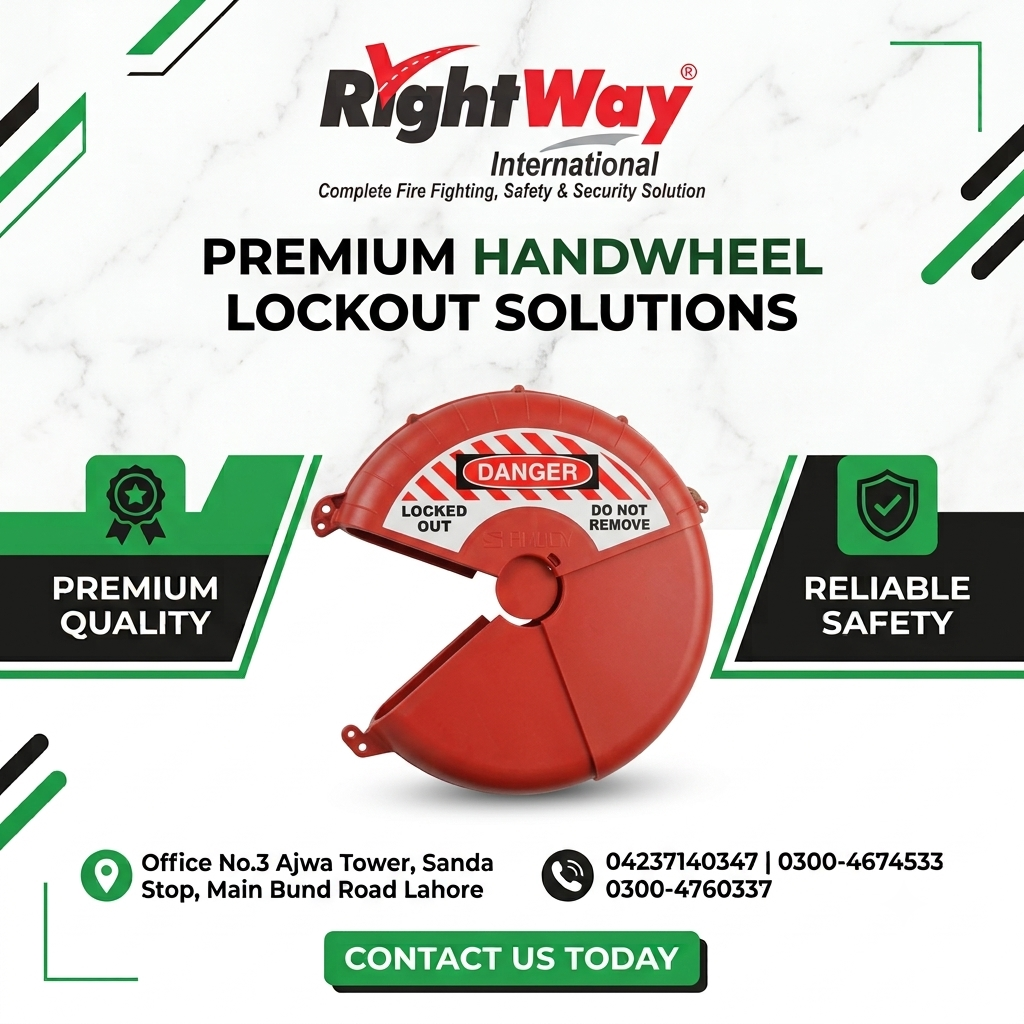
Gate Valve Lockout Devices in Pakistan play an important role in industrial energy-control and hazard-isolation programs. Safety engineers use these devices to secure gate valves during maintenance, inspection, repair, cleaning, and plant shutdown activities.
Unlike improvised ropes, wires, or chains, a purpose-built gate valve lockout device creates a physical barrier around the valve handwheel. As a result, workers cannot easily rotate the handwheel or change the valve position while authorized maintenance personnel work on the connected system.
Industrial facilities across Pakistan use gate valve lockout devices in oil and gas refineries, chemical plants, fertilizer factories, power stations, manufacturing facilities, textile mills, pharmaceutical plants, water treatment facilities, and other process industries.
Most importantly, these devices support a structured Lockout/Tagout (LOTO) process. When workers combine a suitable valve lockout with personal safety padlocks, warning tags, energy isolation procedures, and verification steps, they can significantly reduce the risk of unexpected hazardous-energy release. as Per Occupational Safety and Health Administration (OSHA) Standers.
Manufacturers produce modern gate valve lockouts from high-impact polypropylene, reinforced thermoplastic, ABS-type materials, and, for selected applications, heavy-duty metal components. In addition, many models feature bright safety colors, multiple padlock holes, corrosion-resistant construction, and adjustable designs for different valve handwheel sizes.
Benefits of Gate Valve Lockout Devices
Positive Physical Isolation
A gate valve lockout surrounds or blocks the valve handwheel and prevents normal operation. Therefore, unauthorized personnel cannot easily turn the valve during maintenance.
Wide Valve Size Compatibility
Manufacturers offer gate valve lockouts in different sizes and configurations. Consequently, safety teams can select devices for small utility valves as well as large industrial gate valves.
Lockout/Tagout Support
A properly selected gate valve LOTO device provides designated locking points for safety padlocks and lockout tags. This feature helps organizations maintain a consistent energy-control process.
High-Visibility Identification
Bright red, yellow, or other safety colors make locked-out valves easier to recognize. Furthermore, clear visual identification helps maintenance personnel distinguish isolated equipment from valves that remain in normal service.
Chemical and Weather Resistance
Industrial-grade thermoplastic materials can withstand many common environmental conditions, including moisture, oil, grease, and outdoor exposure. However, users should always confirm chemical and temperature compatibility with the manufacturer before selecting a device for a specific application.
Multi-Padlock Capability
Many gate valve lockout devices include several locking holes. Therefore, multiple authorized workers can attach their personal safety padlocks during group maintenance operations.
Tamper-Resistant Construction
The rigid enclosure restricts access to the valve handwheel. As a result, workers receive a stronger physical barrier than they would from temporary rope, wire, or chain arrangements.
Quick Installation
Most standard gate valve lockouts require no permanent modification to the valve. In addition, many models allow workers to install and remove the device quickly during routine maintenance.
Portable Design
Compact construction makes these devices easy to carry in LOTO kits, safety cabinets, maintenance toolboxes, and industrial lockout stations.
Standardized Safety Control
Purpose-built valve lockouts give maintenance teams a consistent isolation method. Instead of relying on improvised restraints, workers can follow a repeatable procedure across different areas of the facility.
Types of Gate Valve Lockout Devices
Standard Gate Valve Lockout
A standard gate valve lockout uses a rigid enclosure around the valve handwheel. Once workers install the device, the enclosure prevents normal access to the wheel and provides locking points for safety padlocks.
This configuration works well with many standard gate valves used in water, steam, compressed-air, chemical, and process piping systems.
Adjustable Gate Valve Lockout
An adjustable gate valve lockout device accommodates a broader range of handwheel sizes. Workers can adjust the device to achieve a secure fit around different valve configurations.
Therefore, maintenance departments often choose adjustable models when a facility contains many different valve sizes.
Two-Piece Gate Valve Lockout
A two-piece gate valve lockout consists of interlocking sections that fit around the handwheel. After positioning the sections, the worker secures them with a safety padlock.
This design offers a practical solution for many industrial valves, especially where workers need quick installation.
Universal Gate Valve Lockout
A universal gate valve lockout offers greater flexibility for different valve configurations. Its adjustable structure allows safety technicians to work with various handwheel dimensions and surrounding arrangements.
For facilities with diverse valve inventories, a universal design can reduce the number of different lockout sizes required.
Large Gate Valve Lockout
Large pipelines often contain oversized gate valves with large handwheels. For these applications, large gate valve lockout devices provide a larger protective enclosure that prevents access to the operating wheel.
Refineries, power plants, water-treatment facilities, petrochemical plants, and large manufacturing sites commonly require this type of equipment.
Heavy-Duty Gate Valve Lockout
A heavy-duty gate valve lockout uses reinforced thermoplastic, coated metal, or other durable materials for demanding environments.
These devices can suit outdoor installations, heavy industrial areas, utility plants, and locations where mechanical impact or harsh environmental conditions may affect safety equipment.
Key Features of Gate Valve Lockout Devices
Handwheel Enclosure
The enclosure surrounds the gate valve handwheel and restricts physical access to the operating mechanism.
Locking Holes
Dedicated locking holes allow workers to secure the device with approved safety padlocks.
Multiple Padlock Points
Multiple locking positions support group lockout procedures. Consequently, several authorized workers can maintain individual control over the isolation.
High-Strength Thermoplastic Construction
Industrial thermoplastic materials can provide impact resistance, lightweight handling, electrical insulation properties, and resistance to many common industrial contaminants.
High-Visibility Safety Colors
Bright safety colors help workers identify an isolated valve quickly, even in busy industrial piping areas.
Interlocking Design
Two-piece and multi-piece designs create a secure enclosure around the valve wheel while allowing relatively quick installation.
Corrosion-Resistant Components
Corrosion-resistant construction offers additional advantages in humid, outdoor, wastewater, chemical, and marine environments.
Identification Compatibility
Workers can use compatible lockout tags, warning labels, and identification markings alongside the lockout device to communicate the valve’s isolation status.
Compact Profile
A compact design minimizes obstruction around the valve and simplifies transportation, storage, and installation.
Common Applications of Gate Valve Lockout Devices in Pakistan
Industrial technicians use gate valve lockout devices during maintenance, shutdowns, inspections, line breaking, equipment replacement, pipeline servicing, and plant turnaround operations.
| Industry Sector | Primary Application | Common Gate Valve Systems |
|---|---|---|
| Oil, Gas & Petrochemical Refineries | Hydrocarbon pipeline isolation, process-line maintenance, tank isolation | Carbon steel, stainless steel and flanged gate valves |
| Chemical & Fertilizer Plants | Chemical feed isolation, reactor servicing, process pipeline maintenance | Stainless steel, alloy and industrial process valves |
| Power Generation | Steam, cooling water and boiler-system isolation | High-temperature and large-diameter gate valves |
| Water Treatment Plants | Water distribution, filtration and pump isolation | Cast iron, ductile iron and resilient-seated gate valves |
| Manufacturing Plants | Utility, compressed-air and process-line maintenance | Brass, iron and steel gate valves |
| Textile Mills | Steam, dyeing, chemical and water-line isolation | Industrial metal and compatible valve systems |
| Pharmaceutical Facilities | Utility and process-system isolation | Stainless steel and hygienic valve assemblies |
| Food Processing Plants | Water, steam, cleaning and utility isolation | Stainless steel and process valves |
| Mining & Heavy Industry | Slurry, water and utility pipeline isolation | Heavy-duty industrial gate valves |
Gate Valve Lockout vs. Improvised Lockout Methods
| Feature | Engineered Gate Valve Lockout | Improvised Rope, Wire or Chain |
| Physical Protection | Purpose-built enclosure restricts handwheel operation | May provide incomplete restriction |
| Installation | Designed specifically for valve isolation | Requires improvised attachment methods |
| Visibility | High-visibility safety colors | Often difficult to identify |
| Team Accountability | Multiple padlock points can support group LOTO | Usually provides limited control |
| Durability | Industrial-grade materials offer better durability | Rope, wire, or basic hardware may deteriorate |
| Standardization | Supports consistent lockout procedures | Different workers may use different methods |
| Tamper Resistance | Rigid enclosure restricts handwheel access | Can loosen, slip, or become ineffective |
| Maintenance Efficiency | Quick and repeatable installation | Often requires additional adjustment |
| Safety Identification | Works with standardized lockout tags | Often lacks clear identification |
Lockout Tags for Gate Valve Isolation
A lockout tag provides an important administrative warning during gate valve isolation. The tag tells workers that someone has intentionally isolated the valve and that they must not operate it.
First, an authorized employee identifies the correct valve and follows the facility’s approved shutdown procedure. Next, the worker addresses the applicable energy sources and confirms the required isolation conditions.
Afterward, the worker installs the appropriate gate valve lockout device around the handwheel. The authorized employee then attaches a personal safety padlock and LOTO tag to the designated locking point.
Depending on the facility’s procedure, the tag may include the employee’s name, department, date, equipment identification, and warning information.
During group maintenance, every authorized worker should follow the site’s personal lockout procedure. In this way, the team maintains individual accountability throughout the maintenance task.
How a Gate Valve Lockout Device Works
A gate valve lockout device physically restricts access to the valve handwheel and helps prevent unintended valve operation.
First, an authorized employee identifies the correct energy source, valve, equipment, and affected system according to the facility’s energy-control procedure.
Next, the employee shuts down the relevant equipment and moves the gate valve to the required isolation position. The maintenance team must also address stored pressure, temperature, hazardous chemicals, or other stored energy according to the facility’s approved procedure.
The employee then selects a gate valve lockout that matches the handwheel size and valve configuration. Afterward, the worker places the lockout enclosure around the valve handwheel and adjusts or joins the sections according to the manufacturer’s instructions.
Finally, the worker secures the device with the appropriate safety padlock and lockout tag.
Once installed correctly, the lockout restricts normal access to the handwheel. The facility’s energy-control procedure should then include the required verification steps before maintenance begins.
For group lockout operations, each authorized employee should maintain personal lock control according to the organization’s approved LOTO procedure.
Gate Valve Lockout Device Selection Guide
Choosing the right gate valve lockout device requires careful consideration of the valve, installation area, and operating environment.
Measure the Handwheel Diameter
Measure the valve handwheel before selecting a lockout. Then compare the measurement with the manufacturer’s specified size range.
Check the Valve Configuration
Confirm the valve type, handwheel design, stem arrangement, surrounding pipework, and available installation space.
Consider the Environment
Outdoor and chemical-processing areas may expose safety equipment to UV radiation, moisture, chemicals, temperature changes, oils, and other contaminants. Therefore, select a material that suits the expected conditions.
Determine Padlock Requirements
Individual maintenance may require a single locking point, while group maintenance can require multiple padlock positions or an approved group lockout system.
Check Installation Clearance
Ensure that nearby pipes, walls, equipment, brackets, and structural components do not prevent the lockout from fitting correctly.
Select Appropriate Material
Thermoplastic models provide lightweight handling and corrosion resistance. Meanwhile, certain demanding applications may require reinforced or metal construction.
Ball Valve Lockout Device
A ball valve lockout functions as an indispensable administrative and physical safety barrier that coordinates multi-person machinery maintenance safely.
First, the authorized lead technician or shift supervisor shuts down all relevant energy sources across the target pipeline, ensures zero energy/fluid pressure input, and identifies the target valve handle.
Maintenance & Inspection Requirements
Safety teams should include gate valve lockout devices in their regular inspection and equipment-management programs.
Pre-Use Visual Inspection
Inspect the lockout before every use. Look for cracks, deformation, excessive wear, broken sections, or other visible damage.
Locking Mechanism Inspection
Check the locking holes, interlocking sections, adjustment mechanisms, and retaining components. Make sure each component operates correctly.
Cleaning
Remove dirt, oil, grease, and chemical residue with cleaning methods that suit the lockout material.
Fit Verification
Before starting maintenance, confirm that the selected lockout fits the valve handwheel securely and remains stable during use.
Proper Storage
Store valve lockout devices in designated LOTO stations, safety cabinets, maintenance tool rooms, or lockout kits. Keep them clean, dry, accessible, and protected from unnecessary chemical exposure.
Replace Damaged Devices
Remove cracked, broken, severely worn, or ineffective lockout devices from service. Replace them according to the facility’s safety-management procedure.
Why Gate Valve Lockout Devices Matter
Gate valves can control significant quantities of water, steam, chemicals, hydrocarbons, compressed fluids, and other hazardous materials. Therefore, unexpected valve operation can create serious risks during maintenance.
A properly selected gate valve lockout device provides a visible and physical barrier against unintended valve operation. When workers combine this device with an effective energy-control procedure, personal locks, warning tags, isolation verification, and appropriate maintenance controls, they create a more reliable safety system.
For industrial facilities in Pakistan, these devices prove especially useful during plant shutdowns, annual turnarounds, pipeline maintenance, mechanical servicing, equipment replacement, chemical-line maintenance, pressure-line isolation, utility maintenance, and emergency repair activities.