




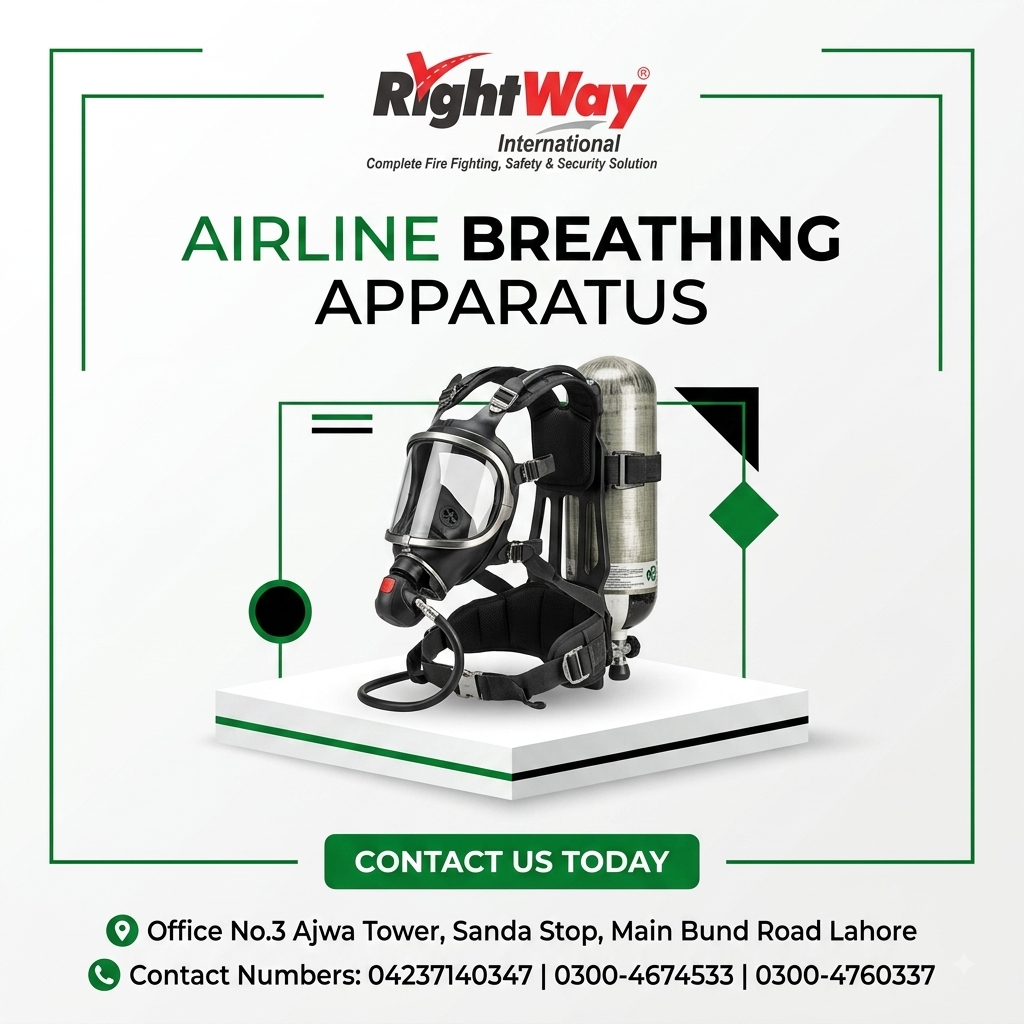
Airline Breathing Apparatus in Pakistan is a respiratory protection system designed to provide clean breathing air to workers through an airline hose connected to a suitable breathing-air source. It is commonly used in workplaces where the surrounding atmosphere may contain toxic gases, fumes, smoke, dust, vapors, or insufficient oxygen.
Unlike filtering respirators, an airline breathing apparatus does not rely on the surrounding atmosphere for breathable air. Instead, it supplies breathing air from a remote source, such as a breathing air compressor or compressed-air cylinder system.
Therefore, organizations should select an airline breathing apparatus according to the workplace hazards, required airflow, operating pressure, hose length, respirator type, and applicable respiratory protection standards.
What Is an Airline Breathing Apparatus?
An airline breathing apparatus is an atmosphere-supplying respiratory protection system that delivers breathing air to a worker through a flexible airline hose.
The system typically consists of a breathing-air source, air purification equipment where required, pressure regulation components, breathing-air hose, and a facepiece or hood.
For example, workers performing painting, chemical handling, industrial cleaning, confined-space work, or other hazardous operations can use an appropriate airline respirator when the workplace conditions require a continuous supply of clean breathing air.
However, the breathing-air source and complete system must be suitable for respiratory protection. Ordinary compressed air should not automatically be assumed to be safe for breathing.
How Does an Airline Breathing Apparatus Work?
First, breathing air is supplied from an approved source, such as a suitable breathing-air compressor or compressed-air cylinder.
Next, the air passes through the required filtration, purification, pressure regulation, and monitoring equipment.
After that, clean breathing air travels through the airline breathing hose to the worker’s respirator.
The respirator may use a tight-fitting facepiece, hood, helmet, or other approved configuration depending on the specific system.
Finally, the worker receives a continuous supply of breathing air while operating within the limitations of the respiratory protection system.
Therefore, the complete airline breathing system—including the air source, purification equipment, regulator, hose, connections, and respirator—must be properly selected, maintained, and used.
Main Components of an Airline Breathing Apparatus
A typical airline breathing apparatus system may include:
- Breathing air compressor or compressed-air source
- Air purification and filtration system
- Carbon monoxide monitoring where applicable
- Pressure regulator
- Air pressure gauge
- Airline breathing hose
- Hose couplings and connectors
- Belt-mounted regulator
- Facepiece, hood, helmet, or mask
- Air control valve
- Emergency escape connection where required
- Air storage receiver or cylinder
- Low-pressure or warning system
Furthermore, the exact configuration depends on the manufacturer, respirator design, workplace hazard, required airflow, and operating conditions.
Airline Breathing Apparatus vs SCBA
An airline breathing apparatus and a Self-Contained Breathing Apparatus (SCBA) both provide breathing air, but they operate differently.
An airline breathing apparatus normally receives breathing air from a remote source through an airline hose. This allows the worker to remain supplied with air for extended operations, provided the air source and system are properly maintained.
In contrast, an SCBA carries its breathing-air cylinder directly on the user’s back. Because the air supply is carried by the worker, SCBA systems provide greater mobility and are commonly used where workers need to move independently from a stationary air source.
Therefore, the choice between an airline respirator and SCBA depends on the application, hazard, mobility requirements, work duration, and approved respiratory protection program.
Breathing Air Quality
Breathing-air quality is one of the most important considerations when using an airline breathing apparatus.
The supplied air must be suitable for respiratory use and meet the applicable breathing-air quality requirements for the respirator and workplace.
For example, OSHA’s respiratory protection requirements under 29 CFR 1910.134 specify breathing-air quality requirements for atmosphere-supplying respirators. These requirements address contaminants such as oxygen, carbon monoxide, carbon dioxide, hydrocarbons, and odor.
Therefore, organizations should never connect an airline respirator to an ordinary industrial compressed-air line unless the complete system is specifically designed, configured, and maintained for breathing-air service.
Benefits of Airline Breathing Apparatus
A properly selected airline breathing apparatus can provide several important benefits.
First, it can provide a continuous supply of breathing air for compatible respiratory protection applications.
In addition, airline respirators can be suitable for extended work periods because the worker does not necessarily have to carry a large breathing-air cylinder.
Furthermore, the remote air source can allow workers to operate in environments where filtering respirators may not provide adequate protection.
Other potential benefits include:
- Continuous breathing-air supply
- Reduced weight compared with cylinder-based systems
- Suitable for extended-duration applications
- Can support hazardous industrial operations
- Compatible with different facepiece configurations
- Can be connected to suitable breathing-air compressors
- Useful for applications requiring supplied-air respiratory protection
However, airline systems can restrict worker movement because the worker remains connected to the breathing-air source through a hose.
Common Applications of Airline Breathing Apparatus
Airline breathing apparatus can be used in various industrial and hazardous environments, including:
- Chemical plants
- Oil and gas facilities
- Refineries
- Paint spraying operations
- Pharmaceutical manufacturing
- Industrial cleaning
- Confined-space operations
- Sandblasting
- Tank cleaning
- Industrial maintenance
- Welding and specialized industrial applications
- Manufacturing facilities
- Emergency-response applications
The exact respirator configuration should always be selected according to the specific workplace hazard and the manufacturer’s approved instructions.
Airline Respirator for Confined Spaces
Confined-space operations can expose workers to serious atmospheric hazards, including toxic gases, oxygen-deficient atmospheres, and other contaminants.
An airline respirator for confined-space applications may provide breathing air from a remote source when the complete respiratory protection system is appropriate for the identified hazard.
However, supplied-air respiratory protection should not replace proper atmospheric testing, ventilation, hazard assessment, emergency planning, and other required confined-space controls.
Therefore, organizations should evaluate the complete confined-space entry procedure before selecting respiratory equipment.
Airline Breathing Apparatus Safety
Proper inspection and maintenance are essential for the safe operation of an airline breathing apparatus.
Organizations should:
- Inspect the respirator before use.
- Check the breathing-air hose for damage.
- Inspect couplings and connectors.
- Verify the breathing-air supply.
- Maintain filters and purification equipment.
- Keep the compressor intake away from contamination.
- Monitor carbon monoxide where required.
- Check operating pressure and airflow.
- Follow manufacturer maintenance instructions.
- Replace damaged hoses and components.
- Keep appropriate inspection and maintenance records.
- Train workers in correct respirator use.
- Follow the organization’s respiratory protection program.
In addition, breathing-air hoses should be protected from crushing, cutting, excessive heat, chemicals, and other workplace hazards.
Airline Breathing Apparatus in Pakistan
Airline Breathing Apparatus in Pakistan can support respiratory protection requirements across industries such as oil and gas, refineries, chemical processing, manufacturing, pharmaceuticals, painting, industrial maintenance, and confined-space operations.
When selecting an airline breathing apparatus in Pakistan, organizations should consider breathing-air quality, airflow requirements, working pressure, hose length, respirator type, filtration, compressor compatibility, certification, replacement parts, maintenance requirements, and manufacturer specifications.
It is also important to select equipment from a reliable supplier that can provide technical information, compatible components, maintenance support, and appropriate user guidance.
Most importantly, the airline breathing apparatus should be compatible with the identified workplace hazard and the organization’s respiratory protection program.
How to Select an Airline Breathing Apparatus
Before purchasing an airline breathing apparatus, organizations should evaluate several factors.
1. Workplace Hazard
Identify the contaminants, gases, vapors, dust, fumes, oxygen levels, and other atmospheric hazards present in the work area.
2. Breathing-Air Source
Determine whether the system will receive air from a breathing-air compressor, compressed-air cylinder, or another approved source.
3. Airflow and Pressure
Verify the manufacturer’s required airflow and pressure specifications for the selected respirator.
4. Hose Length
Select an appropriate airline hose length while considering worker movement, pressure loss, routing, and workplace conditions.
5. Facepiece Configuration
Depending on the application, the system may use a half-mask, full-facepiece, hood, helmet, or other approved supplied-air configuration.
6. Filtration and Purification
Ensure that the breathing-air system includes appropriate filtration and purification equipment for the application.
7. Certification and Standards
Verify that the respirator and associated components meet the applicable standards and certification requirements for the intended application.
Airline Breathing Apparatus Maintenance
Regular maintenance helps ensure that an airline breathing apparatus remains reliable.
Maintenance may include inspection of the facepiece, breathing-air hose, connectors, valves, regulators, filters, air source, and monitoring equipment.
Air purification cartridges and filters should be replaced according to manufacturer instructions and the operating conditions.
Furthermore, damaged or contaminated components should be removed from service and replaced appropriately.
A documented inspection and maintenance program can help organizations identify problems before equipment is required for an emergency or hazardous operation.
Frequently Asked Questions
What is an airline breathing apparatus?
An airline breathing apparatus is a supplied-air respiratory protection system that provides breathing air to a worker through an airline hose connected to a suitable breathing-air source.
What is the difference between an airline respirator and SCBA?
An airline respirator receives breathing air through a hose from a remote source, while an SCBA carries the breathing-air cylinder directly on the worker’s back.
Where is an airline breathing apparatus used?
Airline breathing apparatus can be used in chemical plants, oil and gas facilities, refineries, painting operations, confined spaces, industrial maintenance, manufacturing, and other hazardous environments.
Can an airline breathing apparatus be connected to a normal air compressor?
Not automatically. The air source must be suitable for breathing-air applications and configured with the required filtration, purification, monitoring, pressure control, and other safety components.
Is an airline breathing apparatus suitable for confined spaces?
It can be suitable for certain confined-space applications when the complete system is approved and appropriate for the identified hazards. However, atmospheric testing, ventilation, entry procedures, and emergency controls are also essential.
How long can an airline breathing apparatus be used?
The operating duration depends on the air source, airflow requirements, hose configuration, compressor capacity, cylinder capacity if applicable, and manufacturer’s specifications.
Does an airline breathing apparatus require maintenance?
Yes. The respirator, hose, connectors, regulators, filters, breathing-air source, and other components should be inspected and maintained according to applicable requirements and manufacturer instructions.
Breathing Air Compressor
How Does a Breathing Air Compressor Work?
First, the compressor draws air from a suitable intake location. Next, the compressor increases the air pressure.
After compression, the air passes through appropriate filters, moisture separators, and purification systems. These components help remove contaminants and moisture.
Finally, the purified breathing air travels through the approved breathing-air system to the respirator or storage cylinder.
Therefore, the complete system—not just the compressor—must maintain the required breathing-air quality. Read More