




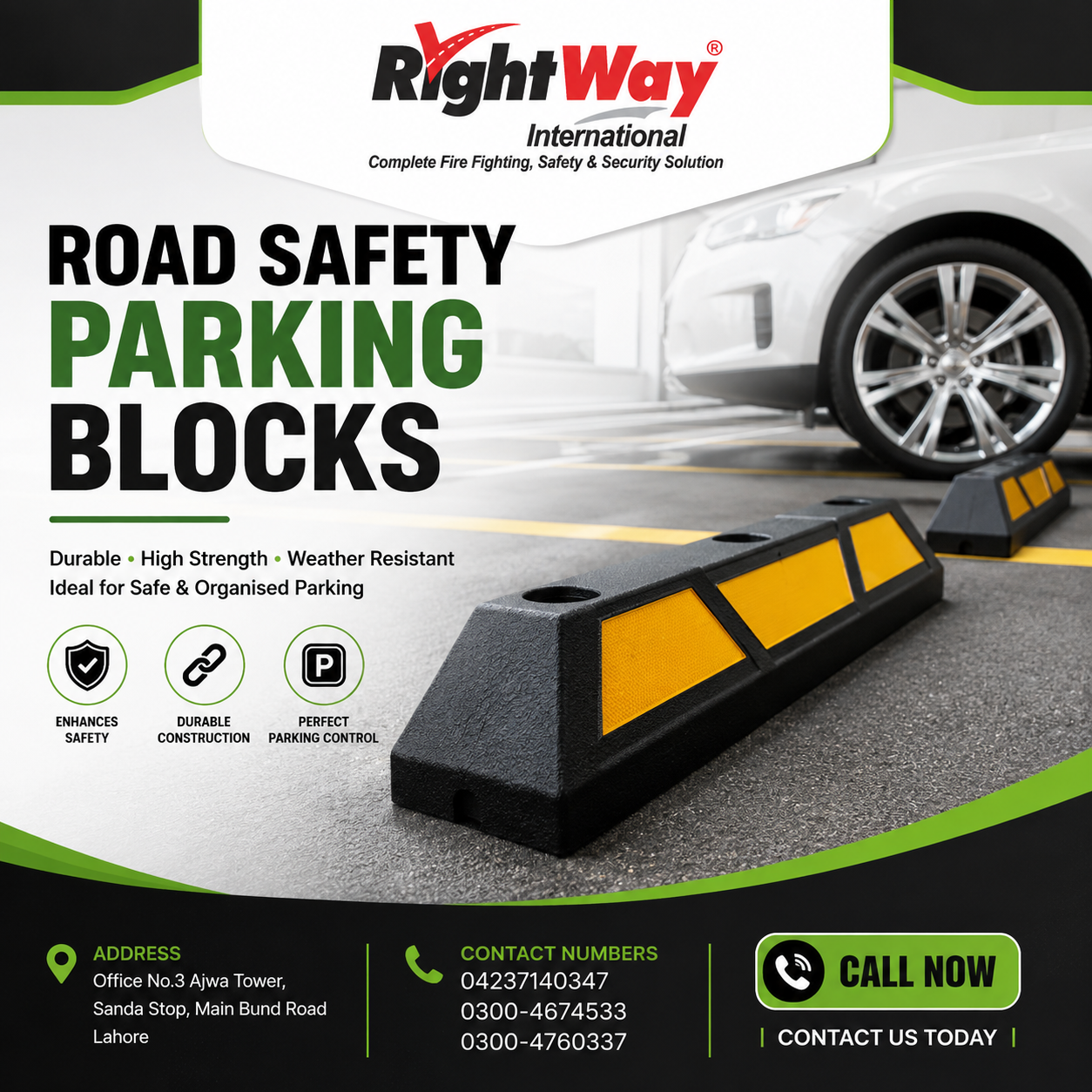
Road Safety Parking Blocks: Types Uses Benefits & Buying Guide Parking areas can become difficult to manage when vehicles move beyond their designated spaces. Therefore, road safety parking blocks provide a clear physical stopping point that helps drivers park more accurately.
Moreover, parking blocks can help reduce the risk of vehicles hitting walls, buildings, poles, fences, curbs, and other nearby structures. As a result, they can improve safety while also protecting property.
They can help:
- Improve vehicle positioning
- Prevent vehicles from moving too far forward
- Protect walls and buildings
- Reduce accidental vehicle impacts
- Keep parking spaces organized
- Improve parking lot safety
- Separate vehicles from pedestrian areas
- Protect curbs and landscaping
- Increase parking-space visibility
- Support effective traffic management
In addition, parking blocks can make large parking areas easier to organize because they create consistent stopping points for vehicles.
Types of Road Safety Parking Blocks
1. Rubber Parking Blocks
Rubber parking blocks offer a durable and practical solution for residential, commercial, and industrial parking areas. In addition, their relatively lightweight construction makes them easier to transport and install than many concrete alternatives.
Furthermore, rubber wheel stops can absorb vehicle impact while providing a clear stopping point for drivers. As a result, they work well in parking areas that require durable yet manageable safety equipment.
2. Recycled Rubber Parking Blocks
Recycled rubber parking blocks use processed rubber materials to create durable wheel-stop products. Moreover, they provide a practical option for parking lots, warehouses, commercial properties, and other vehicle-accessible areas.
Because of their durable construction, these parking blocks can support regular vehicle traffic while helping define individual parking spaces.
3. Concrete Parking Blocks
Concrete parking blocks provide a strong and permanent solution for parking areas. Their substantial weight helps keep them in position, especially when installers secure them correctly.
Therefore, concrete wheel stops are commonly considered for commercial parking lots, industrial facilities, and other locations that require a fixed parking barrier.
However, concrete blocks can be heavier than rubber or plastic alternatives. Consequently, transportation and installation may require additional effort.
4. Plastic Parking Blocks
Plastic parking blocks offer a lightweight alternative for selected parking applications. Because they are easy to handle, they can simplify installation, replacement, and repositioning.
They can work well in locations where facility managers need a practical and easy-to-maintain parking solution.
5. Heavy-Duty Parking Blocks
Heavy-duty parking blocks are designed for demanding parking environments. For example, businesses can use them in warehouses, industrial facilities, commercial parking areas, and locations with frequent vehicle movement.
In addition, buyers should select heavy-duty models according to vehicle size, expected impact, installation surface, and manufacturer’s specifications.
6. Reflective Parking Blocks
Reflective parking blocks feature reflective strips or markings that help improve visibility in low-light conditions. Therefore, they can provide additional visual guidance in parking areas that operate during nighttime.
Furthermore, reflective elements can help drivers identify the parking boundary more easily when lighting conditions are poor.
Benefits of Road Safety Parking Blocks
High-quality parking wheel stops provide several practical benefits.
First, they improve vehicle positioning. Drivers can use the physical stopping point to position vehicles more consistently within designated spaces.
Second, they help protect property. By limiting forward vehicle movement, parking blocks can reduce the possibility of accidental contact with walls, buildings, poles, fences, and landscaping.
Furthermore, parking blocks improve parking organization. They create consistent stopping points and help maintain a uniform layout across multiple parking spaces.
In addition, they can improve visibility. Models with reflective markings make stopping points easier to identify during nighttime and low-light conditions.
Finally, many modern parking blocks offer simple installation and maintenance. Therefore, they provide a practical solution for residential, commercial, industrial, and public parking facilities.
How to Choose the Right Road Safety Parking Block
1. Identify the Application
First, determine where you plan to install the parking blocks. Residential parking areas, shopping centers, warehouses, industrial facilities, and public parking lots may have different requirements.
2. Consider Vehicle Type
Next, consider the vehicles that will use the parking area. Passenger cars, vans, trucks, and other heavy vehicles may require different parking-block specifications.
3. Select the Right Material
Furthermore, choose a material according to the application. Rubber, recycled rubber, concrete, and plastic parking blocks each offer different advantages in terms of weight, durability, installation, and maintenance.
4. Check Visibility
For nighttime parking areas, choose highly visible or reflective parking blocks. Reflective strips can help drivers identify the stopping point when natural or artificial lighting is limited.
5. Check Installation Requirements
In addition, check the installation method before purchasing. Make sure the parking block works with the existing surface, such as asphalt or concrete, and that suitable anchors and fasteners are available.
6. Consider Weather Conditions
Finally, consider the local environment. Outdoor parking blocks should withstand sunlight, rain, dust, temperature changes, and regular vehicle contact.
Installation and Maintenance
Proper installation helps road safety parking blocks remain secure and functional.
First, mark the correct position of the parking block. Then, measure the required distance from the wall, curb, or other parking boundary.
Next, place the parking block in position and mark the mounting holes. Drill the required holes and install suitable anchors or fasteners.
Afterward, tighten all mounting hardware securely. Finally, check the alignment and stability of the parking block before allowing vehicles to use the space.
Regular maintenance also improves long-term performance. Therefore, inspect parking blocks regularly for cracks, loose bolts, damaged reflective strips, movement, and excessive wear.
If you notice any damage, repair or replace the affected components as soon as possible. Also, keep reflective surfaces clean so they remain visible to drivers.
Road Safety Parking Blocks in Pakistan
Road Safety Parking Blocks in Pakistan are useful for commercial parking lots, residential buildings, shopping centers, offices, warehouses, industrial facilities, hospitals, schools, hotels, and other parking areas.
Moreover, businesses and property managers can use parking blocks to organize parking spaces and help protect walls, structures, curbs, and other surrounding property.
When purchasing road safety parking blocks in Pakistan, consider material quality, dimensions, vehicle compatibility, durability, reflective visibility, mounting method, weather resistance, and expected operating conditions.
Furthermore, buyers should compare products according to their actual project requirements rather than choosing a product based only on price. A suitable parking block should provide the right combination of durability, visibility, installation convenience, and long-term performance.
Best Practices
For effective use of road safety parking blocks, follow these best practices:
- First, select durable parking blocks suitable for the application.
- Next, choose the correct size according to the parking space and vehicle type.
- Furthermore, use reflective markings where nighttime visibility is important.
- Install each parking block securely.
- Keep parking blocks correctly aligned.
- Check mounting hardware regularly.
- Clean reflective surfaces when necessary.
- Inspect blocks for cracks, movement, and damage.
- Replace damaged units promptly.
- Finally, follow applicable parking and traffic safety requirements.
Frequently Asked Questions
What are road safety parking blocks?
Road safety parking blocks are physical wheel-stop devices that help control vehicle positioning in parking spaces. In addition, they can help prevent vehicles from moving too far forward and contacting nearby structures.
Where are parking blocks used?
Parking blocks are commonly used in parking lots, commercial buildings, residential areas, warehouses, shopping centers, industrial facilities, hospitals, schools, hotels, and public parking areas.
What are parking blocks made of?
Manufacturers commonly produce parking blocks from rubber, recycled rubber, concrete, plastic, and other durable materials. However, the best material depends on the application, vehicle type, installation surface, and expected traffic conditions.
Are rubber parking blocks suitable for outdoor use?
Yes, many rubber parking blocks are suitable for outdoor applications. However, always check the manufacturer’s specifications for UV resistance, weather resistance, temperature tolerance, and expected service conditions.
Do parking blocks protect walls and buildings?
Yes, parking blocks can help protect walls and buildings by providing a physical stopping point that limits forward vehicle movement. As a result, they can reduce the likelihood of accidental vehicle contact with nearby structures.
Are parking blocks suitable for heavy vehicles?
Some heavy-duty parking blocks can support applications involving larger vehicles. Nevertheless, buyers should check the manufacturer’s specifications, dimensions, mounting system, and intended vehicle capacity before installation.
Are reflective parking blocks better for nighttime use?
Reflective parking blocks can improve nighttime visibility. Their reflective strips or markings can help drivers identify parking boundaries and stopping points when lighting conditions are poor.
Can parking blocks be installed on asphalt?
Yes, many parking blocks can be installed on asphalt. However, installers should use suitable anchors and follow the manufacturer’s recommended installation method for the specific surface and product.
Benefits of Road Safety Cone Lights
High-quality traffic cone warning lights provide several important benefits.
First, they improve visibility. Bright LED illumination makes traffic cones easier to identify in dark or low-light conditions.
Second, they provide an early warning. Drivers can recognize temporary hazards and roadwork areas from a greater distance.
Furthermore, cone lights improve traffic management by clearly highlighting the boundaries of work zones and temporary traffic routes.
Finally, portable cone lights are easy to install and relocate, making them suitable for changing roadwork and construction requirements. READ MORE