

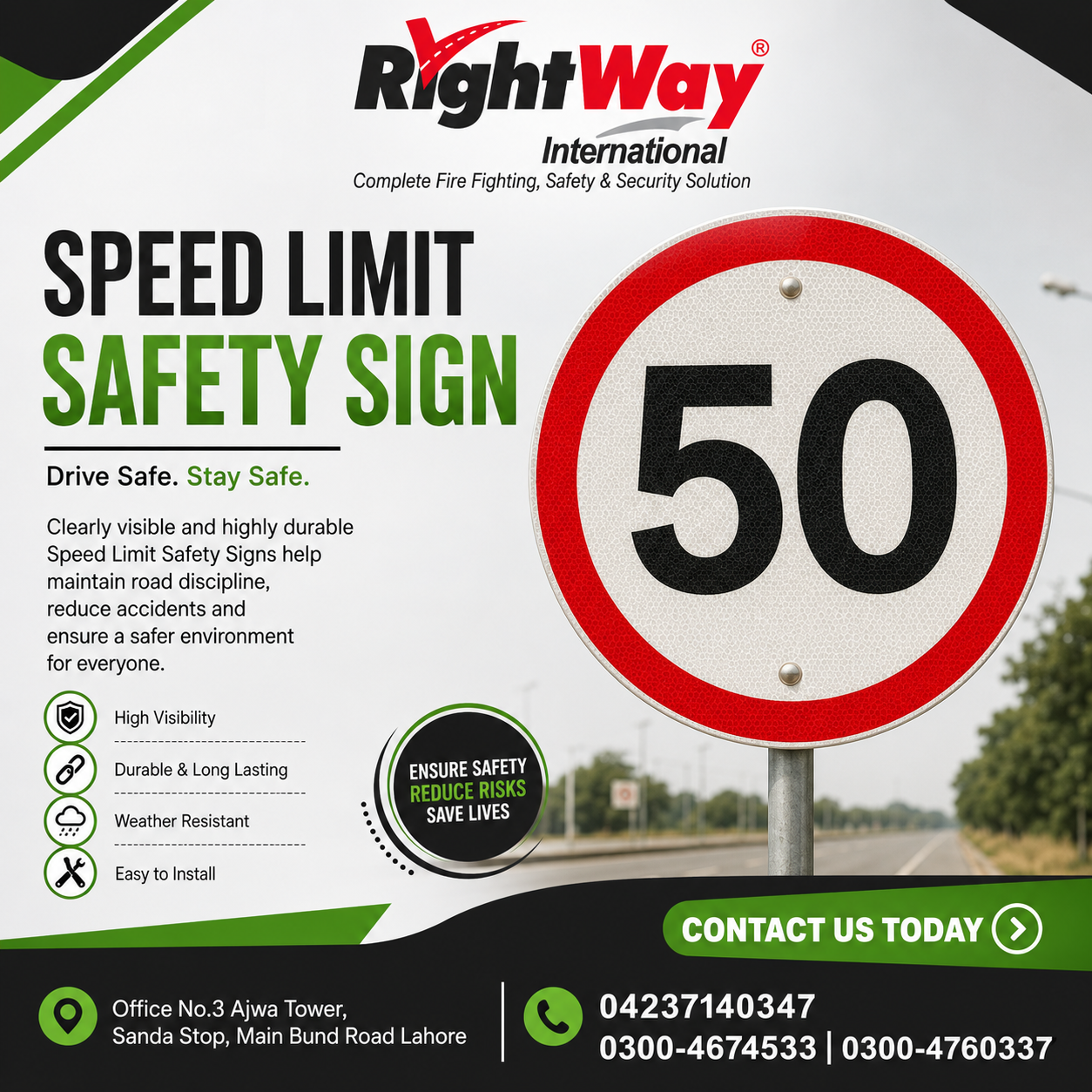
Speed Limit Safety Sign: Types Uses Benefits & Buying Guide is an important road safety device that tells drivers the maximum or minimum speed allowed on a particular road section. These signs help drivers understand the applicable speed requirement and encourage safer, more controlled driving.
Moreover, speed limit signs support traffic management on highways, urban roads, school zones, residential streets, industrial areas, and other locations. Therefore, clear and highly visible speed limit signs can contribute to a safer and more organized road environment.
What Is a Speed Limit Safety Sign?
A speed limit safety sign is a traffic sign that displays a specific speed requirement for road users. The displayed number tells drivers the applicable speed limit for that road or zone.
For example, a sign may display 40 km/h, 50 km/h, 60 km/h, 80 km/h, or another authorized speed depending on the road and applicable regulations.
In Pakistan, speed limit signs commonly communicate the maximum permitted speed in kilometers per hour.
Common names include:
- Speed limit sign
- Speed limit safety sign
- Speed limit road sign
- Speed restriction sign
- Traffic speed limit sign
- Highway speed limit sign
- Road speed limit sign
- Speed control sign
- Maximum speed sign
- Minimum speed sign
- Speed warning sign
- Speed restriction road sign
- Traffic safety speed sign
- Speed limit board
- Speed limit traffic sign
- Road safety speed sign
- Highway speed control sign
- School zone speed limit sign
- Residential speed limit sign
- Variable speed limit sign
Why Are Speed Limit Signs Important?
Speed limit signs provide drivers with clear speed information. As a result, motorists can adjust their vehicle speed according to the applicable road requirement.
Furthermore, speed limits can help manage traffic in areas where road design, pedestrian activity, traffic conditions, or other factors require controlled vehicle speeds.
They can help:
- Inform drivers about the applicable speed
- Support safer driving behavior
- Control traffic speed
- Improve traffic management
- Protect pedestrians and other road users
- Support safer school zones
- Improve safety in residential areas
- Help manage highway traffic
- Create more predictable traffic conditions
Therefore, authorities and road managers should place speed limit signs where drivers can see and understand them clearly.
Types of Speed Limit Safety Signs
1. Standard Speed Limit Signs
Standard speed limit signs display the applicable maximum speed for a road section. They are commonly used on highways, urban roads, residential streets, and other controlled traffic areas.
Moreover, the sign should remain clearly visible so drivers can recognize the speed requirement in sufficient time.
2. Minimum Speed Limit Signs
Minimum speed limit signs communicate the lowest permitted speed for a specific road or lane where such a requirement applies.
Therefore, they can help maintain an appropriate traffic flow on roads where vehicles traveling too slowly may create additional traffic risks.
3. School Zone Speed Limit Signs
School zone speed limit signs identify reduced-speed areas around schools and educational facilities.
In addition, these signs can help drivers recognize locations where children and pedestrians may be present. Some jurisdictions also use special school-speed assemblies or flashing systems.
4. Truck or Vehicle-Specific Speed Limit Signs
Some roads may have different speed requirements for specific vehicle categories, such as trucks or buses.
Consequently, signs or supplemental plaques can communicate speed limits that apply to particular vehicle classes. The exact requirements depend on the applicable traffic regulations.
5. Variable Speed Limit Signs
Variable speed limit signs can display different speed limits according to changing traffic, weather, or road conditions when the relevant authority uses such a system.
For example, a road authority may reduce the displayed speed during certain conditions and restore it when conditions improve.
Where Are Speed Limit Signs Used?
Speed limit signs have many applications. For example, authorities and organizations can use them on:
- Highways
- Motorways
- Urban roads
- Residential streets
- School zones
- Hospital areas
- University campuses
- Industrial facilities
- Construction zones
- Parking facilities
- Commercial areas
- Airport roads
- Private roads
- Housing societies
- Intersections
- Work zones
In particular, speed limit signs prove useful where road conditions or surrounding activities require drivers to maintain a specific speed.
Benefits of Speed Limit Safety Signs
High-quality speed limit safety signs provide several important benefits.
First, they improve driver awareness. A clearly displayed speed limit gives motorists direct information about the applicable speed requirement.
Second, they support traffic management. Consistent speed information can help create a more predictable driving environment.
Furthermore, speed limit signs can improve safety around schools, hospitals, residential communities, pedestrian areas, and busy roads.
In addition, reflective materials can improve sign visibility when vehicle headlights illuminate the sign at night.
Finally, properly positioned speed limit signs help road users understand changes in speed requirements. Current traffic-control standards also address where speed-limit signs should appear when the applicable speed changes.
Important Features to Consider
When selecting a speed limit safety sign, consider:
- High visibility
- Clear numbers and lettering
- Reflective sheeting
- Durable sign material
- Weather resistance
- UV resistance
- Corrosion resistance
- Suitable sign size
- Strong mounting system
- Daytime visibility
- Nighttime visibility
- Long service life
- Easy installation
- Low maintenance requirements
Moreover, choose a sign size that suits the road environment. A larger sign may provide better visibility on wider or higher-speed roads.
How to Choose the Right Speed Limit Sign
1. Identify the Application
First, determine where you will install the sign. A highway, school zone, residential street, and industrial facility may require different sign types and specifications.
2. Check the Required Speed
Next, confirm the legally authorized speed for the specific road or zone. Do not select the displayed number based only on preference or convenience.
3. Consider Visibility
Furthermore, evaluate daytime and nighttime visibility. Reflective materials can help drivers recognize signs after dark.
4. Select the Correct Size
Choose a sign size that allows approaching drivers to read the speed clearly from an appropriate distance.
5. Consider the Environment
Outdoor signs must withstand sunlight, rain, dust, wind, and temperature changes. Therefore, select durable materials suitable for the installation environment.
6. Check Mounting Requirements
Finally, use suitable posts, brackets, anchors, and mounting hardware. Secure installation helps keep the sign correctly positioned and visible.
Speed Limit Safety Signs in Pakistan
Speed Limit Safety Signs in Pakistan are useful for highways, motorways, schools, universities, hospitals, housing societies, commercial areas, industrial facilities, parking areas, and private roads.
Moreover, businesses, construction companies, educational institutions, housing developers, and road-management organizations can use appropriate speed limit signs to communicate speed requirements.
When purchasing speed limit signs in Pakistan, consider sign material, reflective performance, dimensions, visibility, durability, mounting method, and the intended road environment.
Most importantly, buyers should select the displayed speed according to the applicable legal and traffic-management requirements rather than choosing a number simply because it looks suitable.
Speed Limit Sign vs Speed Warning Sign
A speed limit sign communicates a regulatory speed requirement, while a speed warning or advisory-speed sign can alert drivers to a roadway condition or recommend a suitable speed for that condition.
Therefore, these signs do not always serve the same purpose. The correct sign depends on whether the message establishes a regulatory limit or provides a warning or advisory recommendation.
Installation and Maintenance
Proper installation helps speed limit safety signs remain visible and effective.
First, select a location where approaching drivers can see the sign clearly. Next, install it at an appropriate height and orientation according to the applicable traffic-sign requirements.
Furthermore, inspect the sign regularly for:
- Fading
- Dirt and dust
- Damaged reflective material
- Loose bolts
- Corrosion
- Damaged posts
- Obstructions
- Reduced nighttime visibility
Keep the sign clean and replace damaged or severely faded signs when necessary. As a result, drivers can continue to recognize the speed information easily.
Best Practices
For effective use of speed limit safety signs:
- Install signs where drivers can see them clearly.
- Use the correct authorized speed.
- Select an appropriate sign size.
- Use reflective materials where nighttime visibility matters.
- Keep signs clean and unobstructed.
- Inspect mounting hardware regularly.
- Replace damaged or faded signs.
- Consider additional signs where drivers need reminders.
- Follow applicable traffic-sign standards and local requirements.
Frequently Asked Questions
What is a speed limit safety sign?
A speed limit safety sign displays the maximum or minimum speed requirement that applies to a specific road, zone, vehicle type, or traffic condition.
Why are speed limit signs important?
They provide drivers with clear speed information. Therefore, they support traffic management and encourage motorists to maintain the applicable speed.
Where are speed limit signs used?
They are commonly used on highways, motorways, residential roads, school zones, industrial areas, commercial roads, private roads, and other traffic environments.
Are speed limit signs visible at night?
Yes. Signs with suitable reflective materials can improve nighttime visibility when vehicle headlights illuminate the sign.
What material is used for speed limit signs?
Manufacturers commonly use materials such as aluminum, galvanized metal, reflective sheeting, and other weather-resistant materials.
Can speed limit signs be customized?
The physical size and construction may vary according to the application. However, the displayed speed and sign design should follow the applicable traffic regulations and authorized requirements.
What should I consider when buying speed limit signs in Pakistan?
Consider visibility, reflective performance, material quality, durability, size, weather resistance, mounting requirements, and the intended application.
Speed Limit Safety Signs play an important role in communicating speed requirements and supporting organized traffic movement. They help drivers understand the applicable speed and can improve awareness in highways, school zones, residential areas, industrial facilities, and other locations.
Therefore, choose speed limit signs based on visibility, durability, correct sign type, suitable size, reflective performance, and applicable regulations.
With proper selection, installation, and maintenance, speed limit safety signs can contribute to a clearer, more predictable, and safety-focused road environment.