




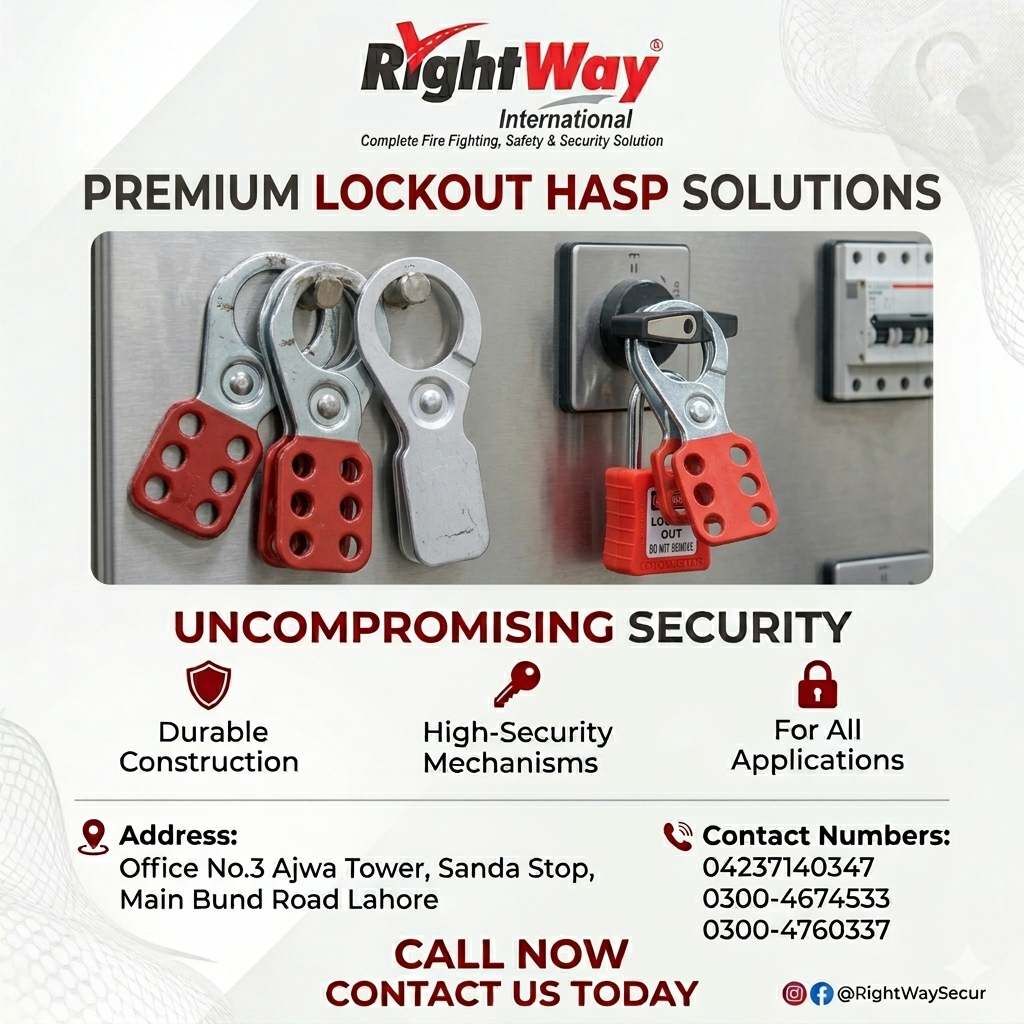
Safety Lockout Hasps are critical Lockout/Tagout (LOTO) devices used in industrial workplaces to ensure multiple workers can safely lock out a single energy source during maintenance or servicing operations. These devices play a major role in workplace safety and compliance with NFPA 70E and OSHA lockout/tagout standards.
According to NFPA 70E guidelines, lockout devices must be uniquely identifiable, durable, and suitable for hazardous energy control procedures. Safety lockout hasps help organizations meet these safety requirements while protecting workers from accidental equipment energization.
What Is a Safety Lockout Hasp?
A safety lockout hasp is a lockout device designed to allow multiple padlocks to secure one isolation point. It ensures that machinery or electrical systems cannot be restarted until every authorized worker removes their personal lock.
Lockout hasps are commonly used in:
- Electrical lockout systems
- Mechanical maintenance
- Industrial machinery servicing
- Valve lockout procedures
- Group lockout applications
- NFPA 70E electrical safety programs
- OSHA-compliant LOTO procedures
Importance of Safety Lockout Hasps in NFPA 70E Compliance
NFPA 70E emphasizes safe hazardous energy control practices. In complex lockout/tagout situations involving multiple workers or energy sources, lockout hasps become essential safety tools.
NFPA 70E Requirements Related to Lockout Hasps
According to NFPA standards:
- Lockout devices must be uniquely identifiable
- Devices must prevent unauthorized energization
- Lockout systems should support multiple-worker protection
- Lockout devices must withstand industrial environments
- The individual applying the lock must retain control of the key
- Complex lockout procedures require clear responsibility management
Types of Safety Lockout Hasps
1. Steel Lockout Hasps
Heavy-duty steel hasps designed for harsh industrial environments.
Features:
- High durability
- Corrosion-resistant coating
- Supports multiple padlocks
- Suitable for outdoor applications
2. Nylon Lockout Hasps
Non-conductive nylon hasps ideal for electrical safety applications.
Features:
- Electrical insulation
- Spark-resistant design
- Lightweight construction
- Chemical resistance
3. Aluminum Lockout Hasps
Lightweight and corrosion-resistant lockout devices.
Best For:
- Food processing industries
- Chemical plants
- Moisture-prone environments
4. Jaw-Type Lockout Hasps
Designed with a clamp-style jaw mechanism for secure lockout.
Applications:
- Circuit breakers
- Electrical disconnects
- Valves and switches
5. Multi-Person Lockout Hasps
Allows several workers to attach personal safety padlocks simultaneously.
Benefits:
- Improved worker accountability
- Group lockout safety
- Enhanced OSHA compliance
Safety Lockout Hasp Specifications
| Specification | Details |
|---|---|
| Material | Steel, Nylon, Aluminum |
| Capacity | 4–12 Padlocks |
| Jaw Diameter | 1 inch – 2.5 inches |
| Color Options | Red, Yellow, Blue |
| Corrosion Resistance | Yes |
| Electrical Insulation | Available in Nylon Models |
| Spark Resistant | Yes |
| Temperature Resistance | -20°C to 120°C |
| Compliance | OSHA 1910.147, NFPA 70E |
| Usage | Group Lockout/Tagout |
Safety Lockout Hasp Price List
| Product Type | Approximate Price |
|---|---|
| Basic Steel Lockout Hasp | $5 – $12 |
| Nylon Safety Hasp | $8 – $18 |
| Heavy-Duty Industrial Hasp | $15 – $30 |
| Electrical Insulated Hasp | $10 – $25 |
| Aluminum Lockout Hasp | $12 – $28 |
| Multi-Person Lockout Hasp | $20 – $40 |
Factors Affecting Lockout Hasp Prices
- Material quality
- Number of lock positions
- Corrosion resistance
- Electrical insulation
- Industrial certifications
- Brand reputation
Key Features of Safety Lockout Hasps
Multiple Worker Protection
Allows several workers to maintain individual control over hazardous energy isolation.
Durable Construction
Made from industrial-grade steel, nylon, or aluminum for long-term use.
High Visibility Colors
Bright colors improve workplace visibility and hazard identification.
Corrosion Resistance
Suitable for harsh industrial and outdoor environments.
Electrical Safety
Non-conductive nylon models help reduce electrical hazards.
Applications of Safety Lockout Hasps
Safety lockout hasps are widely used in:
- Manufacturing plants
- Electrical maintenance
- Oil & gas facilities
- Chemical processing plants
- Power generation systems
- HVAC servicing
- Construction sites
- Mechanical maintenance operations
Advantages of Using Safety Lockout Hasps
Enhanced Worker Safety
Prevents accidental startup during servicing.
OSHA & NFPA Compliance
Supports regulatory lockout/tagout requirements.
Better Group Lockout Management
Ensures every worker maintains lockout protection.
Reduced Workplace Injuries
Minimizes exposure to hazardous energy.
Improved Accountability
Every worker removes only their own lock.
Safety Lockout Hasps in Complex Lockout Procedures
NFPA 70E identifies two forms of lockout/tagout:
- Simple Lockout
- Complex Lockout
Complex lockout procedures typically involve multiple workers, multiple energy sources, or multiple shifts. In these situations, safety lockout hasps are essential for proper hazardous energy control.
How to Choose the Best Safety Lockout Hasp
Consider the following factors:
- Number of workers involved
- Electrical insulation requirements
- Corrosion resistance needs
- Environmental conditions
- Jaw size compatibility
- OSHA and NFPA compliance
- Lock capacity
- Material durability
What Are Safety Padlocks?
Safety padlocks are specially designed locks used in industrial lockout/tagout systems to isolate hazardous energy sources during servicing and maintenance. Unlike ordinary padlocks, safety padlocks feature non-conductive bodies, high-visibility colors, key-retaining mechanisms, and standardized labeling systems.
These locks are widely used in:
- Electrical maintenance
- Industrial manufacturing
- Oil & gas plants
- Chemical industries
- Power generation facilities
- Construction sites
- Mechanical maintenance
- Fire safety systems
Frequently Asked Questions (FAQs)
What is a safety lockout hasp used for?
A safety lockout hasp allows multiple workers to lock out a single energy source during maintenance or servicing operations.
How many workers can use one lockout hasp?
Depending on the design, lockout hasps can support between 4 and 12 padlocks.
Are lockout hasps OSHA compliant?
Yes, industrial safety lockout hasps are designed to comply with OSHA 1910.147 lockout/tagout regulations.
What does NFPA 70E say about lockout devices?
NFPA 70E requires lockout devices to be durable, uniquely identifiable, and used exclusively for hazardous energy control.
Which material is best for electrical lockout hasps?
Nylon lockout hasps are preferred for electrical applications because they are non-conductive and spark-resistant.
Can lockout hasps be used outdoors?
Yes, corrosion-resistant steel and aluminum lockout hasps are suitable for outdoor industrial environments.
What is the difference between steel and nylon lockout hasps?
- Steel Hasps: Higher strength and durability
- Nylon Hasps: Electrical insulation and spark resistance
Safety lockout hasps are essential components of industrial lockout/tagout systems and NFPA 70E electrical safety programs. These devices improve worker protection by ensuring that hazardous energy sources remain isolated until every authorized worker safely completes maintenance tasks.
By selecting high-quality OSHA- and NFPA-compliant lockout hasps, organizations can improve workplace safety, reduce accidents, and maintain proper regulatory compliance in industrial environments.