




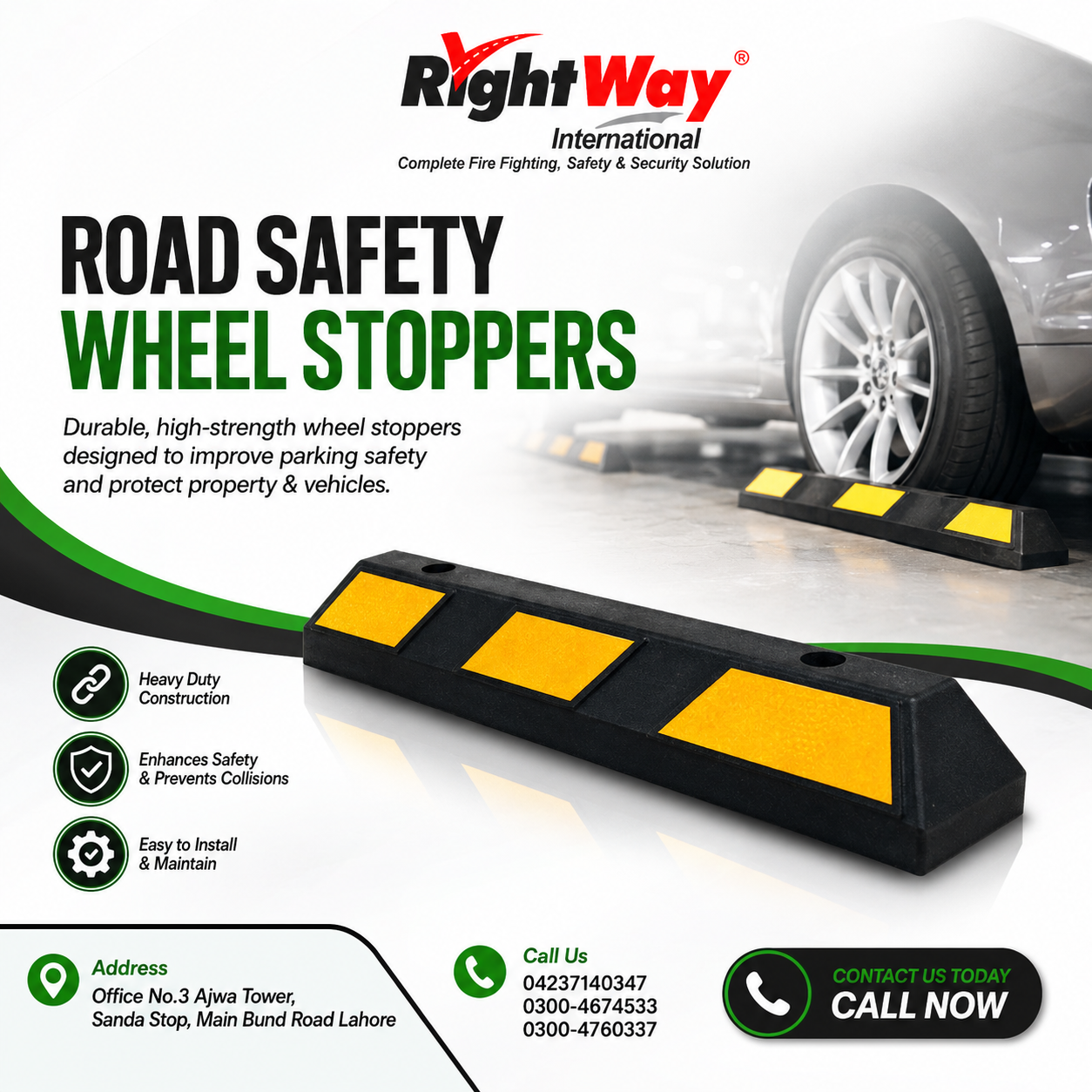
Road Safety Wheel Stoppers help drivers park vehicles safely and maintain proper vehicle positioning. These practical safety products create a clear stopping point and help protect walls, barriers, walkways, doors, columns, and other nearby structures.
Today, businesses and property owners use parking wheel stoppers, rubber wheel stops, parking blocks, vehicle wheel stops, and reflective wheel stoppers in parking lots, garages, warehouses, offices, hospitals, shopping malls, factories, and residential projects.
What Are Road Safety Wheel Stoppers?
Road Safety Wheel Stoppers are physical barriers that limit vehicle movement inside a parking space. A vehicle reaches the stopper at the front of the parking bay, and the tire contacts the barrier. This contact tells the driver to stop.
As a result, wheel stoppers help maintain consistent parking positions and reduce the chance of vehicles moving too far forward.
Common options include:
- Rubber wheel stoppers
- Plastic wheel stoppers
- Concrete wheel stops
- Heavy-duty wheel stops
- Reflective wheel stoppers
- Parking blocks
- Vehicle wheel stops
- Parking barriers
Why Are Wheel Stoppers Important?
A well-planned parking area needs clear vehicle-positioning points. Wheel stoppers provide that control while also helping protect surrounding property.
For example, they can help:
- Prevent vehicle over-parking
- Protect walls and structures
- Maintain organized parking spaces
- Reduce accidental impacts
- Protect pedestrian walkways
- Improve driver awareness
- Create consistent stopping points
- Support safer parking management
Furthermore, reflective models improve visibility in dark or poorly lit parking areas.
Types of Road Safety Wheel Stoppers
Rubber Wheel Stoppers
Rubber wheel stoppers offer a durable and flexible parking solution. Their lightweight design also makes transportation and installation easier. Many models include reflective strips for improved nighttime visibility.
Plastic Wheel Stoppers
Plastic wheel stops provide a lightweight option for selected parking applications. They work well in residential, commercial, and private parking areas where the traffic conditions match the product design.
Concrete Wheel Stops
Concrete wheel stops offer a heavy and robust solution for permanent parking areas. Their weight provides strong resistance against vehicle contact, making them suitable for many outdoor parking facilities.
Reflective Wheel Stoppers
Reflective wheel stoppers use reflective strips, markings, or inserts to help drivers identify the stopping point. Consequently, they can improve visibility during nighttime parking.
Heavy-Duty Wheel Stoppers
Heavy-duty wheel stoppers suit demanding environments such as industrial facilities, warehouses, truck yards, and commercial vehicle areas. Always select a model according to the expected vehicle load and traffic conditions.
Where Can You Use Wheel Stoppers?
Property managers and facility owners can use wheel stoppers in many locations, including:
- Parking lots
- Shopping malls
- Office buildings
- Hospitals
- Hotels
- Schools
- Residential buildings
- Underground garages
- Warehouses
- Factories
- Industrial facilities
- Loading areas
- Vehicle yards
In addition, parking operators can use them around columns, walls, pedestrian routes, entrances, and other areas that need extra vehicle protection.
Key Features of High-Quality Wheel Stoppers
When you choose parking wheel stoppers, consider the following features:
- Strong construction
- Impact resistance
- Weather resistance
- UV resistance
- High visibility
- Reflective markings
- Secure mounting
- Suitable dimensions
- Long service life
- Easy installation
- Pavement compatibility
Moreover, choose the material according to vehicle type, parking conditions, expected impact, and installation location.
How Do Wheel Stoppers Work?
Wheel stoppers use a simple physical stopping system.
First, the driver enters the parking space. Next, the vehicle moves toward the designated stopping point. The front tire then contacts the wheel stopper. Finally, the driver stops the vehicle at the correct position.
Therefore, the stopper helps prevent unnecessary forward movement and keeps the vehicle within its designated parking area.
Wheel Stopper Installation
Correct installation improves stability and long-term performance.
- Select the Location: Mark the correct stopping position.
- Clean the Surface: Remove dust, dirt, oil, and loose material.
- Align the Stopper: Position it according to the parking layout.
- Drill the Holes: Use the correct drilling method for the pavement.
- Install Fasteners: Secure the stopper with suitable anchors and hardware.
- Check Stability: Make sure the stopper remains firmly fixed.
Always follow the manufacturer’s installation instructions and use suitable fixing hardware.
Benefits of Road Safety Wheel Stoppers
Road Safety Wheel Stoppers provide several practical advantages:
- Improve parking organization
- Control vehicle positioning
- Protect walls and structures
- Reduce accidental impacts
- Protect pedestrian areas
- Improve nighttime visibility with reflective models
- Require relatively low maintenance
- Offer easy installation
- Support safer parking management
- Provide long-term parking guidance
As a result, they offer a simple solution for improving safety in many parking environments.
Wheel Stoppers for Commercial Parking
Commercial parking areas experience frequent vehicle movement throughout the day. Commercial parking wheel stops help drivers maintain consistent parking positions while reducing the risk of vehicle contact with walls, columns, doors, and walkways.
For nighttime facilities, reflective wheel stoppers can provide additional visual guidance.
Wheel Stoppers for Industrial Areas
Industrial facilities often handle trucks, delivery vehicles, and heavy equipment. Therefore, industrial wheel stoppers can help establish clear stopping points and protect selected areas.
However, heavy vehicles require products with suitable strength and dimensions. Always check the manufacturer’s specifications before installation.
Wheel Stoppers vs Traffic Cones
Wheel stoppers provide a fixed stopping point inside a parking space. In contrast, traffic cones offer portable traffic control and temporary hazard marking.
For permanent parking management, wheel stoppers usually provide a more practical solution. Meanwhile, contractors can use cones for temporary traffic arrangements.
Wheel Stoppers vs Wheel Chocks
Although people sometimes use these terms interchangeably, the products serve different purposes.
A parking wheel stopper limits vehicle movement within a designated parking space. On the other hand, a wheel chock sits directly against a tire and helps prevent vehicle movement while the vehicle remains stationary.
Therefore, choose the product according to the specific safety requirement.
Road Safety Wheel Stoppers in Pakistan
Road Safety Wheel Stoppers in Pakistan can support safer and more organized parking at commercial, residential, industrial, and public facilities.
Buyers should evaluate:
- Material quality
- Dimensions
- Vehicle type
- Impact resistance
- Reflective visibility
- Mounting system
- Weather resistance
- Pavement compatibility
- Installation requirements
- Expected service life
Furthermore, suppliers should provide products that match the project’s parking layout and operating conditions.
Best Practices for Wheel Stoppers
For better results, follow these practices:
- Select the correct wheel stopper size
- Match the product to the vehicle type
- Choose durable materials
- Use reflective models where visibility matters
- Follow the approved parking layout
- Install suitable mounting hardware
- Inspect fixings regularly
- Replace damaged units
- Keep reflective surfaces clean
- Maintain clear pedestrian paths
- Follow manufacturer recommendations
Frequently Asked Questions
What are road safety wheel stoppers used for?
They help control vehicle positioning and prevent vehicles from moving too far forward inside parking spaces.
What materials do manufacturers use?
Common materials include rubber, recycled rubber, plastic, concrete, and other durable engineered materials.
Are reflective wheel stoppers useful at night?
Yes. Reflective strips or inserts can make the stopping point easier for drivers to see in low-light conditions.
Where can I use wheel stoppers?
You can use them in parking lots, garages, offices, hospitals, warehouses, malls, factories, residential buildings, and vehicle yards.
Can wheel stoppers handle trucks?
Some heavy-duty models can handle commercial vehicles. However, always check the product specifications and load requirements before installation.
Can I install wheel stoppers on asphalt and concrete?
Yes. Many products work with both surfaces. However, you must use the correct fixing system for the pavement type.
How long do wheel stoppers last?
Service life depends on material quality, vehicle traffic, installation quality, weather exposure, and maintenance.
Road Safety Wheel Stoppers provide a simple and effective way to control vehicle positioning and improve parking-area safety. Rubber, plastic, concrete, reflective, and heavy-duty options allow users to select a suitable product for different environments.
By choosing the right material, installing the stopper correctly, and maintaining it regularly, businesses and property owners can create safer and more organized parking areas.
Reflective Road Studs
Reflective Road Studs are small roadway markers that provide additional visual guidance to drivers. Manufacturers typically equip them with reflective elements that return vehicle-headlight illumination toward approaching drivers.
Some modern models also use LEDs and internal power systems to provide active illumination.
Depending on the application, road studs can include:
- Surface-mounted road studs
- Recessed road studs
- Embedded road studs
- Raised road studs
- LED road studs
- Solar-powered road studs
- One-way reflective studs
- Two-way reflective studs
- Multi-directional road studs
Road authorities can install them along:
- Lane boundaries
- Road edges
- Centerlines
- Highway lanes
- Motorways
- Curves
- Bridges
- Tunnels
- Roundabouts
- Traffic islands
- Pedestrian crossings
- Parking areas
- Industrial roads
- Construction zones
Therefore, reflective road studs can complement conventional road markings and traffic signs. Read More