




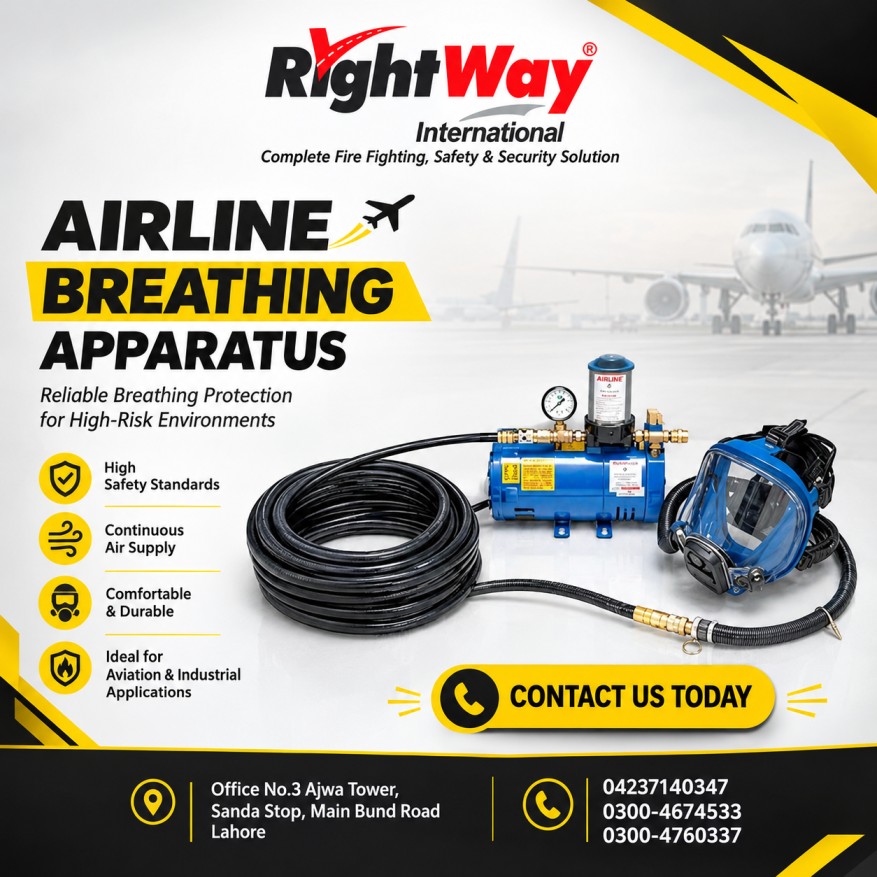
Importance of Airline Breathing Apparatus provides breathable air to workers through a hose connected to a suitable external air source. It helps protect workers in hazardous environments where airborne contaminants may make normal breathing unsafe. For example, industrial workers, maintenance technicians, and painting professionals may use airline breathing systems for specific tasks.
Unlike air-purifying respirators, an airline breathing apparatus receives air from a remote source, such as a suitable breathing air compressor or an approved air supply system. Therefore, workers can receive breathing air without carrying a large cylinder on their backs.
Moreover, these systems support several industries, including manufacturing, chemical processing, spray painting, and industrial maintenance. However, the equipment must match the workplace hazards and applicable safety requirements.
Important: Ordinary industrial compressed air is not automatically safe to breathe. Always use a suitable breathing air source with appropriate purification, monitoring, and maintenance.
Main Benefits of Airline Breathing Apparatus
- Continuous Air Supply: Supplies breathing air through a connected hose while the source operates correctly.
- Respiratory Protection: Helps protect workers from specified airborne hazards when properly selected and used.
- Extended Working Periods: Supports longer tasks when the air supply and system specifications permit.
- Reduced Cylinder Weight: Eliminates the need to carry a large cylinder in standard airline-only configurations.
- Industrial Applications: Supports suitable tasks in manufacturing, chemical plants, and maintenance facilities.
- Improved Workplace Safety: Helps organizations strengthen their respiratory protection programs.
Where Is Airline Breathing Apparatus Used?
1. Industrial Manufacturing
Manufacturing facilities may use airline respirators for approved maintenance tasks involving dust, fumes, or other airborne contaminants. However, employers must assess the hazards before selecting suitable equipment.
2. Chemical Processing
Chemical facilities may require supplied-air respiratory protection for specific hazardous operations. Furthermore, workers need equipment compatible with the chemicals and exposure conditions.
3. Spray Painting
Certain industrial painting operations require supplied-air respirators. These systems deliver breathing air to a compatible mask or hood while workers perform approved coating tasks.
4. Industrial Cleaning and Maintenance
Workers may use airline breathing apparatus during selected cleaning and maintenance activities. However, confined spaces require careful assessment of oxygen levels, contaminants, air supply failure, and emergency escape arrangements.
Main Components of Airline Breathing Apparatus
An airline breathing apparatus system generally includes the following components:
- Breathing Air Source: Supplies air that meets the applicable breathing air quality requirements.
- Air Supply Hose: Transfers air from the source to the respiratory equipment.
- Respirator or Full-Face Mask: Provides the approved interface through which the user receives breathing air.
- Pressure Regulator: Helps maintain the required air delivery conditions.
- Filtration and Purification System: Controls contaminants according to the system’s design and required air quality.
- Emergency Escape Equipment: Some applications require an auxiliary escape air supply if the primary source fails.
Each component must be compatible with the complete system and suitable for the intended working environment.
How to Choose an Airline Breathing Apparatus
Choosing the right airline breathing apparatus requires careful consideration of several factors.
1. Identify the Application
First, determine whether you need the system for industrial maintenance, chemical processing, spray painting, or another task. The workplace hazards will help determine the required protection.
2. Check Air Quality
Next, verify that the breathing air meets the applicable standards. Appropriate controls may include filtration, purification, and testing for contaminants such as carbon monoxide, oil, and excessive moisture.
3. Verify Pressure and Airflow
Ensure the compressor or air supply system provides the pressure and airflow required by the respirator manufacturer. In addition, check the approved hose length and configuration.
4. Inspect Safety Features
Review pressure indicators, alarms, hose connections, and emergency escape provisions where required. Regular inspection also helps identify damage before use.
5. Follow Maintenance Requirements
Finally, follow the manufacturer’s maintenance schedule. Replace purification cartridges when required, inspect the hoses and masks, and arrange appropriate breathing air quality testing.
Airline Breathing Apparatus vs. SCBA
An Airline Breathing Apparatus receives air through a hose from an external source. In contrast, a Self-Contained Breathing Apparatus (SCBA) carries its own breathing air cylinder.
Airline systems can support extended operations when the air supply remains reliable, but the hose limits movement. Meanwhile, SCBA provides greater independence from an external source and is commonly used by firefighters and emergency responders.
Therefore, the correct choice depends on the hazard assessment, mobility requirements, operating conditions, and emergency procedures.
Frequently Asked Questions
1. What is an Airline Breathing Apparatus?
It is a respiratory protection system that supplies breathing air through a hose from a suitable external source.
2. Where is Airline Breathing Apparatus used?
Industries may use these systems for approved manufacturing, chemical processing, spray painting, and maintenance activities.
3. Can an ordinary air compressor supply breathing air?
Not unless the complete system is specifically designed and verified to meet the applicable breathing air quality requirements. Standard industrial compressed air may contain dangerous contaminants.
4. What is the difference between an airline respirator and SCBA?
An airline respirator receives air through a hose, whereas SCBA carries a breathing air cylinder. Each system suits different applications and operating conditions.
5. Where can I buy Airline Breathing Apparatus in Pakistan?
Contact RightWay International to inquire about airline breathing apparatus and related respiratory protection equipment. Confirm product specifications, availability, and suitability before.
An Airline Breathing Apparatus provides breathing air through a hose connected to a suitable external source. It supports respiratory protection in various industrial environments when the equipment matches the identified hazards.
Therefore, always verify breathing air quality, select compatible components, and follow the manufacturer’s inspection and maintenance instructions. Contact RightWay International for information about airline breathing apparatus and industrial safety equipment in Pakistan.