




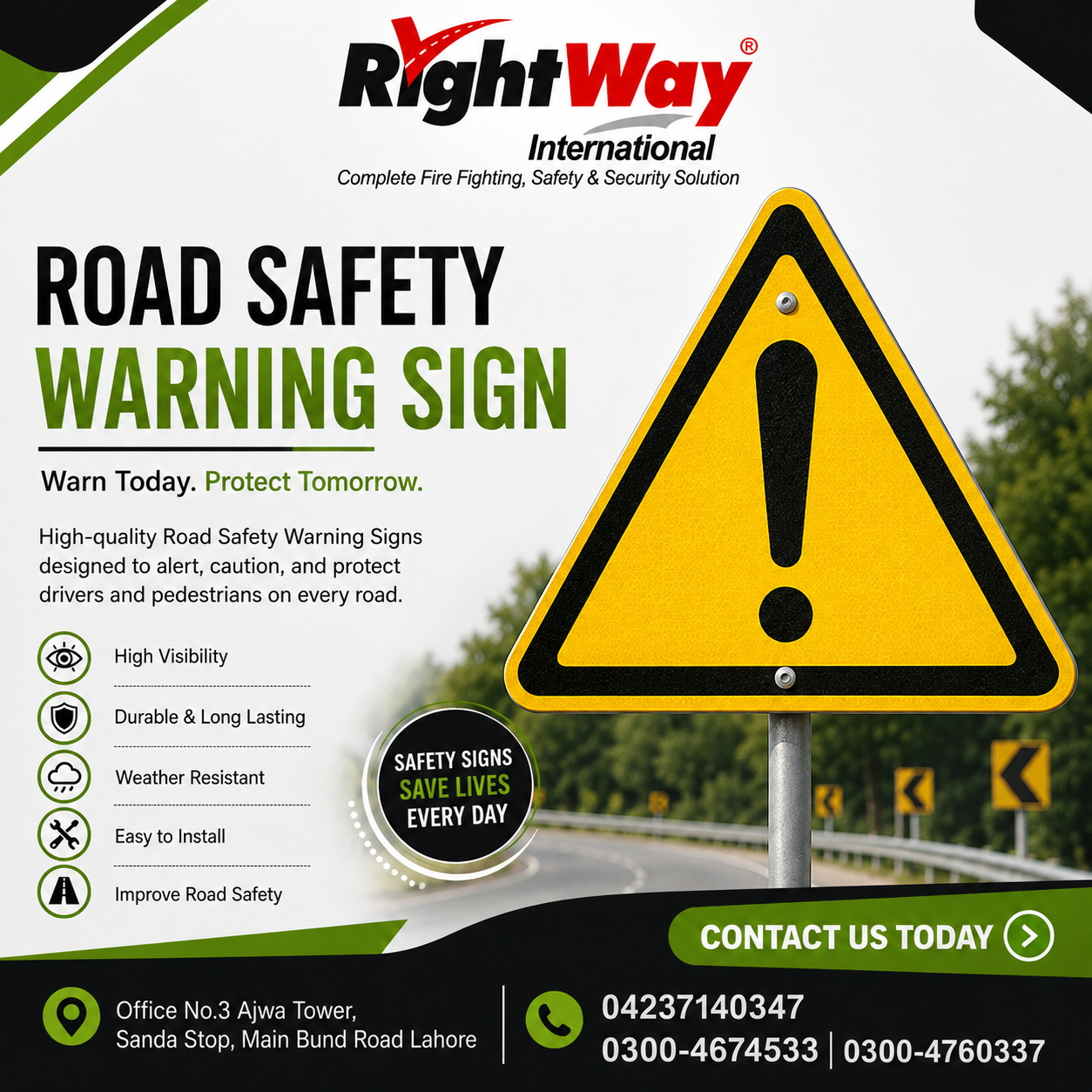
Road Safety Warning Sign: Types Uses Benefits & Buying Guide are important traffic safety devices that alert drivers and other road users about potential hazards ahead. They provide advance information about road conditions, pedestrian areas, sharp turns, construction zones, intersections, and other possible dangers.
Moreover, warning signs help drivers recognize changing road conditions and respond more carefully. Therefore, clear and highly visible road safety warning signs can support safer and more organized traffic movement.
What Is a Road Safety Warning Sign?
A road safety warning sign is a traffic sign that warns road users about a potential hazard, unusual road condition, or changing traffic situation.
For example, warning signs may alert drivers about:
- Sharp turns
- Pedestrian crossings
- School zones
- Speed breakers
- Road construction
- Slippery roads
- Railway crossings
- Animal crossings
- Intersections
- Narrow roads
- Falling rocks
- Uneven roads
Therefore, drivers can receive advance warning and adjust their speed or driving behavior accordingly.
Why Are Road Safety Warning Signs Important?
Unexpected road conditions can create serious risks, especially when drivers do not receive enough warning. Road safety warning signs provide advance visual information, which helps motorists recognize potential hazards earlier.
Furthermore, these signs can help:
- Alert drivers about upcoming hazards
- Improve road awareness
- Encourage safer driving
- Identify dangerous road conditions
- Improve pedestrian awareness
- Support traffic management
- Warn drivers about construction areas
- Improve safety near schools
- Help drivers prepare for road changes
As a result, properly selected and positioned warning signs can contribute to a safer road environment.
Types of Road Safety Warning Signs
1. Curve and Turn Warning Signs
Curve and turn warning signs alert drivers about sharp bends, dangerous curves, or changes in road direction.
Therefore, drivers can reduce speed and prepare for the upcoming road condition.
2. Pedestrian Warning Signs
Pedestrian warning signs alert motorists to areas where pedestrians may cross the road.
Moreover, these signs are commonly used near schools, residential areas, intersections, shopping centers, and busy pedestrian locations.
3. School Zone Warning Signs
School zone warning signs warn drivers about increased pedestrian activity near schools and educational institutions.
As a result, motorists can become more aware of children and other pedestrians.
4. Road Construction Warning Signs
Road construction warning signs alert drivers about maintenance work, construction activity, diversions, or temporary road changes.
Furthermore, these signs help drivers prepare for workers, equipment, and changing traffic conditions.
5. Slippery Road Warning Signs
A slippery road warning sign alerts drivers about road surfaces that may become dangerous in wet or other low-traction conditions.
Therefore, drivers can reduce speed and drive more carefully.
6. Railway Crossing Warning Signs
Railway crossing warning signs provide advance warning that a railway crossing is ahead.
Consequently, drivers can approach the crossing with greater attention and follow the required traffic controls.
7. Speed Breaker Warning Signs
Speed breaker warning signs alert drivers about an upcoming speed breaker or raised road surface.
Moreover, advance warning helps drivers reduce speed before reaching the obstacle.
8. Road Work and Temporary Warning Signs
Temporary road safety warning signs help manage traffic around construction sites, maintenance areas, accidents, and other temporary hazards.
They can provide important guidance while road conditions remain changed.
Where Are Road Safety Warning Signs Used?
Road safety warning signs have many applications. For example, they can be used on:
- Highways
- Motorways
- Urban roads
- Residential streets
- School zones
- Hospital areas
- Construction sites
- Industrial facilities
- Parking areas
- Intersections
- Railway crossings
- Commercial areas
- Private roads
- Housing societies
- Temporary work zones
In particular, warning signs are useful where drivers need advance information about a potential hazard or changing road condition.
Benefits of Road Safety Warning Signs
High-quality road safety warning signs offer several important benefits.
First, they improve driver awareness. A clearly visible sign can give drivers advance notice about potential hazards.
Second, they support safer decision-making. Drivers can adjust their speed and driving behavior after recognizing the warning.
Furthermore, warning signs help organize traffic around construction zones, intersections, pedestrian crossings, and other changing road environments.
In addition, reflective warning signs can improve visibility during nighttime and low-light conditions.
Finally, properly installed warning signs can help create a clearer and more predictable road environment.
Important Features to Consider
When selecting road safety warning signs, consider:
- High visibility
- Clear warning symbols
- Reflective sheeting
- Durable materials
- Weather resistance
- UV resistance
- Corrosion resistance
- Suitable sign size
- Strong mounting system
- Daytime visibility
- Nighttime visibility
- Long service life
- Easy installation
Moreover, select a sign that drivers can recognize from an appropriate distance.
How to Choose the Right Road Safety Warning Sign
1. Identify the Hazard
First, identify the specific road hazard or condition that requires a warning sign.
For example, a pedestrian crossing, sharp turn, construction area, or slippery road requires a different type of warning.
2. Consider Visibility
Next, evaluate the location and lighting conditions.
Furthermore, reflective materials can improve visibility during nighttime and low-light conditions.
3. Choose the Correct Sign Size
Select a suitable sign size according to the road environment and the distance from which approaching drivers need to recognize the warning.
4. Check the Installation Environment
Outdoor signs must withstand rain, dust, sunlight, wind, and temperature changes.
Therefore, choose durable and weather-resistant materials.
5. Use Suitable Mounting Equipment
Finally, select appropriate posts, brackets, anchors, and mounting hardware to keep the sign stable and clearly visible.
Road Safety Warning Signs in Pakistan
Road Safety Warning Signs in Pakistan are useful for highways, roads, construction projects, schools, universities, hospitals, industrial facilities, housing societies, parking areas, and commercial locations.
Moreover, construction companies, businesses, educational institutions, road-management organizations, and industrial facilities can use suitable warning signs to improve awareness about potential hazards.
When purchasing road safety warning signs in Pakistan, consider visibility, material quality, reflective performance, durability, sign size, weather resistance, and mounting requirements.
However, buyers should select the correct sign according to the specific hazard and applicable traffic requirements rather than choosing a design based only on appearance or price.
Road Safety Warning Signs vs Regulatory Signs
Road safety warning signs alert drivers about potential hazards or changing road conditions.
On the other hand, regulatory signs communicate rules, restrictions, or legal requirements, such as speed limits, stopping requirements, or prohibited movements.
Therefore, both types of signs play different but important roles in traffic management.
Installation and Maintenance
Proper installation helps road safety warning signs remain visible and effective.
First, place the sign where approaching drivers can see it clearly. Next, make sure that trees, parked vehicles, advertising boards, or other objects do not block the sign.
Furthermore, inspect warning signs regularly for:
- Fading
- Dirt and dust
- Damaged surfaces
- Reduced reflectivity
- Loose mounting hardware
- Corrosion
- Damaged posts
- Visual obstructions
Consequently, regular maintenance can help keep warning signs visible and easier to recognize.
Best Practices
For effective use of road safety warning signs:
- Install signs where drivers can see them clearly.
- Select the correct sign for the specific hazard.
- Use suitable sign dimensions.
- Consider reflective materials for nighttime visibility.
- Keep signs clean and unobstructed.
- Inspect mounting hardware regularly.
- Replace damaged or severely faded signs.
- Use temporary warning signs for temporary hazards.
- Follow applicable traffic and road-safety requirements.
Frequently Asked Questions
What is a road safety warning sign?
A road safety warning sign alerts drivers and other road users about a potential hazard, changing road condition, or unusual traffic situation ahead.
Where are road safety warning signs used?
They are commonly used on highways, urban roads, school zones, construction areas, residential streets, intersections, industrial facilities, and other locations with potential hazards.
Are road safety warning signs useful at night?
Yes. Reflective warning signs can improve visibility during nighttime and low-light conditions.
What are road safety warning signs made of?
Manufacturers commonly use materials such as aluminum, galvanized metal, reflective sheeting, and other durable weather-resistant materials.
How do I choose the right warning sign?
First, identify the specific hazard. Then, consider visibility, road conditions, sign size, material quality, installation requirements, and applicable traffic standards.
Road Safety Warning Signs provide important advance information about potential hazards and changing road conditions. They can alert drivers about curves, pedestrian crossings, school zones, construction areas, slippery roads, railway crossings, and other road hazards.
Therefore, selecting the right warning sign requires careful consideration of visibility, sign type, material quality, size, reflective performance, installation location, and intended application.
With proper selection, installation, and maintenance, road safety warning signs can improve driver awareness and contribute to a safer, more organized, and predictable road environment.