




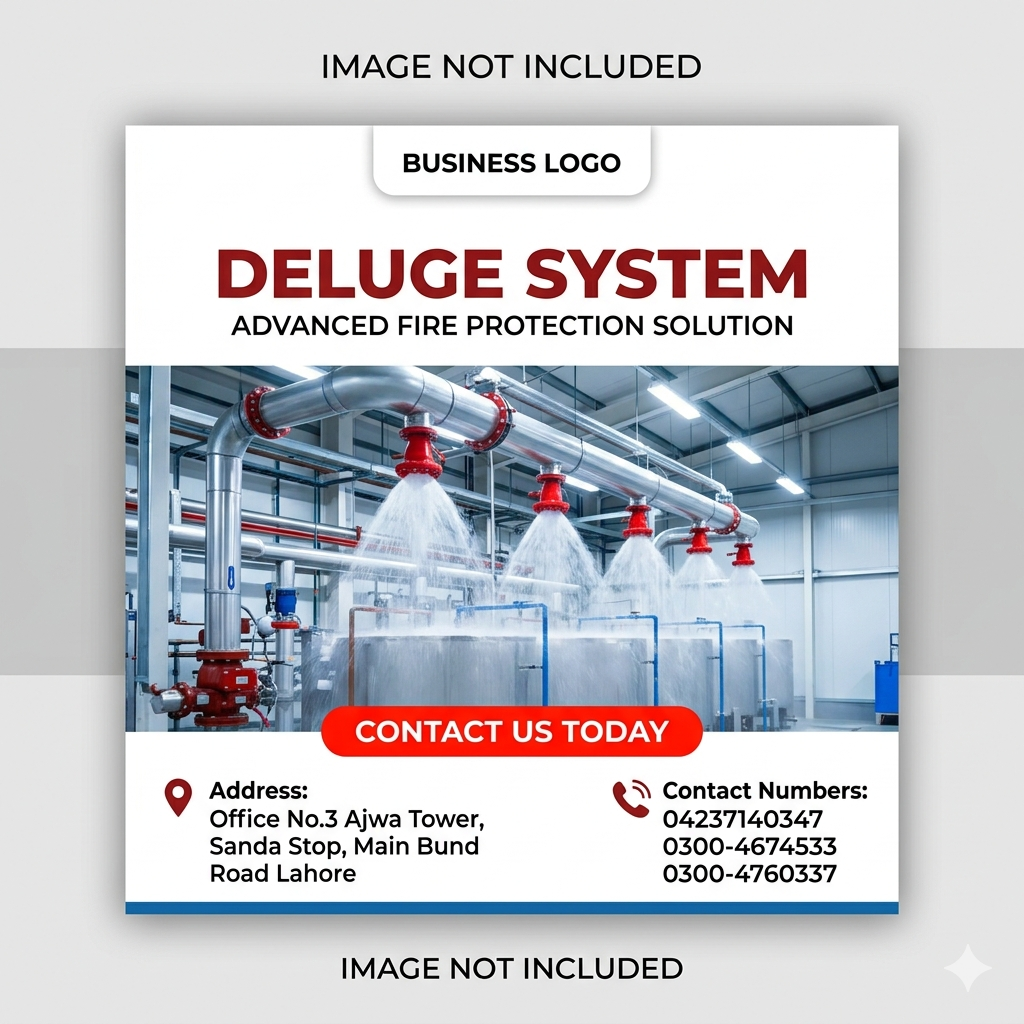
Deluge System Complete Guide to Fire Protection Deluge System is a specialized fire protection and fire suppression system designed to rapidly deliver large volumes of water over a protected area during a fire emergency. Unlike conventional sprinkler systems, all sprinkler nozzles in a deluge system remain open at all times. Water is held back by a deluge valve and is released only when a separate fire detection system activates.
Furthermore, deluge systems are commonly installed in high-hazard industrial environments where fires can spread quickly and cause significant damage. In addition, they are widely used in chemical plants, power generation facilities, aircraft hangars, fuel storage areas, oil and gas facilities, and manufacturing plants. Their ability to provide immediate and widespread water discharge makes them an essential component of modern fire safety infrastructure.
According to fire protection standards established by the National Fire Protection Association (NFPA), deluge systems must be properly designed, installed, tested, inspected, and maintained to ensure reliable operation during fire emergencies.
Benefits of Deluge Systems
1. Rapid Fire Suppression
First, deluge systems provide immediate and large-scale water application once activated. Consequently, they help control rapidly spreading fires before they escalate.
2. Protection of High-Hazard Areas
Moreover, deluge systems are specifically designed for environments with significant fire risks. As a result, they provide enhanced protection for hazardous operations and valuable assets.
3. Full Area Coverage
Additionally, all open nozzles discharge water simultaneously when the system operates. Therefore, the entire protected area receives comprehensive fire suppression coverage.
4. Effective for Flammable Liquid Fires
Furthermore, deluge systems are highly effective in facilities that store or process flammable liquids. Consequently, they help reduce the risk of catastrophic fire events.
5. Fast Response to Fire Emergencies
In addition, integrated fire detection systems activate the deluge valve quickly. Therefore, water discharge begins without waiting for individual sprinkler heads to operate.
6. Equipment and Asset Protection
Unlike localized sprinkler systems, deluge systems can protect large equipment, machinery, and critical infrastructure. As a result, business interruption and financial losses are minimized.
7. Enhanced Life Safety
Most importantly, deluge systems help protect personnel by controlling fire growth and reducing dangerous heat exposure. Consequently, evacuation and emergency response operations become safer.
Uses of Deluge Systems
Deluge systems are widely used in environments where fires can spread rapidly and require immediate suppression.
For example, aircraft hangars utilize deluge systems to protect aircraft, maintenance equipment, and fuel storage areas.
Similarly, oil refineries and petrochemical facilities rely on deluge systems to safeguard processing units and storage tanks. Moreover, power plants use these systems to protect transformers, turbines, and electrical equipment.
In addition, chemical manufacturing plants frequently install deluge systems to minimize fire risks associated with hazardous materials. Meanwhile, offshore platforms, fuel loading racks, LNG facilities, mining operations, and industrial warehouses also use deluge fire protection systems.
Therefore, deluge systems play a critical role in protecting high-risk industrial facilities and ensuring operational continuity.
Benefits of Deluge Systems Compared to Conventional Sprinkler Systems
1. Simultaneous Water Discharge
First, all nozzles operate at the same time. Consequently, fire suppression occurs over a larger area immediately.
2. Superior Protection for High-Risk Facilities
Moreover, deluge systems are designed specifically for severe fire hazards. As a result, they offer greater protection than standard sprinkler systems in critical applications.
3. Faster Area-Wide Fire Control
Additionally, water is distributed throughout the protected zone instantly after activation. Therefore, fire spread is significantly reduced.
4. Flexible Detection Integration
Furthermore, deluge systems can be connected to smoke detectors, heat detectors, flame detectors, and fire alarm systems. Consequently, activation methods can be tailored to facility requirements.
5. Enhanced Industrial Fire Safety
Most importantly, deluge systems support comprehensive fire protection strategies for industrial environments where traditional systems may be insufficient.
Dry Pipe Sprinkler System works:
1. Protection Against Freezing
First, dry pipe systems eliminate the risk of water freezing inside sprinkler pipes. Consequently, they prevent pipe bursts and costly water damage in cold environments.
2. Reliable Fire Suppression
Moreover, dry pipe sprinkler systems provide dependable fire protection in areas where wet pipe systems cannot operate safely. As a result, they ensure continuous fire safety coverage.
3. Reduced Risk of Accidental Water Damage
Additionally, since water is not stored within the piping network, accidental leaks caused by damaged pipes are minimized. Therefore, property protection is enhanced.
4. Suitable for Cold Storage Facilities
Furthermore, dry pipe systems are ideal for refrigerated warehouses, freezer rooms, and temperature-controlled storage areas. Consequently, they are widely used in food processing and logistics industries.
5. Compliance with Fire Safety Regulations
In addition, dry pipe sprinkler systems help facilities meet fire protection requirements in environments exposed to freezing conditions. Therefore, they support regulatory compliance and risk management.
6. Long-Term Infrastructure Protection
Unlike water-filled systems exposed to freezing temperatures, dry pipe systems protect sprinkler piping from ice-related damage. As a result, system longevity is improved.
7. Enhanced Property and Life Safety
Most importantly, dry pipe sprinkler systems provide effective fire control that helps protect occupants, assets, and operations. Consequently, they reduce the impact of fire emergencies and improve overall safety.
How a Deluge System Works
First, the piping network remains empty of water under normal operating conditions.
Next, a deluge valve prevents water from entering the system piping.
Then, a fire detection device such as a smoke detector, heat detector, or flame detector identifies fire conditions.
Afterward, the detection system sends a signal to activate the deluge valve.
Consequently, the valve opens and allows water to enter the piping network.
The water then flows through all open nozzles simultaneously.
As a result, large volumes of water are discharged across the protected area.
Finally, the fire is controlled, suppressed, or extinguished, reducing property damage and protecting personnel.
Components of a Deluge System
A typical deluge fire protection system includes:
- Water Supply Source
- Deluge Valve
- Fire Detection System
- Fire Alarm Control Panel
- Open Spray Nozzles
- Sprinkler Piping Network
- Water Flow Switches
- Pressure Gauges
- Manual Release Station
- Control Valves
- Fire Department Connection (FDC)
- Alarm Devices
- Supervisory Devices
- Emergency Shutdown Controls
Together, these components ensure rapid and effective fire suppression during emergency situations.
Maintenance Requirements
Regular inspection, testing, and maintenance are essential to ensure reliable operation.
Maintenance activities typically include:
- Inspecting deluge valves
- Testing fire detection devices
- Verifying alarm system operation
- Checking water supply availability
- Inspecting open nozzles for blockage
- Testing manual release stations
- Verifying control valve positions
- Conducting full functional system tests
- Inspecting piping for corrosion and damage
- Testing water flow switches
- Checking pressure gauges
- Reviewing system documentation
Routine maintenance helps maintain compliance with fire protection standards and ensures dependable emergency response.
Advantages of Deluge Systems
Deluge systems offer several advantages for high-hazard environments:
- Rapid fire suppression
- Large-area water coverage
- Effective protection of flammable liquid hazards
- Immediate system activation
- Enhanced personnel safety
- Reduced property damage
- Protection of critical industrial assets
- Integration with advanced fire detection systems
- Improved regulatory compliance
- Reliable emergency response
However, deluge systems may require more complex design, installation, and maintenance than conventional wet pipe sprinkler systems.
Applications of Deluge Fire Protection Systems
Common applications include:
- Aircraft Hangars
- Oil Refineries
- Petrochemical Plants
- Power Generation Facilities
- Chemical Processing Plants
- Fuel Storage Terminals
- LNG Facilities
- Offshore Platforms
- Mining Operations
- Transformer Protection Systems
- Conveyor Systems
- Industrial Manufacturing Plants
- Hazardous Material Storage Areas
- Loading Racks
- Marine Facilities
In conclusion, a Deluge System is one of the most effective fire protection solutions for high-hazard industrial environments. Furthermore, its ability to rapidly discharge large volumes of water across an entire protected area makes it ideal for facilities where fires can spread quickly and cause severe damage.
Ultimately, installing a properly designed and maintained deluge system enhances fire safety, protects valuable assets, safeguards personnel, and ensures compliance with fire protection standards. Therefore, it remains a trusted fire suppression solution for industries requiring the highest level of fire protection.