




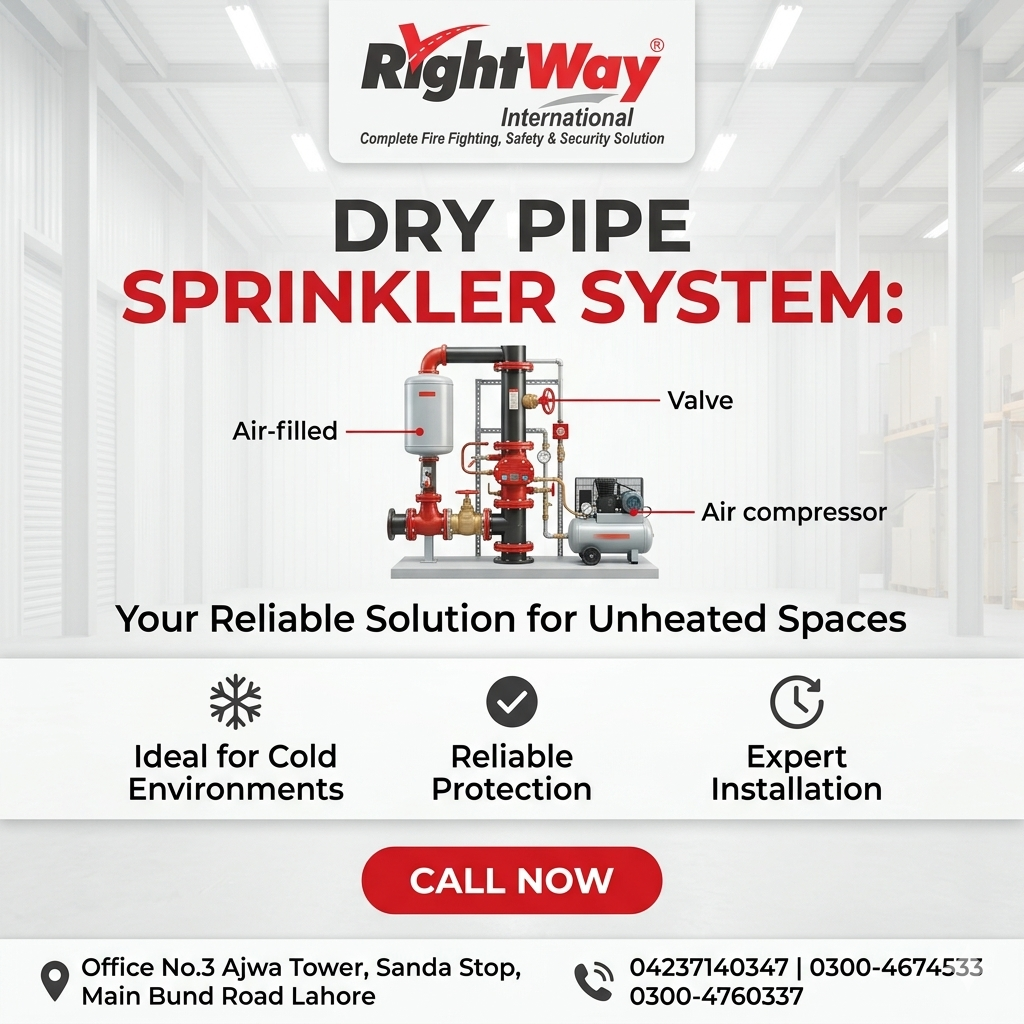
Dry Pipe Sprinkler System is a specialized fire suppression system designed for areas where water-filled pipes may freeze due to low temperatures. Unlike wet pipe sprinkler systems, dry pipe systems contain pressurized air or nitrogen inside the piping network instead of water. As a result, they prevent pipe freezing while still providing effective fire protection when a sprinkler head activates.
Furthermore, dry pipe sprinkler systems are commonly installed in unheated warehouses, parking garages, loading docks, cold storage facilities, attics, and industrial buildings. In addition, they are widely used in regions that experience freezing weather conditions, where traditional wet pipe systems may not be suitable. Their ability to protect both property and sprinkler infrastructure makes them a valuable component of modern fire safety systems.
According to fire protection standards established by the National Fire Protection Association (NFPA), dry pipe sprinkler systems must be properly designed, installed, inspected, and maintained to ensure reliable performance during fire emergencies.
Benefits of Dry Pipe Sprinkler Systems
1. Protection Against Freezing
First, dry pipe systems eliminate the risk of water freezing inside sprinkler pipes. Consequently, they prevent pipe bursts and costly water damage in cold environments.
2. Reliable Fire Suppression
Moreover, dry pipe sprinkler systems provide dependable fire protection in areas where wet pipe systems cannot operate safely. As a result, they ensure continuous fire safety coverage.
3. Reduced Risk of Accidental Water Damage
Additionally, since water is not stored within the piping network, accidental leaks caused by damaged pipes are minimized. Therefore, property protection is enhanced.
4. Suitable for Cold Storage Facilities
Furthermore, dry pipe systems are ideal for refrigerated warehouses, freezer rooms, and temperature-controlled storage areas. Consequently, they are widely used in food processing and logistics industries.
5. Compliance with Fire Safety Regulations
In addition, dry pipe sprinkler systems help facilities meet fire protection requirements in environments exposed to freezing conditions. Therefore, they support regulatory compliance and risk management.
6. Long-Term Infrastructure Protection
Unlike water-filled systems exposed to freezing temperatures, dry pipe systems protect sprinkler piping from ice-related damage. As a result, system longevity is improved.
7. Enhanced Property and Life Safety
Most importantly, dry pipe sprinkler systems provide effective fire control that helps protect occupants, assets, and operations. Consequently, they reduce the impact of fire emergencies and improve overall safety.
Uses of Dry Pipe Sprinkler Systems
Dry pipe sprinkler systems are used in a variety of environments where freezing temperatures may occur. For example, parking garages often utilize dry pipe systems because they are exposed to outdoor weather conditions.
Similarly, loading docks and shipping areas rely on dry pipe protection to maintain fire safety throughout the year. Moreover, refrigerated warehouses and cold storage facilities use these systems to prevent frozen sprinkler pipes.
In addition, industrial plants, aircraft hangars, attics, outdoor canopies, and unheated storage buildings frequently install dry pipe sprinkler systems. Meanwhile, distribution centers and logistics facilities use them to safeguard inventory and equipment.
Therefore, dry pipe sprinkler systems play a critical role in protecting facilities where temperature fluctuations make wet pipe systems impractical.
Benefits of Wet Pipe Sprinkler Systems
1. Immediate Fire Suppression
First, wet pipe sprinkler systems provide an instant response to fire emergencies. Consequently, water is discharged immediately from activated sprinkler heads, helping control the fire in its early stages.
2. High Reliability
Moreover, wet pipe systems have fewer mechanical components than other sprinkler systems. As a result, they are highly reliable and less prone to operational failures.
3. Cost-Effective Installation
Additionally, wet pipe sprinkler systems are generally less expensive to install and maintain compared to dry pipe or pre-action systems. Therefore, they offer an economical fire protection solution.
4. Reduced Property Damage
Furthermore, early fire suppression helps limit the spread of flames and smoke. Consequently, property damage and repair costs are significantly reduced.
5. Simple Design and Maintenance
Unlike more complex fire suppression systems, wet pipe sprinkler systems have a straightforward design. Therefore, routine inspection and maintenance are easier and more cost-effective.
6. Continuous Readiness
In addition, water remains inside the piping network at all times. As a result, the system is always ready to respond immediately when a fire occurs.
7. Enhanced Life Safety
Most importantly, wet pipe sprinkler systems protect occupants by controlling fire growth and reducing hazardous smoke conditions. Consequently, they improve evacuation safety and reduce the risk of injuries and fatalities.
How a Dry Pipe Sprinkler System Works
First, the sprinkler piping network is filled with pressurized air or nitrogen instead of water.
Next, a dry pipe valve holds back water at the system riser while maintaining air pressure inside the pipes.
Then, when a fire generates sufficient heat, the nearest sprinkler head activates and opens.
Afterward, the pressurized air escapes through the open sprinkler head, causing the system pressure to drop.
Consequently, the dry pipe valve opens and allows water to flow into the piping network.
The water then travels to the activated sprinkler head and discharges onto the fire.
Finally, the fire is controlled or extinguished, reducing property damage and enhancing occupant safety.
Components of a Dry Pipe Sprinkler System
A typical dry pipe sprinkler system includes:
- Water Supply Source
- Dry Pipe Valve
- Air Compressor or Nitrogen Generator
- Sprinkler Piping Network
- Automatic Sprinkler Heads
- Alarm Devices
- Control Valves
- Pressure Gauges
- Water Flow Switches
- Fire Department Connection (FDC)
Together, these components ensure effective fire suppression while preventing freezing-related damage.
Maintenance Requirements
Regular inspection and testing are essential to maintain system performance. Maintenance activities typically include:
- Inspecting dry pipe valves
- Checking air or nitrogen pressure levels
- Testing alarm devices
- Inspecting sprinkler heads
- Draining low-point condensate collections
- Verifying compressor operation
- Conducting periodic trip tests
- Inspecting piping for corrosion and damage
Routine maintenance helps ensure compliance with fire protection standards and reliable emergency operation.
Advantages Over Wet Pipe Systems
Dry pipe systems offer several advantages in freezing environments:
- Prevent pipe freezing and bursting
- Suitable for cold-weather applications
- Protect unheated structures
- Reduce freeze-related maintenance costs
- Extend sprinkler system lifespan in low-temperature areas
However, they may have slightly slower water delivery times and higher installation costs compared to wet pipe systems.
In conclusion, a Dry Pipe Sprinkler System is an essential fire protection solution for buildings exposed to freezing temperatures. Furthermore, its ability to prevent pipe freezing while delivering reliable fire suppression makes it ideal for warehouses, parking garages, cold storage facilities, and industrial applications.
Ultimately, installing a properly designed and maintained dry pipe sprinkler system enhances fire safety, protects valuable assets, and ensures compliance with fire protection standards. Therefore, it remains a trusted choice for facilities operating in cold and challenging environments.