




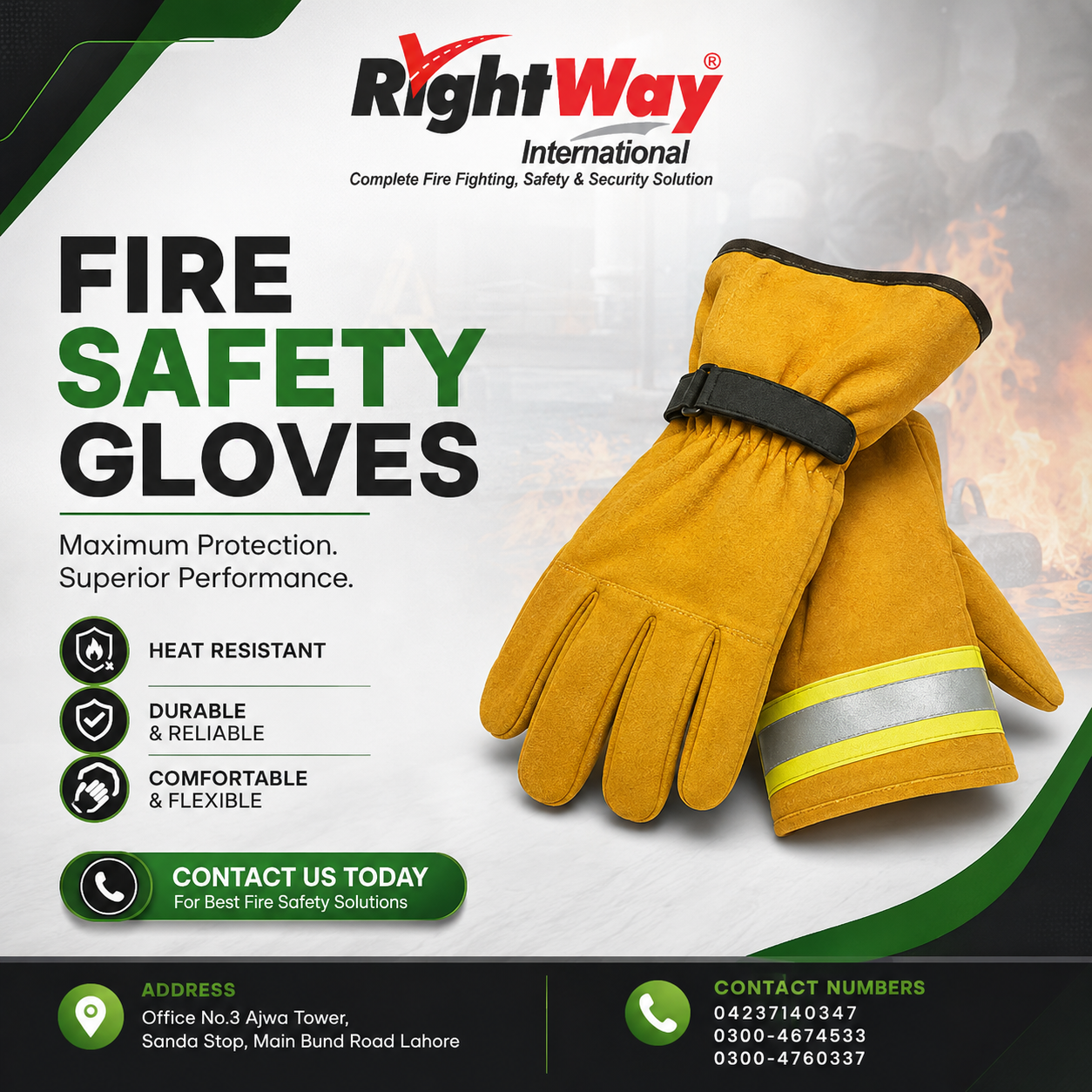
Fire Fighting Gloves: Types Uses Benefits & Buying Guide are an essential part of firefighter personal protective equipment (PPE). They help protect firefighters’ hands from extreme heat, flames, radiant heat, sparks, hot materials, sharp edges, abrasion, and other hazards encountered during firefighting and rescue operations. Moreover, properly designed firefighter gloves can provide protection while maintaining the dexterity needed to handle hoses, tools, equipment, and other firefighting gear.
Modern fire fighting gloves use combinations of heat-resistant, flame-resistant, cut-resistant, abrasion-resistant, and durable materials. In addition, many gloves include multi-layer construction, reinforced palms and fingers, extended cuffs or gauntlets, moisture barriers, thermal insulation, and ergonomic designs. As a result, these features can improve protection, comfort, grip, durability, and hand mobility during emergency operations.
For professional structural and proximity firefighting, glove requirements are addressed within NFPA 1970, which includes requirements for protective ensembles and their elements, including gloves. NFPA materials also identify glove construction and performance considerations such as thermal protection and resistance to heat-related damage.
Fire departments should select firefighter gloves according to the hazards, firefighting activity, applicable standards, certification, and compatibility with the rest of the protective ensemble.
Types of Fire Fighting Gloves
Different emergency situations require different types of protective hand protection. Therefore, firefighters and safety professionals should select gloves according to the intended application.
Structural Fire Fighting Gloves
Structural fire fighting gloves are designed for firefighters working during building fires and other high-temperature emergencies. In particular, they are intended to provide protection against heat, flames, hot surfaces, abrasion, impact, and other hazards associated with structural firefighting.
These gloves commonly feature multiple protective layers and extended cuffs or gauntlets to help provide coverage around the wrist and hand.
Wildland Fire Fighting Gloves
Wildland fire fighting gloves are designed for outdoor firefighting activities such as forest, grassland, brush, and wildfire operations.
Because wildland firefighters may work for extended periods, glove designs often focus on a balance between heat protection, durability, flexibility, grip, and comfort.
Industrial Fire Fighting Gloves
Industrial fire fighting gloves are used in factories, warehouses, oil and gas facilities, chemical plants, power plants, and other industrial environments.
Depending on the application, industrial gloves may provide protection against heat, sparks, abrasion, cuts, mechanical hazards, and other workplace risks.
Rescue Gloves
Rescue gloves are designed for emergency rescue and recovery operations. For example, firefighters and rescue teams may use specialized gloves when handling tools, debris, sharp materials, vehicles, or other challenging environments.
The required protection depends on the specific rescue activity and applicable safety requirements.
Proximity Fire Fighting Gloves
Proximity fire fighting gloves are intended for specialized firefighting environments involving significant radiant heat exposure. Therefore, users should select gloves specifically designed, tested, and certified for the intended proximity firefighting application rather than relying on ordinary work gloves.
Uses of Fire Fighting Gloves
A fire fighting glove serves several important purposes during firefighting and emergency operations. Most importantly, it helps protect the hands from:
- Extreme heat and thermal exposure
- Flames and fire
- Radiant heat
- Sparks and hot particles
- Hot surfaces and materials
- Abrasion
- Certain cuts and mechanical hazards
- Impact hazards
- Debris during rescue operations
- Other application-specific workplace hazards
In addition, firefighters use gloves as part of a complete PPE system. They may wear them with fire fighting suits, fire safety helmets, fire fighting boots, SCBA equipment, hoods, face protection, and other protective equipment.
Benefits of Fire Fighting Gloves
High-quality firefighter safety gloves provide several important benefits. Therefore, selecting appropriate gloves can improve hand protection and support safer emergency operations.
Heat and Flame Protection
The primary purpose of many fire fighting gloves is to help protect the hands from heat and flame exposure. Protective glove construction can reduce heat transfer under specified test conditions.
For professional firefighting, buyers should review the applicable certification and manufacturer performance information rather than assuming that every fire-resistant glove provides the same level of protection.
Thermal Protection
Firefighters may encounter intense thermal conditions during structural and proximity firefighting. For this reason, suitable gloves use protective materials and layered construction designed for their intended application.
NFPA documentation describes thermal performance testing for firefighting gloves, including evaluation of heat transmission through the glove composite.
Cut and Abrasion Resistance
Firefighters frequently handle tools, hoses, equipment, metal components, debris, and other materials. Consequently, appropriate glove construction can help provide protection against abrasion and certain mechanical hazards.
However, the exact level of cut or abrasion protection depends on the glove’s design, certification, and intended application.
Grip and Dexterity
Firefighters need to operate equipment while wearing protective gloves. Therefore, good fire fighting gloves should provide an appropriate balance between protection, grip, flexibility, and dexterity.
A properly designed glove can help firefighters handle hoses, tools, valves, rescue equipment, and other essential equipment more effectively.
Wrist and Forearm Protection
Many firefighting gloves include extended cuffs or gauntlets. As a result, they can provide additional coverage around the wrist and help create a better interface with the firefighter’s protective coat and other PPE.
Durability
Firefighting environments can place significant stress on protective equipment. Furthermore, durable materials, reinforced construction, and proper care can help maintain glove performance throughout the product’s intended service life.
Fire Fighting Glove Materials
Manufacturers use different materials to produce firefighter gloves, depending on the intended application and required protection level.
Common materials and components may include:
- Heat-resistant materials
- Flame-resistant materials
- Aramid fibers
- High-performance protective textiles
- Leather
- Moisture barriers
- Thermal insulation layers
- Impact-resistant components
- Reinforced palm materials
- Cut-resistant materials
- Heat-resistant stitching
- Protective wrist and cuff materials
However, the exact material construction varies between manufacturers and glove models. Therefore, buyers should always review the manufacturer’s technical specifications and certification information before purchasing.
Fire Fighting Gloves Standards
Safety standards play an important role when selecting fire fighting gloves.
For structural and proximity firefighting, NFPA 1970 is an important current NFPA standard covering protective ensembles and ensemble elements, including gloves. NFPA’s published material identifies gloves as an element covered by the standard and specifies requirements relating to construction, performance, testing, and certification.
For other applications, different standards may apply. For example, wildland firefighting, technical rescue, industrial work, and emergency medical operations can have different PPE requirements.
Therefore, do not choose firefighter gloves based only on appearance or price. Instead, evaluate:
- Applicable safety standard
- Certification
- Intended firefighting application
- Thermal protection
- Mechanical protection
- Material construction
- Glove length and coverage
- Dexterity
- Grip
- Comfort
- Compatibility with other PPE
- Manufacturer instructions
Fire Fighting Gloves Buying Guide
When choosing fire fighting gloves, consider the following factors:
1. Identify the Application
First, determine where and how the gloves will be used. For example, structural firefighting, wildland firefighting, industrial firefighting, proximity firefighting, and technical rescue may require different glove characteristics.
2. Check Safety Standards
Next, check the relevant fire fighting glove standards and certifications. Make sure the product is certified for the intended application where certification is required.
3. Consider Heat Protection
Evaluate the glove’s thermal and flame protection according to the expected working environment. Most importantly, do not assume that a general heat-resistant glove is suitable for structural firefighting.
4. Check Material and Construction
Review the glove’s outer shell, thermal barrier, moisture barrier, lining, palm reinforcement, stitching, and cuff construction.
A multi-layer design may provide different forms of protection while maintaining the flexibility needed for firefighting tasks.
5. Consider Fit and Comfort
Firefighters may wear gloves for extended periods. Therefore, consider glove size, weight, flexibility, internal lining, cuff design, and overall fit.
A properly fitted glove should provide protection without unnecessarily restricting hand movement.
6. Evaluate Grip and Dexterity
Firefighters must operate equipment while wearing gloves. Furthermore, check whether the glove allows sufficient finger movement and grip for hoses, tools, valves, rescue equipment, and other tasks.
7. Check Compatibility With Other PPE
Fire fighting gloves should work properly with other protective equipment such as:
- Fire fighting suits
- Fire safety helmets
- Fire fighting boots
- SCBA masks
- Protective hoods
- Face shields
- Communication equipment
As a result, checking PPE compatibility before purchase can help prevent gaps or interference between protective components.
8. Consider Durability and Maintenance
Finally, select gloves designed for the expected working conditions. At the same time, follow the manufacturer’s instructions for cleaning, inspection, drying, storage, and replacement.
Regular inspection is important because damaged, contaminated, excessively worn, or otherwise compromised PPE may not provide its expected protective performance.
Fire Fighting Gloves in Pakistan
If you need fire fighting gloves in Pakistan, select the product according to your workplace hazards and required protection level.
Fire departments, factories, warehouses, construction companies, oil and gas facilities, chemical plants, power plants, and industrial organizations should carefully evaluate glove specifications before purchasing.
In addition, check the product’s certification, material, thermal protection, size, comfort, grip, durability, cuff design, and compatibility with other PPE.
Proper storage is also important. Furthermore, follow the manufacturer’s recommendations regarding cleaning, drying, chemicals, heat, sunlight, and storage conditions to help maintain the gloves’ protective performance.
Frequently Asked Questions
What are fire fighting gloves?
Fire fighting gloves are protective gloves designed for firefighters and emergency responders. They help protect the hands against hazards such as heat, flames, sparks, hot materials, abrasion, and other application-specific risks.
What are fire fighting gloves made of?
Firefighter gloves can be manufactured using heat-resistant textiles, aramid fibers, leather, protective polymers, moisture barriers, thermal insulation, reinforced materials, and other specialized components.
The exact construction depends on the manufacturer, model, intended application, and applicable safety standard.
Where are fire fighting gloves used?
Fire fighting gloves are used in fire departments, industrial facilities, factories, warehouses, oil and gas plants, chemical facilities, power plants, construction environments, rescue operations, and other emergency response applications.
What is the difference between fire fighting gloves and regular work gloves?
Regular work gloves are generally designed for everyday workplace hazards such as abrasion, handling, or mechanical protection. In contrast, professional firefighting gloves are designed and tested for the specific hazards and performance requirements of their intended firefighting application.
Are fire fighting gloves heat resistant?
Yes, appropriate firefighting gloves are designed to provide thermal protection for their intended application. However, the level of protection varies by glove type, construction, certification, and testing requirements.
How do I choose fire fighting gloves?
When choosing fire fighting gloves, consider the intended application, applicable safety standards, certification, thermal protection, materials, durability, grip, dexterity, comfort, size, cuff coverage, and compatibility with other PPE.
Why are firefighter gloves important?
Firefighter gloves provide an essential layer of hand protection during dangerous firefighting and rescue operations. They help firefighters perform critical tasks while reducing exposure to heat, flames, sparks, abrasion, and other hazards.
Fire Safety Helmet
Types of Fire Safety Helmets
Different firefighting situations require different types of protective helmets. Therefore, firefighters and safety professionals should select the appropriate helmet according to the working environment. Common types include:
Structural Firefighting Helmets
Structural firefighting helmets protect firefighters working during building fires and other high-heat emergencies. In particular, these helmets help protect against heat, flames, falling debris, impact, and other hazards associated with structural firefighting. READ MORE