




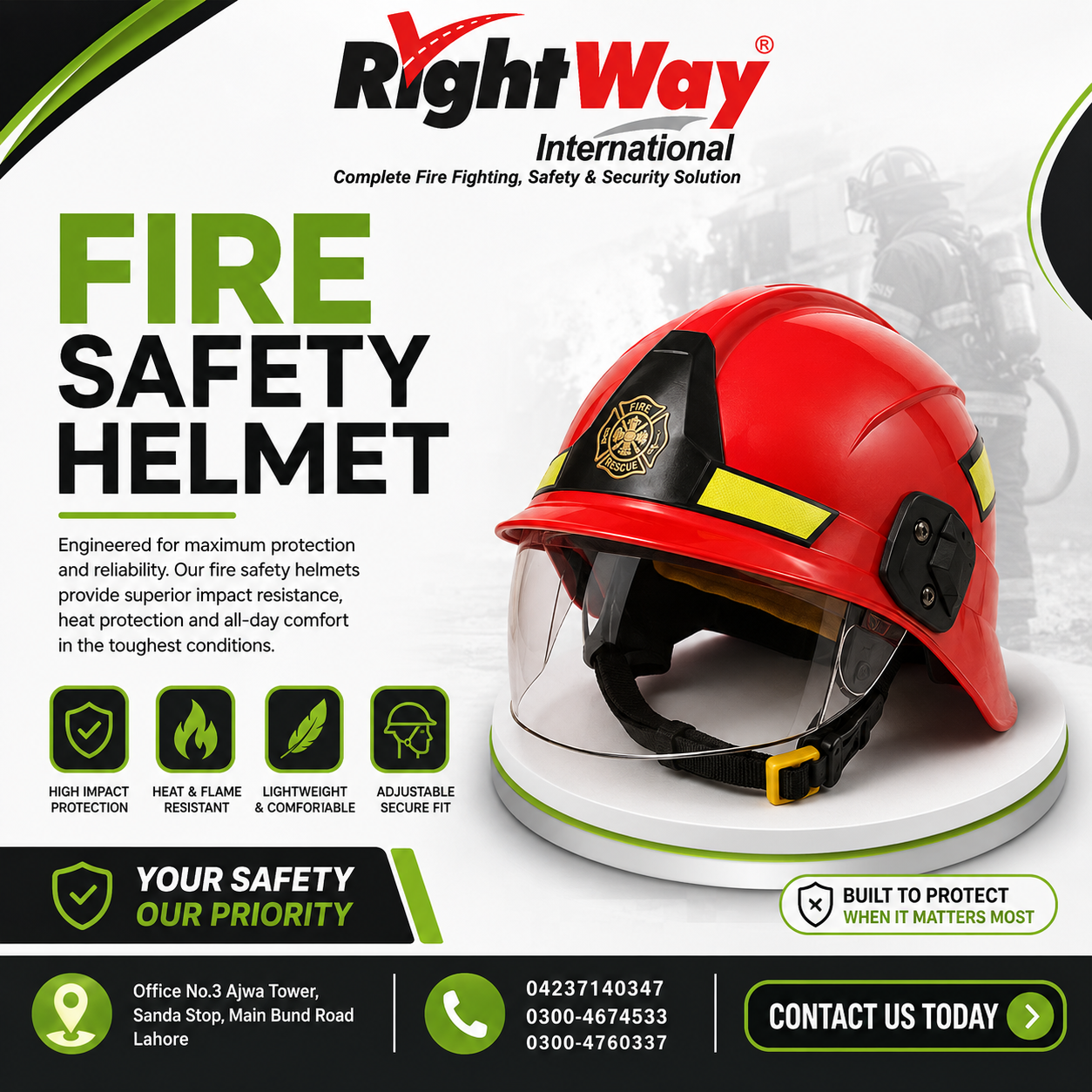
fire safety helmet protects firefighters and emergency responders from falling objects, extreme heat, flames, sparks, and other hazards during firefighting and rescue operations. Moreover, it forms an essential part of firefighter personal protective equipment (PPE) and helps protect the head, face, neck, and eyes during dangerous situations.
Modern fire safety helmets use strong, heat-resistant, and impact-resistant materials. In addition, many helmets feature protective visors, face shields, neck protection, chin straps, adjustable suspension systems, and reflective elements. As a result, these features improve protection, comfort, visibility, and stability during emergency operations. as per National Fire Protection Association Standers
Firefighters use these helmets in many workplaces. For example, common locations include fire departments, factories, warehouses, oil and gas plants, chemical facilities, construction sites, power plants, and other industrial facilities. Furthermore, emergency response teams rely on firefighter helmets when responding to fires, explosions, rescue operations, and other workplace emergencies.
According to the National Fire Protection Association (NFPA), firefighters should select helmets according to the type of firefighting activity, workplace hazards, and required protection level. Therefore, buyers should choose a helmet that suits the intended application and works properly with other compatible PPE.
Types of Fire Safety Helmets
Different firefighting situations require different types of protective helmets. Therefore, firefighters and safety professionals should select the appropriate helmet according to the working environment. Common types include:
Structural Firefighting Helmets
Structural firefighting helmets protect firefighters working during building fires and other high-heat emergencies. In particular, these helmets help protect against heat, flames, falling debris, impact, and other hazards associated with structural firefighting.
Wildland Firefighting Helmets
Wildland firefighting helmets protect firefighters working in forests, grasslands, and outdoor fire environments. Additionally, their lightweight designs can support mobility and comfort during extended outdoor firefighting operations.
Industrial Fire Safety Helmets
Industrial fire safety helmets provide protection in factories, warehouses, oil and gas facilities, chemical plants, and other industrial workplaces. Depending on the design and certification, these helmets can help protect against impact, heat, sparks, and other workplace hazards.
Rescue Helmets
Rescue helmets support emergency rescue operations in challenging environments. For example, firefighters, rescue workers, and emergency response teams may use them during various rescue and recovery activities.
Uses of Fire Safety Helmets
A fire safety helmet serves several important purposes during firefighting and emergency operations. Most importantly, it helps protect the head from:
- Extreme heat and thermal exposure
- Flames and fire
- Falling objects and debris
- Impact hazards
- Sparks and hot particles
- Radiant heat
- Certain environmental hazards
- Head injuries during rescue operations
In addition, firefighters use helmets as part of a complete PPE system. They may wear them with fire fighting suits, fire safety gloves, fire fighting boots, SCBA equipment, face shields, and other protective equipment.
Benefits of Fire Safety Helmets
A high-quality firefighter safety helmet provides several important benefits. Therefore, selecting the right helmet can improve protection and support safer emergency operations.
Head Protection
The primary purpose of a fire helmet is to protect the firefighter’s head from impact, falling debris, heat, and other hazards. As a result, a suitable helmet can provide an important layer of protection during dangerous operations.
Heat and Flame Protection
Firefighting environments can expose workers to intense heat and flames. For this reason, suitable helmets use protective materials and designs that help manage thermal exposure according to the intended firefighting application.
Face and Eye Protection
Many modern fire safety helmets include visors or face shields. Consequently, these components can help protect the face and eyes from heat, sparks, debris, and other hazards.
Comfortable Fit
An adjustable suspension system and chin strap help keep the helmet securely positioned. At the same time, a proper fit allows firefighters to move more comfortably during emergency operations.
Durability
Manufacturers design firefighter helmets with durable materials for demanding working environments. Furthermore, regular inspection and proper maintenance can help maintain the helmet’s protective performance throughout its service life.
Fire Safety Helmet Materials
Manufacturers use different materials to produce firefighter helmets, depending on the helmet design, application, and required protection level.
Common materials may include:
- Heat-resistant thermoplastics
- High-temperature polymers
- Impact-resistant materials
- Flame-resistant components
- Protective visor materials
- Heat-resistant textiles for neck protection
However, the exact material and construction should match the applicable safety standard and intended firefighting application. Therefore, buyers should always review the manufacturer’s specifications before purchasing a helmet.
Fire Safety Helmet Standards
Safety standards play an important role when purchasing a fire safety helmet. However, the applicable requirements can vary depending on the country, workplace, firefighting activity, and type of PPE.
For professional firefighting applications, buyers should check the applicable NFPA standards, certification requirements, manufacturer specifications, and local workplace safety requirements. In addition, they should verify that the helmet suits the hazards firefighters may encounter.
Therefore, do not select a helmet based only on appearance or price. Instead, evaluate its protection level, certification, construction, comfort, and compatibility with other PPE.
Fire Safety Helmet Buying Guide
When choosing a fire safety helmet, consider the following factors:
1. Protection Level
First, identify the hazards and firefighting activities where you will use the helmet. For example, structural firefighting, industrial firefighting, wildland firefighting, and rescue operations may require different protection characteristics.
2. Safety Standards
Next, check the relevant fire helmet safety standards and certifications. Most importantly, make sure the product meets the requirements applicable to your workplace and intended use.
3. Material and Construction
Choose a helmet made from durable, heat-resistant, and impact-resistant materials suitable for the working environment. Additionally, review the manufacturer’s information about construction and protective performance.
4. Comfort and Fit
Firefighters may need to wear helmets for extended periods. Therefore, consider the helmet’s weight, adjustable suspension, padding, chin strap, and overall fit.
5. Visor and Face Protection
If your application requires face and eye protection, check whether the helmet includes a suitable visor or face shield. Furthermore, make sure these components work correctly with other PPE.
6. Compatibility With Other PPE
The helmet should work properly with other equipment such as SCBA masks, fire fighting suits, gloves, boots, hearing protection, and communication equipment. As a result, checking compatibility before purchase can help prevent problems during emergency operations.
7. Durability and Maintenance
Finally, choose equipment that can withstand the expected working conditions. At the same time, follow the manufacturer’s cleaning, inspection, storage, and maintenance instructions to help maintain the helmet’s protective performance.
Fire Safety Helmet in Pakistan
If you need a fire safety helmet in Pakistan, select the product according to your workplace hazards and required protection level. For example, fire departments, factories, warehouses, construction companies, oil and gas facilities, and industrial organizations should carefully evaluate helmet specifications before purchasing.
In addition, always check the product’s certification, material, size, comfort, compatibility, and manufacturer instructions. Regular inspection also plays an important role because damaged or heavily worn protective equipment may not provide the expected level of protection.
Store the helmet in a clean, dry location away from unnecessary heat, chemicals, and direct sunlight when the manufacturer recommends these precautions. Furthermore, proper care can help maintain its protective performance and serviceability.
Frequently Asked Questions
What is a fire safety helmet?
A fire safety helmet is protective headgear designed to help protect firefighters and emergency responders from heat, flames, impact, falling debris, sparks, and other hazards. Therefore, it plays an important role in a firefighter’s overall PPE system.
What is a fire safety helmet made of?
A firefighter helmet may use heat-resistant thermoplastics, high-temperature polymers, impact-resistant materials, and other protective components. However, the exact construction depends on the helmet design, manufacturer, and applicable safety standard.
Where are fire safety helmets used?
Fire safety helmets are used in fire departments, factories, warehouses, oil and gas plants, chemical facilities, power plants, construction sites, and other industrial and emergency response environments. In addition, specialized helmets support wildland firefighting and rescue operations.
What is the difference between a fire helmet and a safety helmet?
A standard industrial safety helmet primarily protects against workplace impact and falling objects. In contrast, a firefighting helmet is specifically designed to provide additional protection against firefighting hazards such as extreme heat, flames, sparks, and thermal exposure.
How do I choose a fire safety helmet?
When choosing a fire safety helmet, consider the protection level, safety standards, certification, material, weight, comfort, size, visor, durability, and compatibility with other PPE. Furthermore, always select a helmet according to the specific hazards and requirements of the intended application.
Why is a firefighter helmet important?
A firefighter helmet provides essential head protection during firefighting and emergency operations. Moreover, it forms an important part of a complete firefighter PPE system and helps reduce exposure to impact, heat, flames, sparks, and falling debris.
Fire Fighting Suit
What is a fire fighting suit?
A fire fighting suit protects firefighters from heat, flames, sparks, and other firefighting hazards.
What is a fire fighting suit made of?
Manufacturers use flame-resistant and heat-resistant materials to make these suits. Many designs use multiple protective layers.
Where are fire fighting suits used?
Fire departments, factories, warehouses, oil and gas plants, and industrial sites use these suits.
How do I choose a fire fighting suit?
Consider the protection level, material, comfort, durability, size, safety standards, and PPE compatibility. Read More