




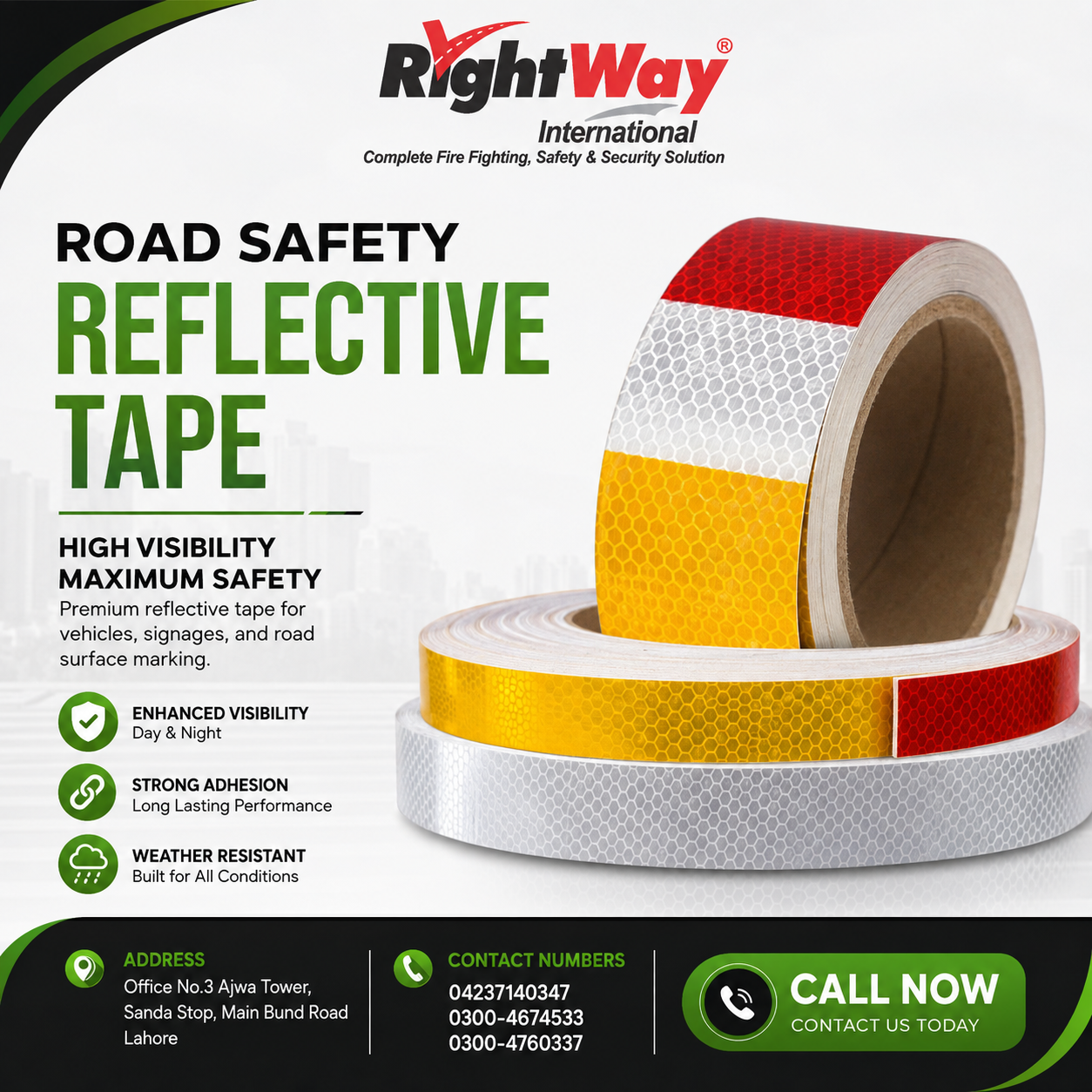
Road Safety Reflective Tape is an important traffic-safety product that improves the visibility of vehicles, road barriers, traffic equipment, construction machinery, safety signs, and roadside objects. It uses highly reflective materials to return light from vehicle headlights toward the driver. As a result, marked objects become easier to recognize, especially during nighttime and low-light conditions.
Moreover, reflective tape offers a simple and practical way to improve visibility without requiring electrical power or complicated equipment. For this reason, road authorities, construction companies, transport operators, logistics businesses, industrial facilities, and emergency-response teams use reflective tape in many different applications.
Furthermore, modern reflective tape comes in various colors, widths, patterns, adhesive types, and reflective grades. Therefore, buyers can select a suitable product according to the application, surface, weather conditions, visibility requirements, and applicable safety standards.
What Is Road Safety Reflective Tape?
Road Safety Reflective Tape is a high-visibility material that reflects incoming light toward its source. In most cases, the tape contains a reflective layer and an adhesive backing that allows users to attach it to suitable surfaces.
When headlights illuminate the tape, its reflective elements return light toward the approaching vehicle. Consequently, drivers can identify marked vehicles, barriers, machinery, and other objects more easily.
Common reflective tape colors include:
- Red
- White
- Yellow
- Fluorescent yellow
- Orange
- Amber
- Red and white
- Yellow and black
In addition, manufacturers offer reflective tape in rolls, strips, sheets, segmented patterns, chevrons, and custom-cut formats.
Common applications include:
- Trucks
- Trailers
- Buses
- Emergency vehicles
- Road barriers
- Traffic cones
- Delineator posts
- Safety barricades
- Construction equipment
- Heavy machinery
- Road signs
- Utility vehicles
- Motorcycles
- Bicycles
- Industrial equipment
- Loading docks
- Parking facilities
Why Is Road Safety Reflective Tape Important?
Drivers often encounter vehicles, barriers, machinery, pedestrians, and roadside hazards during nighttime or poor visibility conditions. Therefore, improving the visibility of these objects can contribute to safer road and work environments.
Reflective tape creates a bright visual response when headlights illuminate its surface. As a result, drivers may recognize marked objects sooner than objects without reflective markings.
For example, a truck traveling on a dark highway becomes easier to identify when it has suitable reflective markings around its rear and sides.
Similarly, reflective tape helps make road barriers, construction machinery, traffic posts, and barricades more noticeable. Furthermore, organizations can use reflective markings to help define the outline of large vehicles and equipment.
Reflective tape can provide valuable visibility during:
- Nighttime road operations
- Dawn and dusk
- Foggy conditions
- Rainy weather
- Road construction
- Highway maintenance
- Emergency roadside work
- Poorly illuminated areas
- Industrial vehicle operations
- Parking and loading operations
However, reflective tape should support—not replace—other safety measures such as headlights, warning lights, traffic signs, barriers, road markings, and proper traffic-management procedures.
How Does Road Safety Reflective Tape Work?
Road safety reflective tape primarily works through retroreflection. This means the tape redirects incoming light back toward its original source.
Step 1: Headlights Illuminate the Tape
First, vehicle headlights or another light source shine onto the reflective surface.
Step 2: Reflective Elements Redirect the Light
Next, specialized reflective elements inside the tape redirect the incoming light toward its source.
Step 3: Drivers See the Reflection
Consequently, the approaching driver sees a bright reflection from the marked surface.
Step 4: Markings Help Identify the Object
Finally, strategically placed reflective markings help drivers recognize the position, shape, width, or outline of vehicles and roadside objects.
Therefore, proper placement plays an important role in achieving effective visibility.
Types of Road Safety Reflective Tape
Different environments require different reflective products. Therefore, manufacturers produce several types of road safety reflective tape.
1. Engineering Grade Reflective Tape
Engineering-grade reflective tape provides a practical visibility solution for general applications. For example, organizations can use it on signs, equipment, barriers, and other suitable surfaces.
Moreover, it can provide useful nighttime visibility for applications that do not require higher-performance reflective materials.
2. High-Intensity Reflective Tape
High-intensity reflective tape provides stronger retroreflective performance than basic reflective materials.
Therefore, it can suit traffic equipment, vehicles, roadside applications, signs, barriers, and other areas where enhanced nighttime visibility matters.
3. Prismatic Reflective Tape
Prismatic reflective tape uses a structured reflective surface to return light efficiently toward the source.
As a result, it can provide strong nighttime visibility for vehicles, traffic equipment, signs, barriers, and construction applications.
4. Vehicle Reflective Tape
Vehicle reflective tape helps improve the visibility of trucks, trailers, buses, service vehicles, and utility vehicles.
Furthermore, operators can use it to highlight vehicle sides, rear sections, edges, doors, and other appropriate areas.
5. Conspicuity Tape
Conspicuity tape helps make large vehicles easier to recognize at night.
For example, red-and-white conspicuity patterns can create a distinctive visual outline around suitable trucks and trailers.
6. Red and White Reflective Tape
Red-and-white reflective tape combines two contrasting colors to create a highly noticeable pattern.
Therefore, it is commonly considered for vehicles, trailers, barriers, barricades, and traffic-safety equipment.
7. Yellow and Black Reflective Tape
Yellow-and-black reflective tape combines a bright warning color with a contrasting dark color.
Consequently, it can help highlight hazards, machinery, barriers, poles, industrial areas, and other objects.
8. Fluorescent Reflective Tape
Fluorescent reflective tape combines daytime fluorescent visibility with nighttime reflective performance.
As a result, it can provide a useful visibility solution for applications that require attention during both day and night.
9. Adhesive Reflective Tape
Adhesive reflective tape includes a pressure-sensitive backing. Therefore, users can apply it directly to compatible surfaces after proper cleaning and preparation.
It is commonly used on vehicles, signs, machinery, barriers, posts, and safety equipment.
10. Heavy-Duty Reflective Tape
Heavy-duty reflective tape provides greater durability for demanding applications.
Moreover, suitable heavy-duty products can withstand repeated handling, weather exposure, cleaning, vibration, and abrasion.
Common Applications of Road Safety Reflective Tape
Road safety reflective tape supports many transportation, construction, industrial, and public-safety applications.
Trucks and Trailers
Large trucks and trailers often travel at night and operate on highways. Therefore, visibility remains an important consideration.
Operators can use reflective tape around:
- Rear sections
- Side panels
- Trailer edges
- Doors
- Lower body sections
- Vehicle outlines
As a result, other road users can recognize the presence and approximate dimensions of large vehicles more easily.
Buses and Public Transport Vehicles
Similarly, buses and public transport vehicles can use suitable reflective markings to improve their visibility during nighttime operations.
This can become particularly useful around bus stops, terminals, parking areas, and poorly illuminated roads.
Emergency Vehicles
Emergency vehicles need clear identification, particularly during nighttime incidents.
Therefore, operators can use suitable reflective tape on:
- Fire trucks
- Ambulances
- Rescue vehicles
- Roadside assistance vehicles
- Emergency maintenance vehicles
Furthermore, reflective markings can complement emergency lighting and warning systems.
Road Construction
Road construction zones often contain workers, barriers, machinery, signs, and temporary traffic routes.
Therefore, construction teams can use reflective tape on:
- Barricades
- Safety barriers
- Traffic posts
- Construction machinery
- Temporary signs
- Equipment
- Delineator posts
Consequently, drivers can identify important objects more easily after dark.
Traffic Barriers
Traffic barriers can become difficult to see at night, especially in poorly illuminated areas.
For this reason, reflective tape can help highlight suitable plastic, metal, concrete, or other traffic barriers.
Traffic Cones
Reflective bands or tape can make traffic cones more noticeable when vehicle headlights illuminate them.
Moreover, reflective cone markings can complement warning signs, road lighting, and other traffic-control equipment.
Delineator Posts
Delineator posts help identify road edges and curves. When organizations add suitable reflective elements, these posts can become easier for drivers to recognize at night.
Heavy Machinery
Construction and industrial machinery can create significant visibility challenges.
Therefore, companies can use reflective tape on:
- Excavators
- Loaders
- Cranes
- Forklifts
- Tractors
- Maintenance vehicles
- Industrial machinery
Warehouses and Industrial Facilities
Inside warehouses and industrial facilities, reflective tape can help identify:
- Loading areas
- Columns
- Vehicle routes
- Pedestrian routes
- Machinery
- Doors
- Safety barriers
- Loading docks
As a result, workers and vehicle operators can recognize important areas more easily.
Key Features of High-Quality Road Safety Reflective Tape
When selecting reflective tape, buyers should evaluate several important characteristics.
High Retroreflectivity
First, quality reflective tape should provide effective light return when vehicle headlights illuminate the surface.
Therefore, buyers should check the product’s reflective performance and intended application.
Strong Adhesive
For adhesive-backed products, a suitable adhesive helps the tape remain securely attached to the intended surface.
However, users should always prepare the surface correctly before application.
Weather Resistance
Outdoor reflective tape may face rain, sunlight, dust, humidity, heat, and temperature changes.
Therefore, buyers should select outdoor-grade products for exterior applications.
UV Resistance
Continuous sunlight can fade colors and degrade some materials. Consequently, UV-resistant reflective tape can provide better long-term performance in outdoor environments.
Abrasion Resistance
Vehicles and machinery may experience frequent cleaning and physical contact.
For this reason, abrasion-resistant reflective tape can provide greater durability in demanding applications.
Flexible Construction
Flexible reflective tape can conform to suitable curved surfaces.
However, users should check the manufacturer’s instructions before applying tape to highly curved or irregular surfaces.
Strong Color Contrast
High-contrast colors help create a distinctive visual pattern.
For example, red-and-white and yellow-and-black combinations can make marked objects easier to recognize.
Easy Application
Adhesive-backed reflective tape offers a convenient installation method when users apply it to a clean and compatible surface.
Long-Term Durability
Quality reflective tape should maintain its adhesion, appearance, and reflective performance throughout its intended service life.
Benefits of Road Safety Reflective Tape
Road safety reflective tape offers several practical benefits.
- Improves nighttime visibility
- Increases vehicle conspicuity
- Helps identify roadside hazards
- Supports road construction safety
- Improves traffic-barrier visibility
- Helps mark heavy machinery
- Supports warehouse traffic management
- Improves low-light visibility
- Provides strong visual contrast
- Works on many suitable surfaces
- Comes in different colors and patterns
- Requires no electrical power
- Provides a lightweight visibility solution
- Supports emergency-vehicle identification
- Helps define vehicle outlines
- Complements existing traffic-safety equipment
Moreover, organizations can combine reflective tape with warning lights, road signs, traffic cones, barriers, headlights, and proper safety procedures for a more comprehensive visibility strategy.
Road Safety Reflective Tape for Daytime and Nighttime Visibility
Visibility requirements can change significantly between daylight and darkness.
During the day, fluorescent and high-contrast colors can help distinguish vehicles and equipment from their surroundings.
However, nighttime visibility depends heavily on available light sources. When vehicle headlights illuminate reflective tape, its retroreflective surface returns light toward the approaching driver.
Therefore, organizations that operate during both daytime and nighttime should select reflective tape that provides suitable visibility for their specific environment.
How to Choose the Right Road Safety Reflective Tape
Choosing the right reflective tape requires careful consideration of the application.
1. Identify the Application
First, determine where you will use the tape.
For example, trucks, trailers, barriers, machinery, traffic cones, and road signs may require different products.
2. Consider Day and Night Visibility
Next, determine whether the application requires daytime visibility, nighttime visibility, or both.
3. Select the Appropriate Reflective Grade
Different grades provide different levels of retroreflective performance.
Therefore, select the appropriate grade according to the application and relevant requirements.
4. Choose the Right Color
Select a color or pattern that provides suitable contrast and complies with applicable vehicle, workplace, or project requirements.
5. Evaluate Adhesion
For adhesive-backed products, make sure the adhesive suits the intended surface.
In addition, check whether the product requires a specific surface-preparation procedure.
6. Consider Outdoor Exposure
For outdoor use, evaluate resistance to:
- Rain
- Sunlight
- UV exposure
- Heat
- Humidity
- Dust
- Abrasion
- Temperature changes
7. Check Tape Width
Choose a width that suits the available surface and intended marking pattern.
8. Consider Surface Type
Reflective tape may work on metal, plastic, painted surfaces, fiberglass, machinery, and other materials.
However, always confirm surface compatibility before installation.
9. Check Certifications and Standards
Where regulations or project specifications apply, verify the product’s relevant certification, performance classification, and intended application.
10. Consider Installation Requirements
Finally, check whether the product requires special preparation, pressure, primer, heat, or another installation method.
Best Practices for Using Road Safety Reflective Tape
Proper installation and maintenance can help preserve reflective performance.
- Clean the surface before installation
- Remove dust, oil, grease, and moisture
- Select a compatible surface
- Follow manufacturer instructions
- Avoid wrinkles and air bubbles
- Apply consistent pressure
- Keep important vehicle lights uncovered
- Avoid covering required identification markings
- Use appropriate reflective patterns
- Inspect markings regularly
- Replace damaged sections
- Replace severely faded material
- Check edges for peeling
- Keep reflective surfaces clean
- Follow applicable safety requirements
Furthermore, organizations should inspect reflective markings as part of their regular vehicle and equipment safety checks.
Road Safety Reflective Tape Installation
Correct installation directly affects adhesion and long-term performance.
Surface Preparation
First, clean and dry the application surface thoroughly. Remove dirt, grease, oil, wax, and other contaminants.
Measuring and Cutting
Next, measure the required length carefully. Then cut the tape to the appropriate size before application.
Application
Afterward, remove the protective liner gradually and apply the tape carefully.
Pressure Application
Apply suitable pressure across the tape to create proper contact between the adhesive and surface.
Final Inspection
Finally, inspect the installation for:
- Air bubbles
- Wrinkles
- Peeling edges
- Contamination
- Uneven application
- Poor adhesion
If you identify a problem, correct it according to the manufacturer’s instructions.
Road Safety Reflective Tape Maintenance
Regular maintenance helps preserve the visibility and appearance of reflective markings.
Inspect reflective tape for:
- Peeling
- Cracking
- Fading
- Scratches
- Abrasion
- Dirt accumulation
- Adhesive failure
- Damaged edges
- Reduced reflective performance
- Chemical contamination
Moreover, clean reflective surfaces using the manufacturer’s recommended cleaning method.
Avoid harsh chemicals, abrasive materials, excessive pressure, or unsuitable solvents because these may damage reflective surfaces.
As soon as the tape becomes severely damaged or fails to provide the required visibility, replace it.
Road Safety Reflective Tape for Trucks and Trailers
Trucks and trailers often travel long distances and operate during nighttime hours. Therefore, vehicle conspicuity plays an important role in road safety.
Reflective tape can help define:
- Vehicle width
- Vehicle length
- Rear profile
- Trailer edges
- Side boundaries
- Lower body sections
As a result, other drivers can recognize large vehicles and their approximate dimensions more easily.
However, vehicle markings should comply with applicable transportation regulations and project requirements.
Road Safety Reflective Tape for Construction Sites
Construction sites contain moving vehicles, heavy machinery, temporary barriers, equipment, and changing traffic routes.
Therefore, construction companies can use reflective tape on:
- Excavators
- Loaders
- Cranes
- Safety barriers
- Traffic cones
- Barricades
- Temporary signs
- Delineator posts
- Construction vehicles
Furthermore, reflective markings can support better equipment visibility during nighttime construction work.
Road Safety Reflective Tape for Emergency Vehicles
Emergency vehicles operate in unpredictable and potentially hazardous environments.
Therefore, suitable reflective tape can help improve the visibility of:
- Fire trucks
- Ambulances
- Rescue vehicles
- Emergency maintenance vehicles
- Roadside assistance vehicles
- Utility response vehicles
In addition, reflective markings can work alongside emergency lighting and warning systems to improve vehicle recognition.
Road Safety Reflective Tape in Pakistan
In Pakistan, organizations can use road safety reflective tape across highways, construction projects, transportation fleets, logistics operations, industrial facilities, warehouses, parking areas, municipal services, and emergency-response operations.
When selecting road safety reflective tape in Pakistan, buyers should consider reflective performance, adhesive quality, tape width, color, durability, weather resistance, UV resistance, surface compatibility, installation method, intended application, and applicable safety standards.
Furthermore, companies should choose products according to the specific requirements of their vehicles, workers, equipment, and operating environments.
Technical Specifications
| Specification | Typical Details |
|---|---|
| Product Type | Road Safety Reflective Tape |
| Primary Function | Visibility and Retroreflective Marking |
| Common Materials | Reflective Film, Prismatic Film, Polymer-Based Materials |
| Common Colors | White, Red, Yellow, Fluorescent Yellow, Orange |
| Common Patterns | Solid, Segmented, Red-White, Yellow-Black, Chevron |
| Application | Trucks, Trailers, Barriers, Machinery, Signs |
| Adhesive | Pressure-Sensitive or Application-Specific Adhesive |
| Surface Compatibility | Metal, Plastic, Painted Surfaces, Equipment |
| Visibility | Daytime Conspicuity and Nighttime Retroreflection |
| Outdoor Use | Available in Outdoor-Grade Designs |
| Weather Resistance | Available in Weather-Resistant Designs |
| Additional Features | UV Resistance, Abrasion Resistance, High Intensity |
| Supply Form | Rolls, Strips, Sheets, Custom-Cut Pieces |
| Main Benefit | Improved Visibility of Vehicles and Roadside Objects |
Frequently Asked Questions
What is road safety reflective tape used for?
Road safety reflective tape improves the visibility of vehicles, trailers, barriers, traffic equipment, machinery, signs, construction equipment, and roadside objects, particularly during nighttime and low-light conditions.
How does reflective tape work?
Reflective tape uses specialized reflective elements that return incoming light toward its source. Therefore, when vehicle headlights illuminate the tape, approaching drivers can see a bright reflection.
What colors are available in reflective tape?
Common colors include white, red, yellow, fluorescent yellow, orange, and amber. In addition, manufacturers offer combinations such as red-and-white and yellow-and-black.
Is reflective tape suitable for trucks and trailers?
Yes. Suitable vehicle-grade reflective tape can improve the visibility and recognition of trucks, trailers, buses, utility vehicles, and other commercial vehicles.
Can reflective tape be used outdoors?
Yes. Many manufacturers produce reflective tape specifically for outdoor applications. However, buyers should select products with suitable weather, UV, temperature, and abrasion resistance.
Can reflective tape be used on traffic barriers?
Yes. Users can apply suitable reflective tape to traffic barriers, barricades, posts, cones, and other road-safety equipment.
What is the difference between fluorescent and reflective tape?
Fluorescent materials primarily improve daytime visibility by creating strong color contrast. In contrast, reflective materials improve visibility when headlights or another light source illuminate them.
Is reflective tape waterproof?
Some outdoor-grade reflective tapes provide strong resistance to rain and moisture. However, water resistance varies between products, so users should check the manufacturer’s specifications.
How long does road safety reflective tape last?
Service life depends on product quality, installation, sunlight exposure, weather conditions, abrasion, cleaning, and frequency of use. Therefore, users should replace tape when it becomes damaged, severely faded, detached, or ineffective.
Can reflective tape be customized?
Yes, depending on the manufacturer. Buyers may find different widths, colors, patterns, shapes, and custom-cut options.
However, customization should never compromise the reflective area or applicable safety requirements.
Where can I buy road safety reflective tape in Pakistan?
Buyers can source road safety reflective tape from specialized safety-equipment suppliers, traffic-safety distributors, industrial-safety companies, and manufacturers.
Before purchasing, compare reflective performance, adhesive quality, durability, specifications, intended application, and applicable standards.
Reflective Safety Vests
What Are Reflective Safety Vests?
Reflective Safety Vests are high-visibility garments designed to make the wearer easier to see. They typically combine fluorescent-colored fabric with reflective strips or bands that reflect light toward its source.
Manufacturers commonly produce safety vests using lightweight polyester mesh, polyester fabric, breathable materials, or other durable textiles. Moreover, many designs include reflective tape around the chest, waist, shoulders, and back.
Common fluorescent colors include:
- Yellow
- Lime green
- Orange
- Fluorescent orange
- High-visibility yellow
Reflective strips commonly appear in silver or other highly reflective materials. Consequently, the combination of fluorescent fabric and reflective elements can improve visibility during both daytime and nighttime operations.