




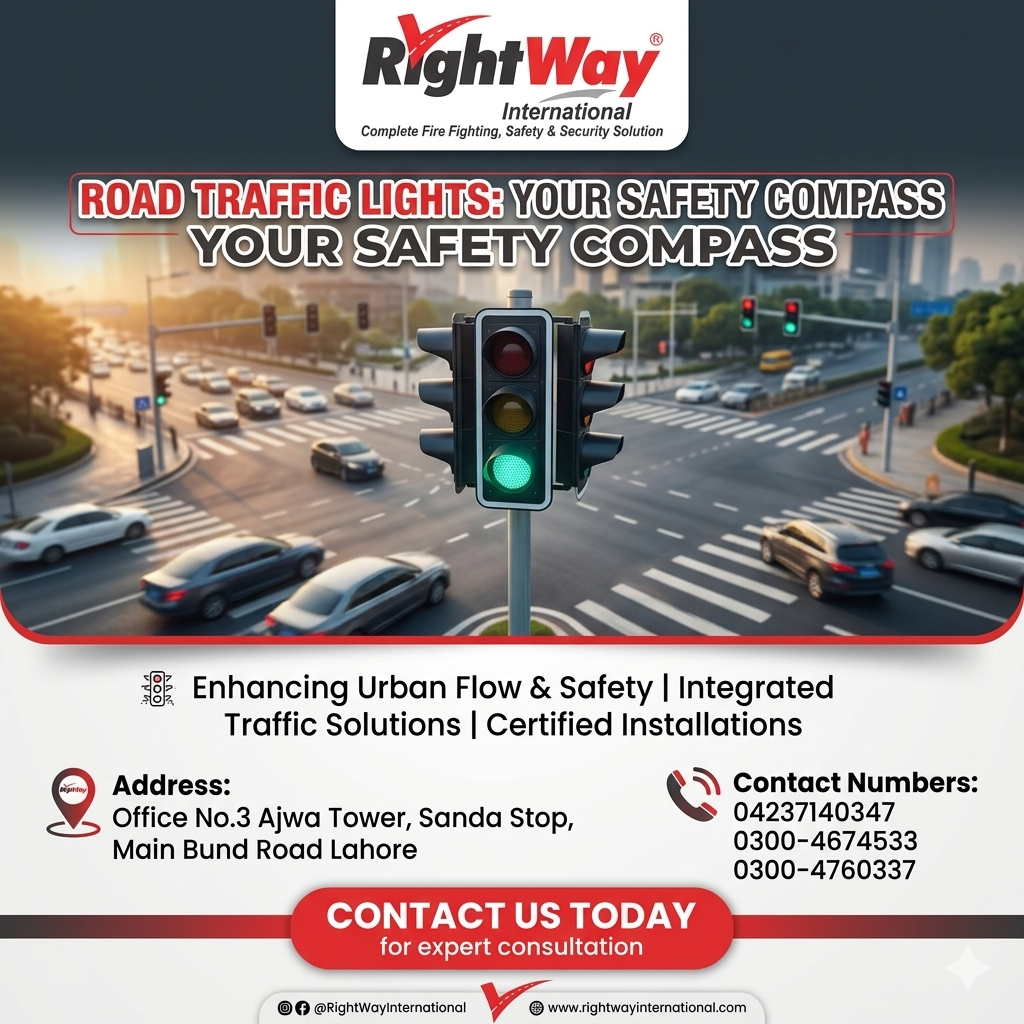
Road Traffic Lights are highly visible traffic control devices designed to regulate vehicle movement, pedestrian crossings, traffic flow, and roadway safety. These essential transportation systems help prevent accidents, reduce congestion, improve traffic efficiency, and ensure safe movement at intersections, highways, urban roads, pedestrian crossings, industrial facilities, airports, and transportation infrastructure. as Per Occupational Safety and Health Administration (OSHA). Standers.
Road traffic lights are widely used on highways, city streets, intersections, roundabouts, tunnels, bridges, parking facilities, railway crossings, airports, industrial complexes, and public infrastructure projects to enhance traffic management and transportation safety.
As urbanization and vehicle ownership continue to increase worldwide, road traffic lights play a critical role in intelligent transportation systems, accident prevention programs, traffic management strategies, roadway efficiency improvements, and public safety initiatives. They support compliance with transportation authority standards, highway regulations, traffic engineering guidelines, and road safety requirements.
What Are Road Traffic Lights?
A Road Traffic Light is an electronic traffic control device that uses colored signal indications—typically red, yellow (amber), and green—to manage vehicle and pedestrian movement at intersections and roadway crossings.
Road traffic lights are commonly used for:
- Traffic control
- Intersection management
- Vehicle flow regulation
- Pedestrian crossing control
- Highway traffic management
- Railway crossing safety
- Road congestion reduction
- Accident prevention
- Public safety enhancement
- Urban transportation management
- Smart city infrastructure
- Emergency vehicle prioritization
- Lane control operations
- Construction zone traffic control
- Transportation system efficiency
Traffic Signal Systems
Traffic signal systems are commonly used for:
- Vehicle movement control
- Traffic flow optimization
- Intersection safety
- Pedestrian management
- Smart transportation networks
- Urban traffic regulation
- Highway management
- Public road safety
- Emergency traffic operations
- Infrastructure modernization
- Intelligent transportation systems
- Traffic congestion reduction
- Roadway efficiency enhancement
- Sustainable mobility solutions
- Transportation planning
Road Safety Equipment
Road safety equipment is commonly used for:
- Traffic regulation
- Accident prevention
- Road hazard warning
- Pedestrian protection
- Highway safety
- Work zone safety
- Vehicle guidance
- Traffic monitoring
- Public infrastructure safety
- Transportation management
- Emergency response support
- Road visibility enhancement
- Driver awareness improvement
- Compliance with safety standards
- Traffic control operations
Key Components of Road Traffic Lights
A typical road traffic light system includes:
- Traffic signal heads
- Red signal lenses
- Yellow signal lenses
- Green signal lenses
- LED light modules
- Traffic signal controller
- Signal poles and mast arms
- Pedestrian signal indicators
- Vehicle detection sensors
- Countdown timers
- Traffic cameras
- Control cabinets
- Communication systems
- Power supply systems
- Backup battery systems
- Smart traffic management software
- Intersection monitoring equipment
- Emergency vehicle detection systems
Road Safety Delineator Posts
Road safety delineator posts are commonly used for:
- Road edge marking
- Lane delineation
- Traffic channelization
- Construction zone safety
- Highway guidance
- Hazard identification
- Parking lot management
- Bridge safety
- Tunnel guidance
- Airport traffic control
- Industrial traffic management
- Pedestrian protection
- Work zone separation
- Roadway obstacle marking
- Accident prevention
How Road Traffic Lights Work
Road traffic lights regulate traffic flow through programmed signal phases and intelligent control systems.
Step 1: Traffic Detection
Sensors, cameras, or detectors monitor vehicle and pedestrian activity.
Step 2: Signal Processing
Traffic controllers analyze traffic conditions and determine signal timing.
Step 3: Signal Activation
Red, yellow, and green lights are displayed according to programmed cycles.
Step 4: Traffic Regulation
Drivers and pedestrians respond to signal indications.
Step 5: Traffic Optimization
The system manages traffic flow while improving roadway safety and efficiency.
Types of Road Traffic Lights
1. Fixed-Time Traffic Lights
Operate according to predetermined timing schedules.
2. Vehicle-Actuated Traffic Lights
Adjust signal timing based on traffic demand detected by sensors.
3. Smart Traffic Lights
Use real-time data and artificial intelligence to optimize traffic flow.
4. LED Traffic Lights
Utilize energy-efficient LED technology for enhanced visibility and reliability.
5. Pedestrian Traffic Lights
Provide crossing instructions and countdown displays for pedestrians.
6. Railway Crossing Signals
Control traffic at rail-road intersections.
7. Solar-Powered Traffic Lights
Use solar energy for sustainable operation.
8. Highway Traffic Signals
Manage traffic movement on major roadways and expressways.
9. Portable Traffic Lights
Used in temporary roadworks and construction zones.
10. Intelligent Traffic Signals
Integrated with smart transportation networks and traffic management centers.
Common Applications of Road Traffic Lights
Road traffic lights are widely used in:
- Urban intersections
- Highways
- Expressways
- Residential areas
- Commercial districts
- Industrial facilities
- Airports
- Railway crossings
- School zones
- Hospital access roads
- Parking facilities
- Toll plazas
- Construction zones
- Smart city projects
- Public transportation corridors
Importance of Road Traffic Lights in Traffic Management Systems
Road traffic lights are fundamental components of modern transportation infrastructure.
Key Benefits
- Improves road safety
- Reduces traffic congestion
- Enhances traffic flow
- Minimizes collision risks
- Improves pedestrian safety
- Supports emergency response
- Enhances intersection efficiency
- Reduces travel delays
- Supports smart city development
- Improves transportation sustainability
Technical Specifications
| Specification | Details |
|---|---|
| Equipment Type | Road Traffic Light System |
| Function | Traffic Regulation and Safety Control |
| Signal Colors | Red, Yellow (Amber), Green |
| Technology | LED, Incandescent, Smart Signal Systems |
| Power Source | Electrical Grid, Solar Power |
| Mounting Type | Pole Mounted, Mast Arm Mounted |
| Visibility Range | High |
| Weather Resistance | High |
| Maintenance Requirement | Moderate |
| Compliance Standards | MUTCD, DOT, EN Standards, Local Traffic Regulations |
Key Features and Advantages of Road Traffic Lights
High Visibility
Bright LED signals provide excellent visibility in all weather conditions.
Improved Safety
Reduce accidents by controlling vehicle and pedestrian movement.
Energy Efficiency
Modern LED systems consume less power and require less maintenance.
Intelligent Traffic Management
Smart systems adapt to changing traffic conditions.
Enhanced Traffic Flow
Reduce delays and improve roadway capacity.
Long Service Life
Durable components ensure reliable long-term performance.
Environmental Benefits
Reduced congestion helps lower vehicle emissions.
Regulatory Compliance
Supports compliance with transportation and road safety standards.
How to Select the Right Road Traffic Light System
1. Assess Traffic Volume
Evaluate average daily traffic and peak-hour demand.
2. Determine Intersection Requirements
Analyze roadway geometry and operational needs.
3. Choose Appropriate Technology
Select between conventional, LED, adaptive, or smart traffic signals.
4. Consider Power Supply Options
Evaluate electrical and solar-powered alternatives.
5. Verify Regulatory Compliance
Ensure compliance with applicable transportation regulations and standards.
Best Practices for Using Road Traffic Lights
- Perform regular signal inspections
- Maintain LED modules and controllers
- Test pedestrian crossing systems
- Monitor traffic performance data
- Update signal timing plans
- Conduct preventive maintenance
- Maintain emergency backup systems
- Train maintenance personnel
- Ensure regulatory compliance
- Implement smart traffic management strategies
Industries That Use Road Traffic Lights
- Transportation departments
- Highway authorities
- Municipal governments
- Smart city developers
- Construction companies
- Airport operators
- Railway authorities
- Infrastructure contractors
- Industrial facilities
- Logistics centers
- Public transportation agencies
- Port authorities
- Educational institutions
- Healthcare facilities
- Security organizations
Importance of Transportation and Road Safety Compliance
Road traffic lights help organizations achieve compliance by ensuring:
- Safe vehicle movement
- Controlled traffic operations
- Reduced accident rates
- Improved pedestrian protection
- Enhanced roadway visibility
- Better traffic management
- Increased public safety
- Compliance with transportation regulations
Difference Between Conventional and Smart Traffic Lights
| Feature | Conventional Traffic Lights | Smart Traffic Lights |
| Signal Timing | Fixed Schedule | Adaptive and Real-Time |
| Traffic Detection | Limited | Advanced Sensors |
| Traffic Efficiency | Moderate | High |
| Congestion Management | Basic | Advanced |
| Data Collection | Limited | Comprehensive |
| Maintenance | Moderate | Predictive |
| Energy Efficiency | Good | Excellent |
| Smart City Integration | Limited | Full Integration |
Frequently Asked Questions (FAQs)
What are Road Traffic Lights used for?
Road traffic lights regulate vehicle and pedestrian movement, improve traffic flow, and enhance road safety.
Where are Traffic Lights commonly installed?
They are commonly installed at intersections, highways, pedestrian crossings, railway crossings, airports, and urban roads.
What colors are used in Traffic Lights?
Standard traffic lights use red, yellow (amber), and green signals.
Do Smart Traffic Lights reduce congestion?
Yes. Smart traffic signals use real-time traffic data to optimize signal timing and improve traffic flow.
When should Traffic Lights be upgraded?
Traffic lights should be upgraded when technology becomes outdated, traffic volume increases significantly, or safety improvements are required.
Conclusion
Road Traffic Lights are essential traffic control systems that regulate vehicle movement, improve road safety, reduce congestion, and enhance transportation efficiency. Their advanced signaling technology, intelligent control systems, high visibility, and compliance with transportation safety standards make them indispensable for highways, intersections, smart cities, airports, industrial facilities, railway crossings, and public infrastructure projects. By improving traffic flow, pedestrian safety, and roadway management, road traffic lights contribute significantly to safer, smarter, and more efficient transportation networks worldwide.