




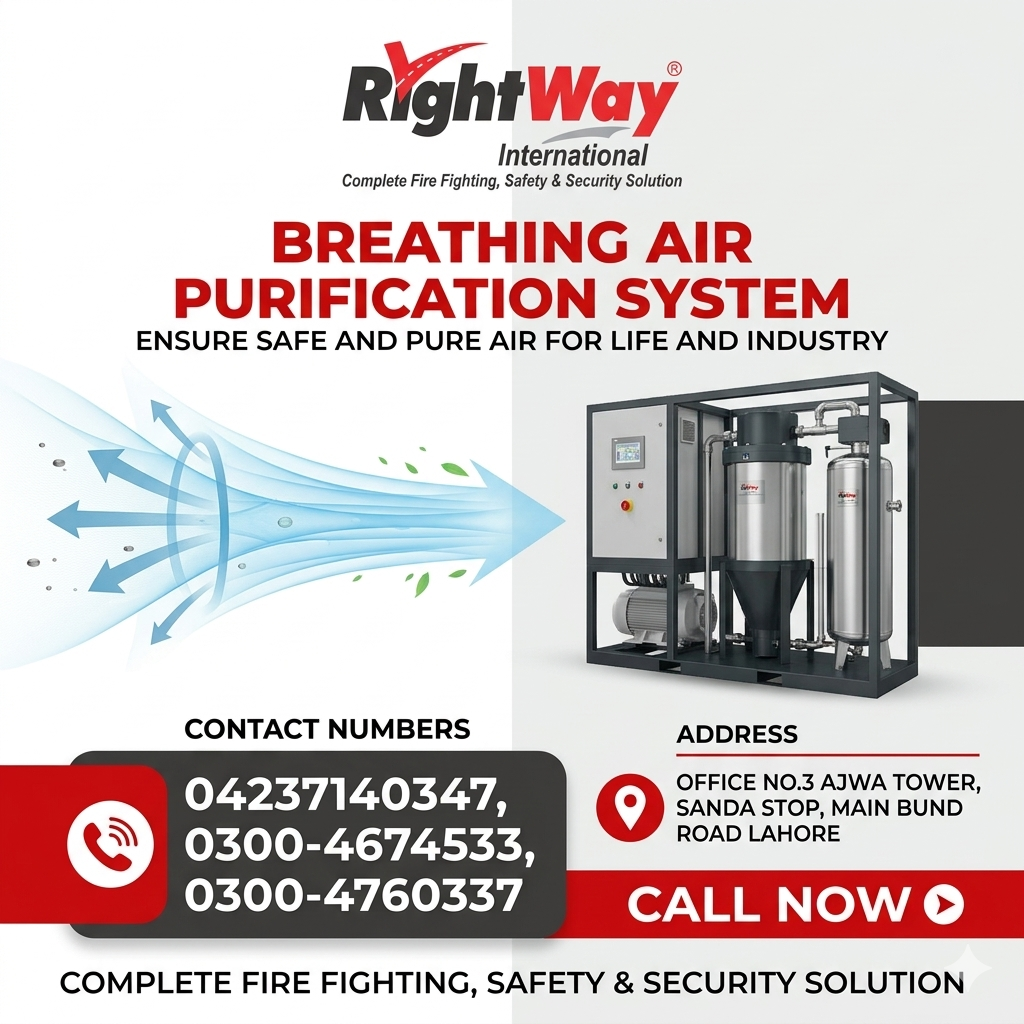
Breathing Air Purification System is a specialized air treatment and filtration system designed to remove contaminants, moisture, oil vapors, toxic gases, odors, and particulate matter from compressed breathing air supplies. These systems ensure that the air delivered to respiratory protection equipment is clean, safe, and compliant with international breathing air quality standards.
Breathing air purification systems are widely used in firefighting operations, industrial safety applications, offshore oil and gas facilities, chemical processing plants, mining operations, pharmaceutical manufacturing, military environments, diving operations, emergency rescue services, and confined space entry activities where personnel rely on supplied breathing air for protection against hazardous atmospheres. as per Occupational Safety and Health Administration (OSHA) Standers.
Because respiratory protection is critical in life-threatening environments, breathing air purification systems play a vital role in worker safety, regulatory compliance, equipment protection, and operational reliability.
What Is a Breathing Air Purification System?
A Breathing Air Purification System is an integrated filtration and purification unit that cleans compressed air before it is supplied to breathing apparatus equipment.
It is commonly used for:
- Compressed breathing air purification
- Self-Contained Breathing Apparatus (SCBA) air supply systems
- Supplied-air respirator systems
- Industrial breathing air treatment
- Firefighter breathing air stations
- Diving air purification systems
- Emergency rescue air supply systems
- Confined space breathing air solutions
- Offshore platform respiratory protection
- Hazardous environment air filtration
- Chemical plant breathing air systems
- Pharmaceutical clean air applications
- Military respiratory support systems
- Mining air purification stations
- Air compressor purification systems
Key Components of a Breathing Air Purification System
A typical breathing air purification system includes:
- Pre-filter assembly
- Particulate filtration cartridges
- Activated carbon filters
- Oil vapor removal filters
- Moisture separator units
- Coalescing filters
- Desiccant air dryers
- Carbon monoxide catalyst filters
- Hydrocarbon removal filters
- Pressure regulators
- Air quality monitoring sensors
- Breathing air storage cylinders
- Moisture indicators
- Filtration housings
- Safety relief valves
- Air sampling ports
- Monitoring and alarm systems
- Distribution manifolds
How Breathing Air Purification Systems Work
Breathing air purification systems remove contaminants from compressed air through multiple stages of filtration and treatment.
Step 1: Air Intake
Compressed air is generated by an air compressor and directed into the purification system.
Step 2: Moisture Separation
Water droplets and condensate are removed using moisture separators and dryers.
Step 3: Particulate Filtration
Dust, rust particles, dirt, and airborne contaminants are captured by high-efficiency filters.
Step 4: Oil Vapor Removal
Coalescing filters and activated carbon cartridges remove oil aerosols and compressor lubricants.
Step 5: Gas Purification
Carbon monoxide, hydrocarbons, odors, and harmful gases are removed through specialized purification media.
Step 6: Air Quality Monitoring
Sensors continuously monitor breathing air quality to ensure compliance with standards.
Step 7: Air Distribution
Purified breathing air is supplied to cylinders, respirators, SCBA systems, or breathing stations.
Types of Breathing Air Purification Systems
1. Portable Breathing Air Purification System
Compact units designed for field operations and temporary work sites.
2. Stationary Breathing Air Purification System
Permanent installations for industrial facilities, fire stations, and offshore platforms.
3. High-Pressure Air Purification System
Designed for high-pressure breathing air compressors and cylinder filling operations.
4. SCBA Air Purification System
Dedicated systems supporting firefighter and emergency response breathing apparatus.
5. Diving Air Purification System
Specialized purification units for scuba and commercial diving applications.
6. Industrial Breathing Air Filtration System
Heavy-duty systems used in manufacturing, mining, and chemical processing environments.
Breathing Apparatus Cleaning Kit
Breathing Apparatus Cleaning Kit is a complete set of tools, chemicals, and accessories used to clean and disinfect respiratory protection equipment after use in hazardous environments.
It is commonly used for:
- Self-Contained Breathing Apparatus (SCBA) cleaning
- Full-face respirator maintenance
- Air mask and visor cleaning
- Breathing hose and regulator sanitation
- Emergency rescue equipment hygiene
- Industrial respiratory protection systems
- Firefighting gear decontamination
- Confined space entry equipment cleaning
- Chemical exposure cleanup operations
- Military and defense respiratory maintenance
- Offshore and marine safety equipment care
- Mining and tunneling respiratory gear cleaning
- Pharmaceutical and cleanroom safety equipment sanitation
- Hazardous material (HAZMAT) response gear cleaning
- Industrial shutdown maintenance operations
Common Applications of Breathing Air Purification Systems
Breathing air purification systems are widely used in:
- Firefighting departments
- Industrial manufacturing plants
- Oil and gas facilities
- Offshore drilling platforms
- Mining and tunneling operations
- Chemical processing facilities
- Pharmaceutical production plants
- Marine and shipyard industries
- Military installations
- Aviation maintenance operations
- Emergency rescue organizations
- Nuclear facilities
- Wastewater treatment plants
- Construction projects
- Hazardous material response teams
Importance of Breathing Air Purification Systems in Safety Operations
Breathing air purification systems are essential for protecting personnel working in hazardous environments.
Key Benefits:
- Removes harmful airborne contaminants
- Provides safe breathing air
- Protects workers in toxic atmospheres
- Supports respiratory protection programs
- Improves workplace safety
- Enhances emergency preparedness
- Reduces health risks
- Extends equipment lifespan
- Ensures operational reliability
- Maintains compliance with industry standards
Technical Specifications
| Specification | Details |
|---|---|
| Equipment Type | Breathing Air Purification System |
| Application | Compressed Air Treatment and Respiratory Protection |
| Filtration Method | Multi-stage filtration |
| Contaminants Removed | Moisture, oil, particles, gases, odors |
| Air Quality Standards | OSHA, NFPA, EN, NIOSH, CGA |
| Installation Type | Portable or Fixed |
| Operating Pressure | Low to High Pressure |
| Monitoring System | Air Quality Sensors and Alarms |
| Usage Environment | Industrial, Firefighting, Offshore, Mining |
| Maintenance Requirement | Periodic Filter Replacement |
Key Features and Advantages of Breathing Air Purification Systems
Advanced Filtration Technology
Removes particulate matter, moisture, oil vapors, and harmful gases efficiently.
High Air Quality Standards
Provides breathing air that meets strict regulatory requirements.
Continuous Monitoring
Real-time sensors ensure safe air quality levels.
Reliable Performance
Designed for continuous operation in demanding environments.
Easy Maintenance
Filter replacement and system servicing can be performed efficiently.
Modular Design
Systems can be expanded based on air demand requirements.
Corrosion Resistance
Suitable for harsh industrial and offshore environments.
Long Service Life
Built for durability and extended operational performance.
How to Select the Right Breathing Air Purification System
1. Determine Air Consumption Requirements
Calculate airflow demand based on the number of users.
2. Evaluate Environmental Conditions
Consider contaminants present in the operating environment.
3. Select Appropriate Filtration Levels
Choose filtration stages suitable for the application.
4. Verify Air Quality Standards
Ensure compliance with OSHA, NFPA, NIOSH, EN, and CGA standards.
5. Consider Portability Requirements
Select portable or fixed systems depending on operational needs.
Best Practices for Using Breathing Air Purification Systems
- Perform regular air quality testing
- Replace filters according to manufacturer schedules
- Monitor carbon monoxide levels continuously
- Inspect purification components routinely
- Maintain compressor systems properly
- Keep moisture separators operational
- Train personnel on system operation
- Follow safety regulations and standards
- Document maintenance activities
- Conduct periodic performance evaluations
Industries That Use Breathing Air Purification Systems
- Fire and rescue services
- Oil and gas industry
- Mining and tunneling companies
- Chemical manufacturing facilities
- Pharmaceutical industries
- Offshore marine operations
- Military and defense organizations
- Aviation maintenance sectors
- Nuclear power facilities
- Emergency response teams
- Construction and infrastructure projects
- Utility and energy providers
- Shipbuilding and repair industries
- Water treatment facilities
- Industrial maintenance contractors
Importance of OSHA and Safety Compliance
Breathing air purification systems support regulatory compliance by ensuring:
- Safe breathable air supply
- Reduced exposure to hazardous contaminants
- Enhanced worker protection
- Consistent air quality monitoring
- Compliance with respiratory safety programs
- Improved emergency response readiness
- Reduced health and liability risks
- Reliable respiratory protection performance
Difference Between Breathing Air Purification System and Standard Air Filtration System
| Feature | Breathing Air Purification System | Standard Air Filtration System |
| Purpose | Human breathing air | General air cleaning |
| Air Quality Standards | OSHA/NFPA/NIOSH compliant | General filtration |
| Carbon Monoxide Removal | Yes | Usually No |
| Moisture Control | Advanced | Basic |
| Respiratory Safety | Critical | Limited |
| Industrial Hazard Protection | High | Moderate |
| Monitoring Systems | Included | Often Not Included |
Frequently Asked Questions (FAQs)
What is a breathing air purification system used for?
It is used to purify compressed air for respiratory protection equipment and breathing applications.
Why is air purification necessary for breathing systems?
It removes contaminants that could endanger user health and safety.
What contaminants are removed?
Moisture, dust, oil vapors, carbon monoxide, hydrocarbons, odors, and airborne particles.
Where are breathing air purification systems used?
Fire stations, industrial plants, offshore platforms, mines, chemical facilities, and emergency response operations.
How often should filters be replaced?
According to manufacturer recommendations and air quality monitoring results.